

Emergency Roof Repairs: What to Expect and Cost
In a roofing emergency, look out for immediate signs such as leaks, missing tiles, or sagging sections. Repair costs can vary significantly, typically ranging from around £200 for minor issues to over £8,000 for extensive damage. It's crucial to document any problems and consider temporary solutions like tarpaulin to protect your home. Always hire a professional for a thorough assessment and proper repairs to ensure your roof remains structurally sound. Familiarise yourself with best practices for managing emergencies and preventing future issues.
Key Takeaways
Emergency roof repairs can cost between £300 and over £8,000, depending on the extent of the damage. Look out for signs like water stains on ceilings, visible leaks, and sagging rooflines, which indicate a roofing emergency. If you find yourself in this situation, temporary solutions such as tarpaulins and sealants can provide a stopgap while waiting for professional help.
Make sure to document all damage with photos and notes; this will assist with insurance claims and help contractors assess the situation accurately. To prevent emergencies and save on long-term repair costs, regular maintenance and inspections of your roof are essential.
Common Signs of Roofing Emergencies
When it comes to roofing emergencies, recognising the common signs can prevent significant damage and costly repairs.
Keep an eye out for water stains or dripping ceilings, as these indicate active leaks that need immediate attention. If you notice visible dripping from your roof or strange smells inside your home, these could be signs of serious water ingress. Untreated leaks can lead to mould growth, which poses health risks. Prompt action can prevent serious damage and save you from extensive repairs. Additionally, regular maintenance can help identify issues before they escalate into emergencies.
After a storm, check for missing or broken tiles, hail damage, or fallen branches. Also, watch for sagging rooflines; this can suggest structural issues. Performing a thorough inspection will help you tackle problems quickly, ensuring the safety and longevity of your home.
Steps for Managing Roof Emergencies
To effectively manage roof emergencies, begin with a thorough assessment to determine the extent of the damage. Conduct inspections of both the exterior and interior, including the attic, and document your findings for contractors and insurance claims. Ensure safety by avoiding climbing onto the roof without appropriate gear. It's crucial to recognize that water leaks and stains indicate serious overhead issues that require immediate attention. Regular roof inspections can help identify potential issues before they escalate into emergencies.
| Step | Action | Purpose |
|---|---|---|
| Damage Assessment | Inspect exterior, interior, and attic | Identify the extent of damage |
| Temporary Solutions | Use tarpaulins, roofing cement, or sealants | Prevent further damage from water ingress |
| Contractor Engagement | Contact a trusted contractor | Schedule comprehensive inspections and repairs |
| Documentation | Take photographs and notes | Support insurance claims |
Cost of Emergency Roof Repairs
When you need emergency roof repairs, it's crucial to know the costs involved. Repairs can vary significantly, with minor issues costing around £200, while severe damage might set you back over £8,000. Factors such as the type of materials used and the urgency of the work can influence these prices. It's also worth exploring your insurance options, as they can help manage these costs effectively. Additionally, understanding the costs of emergency repairs is essential for making informed decisions about the necessary work. Regular maintenance can help identify potential issues early, which can mitigate extensive damage and ultimately save on repair costs.
Average Repair Expenses
Emergency roof repairs can vary significantly in cost, typically ranging from £300 to £1,400. It's important to be aware of these expenses for your repair budget. Here's a breakdown of common emergency repairs:
| Repair Type | Estimated Cost |
|---|---|
| Roof Leak Repair | £300 – £550 |
| Storm Damage Repair | £750 – £1,400 per 10 sq m |
| Tree and Pest Damage | Over £800 |
| Fire Damage Repair | £800+ |
| Urgent Tarping Services | £0.80 – £2.20 per sq m |
Be aware that emergency service fees can add an extra £150 to £250 to your total. Understanding these costs will help you prepare for potential expenses and act quickly when emergencies occur. Regular roof inspections can help identify potential issues before they escalate into emergencies.
Factors Affecting Costs
Understanding the factors that influence the cost of emergency roof repairs is crucial for homeowners dealing with unexpected damage.
Key elements include the severity and location of the damage; minor issues tend to be less expensive to fix than significant structural problems.
The cost of repair materials can vary significantly depending on the type of roofing, such as asphalt shingles or slate.
Labour rates may fluctuate based on the complexity of the repair and local market conditions.
Larger roofs or those with steep pitches often require more resources, leading to increased costs.
Furthermore, urgent repairs typically carry higher fees due to emergency premiums. Additionally, the overall costs can be impacted by labour rates in urban areas, which tend to be significantly higher than in rural areas.
Insurance Claim Considerations
Navigating the insurance claim process for roof repairs can be daunting, especially after unexpected damage.
Start by promptly contacting your insurance provider to report the incident and initiate your claim. It's vital to gather thorough documentation, including photographs of the damage and repair estimates, to facilitate the process.
An insurance adjuster will assess the roof to verify the damage, so having a reliable contractor who understands insurance claims can be beneficial.
Additionally, review your policy to understand your coverage and what it includes.
Causes of Roofing Emergencies
Many homeowners believe their roofs are tough enough to withstand anything, but several factors can lead to unexpected roofing emergencies. Severe weather, such as heavy rain, hail, and strong winds, can damage roofing materials, leaving them exposed to further issues.
Pests like rodents, insects, and birds can also cause significant harm, making early detection essential. Neglecting regular maintenance, such as clearing blocked gutters and replacing worn shingles, can worsen these problems and result in expensive repairs.
Additionally, poor installation practices and low-quality materials can lead to major structural failures. To reduce these risks and ensure your roof remains secure, regular inspections and maintenance are crucial.
Importance of Professional Repairs
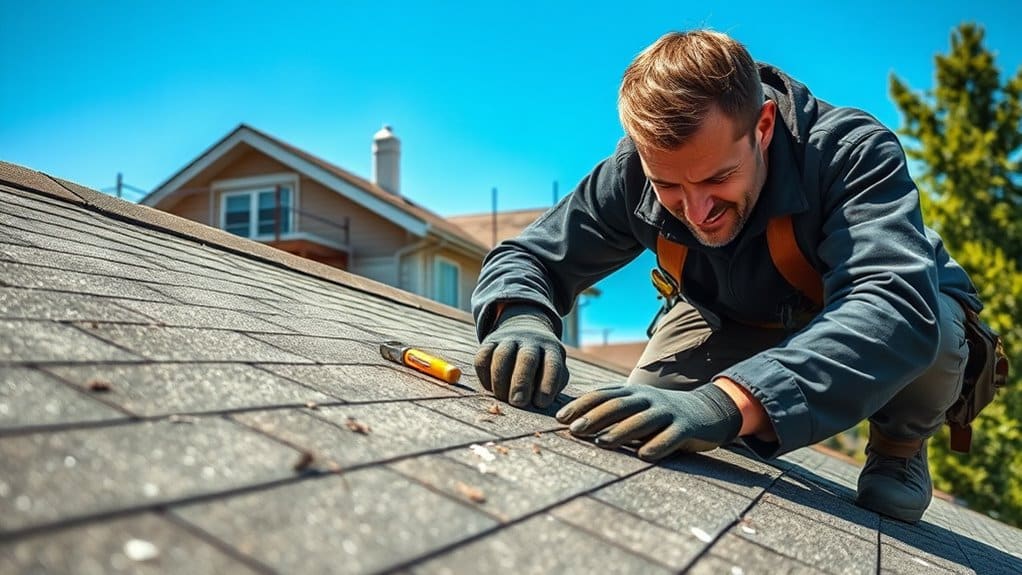
When faced with a roofing emergency, it's crucial to hire professional repairs to ensure the safety and integrity of your roof. Skilled contractors can accurately assess the damage and implement effective solutions, preventing minor issues from becoming major headaches.
Their expertise ensures repairs are carried out safely and efficiently, helping to maintain your repair warranties that could be at risk if you attempt a DIY fix.
Moreover, prompt professional assistance reduces downtime, safeguarding your property from further damage or structural issues. Many roofing companies provide 24/7 emergency services, so you can get help when you need it most.
Preparation and Prevention

To prepare for potential roof issues, conduct regular inspections to spot problems early.
Also, consider tree maintenance, such as trimming back overhanging branches, to reduce the risk of damage from falling debris.
Regular Roof Inspections
Regular roof inspections are essential for maintaining the integrity and longevity of your roofing system. They help you spot potential issues before they turn into costly repairs.
By prioritising roof maintenance, you can enjoy several benefits:
- Extend your roof's lifespan by catching minor issues early.
- Ensure compliance with warranty requirements through routine checks.
- Assess how environmental factors, like wind and snow, affect your roof's durability.
- Keep drainage systems clear by identifying blocked gutters.
Scheduling annual inspections is vital for both residential and commercial properties, particularly after severe weather events.
Hiring a professional inspector can provide valuable insights, ultimately saving you money and reducing stress by preventing premature roof replacement.
Invest in regular inspections to safeguard your property and support your community.
Tree Maintenance Strategies
Maintaining trees around your property is crucial for preventing damage to your roof and extending the life of your roofing system.
Regular tree trimming helps reduce debris build-up and lessens wear on your roofing materials. Aim to keep branches at least 3 metres away from your roof to avoid storm damage and friction on shingles.
Use proper pruning techniques to ensure both tree health and roof safety, steering clear of harmful practices like topping.
Additionally, consider fitting gutter guards and cleaning your gutters regularly to manage tree debris and ensure proper drainage.
Hiring professional arborists not only supports tree health but also evaluates structural integrity, significantly lowering the risk of branch breakage that can lead to expensive roof repairs.
Frequently Asked Questions
How Can I Find a Reliable Roofing Contractor?
To find a trustworthy roofing contractor, start by checking their qualifications and reading reviews. Ask friends or family for recommendations. Ensure they have the right licences and insurance, and take a look at their previous work to see if they can meet your needs and expectations.
Will My Homeowner's Insurance Cover Emergency Roof Repairs?
Your home insurance may cover emergency roof repairs, but this depends on the specifics of your policy. To make a successful claim, it's essential to document the damage thoroughly and understand your coverage details. For example, if a storm causes a leak, your policy might cover the repairs, but wear and tear typically won't be included. Always check your policy to ensure you're getting the most from your coverage.
What Should I Do if I Have a Roofing Emergency at Night?
If you encounter a roofing emergency at night, safety is your top priority. Here's what to do:
- Assess Hazards: Check for any immediate dangers, such as fallen debris or leaks.
- Document Damage: Take photos of any damage for insurance purposes.
- Limit Interior Issues: Move belongings away from affected areas to prevent further damage.
- Secure the Area: If safe to do so, use tarps or buckets to minimise leaks and protect your home.
- Contact Professionals: Reach out to a roofing contractor as soon as possible for assistance.
Stay calm and act decisively to protect your home.
How Long Do Emergency Roof Repairs Typically Take?
The time it takes to carry out emergency roof repairs can vary, typically influenced by the extent of the damage and weather conditions. For instance, a small leak might be fixed in a few hours, whereas significant storm damage could require a day or more. Prompt assessments and professional assistance can speed things up, helping to maintain your roof's integrity and protect your home from further issues.
Can I Perform Temporary Fixes Before Professional Help Arrives?
Yes, you can carry out temporary fixes, such as using a tarp or reattaching loose shingles, while waiting for professionals. Just ensure you prioritise safety by using stable ladders and wearing appropriate footwear to keep yourself safe during the task.
Conclusion
Roof emergencies can be daunting for homeowners. By spotting the signs early and understanding the potential costs, you can tackle these issues more effectively. Relying on professionals for repairs ensures your home remains secure against the elements. Taking preventive measures can help you avoid leaks and expensive damage before they occur. Remember, a well-maintained roof is your home's primary defence against the unpredictable British weather.


