

The Most Popular Commercial Roof Types in the UK
In the UK, flat roofs are the most popular option for commercial buildings, thanks to their cost-effectiveness and low maintenance requirements. They also provide additional usable space for HVAC systems or even rooftop gardens. Pitched roofs are another common choice, offering better drainage and a more traditional look. Green roofs are becoming increasingly popular for their sustainability benefits, such as enhanced insulation and support for biodiversity. Metal roofs are known for their durability and are favoured for their versatility and minimal upkeep. Understanding the pros and cons of each type will help you make the right choice for your needs. Dive deeper to learn more about commercial roofing options.
Key Takeaways
- Flat roofs are the most popular option for commercial buildings in the UK, thanks to their cost-effectiveness and straightforward maintenance.
- Green roofs are becoming more popular due to their environmental benefits, such as enhanced insulation and support for urban wildlife.
- Pitched roofs are often preferred for traditional buildings, offering better drainage and visual appeal for many commercial properties.
- Metal roofs are increasingly selected for their robustness, low upkeep, and resistance to severe weather.
- Low-sloped roofs are frequently used in industrial settings as they provide effective drainage while remaining budget-friendly.
Overview of Commercial Roof Types
When considering commercial roofs, it’s important to know the different types available, each with its own features to suit specific needs.
Flat roofs are the most popular due to their affordability and easy maintenance. They fit well with modern architectural styles and can accommodate additional rooftop spaces like gardens or solar panels. Green roofs are a sustainable option that enhances insulation while contributing to urban biodiversity. These roofs are often constructed with high-quality waterproofing membranes to ensure longevity and prevent leaks.
Pitched roofs, on the other hand, provide better drainage and are often more visually appealing, making them ideal for traditional buildings.
Low-sloped roofs, similar to flat roofs, also aid drainage and are frequently used in industrial settings.
Metal roofs are notable for their durability and versatility, becoming increasingly sought after as roofing technology evolves.
Green roofs, which focus on sustainability, are gaining popularity as businesses look for eco-friendly options that offer natural insulation and aesthetic value.
The materials for these roofs vary, including PVC and TPO for single-ply systems, and EPDM for flat roofs, each presenting specific benefits.
Benefits of Flat Roofs
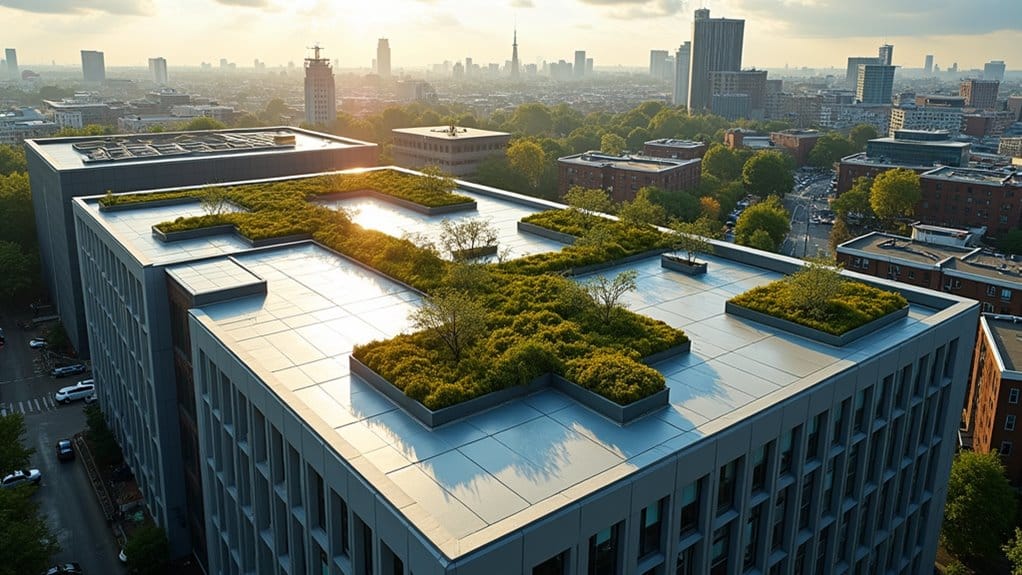
Flat roofs provide numerous benefits, making them an excellent choice for commercial buildings.
Their cost-effective installation helps lower initial expenses, while the flat design creates additional usable space for equipment and leisure areas. Additionally, the lower construction costs associated with flat roofs can be particularly beneficial for businesses looking to maximize their budget. Furthermore, flat roofs typically have a lower average cost for replacement compared to pitched roofs, allowing businesses to allocate funds more efficiently.
Moreover, incorporating green technologies like solar panels can boost energy efficiency and promote sustainable practices.
Cost-Effective Installation
A cost-effective installation is one of the key advantages of flat roofs, making them a popular option for commercial properties in the UK. Flat roofs generally have lower upfront costs due to their simpler structural requirements and reduced materials. This not only lowers initial expenses but also leads to long-term savings through decreased maintenance and repair needs. Additionally, flat roofs can last up to 15 to 30 years with proper maintenance, which enhances their value over time.
Here are some notable benefits of flat roof installations:
- Lower installation costs compared to pitched roofs.
- Simpler framing means less structural complexity.
- Reduced materials cut overall project costs.
- Quick installation processes save on labour expenses.
- Easier maintenance translates to lower long-term costs.
The flat design allows for straightforward inspections, enabling early detection of any issues. Additionally, materials like single-ply membranes are easy to clean and inspect, which can enhance their lifespan. Furthermore, flat roofs are popular in the UK due to their cost-effectiveness, making them a reliable choice for various commercial applications.
If you’re considering a commercial roof, choosing a flat design offers significant cost savings during installation, along with an efficient and low-maintenance solution that pays off over time.
Increased Usable Space
Maximising usable space is a key benefit of flat roofs in commercial buildings. With their functional design, you can effectively use roof space for various applications that enhance your property’s value.
Flat roofs simplify structural requirements, allowing for lightweight materials that reduce strain on the building and facilitate easier installation and future modifications. This design choice also contributes to the durability of flat roofs, enabling them to withstand severe weather conditions. Additionally, flat roofs can be an eco-friendly option, as they often support green roofs that improve insulation and reduce urban heat.
You can place HVAC systems directly on the roof, optimising your heating and cooling solutions. Additionally, flat roofs serve as an excellent platform for solar panel installations, improving energy efficiency.
If you’re considering recreational options, transforming your roof into a rooftop garden or patio creates a pleasant space for employees or clients.
Moreover, flat roofs can support green roofs, which provide natural insulation and offer ecological benefits. You can also utilise this space for additional storage, maximising your building’s functionality.
The versatility of flat roofs allows them to adapt to various uses, making them a smart investment for commercial properties aiming to make the most of every square foot.
Green Technology Integration
When considering modern commercial roofing solutions, integrating green technology into flat roofs offers significant advantages. These roofs aren’t only cost-effective but also serve as a base for sustainable systems that boost energy efficiency and minimise environmental impact. By using eco-friendly materials, you can significantly lower your carbon footprint while enhancing overall performance. Additionally, the installation of solar panels, similar to the project at a concrete roof tile factory, showcases how flat roofs can enhance operational sustainability.
Here are some key benefits of incorporating green technology into flat roofs:
- Solar Panels: Simple to install and maintain on flat surfaces.
- Green Roofs: Promote vegetation, providing natural insulation and reducing heat loss.
- Rainwater Harvesting: Collects and stores rainwater efficiently for reuse.
- Thermal Insulation: High-performance insulation materials can be easily added.
- Energy Savings: Reflective roofing materials can help reduce cooling costs.
Flat roofs also facilitate easier maintenance, allowing straightforward access to systems needing regular attention. Additionally, they can be constructed with high durability to withstand various weather conditions, ensuring long-term performance and reliability.
Embracing green technology not only boosts your building’s sustainability but also positions it as an innovative asset in a competitive market.
Consider the advantages of flat roofs today for a more sustainable future.
Challenges of Flat Roofs
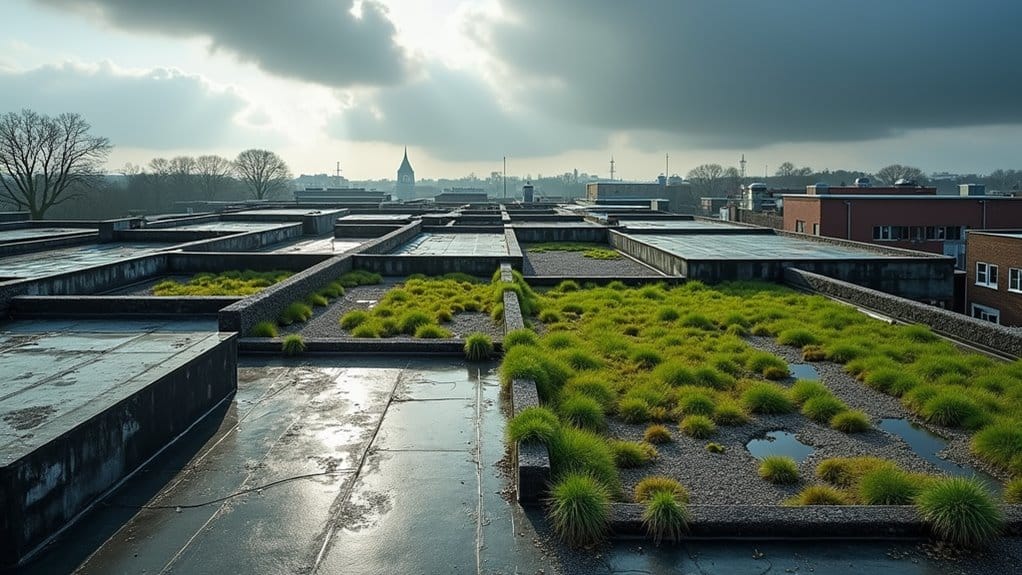
Flat roofs present several unique challenges that need careful attention to ensure their durability and efficiency. A significant concern is water accumulation due to their minimal pitch. Without effective drainage, standing water can lead to leaks and structural damage. If not installed or maintained properly, flat roofs are more prone to leaks, making regular maintenance crucial.
Material deterioration is another issue, as roofing materials can degrade over time, particularly when exposed to stagnant water. To address these risks, ensure your flat roof has a slight slope for proper drainage and choose robust materials such as EPDM, PVC, or TPO. Proper installation is essential, along with adherence to local building regulations to avoid future issues.
While flat roofs may have lower initial costs, they can result in higher long-term expenses due to frequent repairs and maintenance. Therefore, investing in regular inspections can prevent early deterioration and prolong the life of your flat roof.
Being aware of these challenges helps you make informed decisions and maintain a reliable roofing system for your commercial property.
Advantages of Pitched Roofs

Pitched roofs are a popular choice for commercial buildings, offering numerous advantages. One of the primary benefits is their effective water drainage, which significantly reduces the risk of leaks and water damage. They also enhance the overall aesthetics of your building while providing practical features.
Here are some key advantages to consider:
- Improved ventilation: Pitched roofs promote better airflow in loft spaces, reducing moisture build-up and improving air quality.
- Extra attic space: The design allows for additional storage or even office areas, making the most of available space.
- Design flexibility: With styles such as gable, hip, and gambrel, pitched roofs can complement a variety of architectural designs.
- Durability: They withstand harsh weather conditions, including strong winds and heavy snowfall, leading to lower maintenance costs.
- Energy efficiency: When properly insulated, pitched roofs minimise heat loss, which can help lower energy bills.
These features make pitched roofs a dependable choice for commercial properties, combining functionality with an appealing look that ensures your building remains attractive and resilient for years to come.
Common Materials for Pitched Roofs
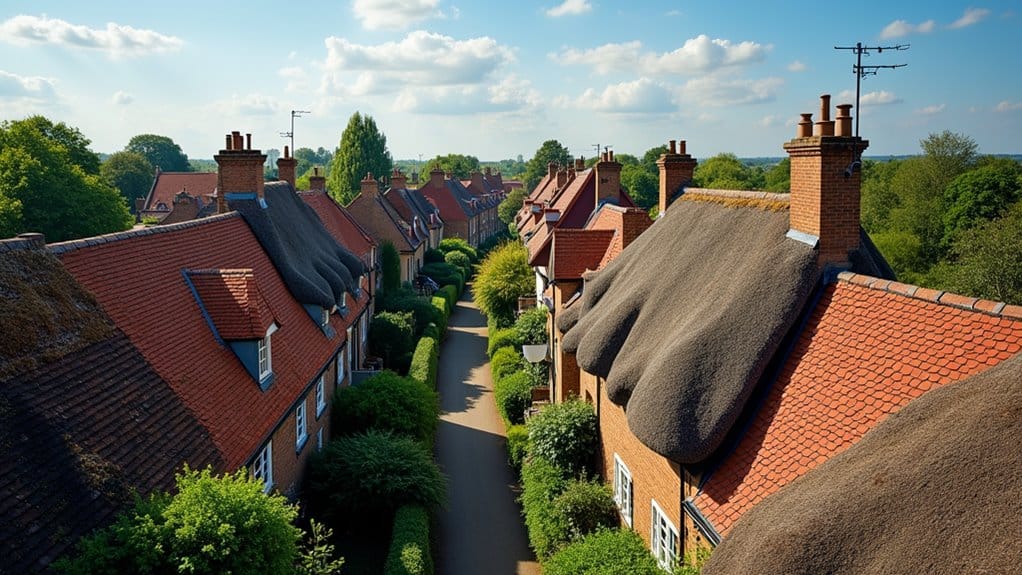
Pitched roofs offer both aesthetic charm and structural benefits, but selecting the right materials is crucial for optimal performance and durability. The choice of material significantly affects maintenance and insulation options.
Here’s a quick overview of common materials for pitched roofs:
| Material | Key Characteristics |
|---|---|
| Slate | Extremely durable with a lifespan of up to 100 years; requires professional installation. |
| Clay Tiles | Traditionally attractive and affordable; available in various styles. |
| Concrete Tiles | Sturdy, cost-effective, and water-resistant; relatively easy to install but heavier than other options. |
| Metal Panels | Versatile, fire-resistant, and can handle various weather conditions well. |
| EPDM | Primarily for flat roofs but can be adapted for pitched roofs with careful planning. |
Each material has its advantages and disadvantages. Slate is long-lasting, while clay tiles add a classic touch. Concrete tiles are budget-friendly but require adequate structural support, and metal panels are quick to fit. EPDM, though not common for pitched applications, is flexible and economical. Be sure to consider maintenance, as different materials will demand varying levels of care to ensure longevity and performance.
Exploring Single-Ply Membranes

When considering single-ply membranes for your commercial roofing needs, you’ll discover several benefits, such as straightforward installation and excellent waterproofing capabilities.
It’s vital to grasp the installation process to ensure the roof’s longevity and performance.
Moreover, assess the environmental impact of your selected materials to meet your sustainability objectives.
Advantages of Single-Ply
Single-ply membranes are a strong roofing solution for commercial buildings, offering durability and cost-effectiveness. Opting for a single-ply system comes with several advantages that make it a smart choice for your project.
Here are some key benefits of single-ply membranes:
- Durability: They provide long-lasting protection against various weather conditions.
- Cost-Effectiveness: Installation costs are generally lower compared to other roofing options.
- Ease of Maintenance: Regular inspections and maintenance can help keep long-term costs down.
- Versatility: These membranes can complement a range of architectural styles and building types.
- Leak Resistance: Their seamless installation significantly reduces the risk of leaks and water damage.
You can also enhance thermal efficiency by adding high R-value insulation layers.
Additionally, single-ply membranes can often be installed over existing roofs, thanks to their lightweight nature, which reduces structural load and makes installation easier.
Installation Process Overview
An efficient installation process is crucial for the durability and performance of single-ply membranes. Begin by preparing the roof deck, ensuring it is clean, dry, and free from contaminants. Check existing roofs for any defects or old adhesive residue, particularly with TPO membranes, which need thorough cleaning before welding. Proper ventilation during installation is key for long-term performance.
In the UK, PVC is the most popular membrane, followed by TPO and EPDM, each requiring specific installation techniques. Here’s a quick summary:
| Membrane Type | Installation Technique | Key Considerations |
|---|---|---|
| PVC | Hot air welding | Ensures strong seams |
| TPO | Hot air welding | Requires thorough prep |
| EPDM | Ballasting | Offers fire resistance |
| Adhesive-backed | Simplified installation | Quick and efficient |
| Mechanically attached | Suitable for large systems | Strong and secure |
Environmental Impact Considerations
Understanding the environmental impact of single-ply membranes is crucial for making informed roofing choices.
These roofing options present several advantages, particularly regarding sustainability and material recyclability. Here are the key factors to consider:
- Durability: Single-ply membranes such as TPO and PVC can last between 20 to 30 years, which reduces the frequency of replacements.
- Recyclability: TPO and PVC are partially recyclable, aiding in waste reduction efforts.
- Energy Efficiency: Reflective coatings and excellent thermal resistance can significantly lower energy consumption.
- Harmful Substances: PVC and EPDM may emit toxic substances during production and disposal, necessitating careful management.
- End-of-Life Options: It’s vital to employ proper disposal methods for these materials to minimise environmental impact.
Features of Metal Roofs
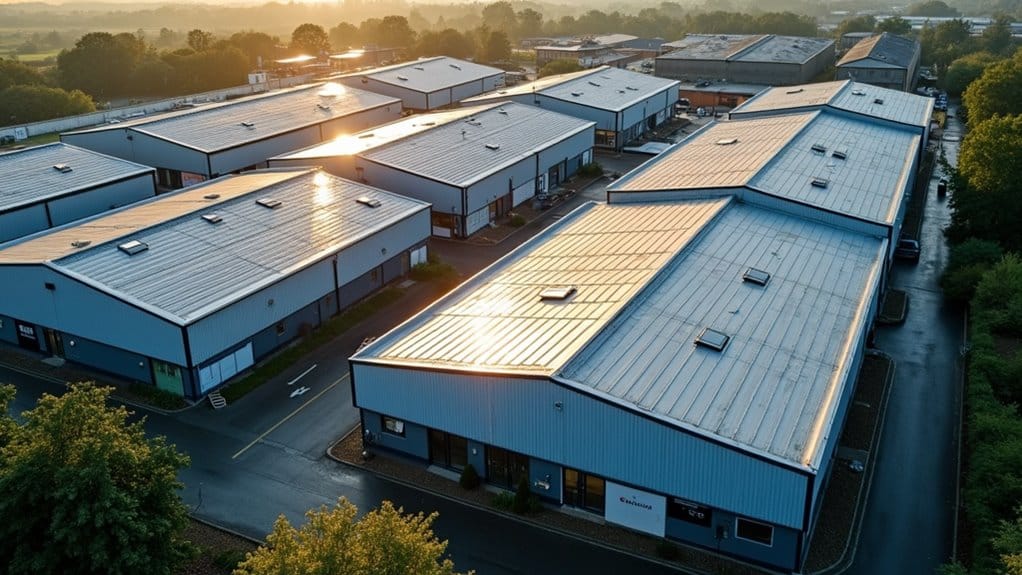
Metal roofs are increasingly popular for commercial buildings due to their numerous advantages. Available in materials like steel, aluminium, and copper, you can choose what best suits your needs. They come in various styles, allowing you to achieve the aesthetic you want while enjoying the benefits of metal roofing.
Installation options include standing seams and corrugated panels, providing flexibility in design. Metal roofs complement a range of architectural styles, making them versatile for different projects. They’re built to endure harsh weather conditions, such as fire, wind, and hail, ensuring reliability and safety.
With low maintenance requirements, they help keep ongoing costs down. You also have the option to customise your roof, whether you’re aiming for a modern or traditional look.
Furthermore, metal roofs can accommodate solar panels and other equipment, enhancing their functionality. Choosing a metal roof means investing in a durable and resilient solution for your commercial property that meets both practical and aesthetic needs.
Benefits of Green Roofs
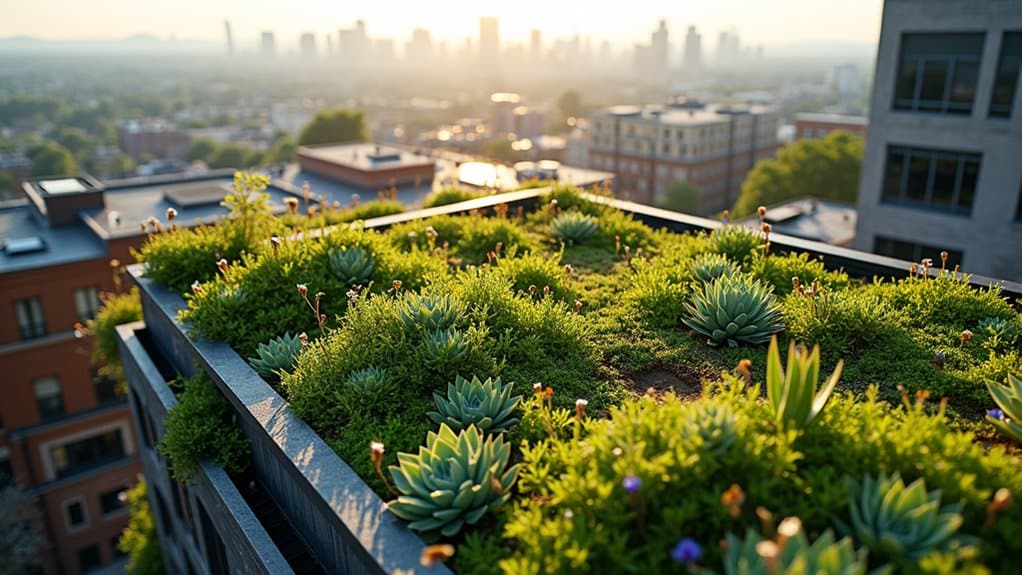
While metal roofs are known for their durability and aesthetic appeal, green roofs offer a unique set of benefits that address both environmental and economic concerns. A primary advantage of green roofs is their ability to boost urban biodiversity and improve cooling efficiency. They create habitats for various species, which is vital for maintaining a healthy ecosystem in our crowded cities.
Here are some key benefits of green roofs:
- Carbon sequestration: They absorb carbon dioxide, helping to combat climate change.
- Improvement of air quality: Plants filter out pollutants, resulting in cleaner air for everyone.
- Reduction of urban heat islands: Green roofs absorb solar radiation, lowering temperatures in built-up areas.
- Water management: Their soil layers effectively manage rainwater runoff, minimising flood risks.
- Thermal insulation: The combination of soil and vegetation reduces heat gain and loss, improving energy efficiency.
Integrating green roofs into your building design not only benefits the environment but can also lead to significant savings on cooling costs and enhance property values.
Choosing green roofs is a step towards investing in a sustainable and multifunctional asset for our urban spaces.
Asphalt Roofs: Pros and Cons

Asphalt roofs, made from a fibreglass or felt paper base coated with asphalt and finished with stone granules, are a popular choice for both residential and commercial properties.
One of their key benefits is excellent waterproofing, safeguarding your building from rain and snow. They also offer aesthetic appeal, available in various colours and styles to fit different architectural designs. Additionally, their lower initial cost makes them attractive for budget-conscious projects.
However, there are drawbacks to consider. Asphalt roofs typically last between 15 to 20 years and often require more frequent repairs than other materials, which can lead to higher maintenance costs in the long run. They may also struggle in extreme weather conditions and are generally less durable than options like slate or metal.
For optimal performance, proper installation is crucial, ensuring adequate layering and sealing. Regular inspections are also essential to identify any damage early on.
The Durability of Slate Roofs

Understanding the durability of slate roofs is crucial when considering your roofing options. Slate roofs are renowned for their longevity, typically lasting between 50 to 200 years. Their durability is influenced by several important factors:
- Quality of Slate: Hard slates, such as Welsh and Spanish, tend to outlast softer varieties.
- Environmental Conditions: Drier climates can improve durability by minimising freeze-thaw cycles.
- Roof Pitch: Steeper roofs effectively shed water, which can enhance lifespan.
- Installation Quality: Proper installation and underlayment are vital for the longevity of slate roofs.
- Maintenance Practices: Regular inspections and timely repairs can significantly extend your roof’s life.
Choosing slate means investing in a material that far exceeds the lifespan of asphalt shingles (15-30 years) and cedar shingles (25-50 years).
Many historical buildings still showcase their original slate roofs, highlighting the material’s resilience.
However, the longevity of your slate roof relies heavily on the quality of the slate and the installation process. By prioritising these aspects, you can ensure your slate roof remains a durable and dependable choice for many years.
Choosing the Right Roof Type

When considering roofing options, it’s essential to evaluate not only durability—such as that offered by slate roofs—but also how different types suit your building’s needs.
Start by assessing your budget; for instance, flat roofs are generally more affordable, with installation costs between £25 and £60 per square metre, while pitched roofs, although more expensive, tend to last longer.
Drainage and weather resistance are also crucial factors. Pitched roofs are designed for efficient water runoff, reducing the likelihood of leaks, whereas flat roofs require regular inspections to prevent water pooling.
Metal roofs are highly durable against severe weather, and green roofs provide insulation and enhance aesthetics through greenery.
Maintenance is another consideration. Metal roofs need minimal upkeep, while TPO and EPDM roofs require regular checks to ensure they remain in good condition.
If sustainability matters to you, green roofs offer good insulation options but require specific care to keep the plants thriving.
Ultimately, ensure the roof type aligns with your building’s design and purpose, confirming it meets structural integrity standards and supports your long-term objectives.
Making an informed choice will improve your building’s performance and longevity.
Frequently Asked Questions
What Is the Average Lifespan of Commercial Roofing Materials?
The average lifespan of commercial roofing materials varies from 15 to 100 years. When assessing roofing options, it’s important to weigh the cost against longevity to ensure you select the best material for your project. For instance, while a cheaper option may save you money upfront, it could require replacement sooner, leading to higher long-term costs.
How Do I Choose a Roofing Contractor for Installation?
Choosing a roofing contractor is akin to selecting a knight for an important quest. You need to carefully assess their qualifications, ensure they can meet deadlines, and check their experience, insurance, and references before making a commitment. Look for contractors with a solid reputation and positive reviews, just as you would seek a knight known for their bravery and skill. This way, you can have confidence that your roofing project will be in capable hands.
What Are the Maintenance Requirements for Different Roof Types?
To maintain your roof, arrange regular inspections to catch any issues early. Follow these maintenance tips: clean out gutters and downpipes, check for any signs of damage, and ensure proper waterproofing. This will help extend your roof’s lifespan and prevent expensive repairs down the line.
Are There Financing Options Available for Commercial Roofing Projects?
Yes, there are various financing options available for commercial roofing projects in the UK. You might consider government loans, eco-friendly schemes, and tax reliefs to help with your budgeting. For instance, the Green Homes Grant could support energy-efficient upgrades, reducing your initial expenditure while enhancing sustainability.
How Do Local Climate Conditions Affect Roof Choice?
Not all roofs are created equal; local climate plays a crucial role in your selection. In the UK, consider insulation and weather resistance to ensure durability, particularly in areas that experience heavy rain or significant temperature fluctuations. For instance, if you live in a coastal region, a roof that can withstand salt corrosion is essential. In contrast, homes in colder areas might benefit from roofs designed to handle snow loads effectively. Choose wisely to protect your home for years to come.
Conclusion
When selecting a commercial roof type for your building, it’s important to consider the long-term advantages and challenges of each option. Flat roofs, for instance, account for nearly 30% of commercial roofs in the UK, largely due to their cost-effectiveness and efficient use of space. However, it’s crucial to balance these benefits with potential maintenance issues that may arise. By assessing your specific needs and understanding the unique features of each roof type, you can make a well-informed choice that fits your goals and budget.


