

Understanding Roof Repair Warranties in the UK
Understanding roof repair warranties in the UK involves recognising the different types and their specific coverage. There are manufacturer warranties, which cover defects in materials, and workmanship warranties, which focus on the quality of the installation. Regular maintenance is key to keeping these warranties valid and protecting your investment from unexpected expenses.
It's important to note common exclusions, such as damage from severe weather or neglect. Being aware of the necessary documentation for claims is also crucial. By understanding these elements, you can better protect your property's roof and ensure you're covered when issues arise.
Key Takeaways
Roof repair warranties in the UK generally include two types: manufacturer's warranties, which cover material defects, and workmanship warranties, which address installation errors.
To keep your warranty valid and extend the life of your roof, regular maintenance is essential. For instance, clearing debris and checking for signs of wear can prevent small issues from becoming costly repairs.
It's important to understand the specifics of your warranty, including exclusions. For example, many warranties do not cover damage from natural disasters or neglect. Being aware of these details can help you avoid unexpected costs.
Legal aspects, such as adherence to UK building regulations, are also crucial when making a warranty claim. Ensure that any work done complies with these standards to avoid complications.
If you're considering an extended warranty, keep in mind that it may provide extra protection but could come with a higher price tag. Weighing your options will help you make a well-informed choice.
What Is a Roof Repair Warranty?
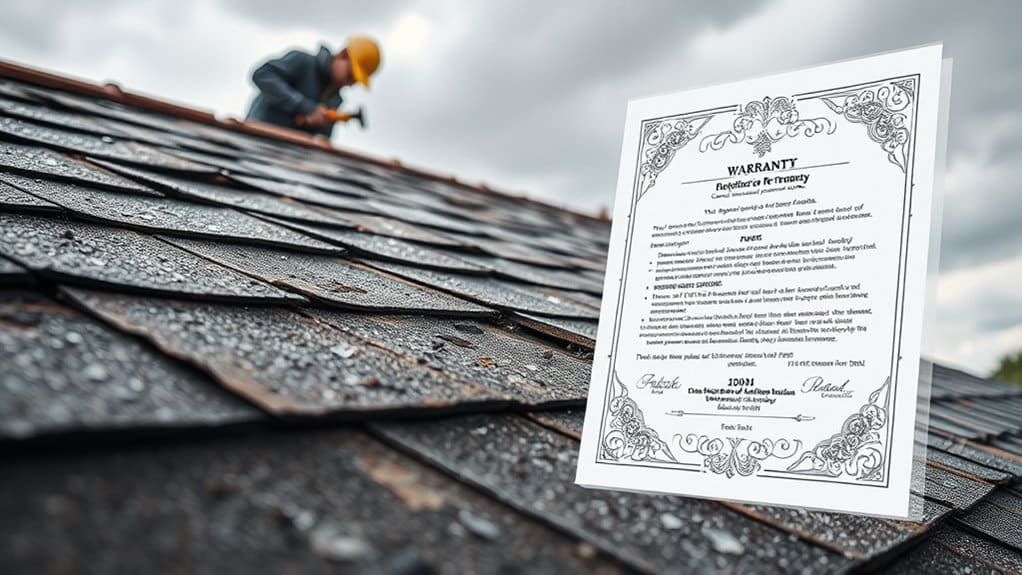
A roof repair warranty is an assurance that certain repairs or material replacements will be covered, providing you with financial reassurance. It protects you from unexpected issues that may occur after installation, preventing you from facing surprise repair bills. These warranties usually cover defects in materials and workmanship, adding value to your property. Manufacturers warranties typically cover defects in roofing materials for a duration of 20 to 50 years, depending on the type and quality of materials used. However, be aware of exclusions, such as damage from natural disasters or neglecting proper roof maintenance, which can void your warranty. Regular maintenance is crucial for maintaining warranty validity, ensuring your roof remains in optimal condition and protecting your investment.
To make the most of your warranty, keep thorough documentation and follow maintenance guidelines. This way, you can protect your investment and ensure long-term security for your home.
Types of Roof Warranties Available
Understanding the various types of roof warranties can significantly protect you from unexpected repair costs. There are several types of warranties, each addressing different concerns.
Manufacturer's warranties cover defects in materials such as tiles and slates, typically lasting between 20 years to a lifetime. It is important to note that warranties may vary in their terms and conditions, so thorough examination is crucial.
Workmanship warranties, on the other hand, focus on installation issues, covering problems like leaks and errors, usually lasting from 1 to 10 years.
For comprehensive coverage, consider system warranties, which include both materials and installation, although they often require using products from a single manufacturer.
Extended warranties provide additional protection but come at a higher cost. Comparing these warranty options will help you find the best fit for your roofing needs, giving you peace of mind.
Coverage Provided by Roof Warranties

When considering roof warranties, focus on two main aspects: protection against defective materials and coverage for installation errors.
Manufacturer warranties usually cover issues like premature wear or structural defects in roofing materials, while workmanship warranties tackle problems caused by poor installation methods. Extended warranties can also provide additional coverage for both materials and installation, enhancing your protection further. Understanding the coverage details of these warranties is crucial to ensure your investment is well protected.
For example, if a roof starts leaking due to faulty materials, the manufacturer warranty should cover it. Understanding these components is crucial to ensure your investment is well protected.
Defective Material Protection
Defective material protection is a vital part of roof warranties, ensuring that homeowners are covered against manufacturing defects in roofing materials. This protection specifically focuses on issues with shingle quality and tile durability, offering reassurance.
Key points of defective material protection include:
- Shingle defects: Covers premature cracking or loss of granules.
- Tile defects: Protects against manufacturing faults that cause wear.
- Material failure: Includes defects in underlayment or accessories.
- Algae and mould resistance: Typically provides coverage for a set period.
It's important to understand the details of your warranty, as different materials may have distinct coverage terms. Additionally, certain roofing materials, such as natural slate, often come with longer warranties due to their durability and longevity.
Regular inspections and proper maintenance can help keep your warranty valid, ensuring you feel confident in your roofing investment.
Installation Error Coverage
Roof warranties not only cover defective materials but also provide essential protection against installation errors. This means your warranty can safeguard you from leaks or other problems caused by poor installation. It's crucial to familiarise yourself with the specific installation guidelines and exclusions, as this knowledge can help avoid disputes over your warranty. Regular maintenance and inspections can extend roof lifespan, ensuring your warranty remains valid.
| Coverage Aspect | Details | Duration |
|---|---|---|
| Workmanship Warranty | Covers installation errors like leaks | 1 to 10 years |
| Contractor Responsibility | Must address issues within warranty period | Varies by agreement |
| Exclusions | Improper maintenance, natural disasters | Common exclusions |
| Documentation | Keep records for a smooth claims process | Essential for claims |
Regular inspections can also help ensure your warranty remains valid.
Importance of Regular Roof Maintenance

Regular roof maintenance is crucial for maintaining your warranty and avoiding expensive repairs.
By carrying out routine inspections, you can spot problems early, like cracks or debris, before they turn into major issues.
This proactive approach not only prolongs the life of your roof but also protects your investment from unexpected costs.
For instance, a small leak left unchecked can lead to significant water damage, which is far more costly to fix. Additionally, regular inspections ensure optimal roof performance and help identify air leaks that can impact energy efficiency.
Warranty Validity Maintenance
Many homeowners underestimate the importance of regular maintenance, but it's crucial for keeping roof warranties valid and intact.
Following maintenance schedules is essential, as most warranties require consistent upkeep. This proactive approach not only helps spot potential issues early but also reduces risks linked to the UK's damp climate, which can cause moss growth and affect the structure of your roof.
Here are some key benefits of routine maintenance:
- Prolongs the life of roofing materials
- Ensures compliance with legal and safety regulations
- Prevents major structural damage
- Lowers the chances of expensive repairs
Costly Repairs Prevention
To avoid costly repairs, it's vital to prioritise regular roof maintenance. Conducting routine inspections allows you to spot early signs of wear, such as rust or gaps, and enables prompt repairs before they escalate into significant issues.
This proactive approach not only improves your roof's ability to withstand weather but also extends the life of your roofing materials, ultimately saving you money. Ignoring maintenance can turn small problems into major headaches, particularly with issues like moss growth.
By committing to seasonal inspections and professional cleaning, you help preserve your roof's structural integrity and minimise the risk of leaks.
In the end, investing in regular maintenance protects your property and ensures it remains a strong barrier against the elements.
Legal Considerations for Homeowners

When navigating roof repair warranties in the UK, it's essential for homeowners to understand their legal rights and responsibilities.
Here are the key considerations:
- Ensure compliance with UK building regulations to guarantee safety and quality.
- Check if planning permission is needed for any alterations.
- Follow waste disposal and noise regulations during the repair process.
- Maintain thorough documentation to support any warranty claims.
How to Choose the Right Warranty

When selecting the right warranty, begin by assessing your needs regarding the length and type of coverage.
Consider the reputation of potential contractors, as their skill can greatly affect both the quality of the installation and the reliability of the warranty.
For instance, if you're installing a new roof, it's wise to choose a contractor with positive reviews and a solid track record.
Assess Your Needs
Selecting the appropriate roof repair warranty involves assessing your individual needs.
Begin by looking at the types of warranties on offer, such as manufacturer's, workmanship, system, and extended warranties. Each type has its own features that may suit your roofing materials and installation methods.
When comparing warranties, keep these key points in mind:
- Coverage: Ensure it includes protection against material defects and installation errors.
- Duration and Transferability: Check how long the warranty lasts and if it can be passed on to future owners.
- Exclusions: Be aware of any exclusions that might lead to unforeseen costs.
- Maintenance Requirements: Understand what maintenance is necessary to keep the warranty valid.
Evaluate Contractor Reputation
Evaluating a contractor's reputation is crucial for ensuring quality roof repairs and securing a dependable warranty. Here are some key criteria to consider during your selection process:
| Evaluation Criteria | Importance | How to Verify |
|---|---|---|
| Licences and Insurance | Confirms the contractor's legitimacy | Request copies of their documents |
| Past Projects and Reviews | Assesses work quality and client satisfaction | Check online reviews and customer testimonials |
| Industry Accreditations | Verifies compliance with industry standards | Look for affiliations with relevant trade organisations |
Understanding Manufacturer's Warranties
Understanding manufacturer's warranties is crucial for homeowners wanting to safeguard their roofing investment.
These warranties generally last from 10 to 30 years and cover material defects under standard conditions, but not installation mistakes.
Here are some key points to consider:
- Compare warranties from different manufacturers to find the best option.
- Look at material-specific coverage based on your chosen roofing type.
- Be aware of exclusions, such as damage from natural disasters or lack of proper maintenance.
- Consider the transferability of the warranty, as this can impact your property's resale value.
Workmanship Warranties Explained
Workmanship warranties are vital for protecting homeowners from installation-related problems that can occur after a new roof is fitted. They cover issues like leaks caused by improper installation, ensuring that contractors rectify these problems at no extra cost to you. Here's a brief overview of their significance:
| Aspect | Details | Importance |
|---|---|---|
| Coverage | Leaks from poor installation | Protects against financial loss |
| Duration | 1 to 10 years | Offers assurance of quality work |
| Maintenance Requirements | Regular inspections necessary | Validates warranty claims |
Understanding the importance of a workmanship warranty prepares you for the claims process, helping to maintain your roof's integrity and longevity. Always review the terms and keep records to support any claims you may need to make.
Extended Warranty Options for Homeowners
When exploring roofing options, extended warranties can significantly bolster your protection against potential issues.
These warranties provide extensive coverage for materials and workmanship, making them particularly beneficial for homeowners in areas prone to severe weather.
Here are some essential warranty comparison tips:
- Ensure you have clear and detailed documentation of the coverage and terms.
- Check if you can customise the coverage to suit your specific requirements.
- Look into the transferability options for future buyers of your home.
- Think about the long-term savings from avoiding unexpected repair expenses.
Common Exclusions and Limitations
Roof repair warranties can offer valuable protection, but it's essential for homeowners to understand the common exclusions and limitations. Many misconceptions can lead to unexpected expenses.
For instance, damages caused by extreme weather, lack of maintenance, or unauthorised alterations are typically not covered. Normal wear and tear is also usually excluded from warranty provisions.
Moreover, while material defects may be addressed, installation mistakes generally fall outside the warranty's scope. It's crucial to grasp the claims process, as filing a claim often requires specific documentation and proof of maintenance.
Keep in mind that warranty terms can vary significantly depending on the contractor, so it's wise to read the fine print carefully. Staying informed will help ensure your warranty provides the protection you need.
The Role of Documentation in Warranty Claims

Proper documentation is crucial for effectively managing warranty claims, as it provides a clear record of adherence to warranty terms.
Recognising the importance of this documentation can significantly streamline the claims process. Here are the key elements you should keep:
- The warranty agreement, detailing coverage and duration
- Comprehensive logs of maintenance and inspections carried out
- Supporting evidence, such as photographs and inspection reports
- Up-to-date contact information for warranty providers
For instance, if you've had regular servicing on your car, keeping a detailed log and receipts will strengthen your claim if an issue arises.
Frequently Asked Questions
Are Roof Repair Warranties Transferable to New Homeowners?
Yes, roof repair warranties can be transferred to new homeowners, provided you follow certain transfer rules. Understanding your rights as a homeowner can ensure a seamless transition, which may even boost your property's value. For instance, if you sell your house and the warranty is still valid, the new owner can benefit from it, making your home more appealing in the market.
How Do I File a Warranty Claim for Roof Repairs?
Did you know that 30% of warranty claims are rejected due to inadequate documentation? To successfully handle your claim, ensure you collect all relevant warranty documents and submit them to your provider without delay.
What Happens if My Roofing Contractor Goes Out of Business?
If your roofing contractor goes out of business, you may lose warranty coverage. It's important to check what obligations the contractor has and consider options like Insurance Backed Guarantees or collateral warranties to protect your investment. For example, an Insurance Backed Guarantee can ensure that your roof is still covered even if the contractor is no longer trading.
Can I Void My Warranty by Changing Roofing Materials?
Changing roofing materials can void your warranty, much like using the wrong fuel in a car. It's essential to check with your manufacturer before making any changes to ensure compatibility and keep your warranty intact.
Are There Specific Requirements for Roof Inspections Under the Warranty?
Yes, there are specific requirements for roof inspections under your warranty. You must follow the inspection frequency set by the manufacturer and keep detailed records of each inspection to ensure your warranty stays valid. For example, if the manufacturer requires inspections every six months, make sure you schedule them accordingly and document any findings. This will help protect your investment and ensure any potential issues are addressed promptly.
Conclusion
In the UK, understanding roof repair warranties is crucial for protecting your investment. It's surprising to learn that around 20% of homeowners encounter unexpected roof problems within five years of installation. By knowing the different types of warranties, what they cover, and the importance of keeping proper documentation, you can avoid common pitfalls. Regular maintenance not only extends your roof's life but also ensures your warranty remains valid. Stay informed and proactive to safeguard your home and finances.


