
Common Mistakes During Roof Replacement Projects
During roof replacement projects, several common mistakes can arise. Poor planning and insufficient communication with contractors may lead to delays. Installation errors, such as incorrect nailing or misaligned flashing, often result in leaks. Overlooking manufacturer guidelines could void warranties, while ignoring local building regulations can create compliance issues. Moreover, using substandard materials and failing to ensure adequate ventilation can lead to long-term problems. Being aware of these pitfalls is crucial for a successful project, and there's plenty more to learn.
Key Takeaways
- Insufficient planning can cause delays, inflate costs, and create mismatched expectations with contractors.
- Disregarding manufacturer guidelines and local building regulations risks voiding warranties and jeopardising roof stability.
- Employing unqualified contractors might result in poor workmanship and potential legal issues later on.
- Overlooking regular inspections and maintenance can lead to serious problems such as mould growth and structural damage.
- Opting for low-quality materials to save money in the short term often results in frequent repairs and higher costs in the long run.
Improper Planning and Preparation

When replacing a roof, poor planning and preparation can seriously hinder the project, leading to expensive delays and frustration.
It's crucial to thoroughly check the contractor's credentials; hiring inexperienced roofers can jeopardise your project's success. Ensure they've the necessary licences and insurance to protect yourself from potential liabilities. Additionally, hiring an experienced roofing contractor can help prioritize the permit acquisition to avoid potential penalties. A well-chosen contractor can enhance overall project success by ensuring compliance with industry standards and regulations.
Obtaining the required permits before starting work is equally important to avoid fines and interruptions. Ignoring local building regulations and neighbourhood agreements can lead to legal issues that may stall your project.
Maintain clear communication with your contractor regarding expectations and compliance to ensure a smooth process.
Installation Errors
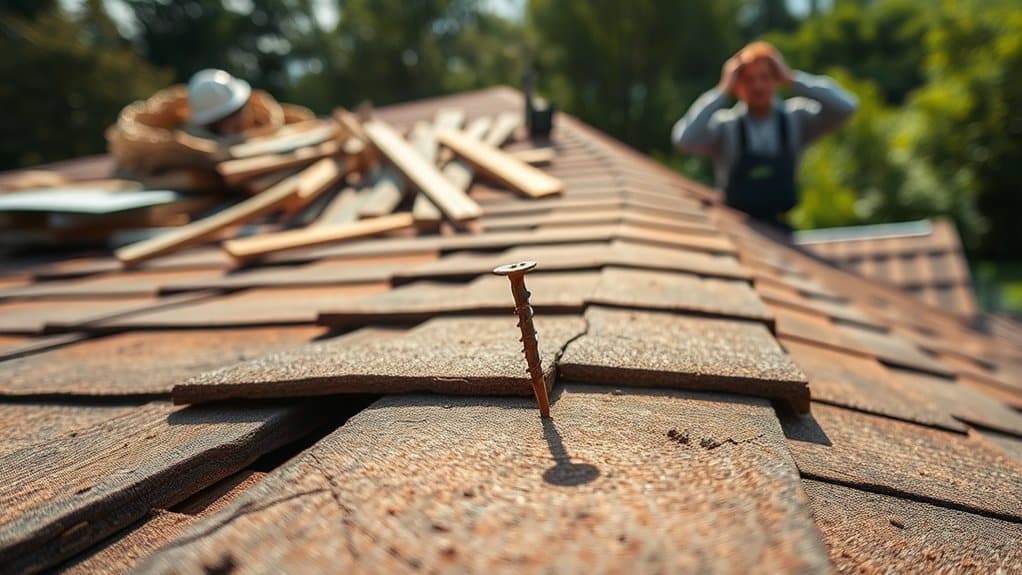
Installation errors during a roof replacement can lead to serious issues, such as leaks, structural damage, and expensive repairs.
Problems with underlayment, like improper fitting, can let moisture into your roof, significantly shortening its lifespan. If the flashing isn't aligned correctly, gaps can form that allow water to seep in, jeopardising the structural integrity of your home. Additionally, new flashing ensures proper water redirection and prevents leaks, which is essential for maintaining a watertight seal. Regular maintenance of flashing systems is essential to prevent water damage.
Mistakes with shingles, such as incorrect nailing or poor sealing, can cause leaks that threaten your safety.
Ventilation issues due to inadequate airflow can result in excess moisture and mould growth, further reducing the lifespan of your roof. Implementing effective ventilation strategies is crucial for maintaining indoor comfort.
Lastly, valley installation must be spot on; incorrect angles can direct water flow improperly, leading to leaks.
It's crucial to address these installation errors to ensure your roof remains durable and effectively protects your home.
Ignoring Manufacturer Guidelines
Ignoring manufacturer guidelines during roof replacement can void your warranty and cause major compatibility issues with materials. For instance, if you overlook ventilation requirements, you could create conditions that promote moisture damage, ultimately shortening the lifespan of your roof. It's crucial to understand and follow these guidelines to ensure your roofing system performs well and remains safe. Additionally, adherence to local building codes is essential to maintain the integrity of your roofing project. Regular maintenance and annual inspections are also vital to ensuring compliance and prolonging the life of your roof.
Warranty Risks
Failure to follow manufacturer guidelines during a roof replacement can seriously jeopardise your warranty. Ignoring specified installation methods can result in defects that may void your warranty.
It's crucial to keep proper documentation to ensure all procedures comply with manufacturer specifications. Making unauthorised repairs or modifications, like adding skylights without prior approval, can also invalidate your warranty.
Additionally, neglecting regular maintenance and inspections can lead to unnoticed damage, further risking your warranty compliance. Always refer to the manufacturer's guidelines on ventilation, flashing, and fastener use to avoid problems. Furthermore, understanding warranty types and coverage can help you make informed decisions that protect your investment.
Material Compatibility Issues
When you ignore material compatibility during a roof replacement, you risk serious issues that can jeopardise the entire roofing system. Not following manufacturer guidelines can lead to harmful chemical reactions between incompatible materials, like single-ply membranes and bituminous products. This can cause premature roof failure, structural damage, and costly repairs.
To ensure optimal performance, always carry out adhesion testing and select compatible underlayments. Using separation layers can help prevent adverse reactions, and it's important to maintain consistent polymer types throughout the system.
Ventilation Requirements Neglected
Neglecting ventilation requirements during a roof replacement can lead to serious long-term issues, similar to ignoring material compatibility.
Proper ventilation is essential to prevent moisture build-up and structural damage, following the guidelines of 1:150 and 1:300 for net free area.
It's important to choose ventilation types suited to your climate, especially in hotter regions where effective systems are necessary.
Ignoring manufacturer guidelines can't only void warranties but also increase energy costs and pose health risks from mould.
Ensure a balance between intake and exhaust vents for optimal airflow.
Hiring professionals ensures correct installation and compliance with local building regulations, protecting your roof's integrity and longevity.
Prioritise ventilation for a healthier living environment. Proper roof ventilation is crucial for regulating attic temperatures and enhancing energy efficiency.
Maintenance and Inspection Oversight
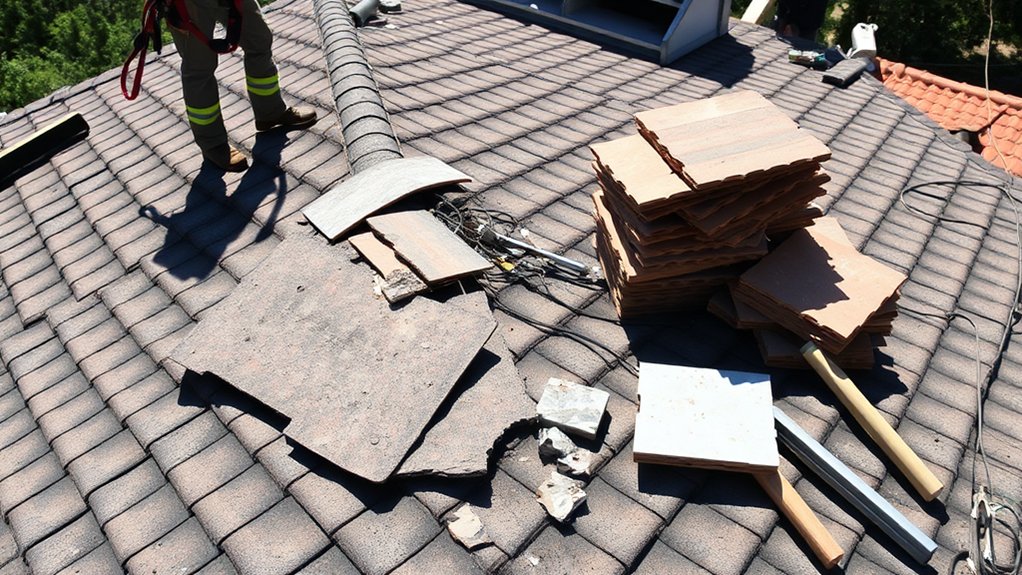
Neglecting regular inspections can lead to serious problems that compromise your roof's integrity.
It's essential to prioritise gutter maintenance and promptly address any air leaks to avoid costly repairs later on.
For instance, clogged gutters can cause water to overflow, leading to dampness and structural damage.
Regular Inspection Importance
Regular inspections are vital for preserving your roof's integrity and longevity. They allow you to spot minor issues, like cracked tiles, small leaks, or loose flashing, before they turn into costly repairs.
By addressing these problems early, you can extend the lifespan of your roof and maintain its strength against the elements.
Routine checks can also improve energy efficiency and protect your home's value, ensuring compliance with insurance requirements.
By prioritising these evaluations, you reduce the risks of neglect, such as mould growth and structural damage, while receiving tailored advice for future maintenance.
In short, keeping your roof well-maintained not only protects your home but also provides peace of mind.
Gutter Maintenance Necessity
Maintaining your gutters is just as essential as regular roof inspections. Proper gutter upkeep prevents water from pooling, which can cause serious structural damage.
It's vital to clean your gutters regularly; check for debris and ensure downspouts are clear. Ignoring this task can lead to expensive repairs and a shorter roof lifespan.
If you notice any signs of damage or inefficiency, think about the advantages of gutter replacement, like improved drainage and enhanced appearance.
A professional assessment during your roof replacement can ensure your gutters are in top condition, protecting your home's integrity and value.
Don't overlook this important aspect of home maintenance; it's crucial for your property's long-term wellbeing.
Addressing Air Leaks
When tackling air leaks in your roofing system, it's important to understand that even small mistakes during installation or maintenance can lead to significant problems.
To prevent air leaks, choose high-quality materials suitable for the UK climate and hire experienced contractors for correct installation. Regular inspections can help spot issues like faulty flashing or poor insulation, which can worsen air infiltration.
If your attic is under-insulated, consider upgrading the insulation to help balance temperature effectively. Also, ensure proper ventilation to reduce moisture build-up and prevent long-term damage.
Cost-Saving Mistakes

Cost-saving mistakes during roof replacement can lead to significant financial consequences in the long run. When you focus on short-term savings, you may miss out on crucial budgeting strategies that ensure durability and efficiency.
For example, choosing low-quality materials may save you money at first, but it can result in frequent repairs that ultimately cancel out any initial savings.
Additionally, neglecting thorough inspections can leave hidden problems unresolved, leading to costly repairs later on. It's important to consider the long-term benefits of energy-efficient materials and proper ventilation, as these investments can substantially lower your utility bills.
Always factor in all expenses, including the cost of removal and permits, to avoid budget overruns that can disrupt your financial plans.
Prioritise quality for sustainable results.
Communication and Project Management Issues
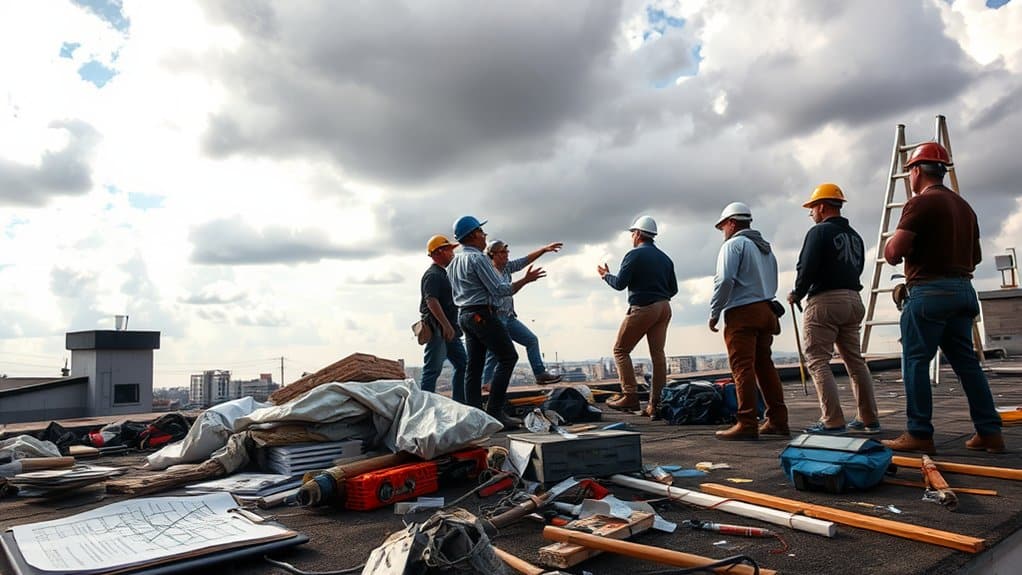
During a roof replacement, misunderstandings with contractors can significantly disrupt your project.
Poor scheduling and vague project goals often worsen these issues, resulting in misaligned expectations and delays.
It's crucial to establish clear communication channels and set defined objectives to ensure a smooth and efficient process.
For instance, having regular check-ins with your contractor can help keep everyone on the same page and prevent costly mistakes.
Misunderstandings With Contractors
Clear communication and effective project management are crucial to avoid misunderstandings with contractors during a roof replacement. Setting clear expectations from the beginning can significantly minimise the risk of miscommunication.
It's important to define the project scope, including materials and timelines, to ensure everyone is on the same page. Regular updates and meetings help maintain transparency, allowing any issues to be addressed quickly.
Using preferred communication methods, such as mobile phones, can make interactions smoother. Additionally, documenting everything in writing, such as contracts, promotes accountability.
Daily check-ins with the crew can also help spot potential challenges early, which can prevent expensive changes down the line. By prioritising clear communication and effective project management, you can create a collaborative environment that leads to successful outcomes.
Ineffective Scheduling Practices
Effective scheduling is crucial for a smooth roof replacement process, yet many contractors fall into common traps that can disrupt projects. Overbooking crews or misallocating resources often leads to scheduling conflicts and delays.
Poor logistical planning may cause material shortages, further hindering timelines, while lack of communication among tradespeople can create confusion and errors. Additionally, failing to consider weather conditions can unexpectedly halt progress.
To tackle these issues, it's essential to use specialised roofing CRM software to improve scheduling and enhance coordination.
Undefined Project Goals
Undefined project goals can significantly hinder the success of a roof replacement, often leading to mismatched expectations between clients and contractors. Without clear objectives, it becomes difficult to align the project, resulting in disorganised progress tracking and potential cost overruns.
Setting measurable milestones and a clear budget is vital for maintaining accountability throughout the project.
Lack of stakeholder involvement can worsen communication issues, threatening the shared vision necessary for success. Regular updates and open conversations with clients, suppliers, and team members are essential to ensure everyone stays on the same page.
Hiring Unqualified Contractors
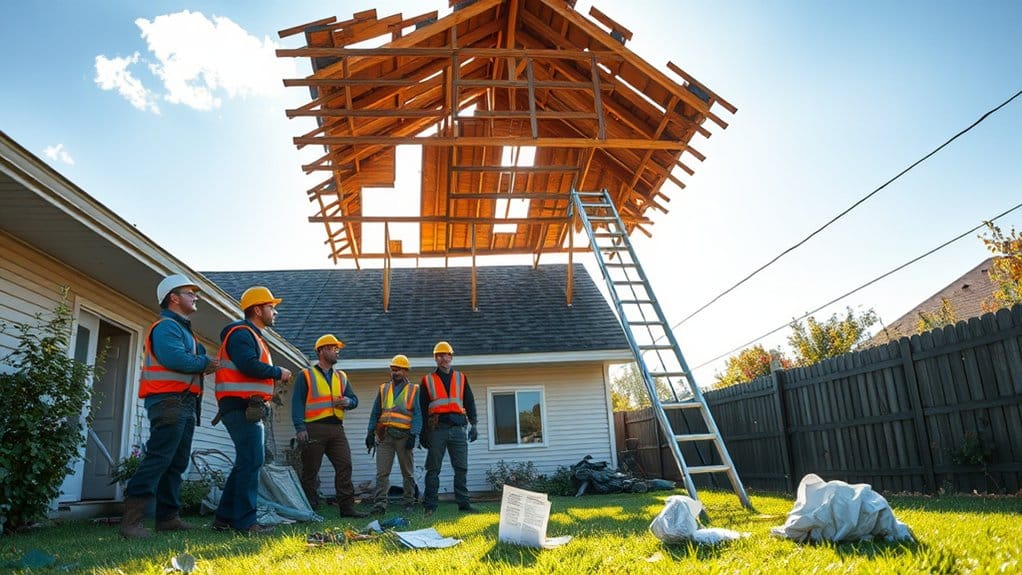
Hiring unqualified contractors for your roof replacement can result in serious financial and structural issues. To protect yourself, keep these points in mind:
- Contractor Credentials: Always check that your contractor is licensed and insured. Unlicensed workers often lack proper training, leading to poor workmanship.
- Legal Implications: Using unqualified contractors could leave you liable for any accidents. If they're uninsured, you might've to cover any injuries or damages that occur during the job.
- Long-Term Costs: Substandard work can lead to expensive repairs later on. Unqualified contractors may use inferior materials, risking the roof's longevity and possibly voiding your home insurance.
Selecting experienced professionals is crucial to protect your investment and ensure quality work.
Neglecting Local Building Codes
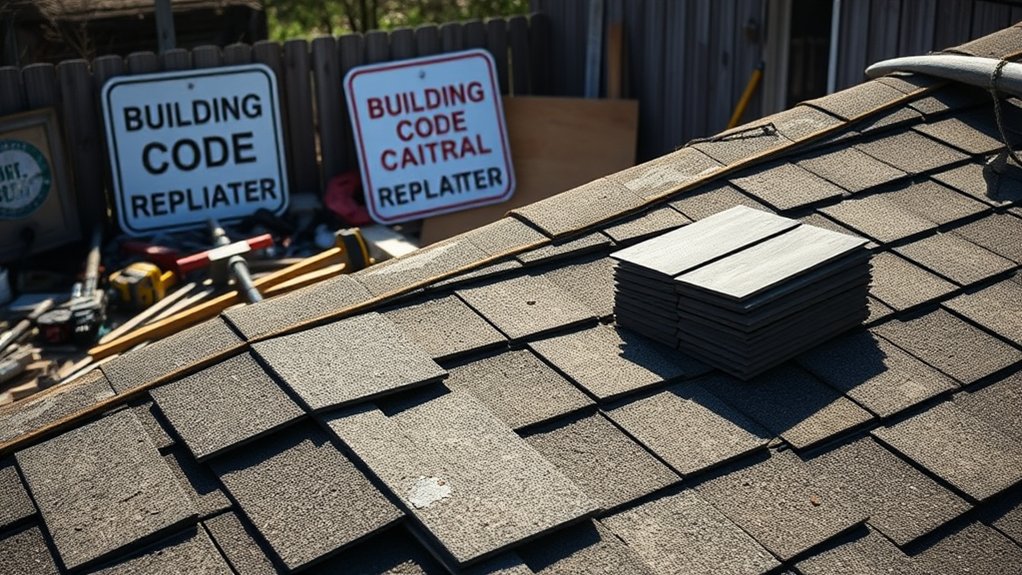
Neglecting local building regulations can lead to serious complications when replacing a roof. Each local authority has its own rules that may differ from national standards, creating compliance challenges.
It's crucial to understand these regulations, including the minimum requirements for roof assemblies, to ensure safety and structural integrity. For instance, different construction types require various fire-resistance ratings, and failing to comply can result in legal penalties, fines, or even the removal of materials.
Additionally, non-compliance can complicate insurance claims and affect property value. To avoid these issues, make sure to familiarise yourself with local amendments, keep detailed records, and work closely with building officials to ensure your project meets all necessary standards.
Inadequate Ventilation
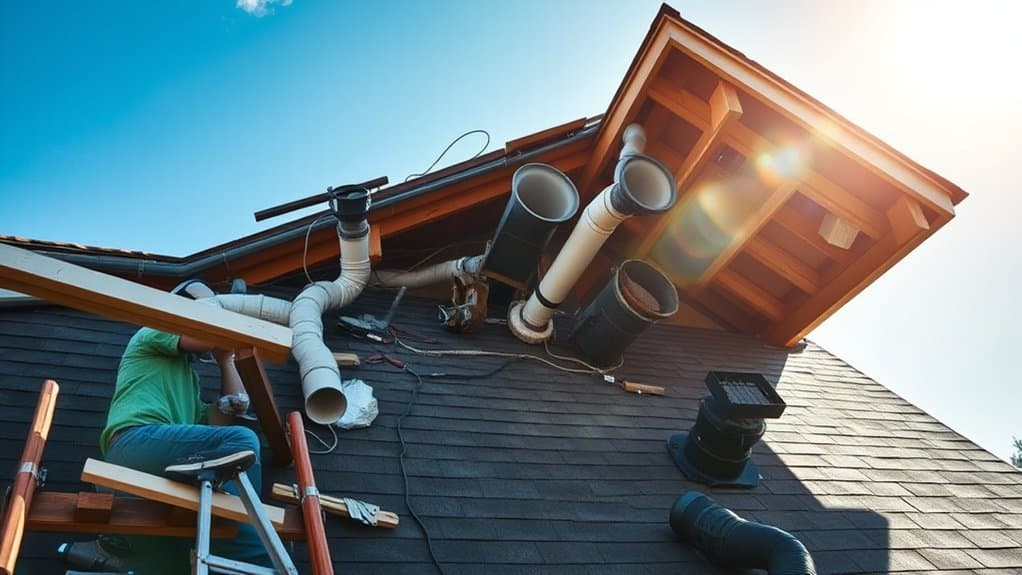
When replacing your roof, ensuring proper ventilation is crucial to prevent moisture build-up and excessive heat, which can severely affect your home's structure.
Effective ventilation requires both intake and exhaust vents placed strategically to ensure balanced airflow. Here are some important points to consider:
- Proper Positioning: Exhaust vents should be located at the highest points of the roof, while intake vents should be near the soffits to promote good airflow.
- Adequate Intake: Make sure enough intake vents are fitted; blocking them with insulation is a common error that reduces exhaust efficiency.
- Consistent Ventilation Types: Avoid mixing different types of ventilation, as this can disrupt airflow balance and lead to energy inefficiency and structural problems.
Regular inspections are vital to spot and resolve any ventilation issues early on, helping to extend the lifespan of your roof.
Poor Material Selection
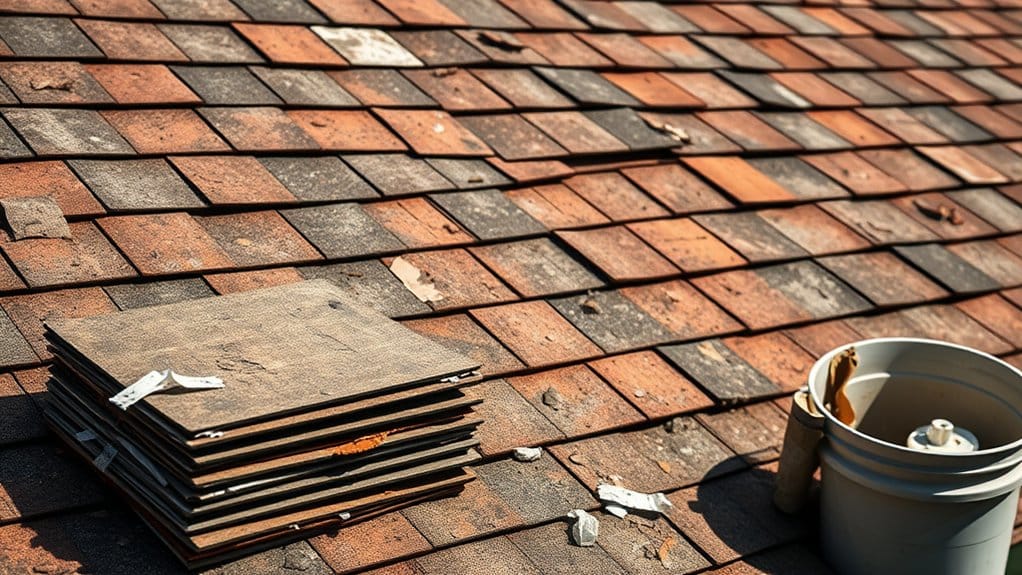
Choosing the right materials for your roof is vital; a poor choice can lead to serious long-term problems.
Using low-quality materials often means reduced lifespan and poor insulation, which can increase energy bills and lead to frequent repairs. Such materials may struggle against harsh weather, resulting in unexpected costs and potential health hazards from mould due to moisture build-up.
Always take into account your local climate and the architectural style of your home when selecting materials; this ensures both durability and a pleasing appearance.
Don't let tight budgets push you towards inferior products. Seeking advice from experienced roofing professionals can help you make informed choices that balance immediate needs with long-term advantages for your property.
Frequently Asked Questions
How Do I Know When My Roof Needs Replacing?
To know if your roof needs replacing, check for signs such as curled shingles, leaks, or sagging. Pay attention to the age of your roof and any signs of material wear. For example, if your roof is over 20 years old and showing significant wear, it might be time to consider a replacement.
What Warranties Are Available for New Roofs?
When it comes to warranties for new roofs, it's essential to grasp the different types and what they cover. There are three main warranty types to consider: manufacturer's, workmanship, and full-coverage warranties. Each offers varying levels of protection.
For instance, a manufacturer's warranty typically covers defects in materials, while a workmanship warranty ensures that the installation was done correctly. A full-coverage warranty combines both, providing comprehensive protection. Choosing the right warranty gives you peace of mind, knowing your investment is safeguarded.
How Long Does a Roof Replacement Take?
A roof replacement usually takes between 1 to 3 weeks. The duration can vary based on factors such as the type of materials chosen and the weather conditions. For instance, opting for slate tiles may take longer than using felt. Planning the work during a dry season can help avoid delays and ensure a more efficient installation process.
Can I Stay in My Home During Roof Replacement?
You can stay at home during a roof replacement, but it's important to prioritise safety. While avoiding temporary accommodation can save you money, be prepared for some disruptions. Stay alert, maintain communication with your contractors, and protect your belongings to ensure a smoother process. For instance, consider moving valuable items away from the work area to prevent any accidental damage.
How Can I Choose the Right Roofing Material?
To select the right roofing material, start by considering the local climate and the various types of roofing available. Look for materials that are durable to ensure they last, while balancing the initial costs with potential long-term savings. For instance, slate roofs can be more expensive upfront but often last a century, making them a worthwhile investment. Also, think about aesthetics; choose a style that complements your home's design while fulfilling practical needs. For example, a thatched roof might suit a cottage, while sleek metal could enhance a modern home.
Conclusion
When replacing a roof, remember that "an ounce of prevention is worth a pound of cure." Avoid common pitfalls such as poor planning, ignoring manufacturer guidelines, and disregarding local building regulations. Prioritising quality materials and skilled contractors is essential, as these choices significantly affect your roof's durability and performance. Regular maintenance and inspections will help protect your investment, ensuring a robust and efficient roofing system that safeguards your home for years to come.


