

Common Residential Roof Repairs and How to Avoid Them
Common residential roof repairs typically include broken tiles, leaks, and drainage issues. To prevent these problems, carry out regular inspections of critical areas such as flashing, chimneys, and roof valleys. Ensure that you clear debris from gutters and downpipes to avoid blockages that can lead to water pooling. For flat roofs, it's essential to maintain proper drainage design. Regularly check for signs of wear, like cracks or gaps in the flashing, and address any issues promptly. By staying on top of maintenance, you can significantly extend your roof's lifespan and minimise the likelihood of costly repairs.
Key Takeaways
- Regularly check your roof for damaged tiles, slates, and signs of wear to catch problems early and avoid expensive repairs.
- Maintain flashing and drainage systems to prevent leaks and water damage, especially in vulnerable areas like chimneys and roof valleys.
- Clean gutters and downspouts regularly to ensure proper water drainage and prevent blockages that can cause pooling.
- Schedule seasonal inspections to spot and address issues made worse by extreme weather, helping to extend the life of your roof.
- Keep detailed records of inspections and maintenance to monitor your roof's condition and guide future care.
Broken Tiles and Shingles
When you spot broken tiles and shingles on your roof, it's crucial to tackle the issue quickly to prevent further damage. Common culprits include age, weather exposure, impact damage, and poor installation. Slate tiles can deteriorate over time, and shingles often become brittle in extreme temperatures. High winds and hail may cause cracks, as can falling objects or even foot traffic. To manage these problems, consider replacement options that match your roofing material. If you have clay or slate, replace them with similar products to maintain consistency. For shingles, learn simple repair techniques like patching or replacing damaged sections to prevent leaks. Regular inspections are key to maintaining roof health, as they can help identify issues early before they escalate. Spotting broken tiles early allows for timely repairs. Ensure proper ventilation to avoid moisture buildup, and clear debris from roof valleys to improve drainage. Additionally, be aware that UV radiation can degrade slate tiles, increasing the likelihood of cracks and damage over time.
Addressing Roof Leaks
Addressing roof leaks promptly is essential to prevent serious damage to your home. Regularly inspect vulnerable areas such as chimneys, roof vents, and flashing to detect leaks early. Look for signs of water intrusion, as catching these issues in time can save you from expensive repairs later on.
Common causes of leaks include problems with seams, lack of maintenance, and damage from rooftop equipment. Seasonal weather patterns can exacerbate existing vulnerabilities, so it's crucial to stay vigilant. Older roofs may develop cracks, which hampers their ability to shed water effectively. To avoid these problems, carry out regular inspections, keep gutters clear of debris, and ensure proper ventilation in your loft to reduce condensation. Additionally, addressing human error through proper training and careful navigation on rooftops can significantly minimize the risk of leaks.
When leaks do occur, quick fixes can make a significant difference. Replace damaged pipe boots, reseal flashing, and check that nails are properly driven in to prevent further issues.
If you see leaks around your chimney, address any damage without delay.
Flat Roof Drainage Issues
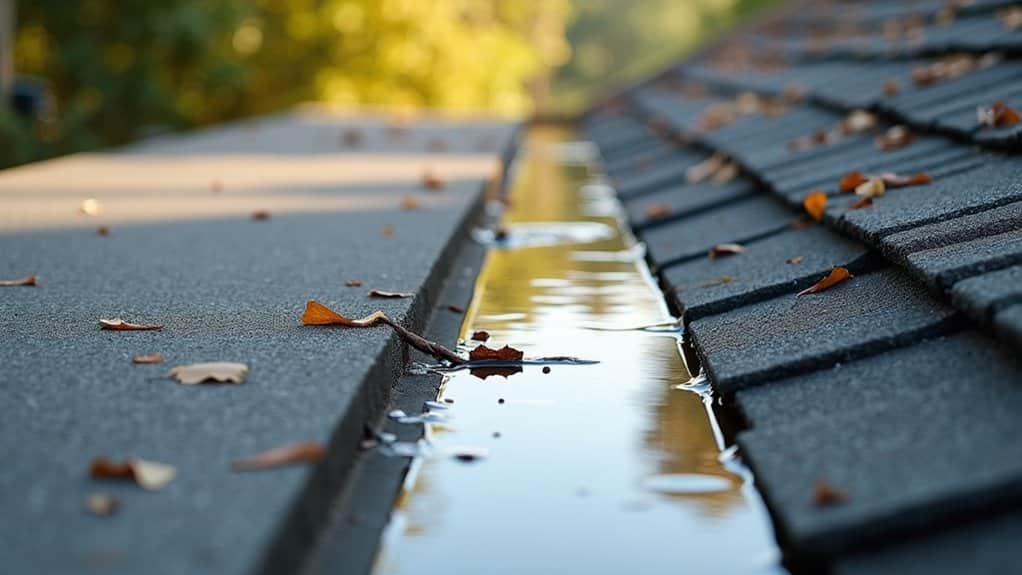
How do flat roof drainage issues affect your home's integrity? Inadequate drainage can lead to water pooling, causing significant damage over time.
If your roof lacks sufficient slope, water may not reach the drainage points effectively, and design or installation mistakes can leave drains poorly positioned. Blocked drains from debris like leaves can worsen these problems, resulting in further water accumulation. Moreover, effective drainage solutions such as tapered insulation systems can help mitigate these issues.
Another concern is insulation compression; as insulation compresses, the roof can sag, creating low areas where water collects. Additionally, natural settling of the building can add to these drainage challenges. Flawed installation of roof drains can lead to inadequate drainage and exacerbate these issues.
To tackle these issues, ensure your drainage design features effective components such as internal drains, scuppers, and tapered insulation systems that achieve the necessary slope.
Regular maintenance is crucial. Schedule inspections twice a year to clear debris and ensure all drainage systems are functioning correctly.
Consider installing siphonic drains and high-quality waterproofing membranes to improve your roof's performance. By proactively addressing these drainage problems, you can significantly extend your flat roof's lifespan and safeguard your home's integrity.
Importance of Flashing Maintenance
Proper maintenance of flashing is vital for maintaining the integrity of your roof and preventing water ingress. Flashing is crucial in areas such as chimneys, valleys, roof edges, skylights, and vents. Each of these locations requires specific types and materials of flashing to effectively direct water away from vulnerable joints and prevent leaks. Regular inspections are essential to ensure your flashing remains functional. During these checks, look for signs of rust, cracks, or gaps, as these can weaken the flashing. Conducting annual evaluations helps identify potential problems before they develop into costly repairs or structural damage. Roof flashing acts as a barrier during heavy rain or snow to maintain structural integrity, making its maintenance critical. Neglecting proper maintenance can lead to serious consequences, such as leaks that encourage mould growth and damage to interiors. Environmental factors like extreme weather can further threaten the condition of your flashing, making regular upkeep even more important. Additionally, the use of high-quality materials for flashing can significantly enhance durability and resistance against common roofing issues.
Preventative Roof Care
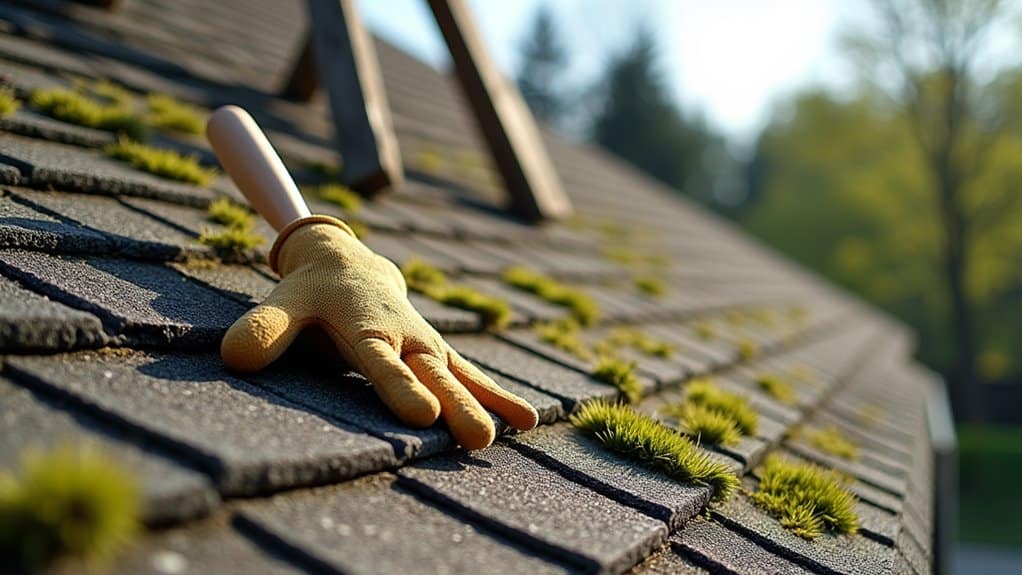
Preventative roof care is crucial for extending the lifespan of your roofing system and avoiding expensive repairs. One important aspect of maintenance is regular roof cleaning and debris removal.
Use a leaf blower or broom to clear away leaves and dirt, and trim any overhanging branches to prevent damage from falling debris. It's vital to maintain your gutters; clean them regularly to ensure proper drainage and prevent water buildup, which can shorten your roof's lifespan. Regular preventative maintenance can extend the roof lifespan by 10-30 years, depending on materials. Additionally, scheduling annual inspections is essential for identifying potential issues before they escalate.
Be sure to inspect roof drains and downspouts for blockages. Adding downspout extensions can direct water away from your foundation, reducing the risk of water intrusion.
Managing vegetation is also key; keep plant growth near the roof in check and consider applying protective coatings to enhance durability.
Maintain detailed records of inspections and maintenance activities to monitor your roof's condition. Schedule annual professional inspections to catch potential issues early.
Address minor problems promptly before they develop into significant concerns. By following these preventative measures, you'll protect your investment, extend your roof's life, and ultimately enhance the comfort of your home.
Regular Inspection Practices
A well-maintained roof needs regular inspections to ensure its integrity and longevity. Aim to have your roof inspected at least once a year, preferably by qualified roofing contractors who can carry out thorough assessments. These experts can spot subtle signs of wear and damage that may go unnoticed by an untrained eye. Regular inspections can help extend your roof's lifespan and prevent expensive repairs later on.
When inspecting your roof, start from the ground or the eaves to look for visible damage. Using binoculars can help you check hard-to-reach areas without having to climb onto the roof. Pay special attention to critical areas like roof valleys, skylights, chimneys, and flashings, watching out for debris, leaks, or damage.
Additionally, check the gutters and downspouts for blockages to ensure proper water drainage. It's also wise to inspect the attic for signs of moisture or structural issues.
Advanced techniques, such as infrared technology, can uncover hidden damage, making your inspections even more comprehensive. By maintaining a regular inspection schedule and using these techniques, you can protect your roof and home effectively.
Frequently Asked Questions
How Often Should I Replace My Roof?
You should consider replacing your roof every 15 to 30 years, depending on the materials used and the level of maintenance. Look out for signs such as holes, water stains, and damaged tiles to help you decide if it's time for an upgrade.
What Causes Roof Damage in Different Climates?
Think of your roof as a protective barrier; environmental factors like heavy rain, strong winds, and fluctuating temperatures gradually weaken it. Weather-related issues, such as hail and snow, can intensify the damage, making regular maintenance and repairs essential. For instance, a prolonged winter can lead to snow accumulation, which may cause leaks or structural stress. It's crucial to stay vigilant and address any potential problems before they worsen.
Can I Repair My Roof Myself?
You can repair your roof yourself if you have the right DIY tools and skills. Start with a thorough inspection to identify any issues. Always prioritise safety and use proper techniques throughout your project. For example, if you notice loose tiles, you can replace them with a few basic tools. Just ensure you're comfortable working at height and take necessary precautions.
How Do I Choose a Roofing Contractor?
Choosing a roofing contractor is much like dating—don't rush into it! Check their qualifications, compare quotes, and read customer reviews. A bit of research ensures you find a trustworthy expert to safeguard your home against the weather.
What Insurance Coverage Is Available for Roof Repairs?
When reviewing insurance policies, check the coverage limits for roof repairs. Damage from storms, vandalism, and structural issues is usually covered, whereas routine maintenance is not. For example, if a tree falls on your roof during a storm, you'll likely be covered. Understanding your policy is essential to ensure you're properly protected against potential roof damage.
Conclusion
In roofing, timely maintenance can prevent costly repairs later. Regular inspections and paying attention to details like flashing can keep your roof in good condition. It's not just about fixing broken tiles or stopping leaks; it's about ensuring your home's first line of defence remains strong. With a bit of care, you can keep your roof in great shape throughout the seasons.


