

How to Handle Emergency Repairs on Commercial Roofs
To manage emergency repairs on commercial roofs, safety is paramount. First, identify any hazards and restrict access to affected areas. Quickly find the source of the leak and assess the damage. Use buckets to catch water and apply temporary fixes such as sealants for minor leaks or tarpaulins for larger ones.
It's important to document all actions taken for insurance purposes. Engage skilled contractors for efficient repairs, ensuring they use appropriate materials. Regular inspections can help prevent future emergencies.
Additionally, gather all necessary documentation for claims and maintain a record of repair history. For a more robust approach, consider exploring further strategies to enhance your emergency response plan.
Key Takeaways
- Prioritise safety by assessing hazards and restricting access to affected areas during emergency roof repairs.
- Use temporary solutions such as sandbags, buckets, and roof sealants to reduce damage until professional help arrives.
- Document all damage with photographs and detailed descriptions to support insurance claims and future repairs.
- Hire experienced roofing contractors with a solid reputation to ensure repairs are carried out efficiently and effectively.
- Schedule regular roof inspections and maintenance to proactively identify and address potential issues before they worsen.
Understanding Emergency Roof Repairs
When dealing with emergency roof repairs, it's important to know what can lead to these situations. Severe weather, such as storms and strong winds, can cause unexpected damage to your roof. Structural failures or sudden leaks need urgent attention to prevent more serious issues. Even small leaks may signal bigger problems that require immediate action. To better prepare for emergencies, schedule regular roof inspections. This proactive step helps spot potential issues before they turn into crises. Building relationships with suppliers can also reduce delays during urgent situations, ensuring you have essential roofing materials on hand. Training staff on emergency response procedures is vital; everyone should understand their role in these situations. Additionally, keeping essential supplies like tarpaulins, ropes, and sealants readily available can offer immediate protection against further damage. Regular inspections can help identify hidden issues that might lead to emergency repairs, including poor underlay installation that can hinder water channeling to gutters.
Immediate Actions During Emergencies
In an emergency, your first priority is safety. Identify any hazards and restrict access to affected areas. Then, implement temporary leak solutions to minimise water intrusion as you assess the damage. Acting quickly in these areas not only protects your property but also prevents further complications. For example, using sandbags to divert water can be an effective immediate measure. Additionally, it is important to conduct a detailed inspection to identify visible and hidden damage during this critical time.
Prioritize Safety Measures
Emergency situations on commercial roofs require swift and decisive action to ensure the safety of all personnel involved. Start with a thorough risk assessment to identify hazards that could endanger workers, such as weak spots or exposed electrical lines. Contact a trusted roofing company for a quick response.
After assessing the risks, implement strong safety measures. Ensure all roof edges are secured with guardrails or flag lines, positioned at least 6 feet from the edge. Use safety nets and personal fall arrest systems to prevent falls. It is essential to follow proper safety measures to mitigate risks effectively.
Also, protect roof hatches and skylights with appropriate coverings or cages, ensuring they comply with UK health and safety regulations.
Maintain clear communication with your team during the emergency repair process, stressing the importance of safety. Training staff on these protocols is crucial for preparedness.
Always document your actions and conduct a post-repair assessment to identify areas for improvement. By prioritising safety measures, you not only protect your team but also ensure the integrity of the repair process.
Temporary Leak Solutions
When faced with a roof leak, quick action is essential to minimise damage and protect your property. Start by identifying the leak: assess the damage to locate the source and gauge how extensive it is. Use buckets or containers to catch any dripping water, and move valuables away from the affected area to prevent further loss.
For immediate relief, consider temporary patching techniques. If the leak is small, apply a roof sealant directly to the damaged area, ensuring it's clean and dry first. To enhance your response, engaging professional roofers for efficient resolution is crucial. Regular inspections can help identify potential issues before they escalate, ensuring timely interventions.
For larger leaks, a reinforced tarpaulin can shield against water intrusion; make sure it's secured properly to withstand wind and rain. If the damage is more severe, you might use plywood or shingles alongside roofing tar for extra coverage.
To further protect the area, cover it with plastic sheets or tarps. Remember to document the situation with photos and notes for insurance claims and future reference.
While these temporary measures are crucial, it's important to contact professionals for permanent repairs. Their expertise will ensure a long-lasting fix and reduce the risk of future leaks. Investing in regular maintenance is key to avoiding leaks altogether and safeguarding your investment.
Preventing Further Damage
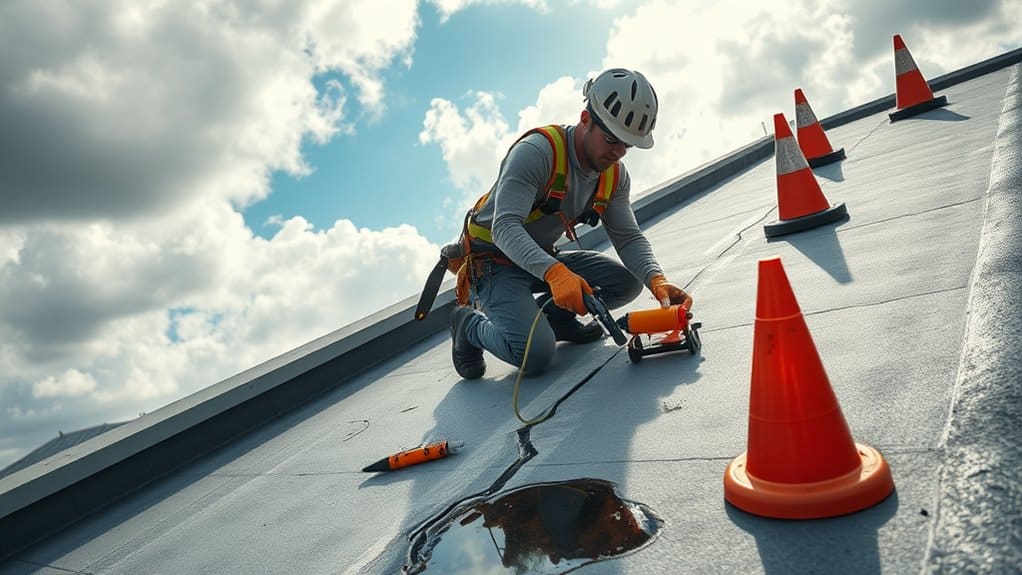
To prevent further damage to your commercial roof, begin by removing any debris that could obstruct drainage or cause water to pool. Next, promptly seal any minor leaks to prevent water from seeping in and turning into a bigger problem. Regular inspections and maintenance are crucial for identifying potential roofing issues before they escalate into significant repairs. Additionally, regular gutter cleaning is essential for effective water drainage and helps to prevent issues with pooling water.
Clear Roof Debris
Maintaining a clean roof is essential for protecting your commercial property. Regularly clearing debris helps prevent water accumulation, extends the life of roofing materials, and avoids structural problems.
Here are some effective methods for clearing roof debris:
- Use a sturdy ladder with stabilisers to safely access the roof.
- Start by clearing gutters to prevent water from backing up onto the roof.
- Use a roof rake or a long-handled broom to remove loose debris without stepping onto the roof.
- For larger items, seek assistance when climbing up to avoid damaging the shingles.
- A leaf blower can be handy for light debris, but make sure to use it gently to avoid harming the roofing materials.
Seal Minor Leaks
After clearing debris from the roof, the next crucial step in maintaining your commercial roof is to seal any minor leaks to prevent further damage. Choose high-quality sealants specifically designed for commercial roofing systems, ensuring they're compatible with your roofing material for maximum effectiveness.
Before applying sealant, clean and dry the affected areas thoroughly. This ensures proper adhesion and extends the life of the seal. Follow the manufacturer's instructions for applying the sealant.
In emergencies, temporary sealants can provide immediate relief, but remember to plan for a permanent solution. Regular inspections after sealing leaks are vital to spot any signs of wear and tear. Reapply sealants as needed to maintain the integrity of your repairs. Additionally, addressing flashing maintenance can help prevent water ingress and enhance the effectiveness of your sealant repairs.
If you face complex issues, consult a roofing professional for expert advice. They can offer insights on additional preventative measures, such as sealing vulnerable areas and ensuring proper drainage, helping you avoid future leaks and costly repairs.
Proactive maintenance is essential for extending the life of your commercial roof.
Executing Repairs Efficiently
Efficiently carrying out emergency repairs on commercial roofs demands a systematic approach that emphasises safety and effectiveness.
Here's how to tackle it:
- Secure the Area: Ensure the site is safe to prevent accidents and further damage.
- Choose the Right Materials: Use suitable materials according to the roof type and specific damage.
- Apply Temporary Fixes: Implement quick solutions, such as caulking or patching, to stabilise the roof immediately.
- Address Underlying Issues: Investigate and rectify any structural problems that may have caused the emergency.
- Monitor the Repair: Supervise the repair process closely to ensure compliance with safety and quality standards.
- Document the Damage: Keep a record of the roof's condition for future reference.
Additionally, regular inspections help identify hidden damage that may not be immediately apparent, ensuring more comprehensive repairs.
Handling Insurance Claims

When dealing with emergency roof repairs, managing the insurance claims process is crucial to ensure you receive the necessary funds for recovery. Start by promptly reporting the incident to your insurance provider and providing detailed information about the damage.
Document everything thoroughly—take photos and videos, and write descriptions to support your claim.
Next, hire a reputable roofing contractor to inspect the damage and prepare the required documentation. Review your insurance policy carefully to understand coverage limits, deductibles, and filing requirements.
Once you have all the information, compile it and submit your claim, including the adjuster's report and repair estimates.
Arrange a meeting with the insurance adjuster, ensuring the contractor is present to provide professional support. Be ready to discuss the extent of the damage and advocate for your needs.
If the initial claim offer is inadequate, don't hesitate to negotiate, using the contractor's documentation to strengthen your case.
Importance of Documentation
Why is documentation so essential in emergency roof repairs? Effective documentation is crucial for several reasons that enhance repair processes and ensure compliance with regulations. It provides proof of damage necessary for insurance claims and legal matters, while also keeping a detailed record of all repairs made.
Here are the key points to consider:
- Establishes proof of damage for insurance purposes.
- Tracks repair history to maintain accurate records.
- Ensures clear communication with roofing contractors.
- Reduces misunderstandings throughout the repair process.
- Strengthens insurance claims with comprehensive evidence.
To document effectively, take clear photographs, including context shots, and record the date and time of the incident.
Make sure to document any temporary fixes too, as this offers a complete view of the situation. Additionally, keep all relevant permits and inspection reports to ensure compliance with regulations.
By organising your documents and capturing clear records, you'll facilitate smoother recovery processes and build a solid foundation for future reference.
This careful approach not only safeguards your interests but also enhances the repair experience.
Preventive Measures for Future Issues

Preventive measures are vital for preserving the integrity of commercial roofs and reducing the need for emergency repairs. Implementing a structured roof maintenance programme can significantly extend your roof's lifespan. Conducting seasonal inspections, particularly before severe weather, is crucial for spotting and addressing potential issues early. Regular maintenance ensures your roof remains in optimal condition.
Here's a summary of essential preventive measures:
| Maintenance Activity | Frequency | Purpose |
|---|---|---|
| Biannual inspections | Twice a year | Identify potential issues early |
| Drainage system checks | Before heavy rain | Ensure effective water flow |
| Flashing and sealant checks | As required | Prevent leaks and water damage |
| Vegetation management | Monthly | Prevent damage and maintain integrity |
Engaging Professional Services
Engaging professional services for emergency roof repairs is crucial for a swift and effective resolution to roofing problems. When faced with a roofing emergency, it's vital to have experts who can accurately assess the damage and provide dependable solutions.
Consider these key factors:
- Professional qualifications: Select contractors with significant experience, ideally over 45 years, to handle complex repairs.
- Service reliability: Choose companies endorsed by leading brands to ensure quality materials and workmanship.
- Rapid response: Ensure the service can respond promptly to prevent further damage.
- Comprehensive services: Look for providers that offer a variety of options, from emergency repairs to ongoing maintenance.
- Cost awareness: Be aware that repair costs can vary greatly depending on the type and severity of the damage.
Having these factors in mind will help you navigate the challenges of roofing emergencies with confidence.
Utilizing Advanced Technology

Advanced technology is essential in modern emergency roof repairs, revolutionising how inspections and repairs are carried out. Drones enable thorough inspections with high-resolution aerial views, significantly reducing the risks associated with traditional physical inspections. This method enhances efficiency and proves to be cost-effective, helping to minimise repair expenses.
Alongside drones, thermal imaging technology detects hidden damages and leaks that are often not visible to the naked eye. This non-invasive technique reduces disruption to your business and enhances energy efficiency by identifying areas of heat loss.
Here's a brief comparison of these technologies:
| Technology | Benefits | Applications |
|---|---|---|
| Drone Technology | Enhanced inspections | Damage assessments |
| Thermal Imaging | Hidden damage detection | Non-invasive inspections |
| Combined Use | Efficient, cost-effective | Preventive maintenance strategies |
Frequently Asked Questions
How Much Do Emergency Roof Repairs Typically Cost?
Emergency roof repair costs can vary greatly depending on the type of damage and the size of the roof. When budgeting, factor in costs for materials, labour, and any necessary permits to ensure you're ready for unforeseen expenses. For instance, a small leak might only require a few hundred pounds for quick repairs, while extensive storm damage could run into thousands. Being prepared can save you stress and money in the long run.
Can I Perform Emergency Repairs Myself?
You can try DIY repairs, but it can be risky. Without the right skills and safety measures, you may misdiagnose problems or create new hazards. For example, fixing a leaking tap might seem straightforward, but if you don't turn off the water properly, you could cause a flood. It's usually better to hire professionals who can provide effective, long-lasting solutions and protect your investment.
How Quickly Should I Contact a Roofer After Damage Occurs?
You should contact a roofer straight away after any damage occurs. Acting quickly can help prevent further issues, such as leaks or structural problems. For instance, if a storm has blown off tiles, it's essential to get a professional to assess the situation before it leads to water damage inside your home. Prompt action ensures that the problem is tackled before it escalates.
What Types of Roofing Materials Are Best for Emergencies?
What's the best option during a roofing emergency? Metal roofing offers durability and straightforward installation. For urgent repairs, consider using emergency patching solutions like sealants or all-weather patches to stop any further damage.
Will My Insurance Cover All Roof Repair Costs?
Your insurance policy generally won't cover all roof repair costs. The claims process requires you to document the damage and be aware of any exclusions. For instance, if your roof has pre-existing issues or is quite old, this may affect your coverage. It's essential to review your policy closely to ensure you get the most out of your benefits.
Conclusion
In the realm of commercial roofing, addressing emergency repairs promptly is crucial. Acting quickly, keeping a detailed record of each step, and consulting professionals when necessary can help reduce damage and protect your investment. For instance, a minor leak today could escalate into significant problems tomorrow. Implementing preventive measures not only secures your property but also provides peace of mind. Remain vigilant, and your roof will withstand the harshest weather conditions.


