
Common Signs Your Roof Needs Repair
Common signs your roof needs repair include sagging structures, which can indicate serious integrity issues, and water stains on ceilings or walls that often suggest leaks. Check for damaged tiles—missing, curling, or cracked ones can lead to further problems. Gutter issues, such as blockages, may also cause significant water damage. If you notice higher energy bills, it could be a sign of ventilation or insulation issues. Be vigilant for signs of mould as well. There are several other key indicators to help you assess your roof's condition.
Key Takeaways
- Look for sagging areas in the roof, which may indicate structural issues needing urgent attention.
- Check for damaged tiles, such as curling or missing pieces, as these can lead to leaks.
- Inspect for water stains on ceilings and walls, a common sign of hidden leaks.
- Watch out for signs of mould or mildew, suggesting moisture problems and potential roof damage.
- Ensure gutters are free from debris; blocked gutters can cause water damage and increase repair costs.
Sagging Roofs
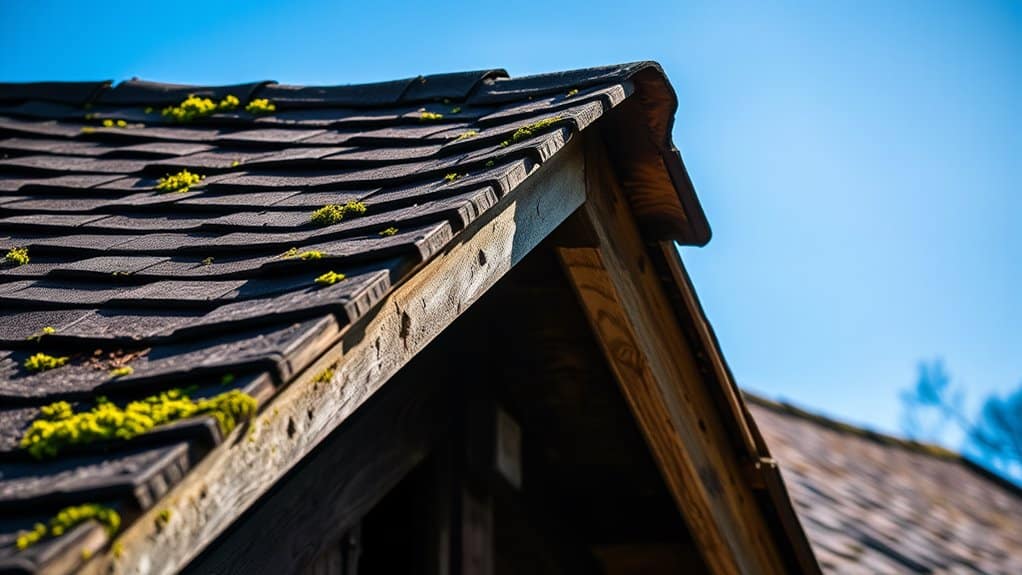
If you notice your roof sagging, it's crucial to understand the risks involved. A sagging roof can compromise your home's structural integrity and lead to serious issues. Causes often include excessive weight from snow or ice, poor construction, and ageing materials. Regular roof inspections are essential to identify these problems early. Roof age is a significant factor that can exacerbate sagging, as materials weaken over time. Look for signs such as dips in the roof or rising maintenance costs, which may indicate structural weaknesses. Additionally, structural issues like water damage or poor construction can contribute to this problem. Ignoring a sagging roof can lead to expensive repairs, safety risks, and even damage to your home's foundation. Addressing sagging promptly through reinforcement, maintenance, or seeking professional help can help maintain your roof's integrity and protect your home.
Water Leaks and Damage

Water leaks can cause serious damage to your home if not dealt with promptly.
To ensure your roof stays in good condition, keep an eye out for these signs:
- Water stains on ceilings or walls
- Musty smells that suggest hidden moisture
- Dripping ceilings during rainfall
- Dark streaks on outside walls
Using leak detection techniques and moisture meters can help spot these problems early. Additionally, regular roof inspections can identify potential vulnerabilities before they lead to leaks.
Stains and mould growth are clear indicators of potential leaks that require immediate attention.
Ignoring these signs could compromise your home's structure and lead to expensive repairs. Regularly check your roof and take action quickly to protect both your home and your family's wellbeing. Additionally, regular inspections can help identify leaks early before they escalate into major issues.
Damaged Shingles
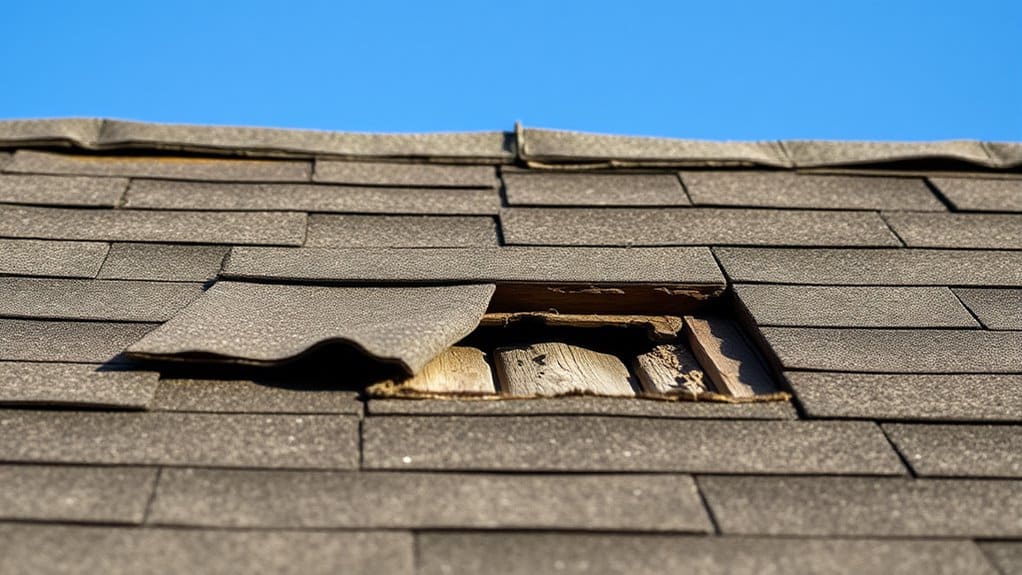
After dealing with water leaks and damage, it's crucial to recognise that damaged shingles can significantly exacerbate these problems.
Look for clear signs like curling, missing, or cracked shingles, as these can lead to substantial water ingress. Extreme weather and ageing are major factors affecting the lifespan of shingles, making regular inspections vital. Heavy granule shedding indicates potential roof replacement and can further compromise the integrity of your roof. Regular inspections can also help identify common roof issues before they escalate into more significant concerns.
Carry out shingle maintenance by checking for loose or displaced shingles to prevent minor issues from escalating.
Be on the lookout for excessive granule loss, which signals deterioration. Following severe weather, conduct a thorough inspection of your roof or consult professionals to evaluate any potential damage.
Acting quickly can save you from costly repairs or replacements, ensuring your roof stays secure and functional.
Gutter Issues

Blocked gutters can cause significant issues, such as water damage to your home's foundation and a higher risk of mould growth.
Regular maintenance is crucial to avoid these problems; ignoring your gutters may lead to expensive repairs later on.
To ensure your gutters function properly, keep them clean and free from debris. Additionally, installing gutter guards can help reduce clogging and maintenance frequency, further protecting your home from water damage.
Clogged Gutter Consequences
Neglecting gutter maintenance can lead to serious issues for your home. Clogged gutters can cause problems that threaten both your property and safety, such as:
- Foundation Cracks: Accumulated water can weaken your foundation.
- Roof Damage: Water backing up may result in leaks and structural harm.
- Pest Infestations: Stagnant water attracts pests, posing health risks.
- Landscape Damage: Overflowing water can damage your plants and garden.
To avoid these problems, adhere to gutter maintenance tips and implement effective strategies for protecting your foundation. Regularly cleaning your gutters and ensuring proper drainage can save you from costly repairs and safeguard your home's integrity. Additionally, regular gutter cleaning is essential to prevent debris buildup and ensure proper water drainage. Don't wait for visible signs—take action now to keep your home in good condition.
Importance of Regular Maintenance
Regular gutter maintenance is crucial for maintaining your home's health and safety. By ensuring gutters channel water effectively, you prevent issues with your foundation and extend the life of your roof.
Blocked or damaged gutters can cause water to build up, leading to expensive repairs and the risk of mould growth. Routine inspections can spot leaks, sagging, and debris, allowing for prompt action. This not only cuts down on repair costs but also boosts your home's safety and appearance.
In colder climates, well-maintained gutters can prevent ice dams, further protecting your roof. Focusing on gutter maintenance is essential for preserving your home's structural integrity and prolonging your roof's lifespan.
Make it a priority for the benefit of your home and family.
Energy Efficiency Concerns
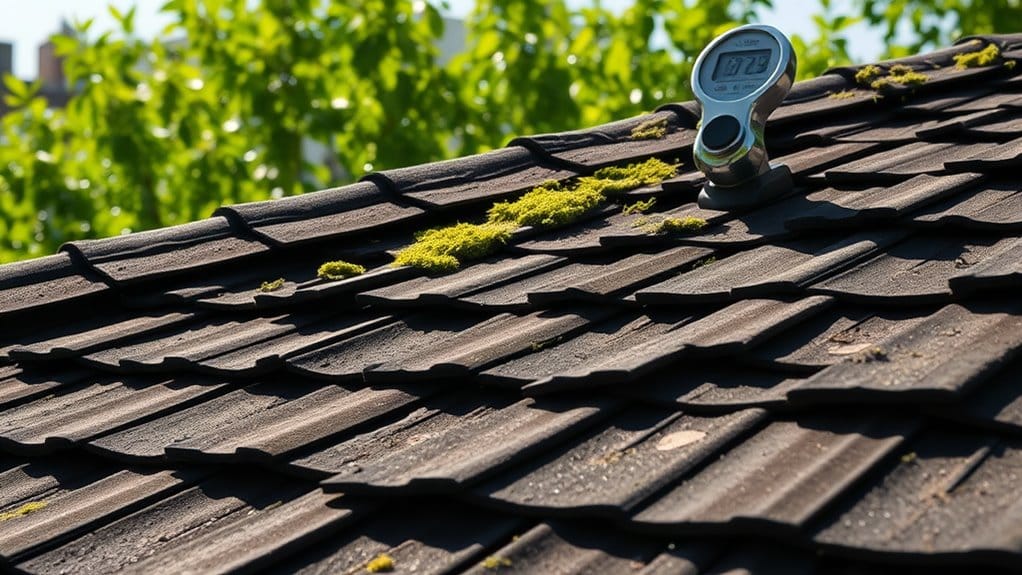
If you're struggling with high energy bills, it could be time to check your roof's ventilation and insulation.
Poor ventilation can trap heat and moisture, while insufficient insulation allows energy to escape, resulting in higher costs.
Spotting these problems early can help improve your roof's energy efficiency and reduce your utility bills.
For instance, if your loft feels excessively warm in summer, it may indicate inadequate ventilation.
High Energy Bills
If you've noticed a sudden increase in your energy bills, it could be time to check your roof for any damage. Higher energy costs often signal air leaks and poor insulation, forcing your heating system to work harder.
Look out for:
- Missing or damaged tiles
- Signs of water leaks or stains
- Age of the roof (over 20 years)
- Ineffective insulation
Conducting an energy audit can help pinpoint these issues, while upgrading insulation can boost efficiency.
If there are gaps in your roof, warm air escapes, resulting in higher bills. Furthermore, moisture can damage insulation, leading to even greater costs.
Regular maintenance and timely repairs are crucial for keeping energy efficiency high and bills low. Act now to save money in the long run!
Roof Ventilation Issues
Proper roof ventilation is crucial for energy efficiency in your home. Poor airflow can lead to higher cooling bills and potential structural damage.
Signs of ventilation problems include hot spots or condensation under your roof, which can encourage mould growth and compromise your home's integrity, resulting in increased maintenance costs.
To ensure optimal airflow, invest in balanced ventilation with well-placed intake and exhaust vents. Options like ridge or gable vents can significantly improve efficiency and prolong the life of your heating and cooling systems.
Regular maintenance is vital to keep your ventilation system working effectively, protecting your home from health hazards and maintaining its value.
Insulation Quality Assessment
How can you tell if your roof's insulation is adequate? Evaluating insulation quality is crucial for energy efficiency and preventing damp problems. Here are some signs to look out for:
- Rising energy bills
- Noticeable heat loss
- Visible signs of damp or mould
- Unusual temperature changes
To assess insulation effectiveness, consider using infrared scanning or capacitance testing. These techniques can highlight temperature differences and moisture levels.
Materials such as polyurethane foam (PUF) provide high thermal resistance, improving energy efficiency. Regular inspections can help spot potential issues early.
If you find any problems with your insulation, it's essential to address them quickly to maintain your roof's integrity and energy efficiency. Keeping on top of insulation maintenance can save you money and ensure a comfortable home.
Visible Growth and Sun Damage

What signs indicate your roof may be suffering from visible growth or sun damage?
Start by checking for mould or mildew, which often points to excess moisture from leaks or poor ventilation.
Look for water stains on ceilings; these can signal leaks that may lead to mould.
Inspect your roofing materials for any discolouration or brittleness—these are signs of UV damage that can compromise their protective qualities.
Prolonged UV exposure can also raise your energy bills, as damaged insulation affects efficiency.
To prevent mould and UV damage, ensure proper attic ventilation and carry out regular exterior inspections.
Addressing these issues quickly can prolong your roof's lifespan and improve your home's safety.
Missing Shingles
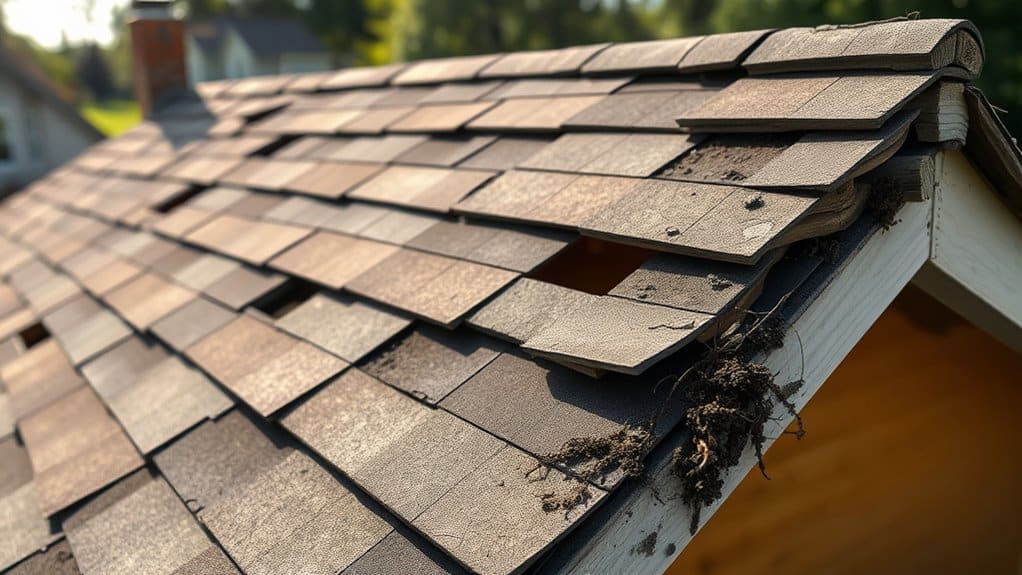
Missing shingles can occur due to several reasons, including harsh weather, the age of the roof, or poor installation.
It's crucial to establish the underlying cause to decide if you need a repair or a full replacement.
Addressing missing shingles quickly can help avoid further damage and prevent expensive repairs in the future.
For instance, if a few shingles are missing after a storm, it's best to fix them before water seeps into your home.
Causes of Missing Shingles
When severe weather hits, it can result in missing shingles on your roof, jeopardising your home's structure.
It's important to know the causes to keep your roof in good condition.
- High Winds: These can lift and dislodge shingles.
- Hailstorms: They create cracks and bruises, which can lead to shingles coming off.
- Installation Mistakes: Incorrectly placed nails and poor overlapping can weaken shingles.
- Age and Wear: Over time, shingles lose granules and become brittle.
These weather events and installation errors significantly contribute to shingle loss.
Additionally, temperature changes and moisture can further compromise the materials.
Regular inspections can help you spot these issues early, ensuring your roof stays secure and functional for years.
Repair or Replacement Options
Deciding whether to repair or replace missing roof shingles can significantly affect your home's integrity and your budget. If you've spotted a few missing shingles, opting for repair is usually more cost-effective and quicker than a complete replacement. However, if your roof is approaching the end of its lifespan, it may be time to reconsider.
| Option | Considerations |
|---|---|
| Repair | Cost-effective, DIY friendly, quicker |
| Replacement | Necessary for extensive damage, long-term solution |
Repairing can help maintain your roof's integrity, but ensure you assess its overall condition. Check for leaks or structural issues before making a decision. Timely action can prevent more expensive repairs later and extend your roof's lifespan.
Curling and Cracked Shingles
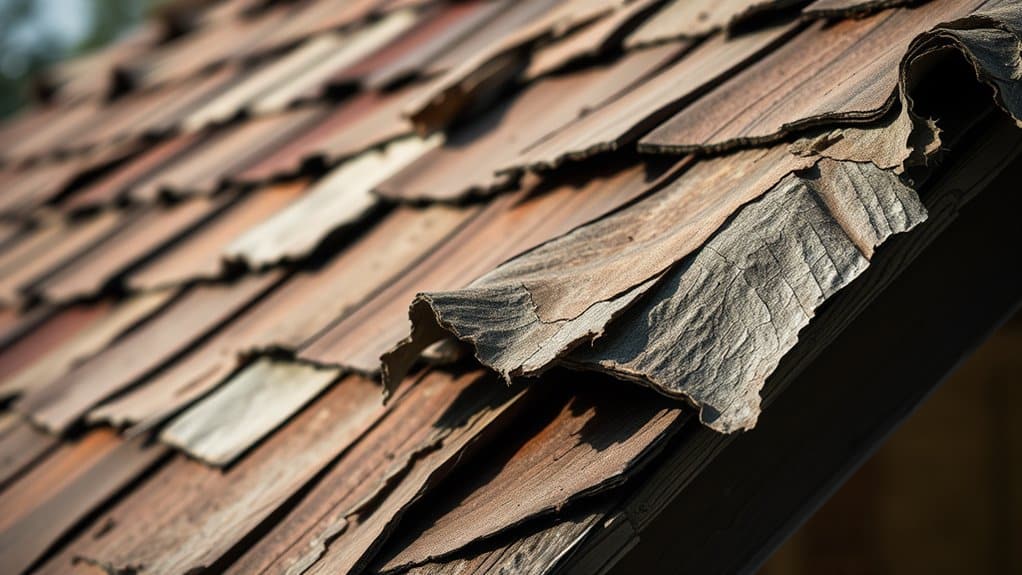
Curling and cracked shingles are clear signs that your roof needs attention. Addressing these issues promptly can prevent further damage and ensure your home's safety.
- Look out for visible distortions in shingles for early detection.
- Curling can result from ageing, poor ventilation, or installation issues.
- Be aware that cracked shingles can lead to water leaks and structural weakness.
- Conduct regular inspections to identify problems before they worsen.
Neglecting curling and cracked shingles can result in leaks and expensive repairs. By replacing damaged shingles and ensuring proper ventilation, you can maintain your roof's integrity.
Stay proactive to protect your home and share this important information with your community. Regular maintenance is essential to avoid significant issues later on.
Stains on Ceilings and Walls

If you spot stains on your ceilings and walls, it's crucial to act quickly, as these often indicate hidden water leaks.
Brown or yellowish marks typically arise from water seeping into your ceiling, suggesting problems with your roof or plumbing. Ignoring these stains can lead to serious structural damage and electrical risks.
Check your attic for signs of moisture and possible entry points, particularly after heavy rain. Once you've identified and fixed the source, tackle the stains with a mixture of bleach and water, then apply a stain-blocking primer before repainting.
To avoid future stains, consider improving attic ventilation and ensuring your gutters are well maintained. Regular inspections are essential for early detection and prevention.
Increased Energy Bills
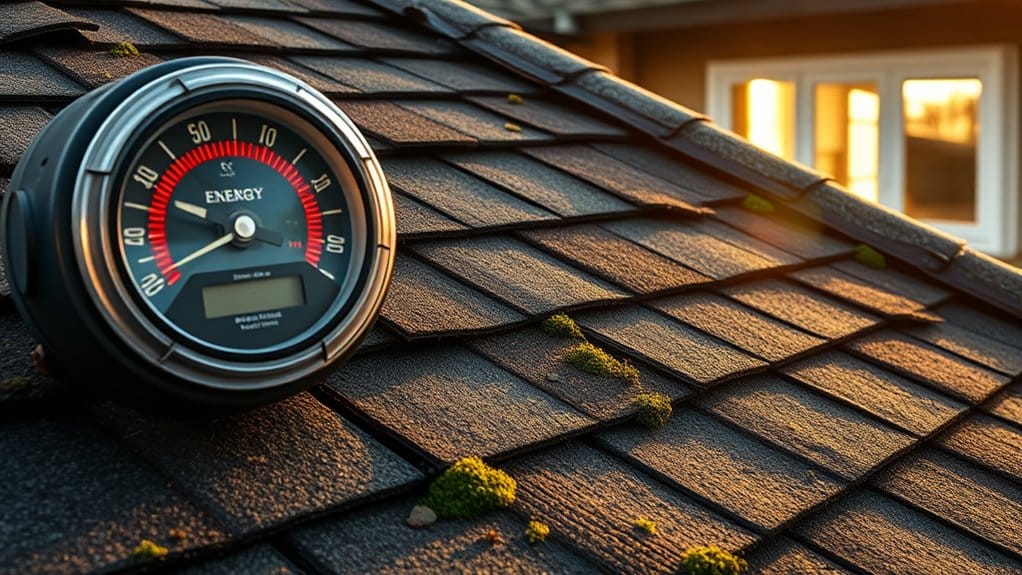
If you're seeing an increase in your energy bills, it may be time to take a closer look at your roof. A damaged or poorly insulated roof can significantly affect your home's energy efficiency. An energy audit could uncover gaps and leaks that allow heat to escape, causing your heating system to work overtime and driving up costs.
Here are a few points to consider:
- Poor insulation can lead to heat loss.
- Uneven indoor temperatures may require constant thermostat adjustments.
- Conditioned air escaping from your home results in wasted energy.
- Your heating and cooling systems may be under extra strain.
Upgrading your insulation or installing reflective roofing materials can reduce these issues and improve your home's energy efficiency.
Regular maintenance and timely repairs are essential to keep your energy bills manageable.
Blocked Gutters and Downspouts
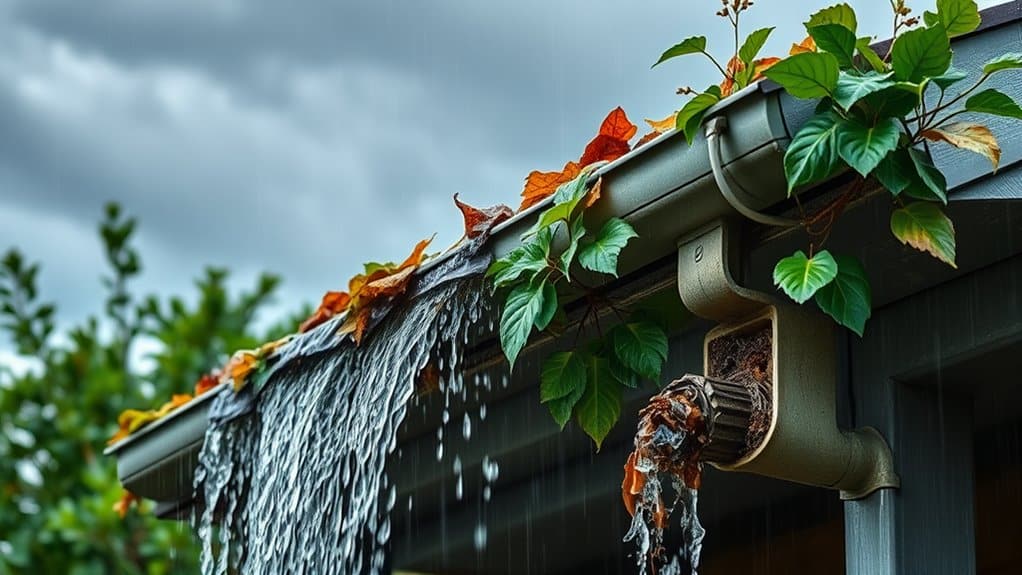
Blocked gutters and downspouts can cause serious issues for your home. When gutters become clogged, they can't drain water properly, leading to overflow that can damage your foundation and walls.
The added weight from stagnant water may cause gutters to bend or detach, resulting in costly repairs that can range from £800 to £5,600. Moreover, this blockage can create roof leaks as water pools and seeps beneath the shingles, potentially leading to significant structural damage.
Regular maintenance of your gutters is vital to prevent these problems and protect your home from erosion and pest infestations.
Signs of Mold and Mildew

Mould and mildew on your roof can cause significant structural problems if not addressed promptly.
Be on the lookout for these signs:
- Dark streaks or patches on roof tiles
- Musty smells in lofts or underfloor spaces
- Soft or spongy areas on the roof
- Water stains on ceilings
It's vital to implement mould prevention measures, such as ensuring proper ventilation and conducting regular inspections.
If you spot signs of mildew, use effective removal techniques to tackle the issue straight away.
Addressing mould growth not only maintains your roof's integrity but also contributes to a healthier living environment.
Don't delay; taking proactive steps can save you time and money in the long run.
Frequently Asked Questions
How Often Should I Inspect My Roof for Damage?
You should inspect your roof every two years, or more often after severe weather events. It's wise to check for debris and any damage, particularly if your roof is older, to ensure your home remains safe and well-maintained.
What Are the Benefits of Regular Roof Maintenance?
Regular roof maintenance extends the life of your roof and helps you avoid hefty repair bills. By following a simple maintenance checklist, you can spot potential issues early on. This proactive approach not only ensures your roof performs well but also enhances safety and boosts your property's value. In the end, it saves you money and gives you peace of mind. For instance, a small leak caught early can prevent major water damage and costly repairs down the line.
Can I Repair My Roof Myself or Hire a Professional?
You can manage small repairs on your roof yourself for flexibility and to save money. For instance, clearing debris or replacing a few missing tiles can often be done with basic tools. However, for more complicated issues or safety risks, it's wise to hire a professional. They ensure high-quality work, compliance with building regulations, and you'll have the reassurance that the job is done properly.
How Do I Choose a Reliable Roofing Contractor?
To select a reliable roofing contractor, start by reviewing their qualifications and reading customer feedback. Ensure they have relevant experience and a track record of positive reviews. Good communication is key; it reflects their dedication to quality work and customer satisfaction. For instance, if a contractor promptly answers queries and provides detailed estimates, it's a good sign they're professional and trustworthy.
What Materials Are Best for Roof Replacement?
Think of your roof as a vital shield for your home. For longevity, metal roofing is an excellent choice; it can endure harsh weather conditions effectively. If you're looking for a budget-friendly option, asphalt shingles provide dependable protection at a lower cost. Make your selection carefully, and your home will be well-protected.
Conclusion
If you've spotted any of these signs, don't delay in getting them fixed; putting off repairs can lead to more serious damage and higher costs. Your roof may appear fine from the ground, but minor issues can escalate quickly. Acting promptly will help safeguard your home's structure and prevent future problems. Regular upkeep and timely repairs can prolong your roof's life, ensuring your home stays safe and comfortable for years to come.


