

What to Expect During a Roof Replacement Project
During a roof replacement project, you can expect a detailed assessment of your existing roof, followed by measures to protect your home. The old roof will be carefully stripped away, with attention to managing debris. New roofing materials will then be installed layer by layer. Safety precautions will be in place throughout the process, and a final inspection will ensure everything meets quality standards. If any unexpected repairs arise, they will be addressed without delay. Keep reading to discover more about each stage of this vital project.
Key Takeaways
- Expect an assessment of your roof's condition, which includes checking for leaks and structural issues before the replacement starts.
- Prepare your home by clearing the attic and securing valuables to shield them from dust and vibrations during the work.
- The removal process entails stripping off old tiles and inspecting the roof decking for any hidden damage that may need repair.
- Be ready for possible delays due to weather or unexpected structural repairs, so maintain flexible scheduling and keep communication open with your contractors.
- After installation, conduct a final inspection to ensure quality and address any concerns before settling the final payment.
Assessment of Need for Roof Replacement
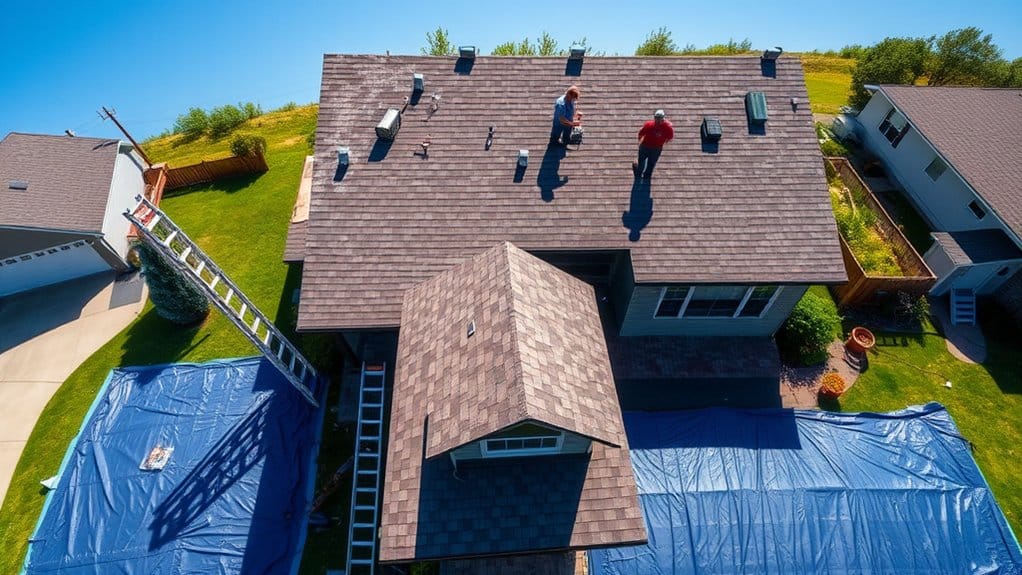
How can you tell if it's time to replace your roof? Start by checking its age; most roofs last between 20 to 50 years, depending on the materials used.
Use a simple inspection checklist to identify visible signs of deterioration, such as missing or damaged tiles and loss of granules. Look out for leaks and water damage inside your home, as recurrent leaks may signal an urgent need for replacement. Additionally, consider the average lifespan of your specific roofing material, as this can guide your decision-making process.
Also, check for structural issues like sagging or mould, as these can significantly weaken your roof. Lastly, consider how harsh weather conditions have affected your roof over time. A comprehensive inspection can help ensure a thorough assessment of the current roof condition, helping you make an informed decision about your roof's future.
Preparing Your Home for the Project
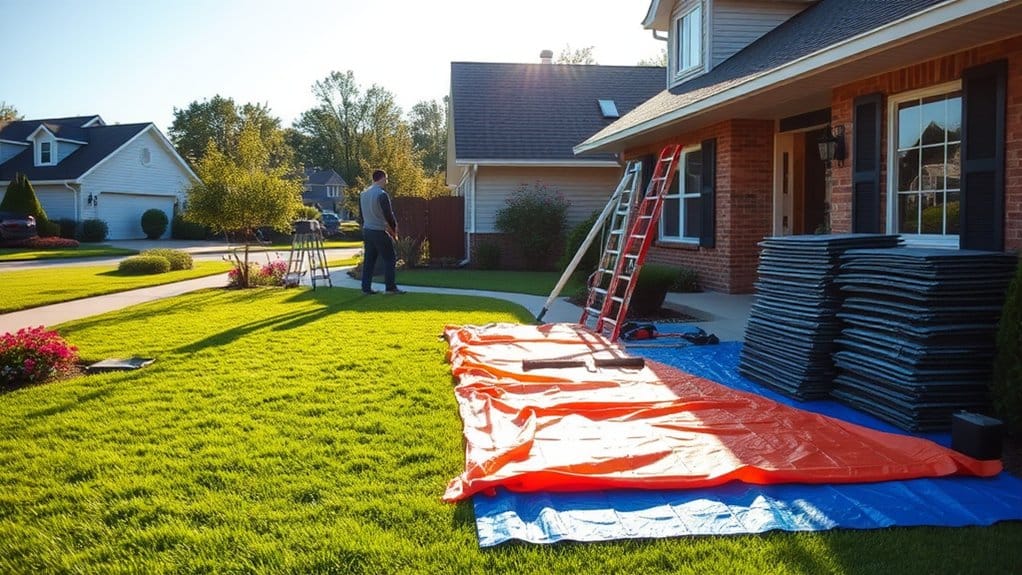
Preparing Your Home for Your Roof Replacement
As you get ready for your roof replacement, it's important to take steps to protect your home and ensure everything runs smoothly. Understanding your responsibilities as a homeowner and what your contractor will need is key. Here's a straightforward checklist:
| Preparation Steps | Purpose |
|---|---|
| Clear attic space | Prevent damage from dust and debris |
| Move outdoor items | Avoid damage to garden furniture and equipment |
| Secure interior items | Protect valuables from vibrations |
| Inform neighbours | Minimise disruptions |
| Provide power access | Assist contractor with their tools |
Additionally, knowing that local building codes may require specific permits for roof replacements can help you avoid fines and ensure compliance during the project. It's also beneficial to be aware of the warranty requirements that may be associated with your new roof to ensure you're fully covered.
Roof Removal Process
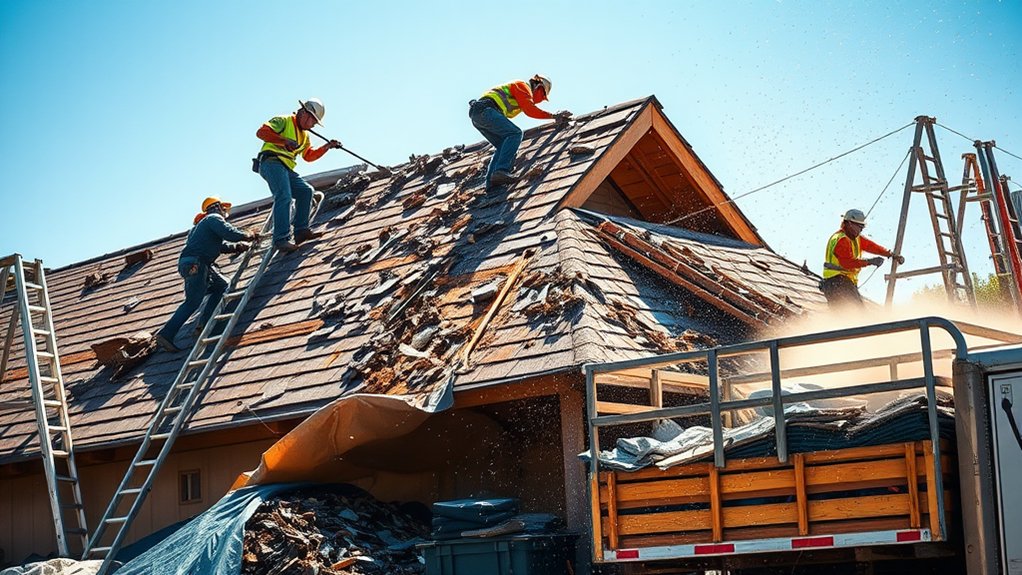
The roof removal process is a vital stage in your roofing project that demands careful planning and execution. It starts at the apex, where you remove ridge caps and shingles in manageable sections. Tools like roofing shovels and pry bars help with the efficient removal of materials. Working from the top down, it's important to protect the roof deck and identify any soft spots that may indicate damage. Addressing signs of damage promptly can prevent significant problems later on. Regular inspections can help identify potential issues before they escalate. Check the flashing for rust before taking it off, and ensure old nails are either removed or hammered down. Use tarps or dumpsters to collect debris for a tidy workspace. This meticulous approach not only prepares your roof deck for new installation techniques but also reveals any necessary repairs before applying new roofing materials.
Cleanup and Safety Measures
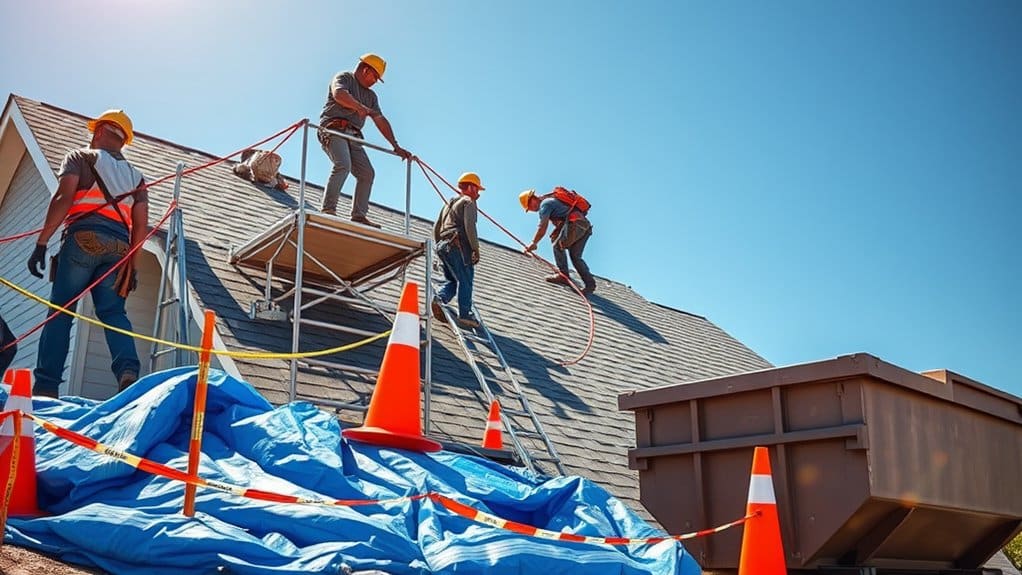
As you complete your roof replacement project, proper cleanup and safety measures are crucial.
A good debris management plan will help you efficiently clear waste while protecting your property and garden.
Make sure to use the right safety equipment to ensure a secure environment for everyone involved in the cleanup. Regular inspections and maintenance are important to extend the overall lifespan of your new roof, helping to prevent future issues.
Debris Management Strategies
Effective debris management strategies are vital for ensuring safety and keeping the environment clean during a roof replacement project.
Use containment techniques like tarps or temporary barriers to keep your work area tidy. Regular clean-ups throughout the day improve efficiency and reduce hazards.
Protect sensitive areas, such as gardens, by covering them, and ensure your crew has easy access to driveways for material deliveries.
Employing advanced equipment like chute systems or the Equipter RB4000 can simplify debris disposal. Additionally, implementing regular inspections can help identify potential hazards before they become significant issues.
After the installation, conduct a thorough final clean-up and inspection to ensure all debris and tools are removed, leaving your property spotless.
Prioritising these strategies leads to a safer, more organised project.
Safety Equipment Usage
When undertaking a roof replacement project, using safety equipment is vital to protect workers and ensure a smooth operation. The right safety gear significantly reduces the risks of falls and other hazards.
Here are three key components to include:
- Harness Systems: These secure workers to anchor points on the roof, preventing falls and providing essential protection.
- Guardrails: These provide passive protection by blocking access to edges and openings, available in both temporary and permanent options.
- Fall Protection Kits: Comprehensive kits include harnesses, lanyards, and lifelines to ensure all equipment is compatible and complete for optimal safety.
Implementing these measures will help create a safer working environment and promote a culture of safety throughout the project.
Protecting Surrounding Areas
Once workers are equipped with proper safety gear, it's crucial to focus on protecting the surrounding areas during a roof replacement project.
Begin by removing outdoor furniture and relocating vehicles to ensure easy access. Cover plants with tarps to protect them from falling debris, especially when working on steep roofs.
Mow the lawn to make it easier to spot any dropped nails, and secure the perimeter to keep children and pets safe.
Daily clean-ups and using magnetic sweepers for nail collection are essential debris safety measures.
Maintaining clear pathways for workers helps prevent slips and falls.
Installation Process Overview

To ensure a successful roof replacement, a clear installation process is crucial. Here are the key steps that determine the effectiveness of the installation and the quality of materials used:
- Initial Preparation: Contractors deliver materials, inspect the site, and implement safety measures.
- Removal of the Old Roof: Old shingles are carefully stripped away, debris is cleared, and the roof decking is checked for any damage.
- Installing New Components: Underlayment, flashing, and shingles are installed layer by layer, finishing with the ridge cap to ensure structural integrity.
Managing Delays and Unexpected Issues

When managing a roof replacement project, you may face delays due to weather and unexpected structural issues.
Stay proactive by regularly checking the weather forecast and being prepared for any hidden damage.
Clear communication with your contractor is vital to overcoming these challenges and ensuring the project remains on schedule.
For instance, if heavy rain is forecasted, discuss alternative plans to protect your property and keep the work progressing smoothly.
Weather-Related Delays
Weather-related delays are often unavoidable in roof replacement projects, but understanding their impact and managing them effectively can help minimise disruptions.
Here are some tips to navigate these challenges:
- Monitor Weather Forecasts: Keep an eye on local forecasts from reliable sources to anticipate adverse weather and adjust your plans accordingly.
- Flexible Scheduling: If bad weather hits, focus on other tasks that don't involve the roof, ensuring that work can continue smoothly.
- Proactive Communication: Keep your clients in the loop about any potential delays and changes to the project timeline to manage their expectations.
Unforeseen Structural Repairs
Unforeseen structural repairs can significantly affect your roof replacement project, leading to delays and increased costs.
During the removal process, you may uncover hidden damage such as waterlogged timber or weakened rafters that need immediate attention. Pest infestations might also reveal structural weaknesses that were previously unnoticed.
To navigate these unexpected challenges, maintain clear communication with your contractor and have a contingency plan in place.
It's crucial to have some flexibility in your budget to accommodate these surprises, and regular site inspections can help spot potential issues early on.
By prioritising essential repairs and ensuring material availability, you can minimise disruptions and keep your project on schedule.
Addressing these matters promptly will help protect your home's integrity and value.
Final Inspection and Quality Assurance
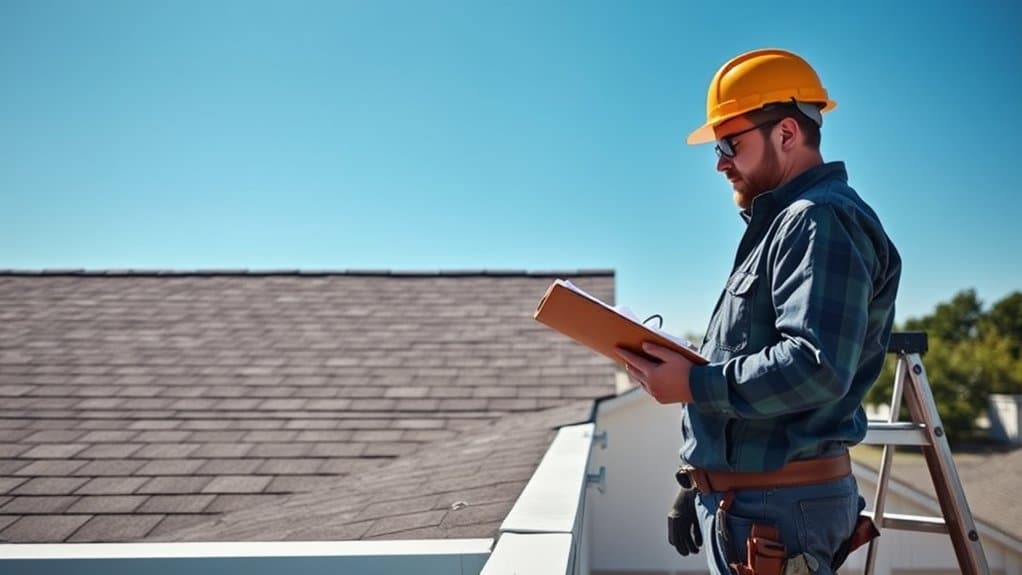
As you reach the final inspection and quality assurance stage of your roof replacement project, it's crucial to ensure that every detail complies with the necessary standards.
This phase involves verifying adherence to local building regulations and safety requirements through a comprehensive assessment. Inspectors will concentrate on key criteria, including:
- Material Installation: Check that the roofing materials are correctly aligned and securely fastened.
- Flashing and Ventilation: Ensure these components are properly fitted to prevent any leaks.
- Debris Removal: Conduct a thorough clean-up to leave your property tidy and safe.
Understanding Warranty Information

Understanding warranty information is crucial for homeowners planning a roof replacement, as it can significantly impact the long-term value of your investment.
Familiarise yourself with the two main types of warranties: manufacturer and contractor warranties. Manufacturer warranties usually last between 25 to 50 years and cover defects in materials, while contractor warranties typically range from 2 to 10 years, focusing on workmanship.
Be mindful of coverage limits; many warranties become prorated as your roof ages, meaning the compensation for repairs or replacements decreases over time.
Additionally, it's important to pay attention to the fine print, as improper installation can void a manufacturer warranty.
Regular maintenance is key to keeping your warranty valid, so ensure you follow manufacturer recommendations and keep records of your maintenance to protect your investment effectively.
Final Payment and Satisfaction Confirmation
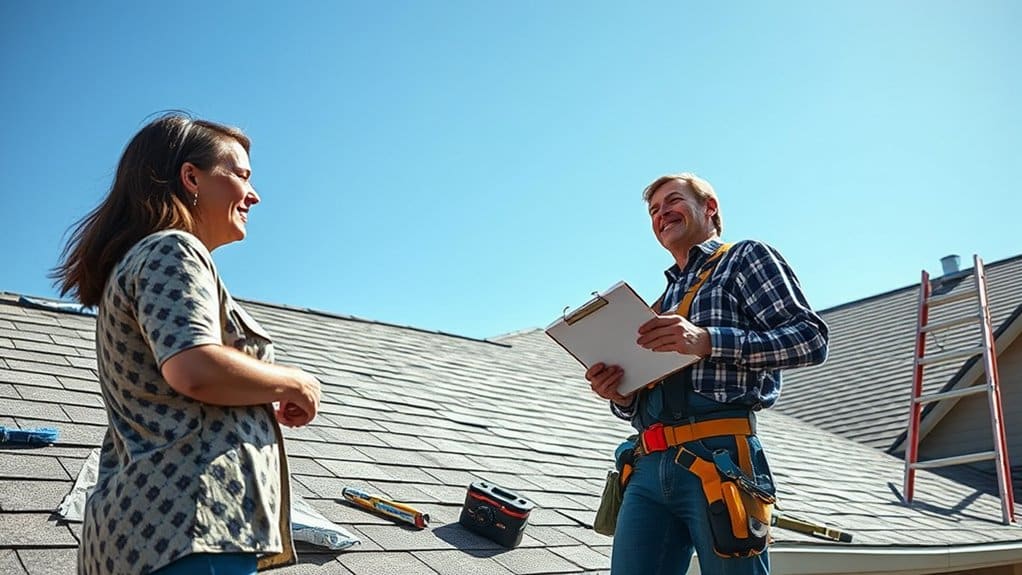
Final payment for your roof replacement project should only be made once you're satisfied with the work completed.
To ensure everything meets your expectations, follow these steps:
- Inspect the roof thoroughly for any visible issues.
- Join your contractor for a final walk-through to review the work and any documentation.
- Ensure any concerns are addressed before making the final payment.
Use secure payment methods, such as bank transfers or credit cards, to keep a clear financial record.
This also provides protection in case of disputes.
Confirming your satisfaction before payment is vital for a successful project and helps avoid any future conflicts.
Frequently Asked Questions
How Long Does a Roof Replacement Typically Take?
A roof replacement usually takes between 1 to 12 days, depending on factors such as the size and complexity of the roof, as well as the weather conditions. For instance, a simple, small roof might be completed in just a couple of days, while a larger or more intricate design could take over a week. Being aware of these factors can help you better prepare for the project and ensure everything runs smoothly.
What Types of Roofing Materials Are Available?
There are several roofing materials to consider, such as asphalt shingles, which are favoured for their cost-effectiveness, and metal roofing, renowned for its longevity. Each option is designed to meet different requirements, allowing you to select the ideal solution for your project.
Will My Homeowners Insurance Cover Roof Replacement?
Your home insurance may cover roof replacement if you make claims for covered events. Check your policy for coverage details, including limits, excesses, and exclusions, to ensure you get the most out of your benefits. For example, if a storm causes damage, your insurance might help with repair costs.
What Should I Do if It Rains During Installation?
If it rains during installation, ensure rain protection by covering exposed areas with tarpaulins. Be prepared for possible delays and discuss any immediate concerns with your contractor to protect the integrity of your roof.
How Will I Know When the Roof Is Fully Installed?
You'll know your roof is fully installed after a comprehensive roof inspection and a final walkthrough of the project. These steps ensure that every detail has been addressed, confirming the quality and durability of your new roofing system.
Conclusion
In summary, during your roof replacement project, you can expect detailed assessments, careful preparations, and efficient installations. You'll go through the removal process, handle any unexpected issues, and ensure a tidy and safe working environment. After final inspections and receiving clear warranty information, you'll have peace of mind. Ultimately, you will end up with a durable roof that enhances your home's protection and increases its value. By staying informed and engaged, you can ensure the project meets your expectations, leaving you satisfied with the outcome.


