

How to Find a Reliable Roof Repair Contractor
To find a reliable roof repair contractor, start by checking their credentials and licensing with your local council. Look at their experience by reviewing past projects, and ask for detailed quotes that clearly outline costs. Ensure they offer robust warranties and verify their insurance coverage. Collect client references and read online reviews to assess their reliability and customer satisfaction. By following these steps, you'll be well-equipped to make an informed choice.
Key Takeaways
- Check the contractor's licensing and insurance through official channels to ensure they meet local regulations.
- Look into the contractor's experience by examining their portfolio and previous projects for quality of workmanship and materials.
- Request detailed quotes from several contractors to compare prices and understand the repair costs involved.
- Review the warranties provided by the contractor, paying attention to the duration and exclusions to assess their confidence in their work.
- Seek client references and read online reviews to gauge the contractor's reliability, customer service, and overall satisfaction from past clients.
Evaluating Credentials

When searching for a reliable roof repair contractor, it's crucial to evaluate their credentials to ensure a successful project.
First, check if the contractor is licensed and compliant with local regulations, and verify that their licence is active and in good standing. This ensures they adhere to building codes and safety standards.
Next, confirm that they hold both Public Liability and Employers' Liability Insurance to protect you from potential financial risks. Additionally, ensure you verify the contractor's license through the Florida Construction Industry Licensing Board website to confirm its status. A contractor should also have necessary insurance coverage to safeguard against liability claims.
Look for certifications from reputable trade associations and their involvement in local organisations, as this enhances their credibility.
Lastly, read client testimonials to gain insights into their previous work and service quality.
This thorough assessment will help you choose a contractor who values quality and client satisfaction.
Assessing Experience

Assessing a contractor's experience is crucial when hiring someone for your roofing needs.
Look for contractors with a varied portfolio, which shows their ability to handle different roofing projects. A strong track record indicates quality work and reliability, so ask about their years in the industry. Experienced contractors stay current with industry trends, using the latest techniques and materials to address roofing issues effectively. Regular inspections ideally in spring and fall help maintain optimal roofing system condition, with the National Roofing Contractors Association recommending inspections every two years. Additionally, ensure that the contractor is familiar with health and safety regulations that govern roofing work to guarantee a safe working environment. Request to see examples of past projects to evaluate their craftsmanship and materials.
Analyzing Pricing and Estimates

When hiring a roof repair contractor, it's crucial to analyse pricing and estimates to ensure you get good value for your money. Start by requesting detailed cost estimates that clearly outline labour, materials, and any additional charges. Look for transparency in pricing; reliable contractors will provide straightforward, itemised quotes. Be wary of estimates that are vague, as this could indicate a lack of professionalism. Comparing multiple quotes is essential to understand the pricing landscape and identify any potential red flags. Remember that costs can vary based on the size of the roof, the materials used, and the extent of the repairs needed (repair types and their costs). Additionally, consider that material choice significantly impacts overall expenses, as seen in the cost variations by material (material costs per square metre) for roofing options.
Reviewing Workmanship and Materials
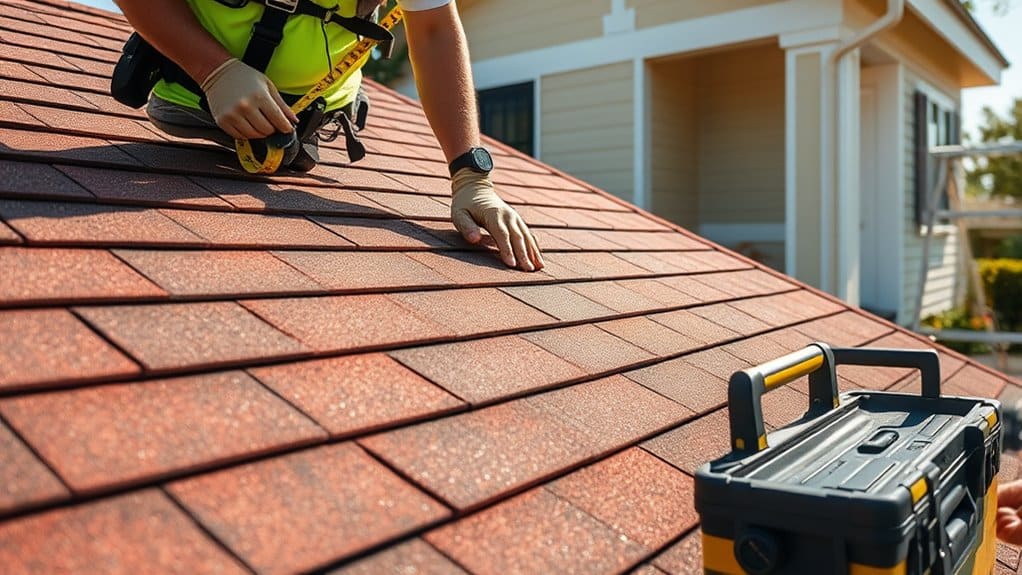
When reviewing the workmanship and materials for your roof repair, begin by checking the quality of the materials. Ensure they're sourced from reputable manufacturers known for their durability. You should also evaluate the contractor's craftsmanship by looking at their project portfolios and conducting on-site inspections. This will help you confirm that they pay attention to detail and follow safety standards. Additionally, consider the longevity of the materials used, as high-quality materials can significantly reduce the need for repairs over time.
Material Quality Assurance
To ensure a successful roof repair, it's crucial to focus on material quality assurance, as the choice of materials and workmanship significantly affects your roof's lifespan and performance.
Here are some key strategies to consider:
- Material Types: Select robust tiles and weatherproof coatings for improved durability.
- Brand Selection: Choose trusted manufacturers to ensure reliability and longevity of products.
- Material Testing: Carry out tests to confirm materials meet project specifications and can endure local weather conditions.
- Quality Control Measures: Use quality checklists and regular inspections to uphold standards and promptly address any material defects.
Additionally, consider using materials with excellent energy efficiency benefits, as they can help reduce long-term costs associated with heating and cooling.
Craftsmanship Evaluation Techniques
How can you ensure your roof repair contractor provides high-quality workmanship? Start by assessing their craftsmanship standards against recognised quality benchmarks. Here are some straightforward techniques:
| Evaluation Technique | Purpose | Key Indicator |
|---|---|---|
| Portfolio Review | Examine past projects | Range and standard |
| Workmanship Warranty | Assess confidence in their skills | Duration of warranty |
| Client Feedback Analysis | Gauge customer satisfaction | Online reviews |
| Post-Completion Inspection | Confirm quality of execution | Attention to detail |
Understanding Warranties and Guarantees

What should you know about warranties and guarantees before hiring a roof repair contractor? Understanding the types of warranties can prevent future issues. Here are essential points to consider:
- Workmanship Warranty: This covers errors in installation and usually lasts between 2 to 25 years.
- Manufacturer Warranty: This protects against defects in roofing materials, typically lasting 10 to 30 years.
- Warranty Exclusions: Be mindful of what isn't covered, such as damage from natural disasters or lack of proper maintenance.
- Transferability: Some warranties can be transferred to new homeowners, which can add value to your property.
Always review the details of the warranty, including any limitations and the claims process.
A contractor who offers a robust warranty demonstrates confidence in their work, ensuring you have protection in the long run.
Managing Communication and Project Timeline

Effective communication and a well-organised project timeline are crucial for a successful roof repair. Start by establishing clear communication channels with your contractor. Use the table below to manage your project efficiently:
| Communication Method | Purpose | Frequency |
|---|---|---|
| Phone | Quick updates | As needed |
| Detailed documentation | Weekly | |
| Text Messaging | Fast communication | Daily |
Encourage open feedback and ensure transparent updates throughout the project. Set realistic timelines, taking into account weather conditions and material availability, and coordinate your schedules with your contractor. Consider using project management tools for real-time updates, and be prepared for possible delays. Regular check-ins will strengthen your relationship and keep everyone informed.
Checking Insurance Coverage and Licenses
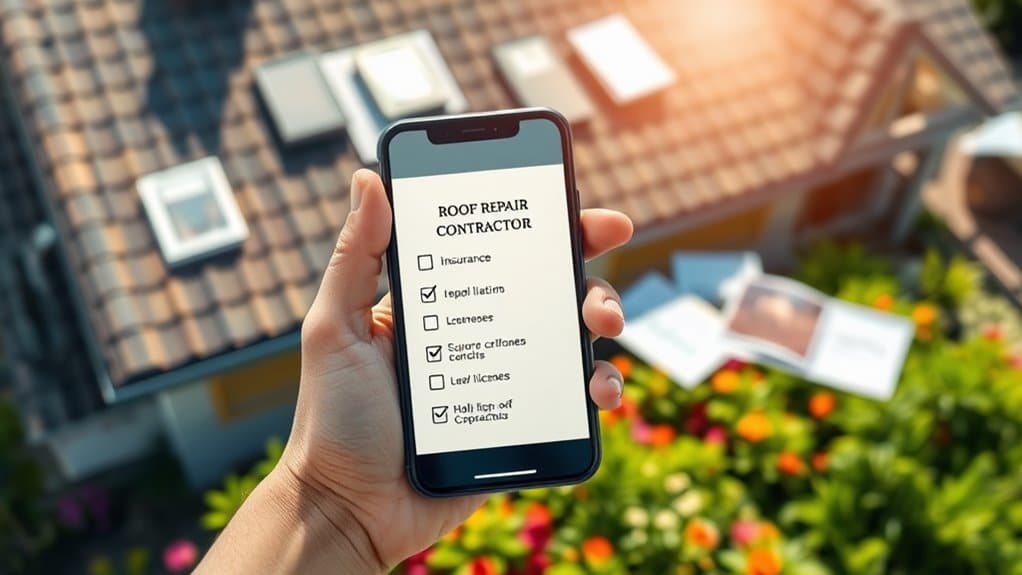
When hiring a roof repair contractor, it's crucial to check their licences and insurance coverage for your protection.
Confirm that their licences are valid, review the limits of their insurance policies, and ensure they comply with local regulations.
This diligence not only protects your investment but also ensures the work meets industry standards.
For instance, if a contractor has inadequate insurance, you could be liable for any accidents that occur on your property.
Verify License Authenticity
Before hiring a roof repair contractor, it's crucial to verify their licence authenticity and insurance coverage.
Understanding the contractor's background can significantly affect the success of your project.
Here's how to check their licence:
- Check Local Regulations: Start by researching whether your local area requires contractors to hold a licence.
- Use Licence Lookup Services: Make use of online resources provided by local councils or relevant authorities to confirm their status.
- Verify Licence Number: Ensure they supply a valid licence number for your verification.
- Investigate Complaints: Look into any complaints or disciplinary actions taken against the contractor.
Taking these steps can help ensure you hire a reputable contractor for your roof repair needs.
Confirm Insurance Limits
Confirming insurance limits is a crucial step when hiring a roof repair contractor. Always request a certificate of insurance to ensure the contractor has valid coverage, particularly for general liability and employers' liability.
Make sure the policy limits are between £1 million and £5 million to protect yourself from financial loss due to accidents on your property.
It's also important to check that any subcontractors have sufficient insurance, as their lack of coverage can increase your risk.
Consider reaching out to the contractor's insurance provider for the latest details and to understand the specific risks covered.
Check Regulatory Compliance
After ensuring your insurance limits are in order, it's crucial to check that your roof repair contractor adheres to all regulatory requirements. This is vital for the success and safety of your project.
Here's how to do it:
- Understand Local Regulations: Research the specific licences required in your area, as these can differ between councils.
- Verify Licences: Use online resources or contact local licensing authorities to confirm your contractor's credentials.
- Check for Varying Licensing Levels: Some regions have distinct licensing requirements for residential versus commercial work.
- Inquire About Liability Insurance: Ensure your contractor has adequate liability insurance to cover any potential damages.
Gathering Client References and Reviews

When searching for a reliable roof repair contractor, it's crucial to gather client references and reviews to make an informed choice.
Start by asking the contractor for recent client testimonials that reflect their current performance. Previous clients can offer insights into the quality of work, punctuality, and overall satisfaction.
Don't hesitate to ask specific questions about the contractor's communication and how they maintain the site during projects.
Utilise online platforms like Google, Trustpilot, and Checkatrade to read reviews. Look for consistent positive feedback on customer service and project completion.
Comparing Multiple Contractors
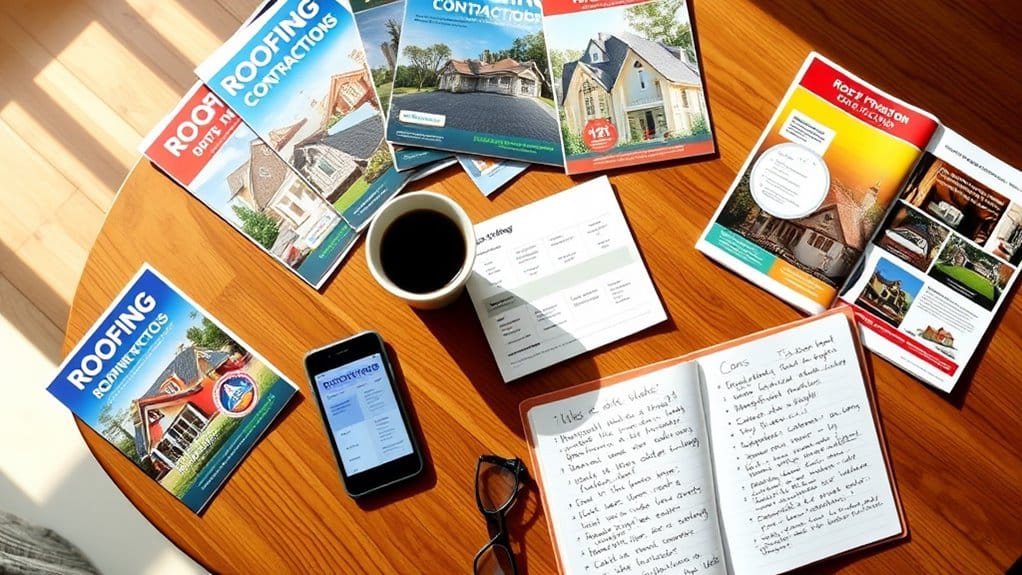
Gathering references and reviews lays a strong foundation for choosing a roof repair contractor, but the process doesn't end there. Comparing multiple contractors helps you assess their transparency and ensure they meet your expectations.
Here's how to effectively evaluate your options:
- Scope of Work: Ensure all estimates clearly outline the specific tasks involved.
- Material Quality: Compare the quality of materials each contractor proposes; for instance, some may offer premium roofing tiles while others might suggest lower-grade options.
- Cost Breakdown: Look for clear cost breakdowns to avoid unexpected charges later on.
- Warranty Details: Check the warranties provided on both materials and workmanship to ensure you're covered.
Frequently Asked Questions
What Should I Do if I Have a Roofing Emergency?
In a roofing emergency, your safety comes first. If necessary, evacuate the premises. Quickly assess the damage to identify any immediate hazards. Protect your belongings by moving them away from affected areas. Use waterproof materials like tarps or buckets to shield leaks temporarily, then contact a professional for repairs.
How Long Does a Typical Roof Repair Take?
Roof repairs can often feel urgent. Minor fixes usually take just a few hours to a day, whereas moderate repairs might require one to two days. The exact duration depends on several factors, such as the type of damage and weather conditions. For instance, fixing a small leak could be quick, but replacing several tiles might take longer.
Can I Stay in My Home During Repairs?
Yes, you can stay at home during repairs. Just ensure you take safety precautions, such as keeping children away from the work area and setting clear boundaries to protect both your space and the contractors while they work. For instance, if you're having a room renovated, consider designating a separate area for your family to use.
What Weather Conditions Affect Roofing Repairs?
Just like a ship braving a storm, it's crucial to recognise how rain, extreme temperatures, and seasonal maintenance impact roofing repairs. Storm damage can hinder repairs, so it's vital to plan for safety and effectiveness. For instance, tackling roof work in heavy rain can lead to unsafe conditions and further damage. Always consider the weather before starting repairs to ensure a successful outcome.
How Can I Maintain My Roof After Repairs?
To maintain your roof after repairs, arrange regular inspections and tackle any issues as soon as they arise. Aim for roof maintenance every six months, paying particular attention to the condition of the shingles and ensuring proper ventilation. This proactive strategy helps extend the lifespan of your roof and reduces the need for future repairs. For instance, if you notice loose or missing shingles, address it quickly to prevent further damage.
Conclusion
Finding a reliable roof repair contractor can feel daunting, but with a focused approach, you can identify the right fit for your needs. Start by checking their credentials, experience, and customer reviews. This will give you confidence in your choice. Remember, investing time now can prevent expensive repairs in the future. So, take a moment to gather your information and ensure your roof remains a strong protector of your home for years to come.


