

How to Fix Common Flat Roof Leaks
To fix common flat roof leaks, begin by identifying any damage to the membrane and ensuring proper drainage. Look for signs of physical damage, such as cracks and blisters. If you notice ponding water, remove debris and enhance drainage systems. Repair any damaged flashing using roofing cement and sealants. Consider applying waterproof coatings as a preventative measure, and check for corrosion on metal roofs. If you encounter multiple leaks or significant damage, it may be wise to seek professional assistance. More effective repair techniques are detailed below.
Key Takeaways
- Check the roof for visible damage like cracks, blisters, or punctures, and fix these quickly to avoid leaks.
- Use suitable roofing sealants on cracks and seams, making sure the surfaces are clean and dry for the best bond.
- Repair or replace damaged flashing around roof penetrations to remove potential leak sources and create a waterproof seal.
- Tackle ponding water by enhancing drainage, clearing debris, and ensuring the roof has a proper slope to prevent long-term issues.
- If you spot extensive leaks or serious signs of damage, it’s wise to consult a professional for a comprehensive assessment and repair.
Understanding the Causes of Flat Roof Leaks

Understanding the causes of flat roof leaks is vital for proper maintenance and repairs. Common membrane types, such as modified bitumen, EPDM rubber, and thermoplastics like TPO or PVC, can suffer from damage due to physical wear and environmental factors. This can lead to issues like cracks, blisters, or splits. Damaged roofing membranes endure significant wear from humans and nature, making them susceptible to deterioration. When these membranes deteriorate, water can seep beneath them, compromising insulation and causing hidden leaks. Additionally, regular inspections of the roof can help identify issues before they escalate into serious problems.
Furthermore, damaged or improperly installed flashing around roof penetrations—like vents and HVAC units—often becomes a source of leaks. Regular inspections of both the membranes and flashings are crucial for catching problems early. By recognising these potential issues, you can take proactive steps to prevent leaks and preserve the integrity of flat roofs for your clients.
Identifying Water Ponding and Drainage Issues

When you see standing water on a flat roof, particularly if it remains for over 48 hours after rain, it’s crucial to investigate potential drainage problems. Ponding often occurs due to insufficient slope, blocked drains, or structural settling. Look for signs such as algae growth, ice accumulation, or sagging areas, as these point to ongoing moisture issues and poor drainage. Check drains and downspouts for debris or damage to pinpoint any failures. To improve drainage, regularly clear debris from gutters and scuppers, and carry out routine inspections to catch emerging issues early. Taking immediate action to address ponding water is essential to prevent long-term damage, as untreated issues can lead to serious water ingress that may require emergency roof repairs.
Inspecting for Physical Damage on the Roof

To effectively tackle flat roof leaks, conduct a thorough inspection for physical damage.
Begin by examining the roof surface for visible cracks, blisters, or punctures that may cause leaks. Use a flashlight to identify subtle fractures at seams. Regular maintenance is crucial to prolonging roof lifespan and minimizing leak potential.
Don’t ignore discoloured spots or stains; these can indicate trapped moisture. Check the underside of the roof deck for signs of rot or corrosion, as these issues can weaken structural integrity. Electronic Leak Detection can be a valuable tool to identify pinpointed areas of breach during your inspection.
Pay close attention to flashings and roof penetrations for any gaps or cracks that could allow water to enter.
Evaluating Environmental and Structural Factors

Evaluating environmental and structural factors is crucial for diagnosing flat roof leaks, as these elements significantly affect the roof’s integrity.
For instance, sunlight and UV exposure can weaken materials, leading to cracks and flaking that permit water ingress. Similarly, moisture build-up from drainage problems can result in leaks and internal damage, while stagnant water accelerates wear and undermines insulation.
Wind and weather conditions also place additional stress on roof materials, causing tears and loosening seams. Moreover, structural settlement can misalign drains, increasing the risk of pooling.
Implementing Regular Maintenance and Inspections

To prevent leaks in flat roofs, establish a regular routine for inspections and maintenance.
Schedule checks at least twice a year, preferably in spring and autumn, and after any severe weather.
Effective maintenance helps identify problems early, ensuring the integrity of your roof is protected.
For instance, after a heavy storm, check for debris or damage that could lead to leaks.
Scheduled Inspection Frequency
Regular inspections are crucial for maintaining flat roofs, with at least two evaluations recommended each year—once in spring and once in autumn.
These inspections help identify any damage caused by severe weather. Ideally, aim for one professional assessment annually, but consider more frequent checks if your roof is older or in poor condition.
After major weather events, such as storms or heavy rain, inspect your roof to catch any issues early.
Factors like nearby trees, local weather conditions, and visible damage can affect how often you should inspect your roof.
Regular evaluations not only meet insurance requirements but also prolong your roof’s lifespan by allowing for timely maintenance and repairs.
Effective Maintenance Practices
Maintaining a flat roof may seem daunting, but proper upkeep can significantly prolong its life and prevent leaks.
Begin with a maintenance checklist that includes regular cleaning to remove debris, ensuring drainage pathways are clear to avoid standing water, and applying protective coatings every few years. Regular visual inspections will help identify early signs of damage such as cracks or ponding.
Pay attention to preventative measures like enhancing insulation and ventilation to prevent ice dams during the colder months.
It’s wise to schedule professional inspections for comprehensive assessments and expert advice.
Common Signs of Flat Roof Leaks

How can you tell if your flat roof is leaking? Look for visible water stains or mould growth indoors—brown or dark patches on ceilings and walls often indicate leaks, particularly after rain.
Mould in attics suggests moisture intrusion, which can pose health risks.
Check for pooling water on the roof; if it remains for more than 48 hours, you likely have drainage problems.
Cracks, blisters, or splits in the roofing membrane can also indicate leaks.
Loose or damaged flashing around vents and pipes may allow water to enter.
Lastly, be alert for structural issues, such as sagging areas, which can signal deeper problems.
Regular leak detection and maintenance can help you address these signs swiftly.
Sealing Small Cracks and Splits
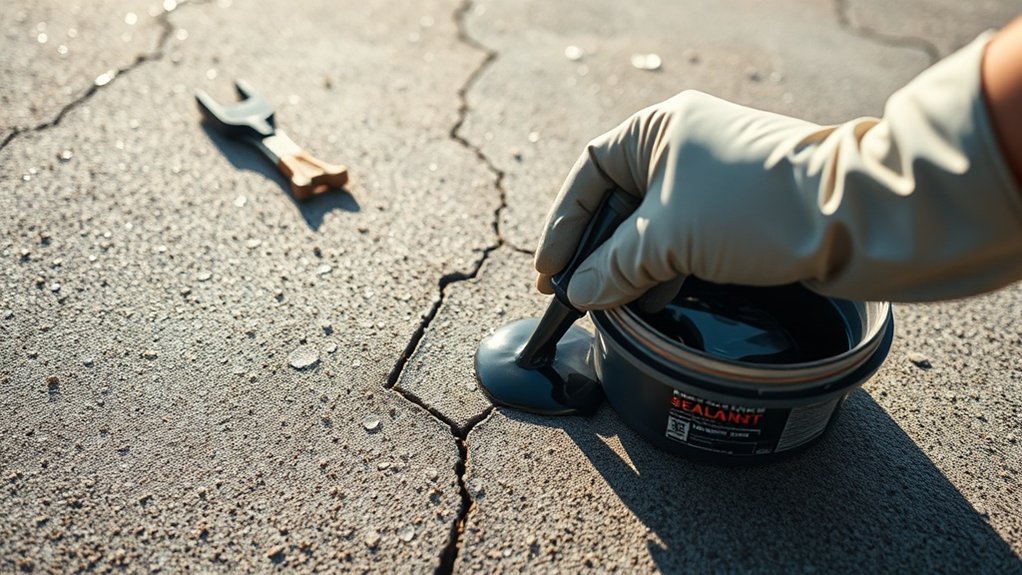
To seal small cracks and splits on your flat roof, first, locate them carefully.
Once you’ve identified the cracks, use roofing sealants that are specifically designed for durability and waterproofing.
This straightforward approach helps prevent water from seeping in and can prolong the lifespan of your roof.
Identify Crack Locations
Identifying crack locations is crucial for effectively sealing small cracks and splits on flat roofs. Use a variety of inspection techniques to ensure you spot all potential issues. Conduct regular visual inspections, looking for signs of damage such as splits or blisters. Also, watch for interior clues like water stains and musty odours.
| Inspection Technique | Areas to Check | Signs of Damage |
|---|---|---|
| Visual Inspection | Roofing membrane | Cracks, splits, blisters |
| Interior Monitoring | Ceilings and walls | Stains, mould, peeling paint |
| Thermal Imaging | Under the membrane | Trapped moisture |
| Water Testing | Roof sections | Infiltration points |
| Professional Inspection | Complete roofing system | Advanced diagnostics |
Apply Roofing Sealants
Applying roofing sealants is crucial for effectively sealing small cracks and splits in flat roofs, helping to prevent water leaks and extend the roof’s lifespan.
To ensure a successful application, follow these steps:
- Sealant Selection: Choose the appropriate sealant for your roof material—options include polyurethane, bitumen-based, liquid rubber, or acrylic.
- Surface Preparation: Clean the area thoroughly, removing any debris and ensuring the surface is dry.
- Application Techniques: Use a caulking gun for precise application along cracks. For larger gaps, fill the space, allow it to cure, then reinforce with mesh tape.
Repairing Damaged Flashing Around Penetrations
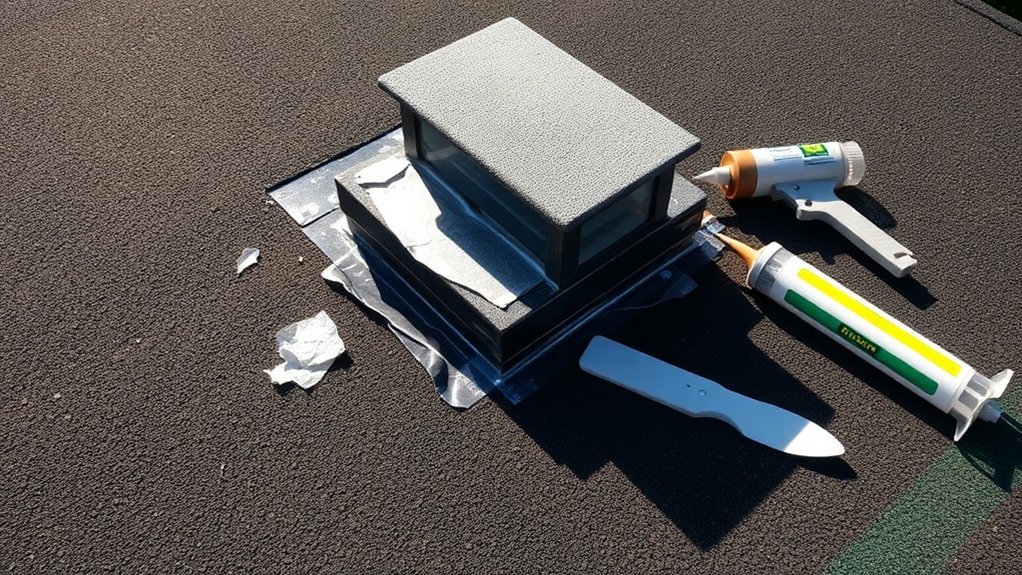
When inspecting the flashing around roof penetrations, look out for damage such as cracks, rust, or sections that are missing.
Water stains on walls can also signal hidden leaks. Carefully remove any damaged flashing, using a heat gun if needed to make the job easier. Clean the area thoroughly to ensure a good bond with the new flashing materials.
Apply roofing cement beneath and around the flashing, then use polymer sealants to create a waterproof barrier. Secure the edges with the right fasteners, taking care not to overdrive them to avoid leaks.
Regular inspections and prompt repairs are crucial for preventing leaks and maintaining the integrity of your roof’s flashing.
Applying Waterproof Coatings for Protection

Selecting the right waterproof coating is crucial for safeguarding your flat roof against leaks and prolonging its lifespan. Here are three popular options to consider:
- Acrylic Coatings: Affordable, easy to apply, and energy-efficient thanks to their high reflectivity.
- Polyurethane Coatings: Tough and resistant to physical damage, making them ideal for roofs that experience heavy foot traffic.
- Silicone Coatings: Extremely water-resistant and UV stable, offering long-lasting protection.
When applying waterproof coatings, ensure proper surface preparation and select the right application methods, such as brushing or spraying, depending on the type of coating.
Always adhere to the manufacturer’s guidelines for optimal results, and consider using primers to improve adhesion when needed.
Following these steps will enhance the effectiveness of your waterproof coatings.
Addressing Corrosion on Metal Roofs
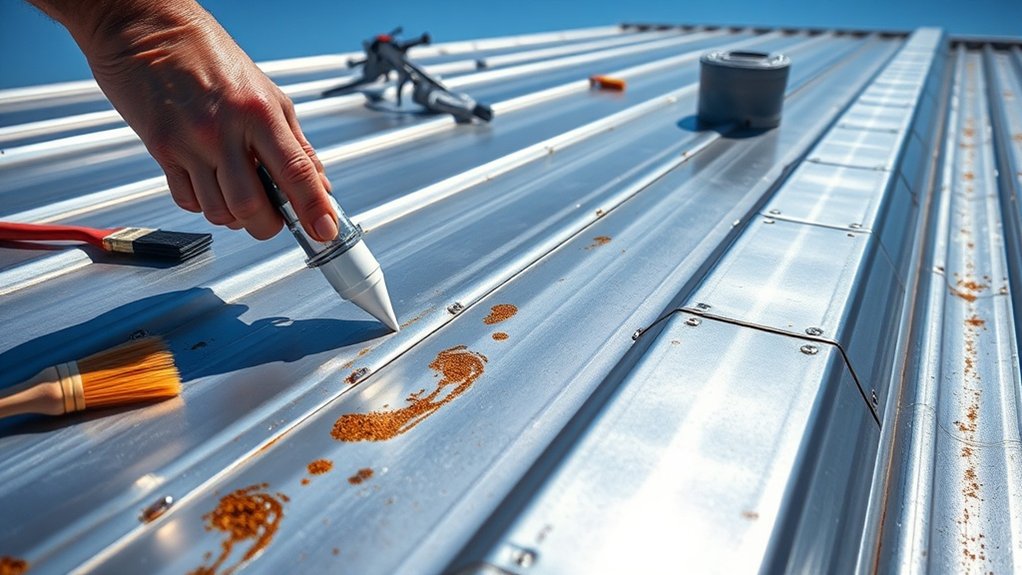
To effectively tackle corrosion on metal roofs, start by identifying areas with rust or deterioration.
Once you’ve found these spots, you can consider various repair methods to restore the roof’s integrity.
Understanding the root causes of corrosion will enable you to implement long-lasting solutions to prevent future issues.
For instance, regular maintenance, such as cleaning debris and ensuring proper drainage, can significantly extend the lifespan of your roof.
Identify Corrosion Areas
Identifying corrosion areas on metal roofs is crucial for maintaining structural integrity and preventing leaks.
To effectively assess corrosion, focus on these key areas:
- Roof Penetrations: Examine fasteners, seams, and any cuts or drilled sections, as these are particularly susceptible to corrosion.
- Visual Indicators: Watch for bubbling paint or rust stains, which often indicate underlying metal damage.
- Environmental Factors: Be mindful of regions in coastal or industrial areas, where moisture and salt can speed up corrosion.
Regular assessments and timely interventions are essential for preventing corrosion.
Repair Techniques Overview
Addressing corrosion on metal roofs may seem daunting, but using effective repair techniques is essential for maintaining their integrity and preventing leaks.
Begin by removing rust with a wire brush or sandpaper, scrubbing thoroughly without damaging the metal. Rinse the area with water and ensure it’s completely dry to prevent moisture build-up. For extensive rust, consider hiring a professional for cleaning.
Next, prepare the surface by applying a rust-inhibiting primer specifically designed for metal roofs right after rust removal. Ensure the surface is clean and dry for the best adhesion.
For small holes, metal patch kits work well, while cracks can be sealed with waterproof, UV-resistant sealants. Timely repairs will help extend your roof’s lifespan and improve its resistance to leaks.
Improving Drainage Components to Prevent Ponding

Improving drainage components is vital for preventing ponding on flat roofs, as stagnant water can cause serious structural problems.
To enhance your drainage systems, consider these key aspects:
- Proper slope: Ensure your roof has a slope directing water towards drains, ideally between 1-2%.
- Strategic drain placement: Position interior drains at natural low points to effectively collect water.
- Redundancy is key: Use a combination of interior drains, scuppers, and gutters for optimal water evacuation.
When to Call a Professional for Repairs
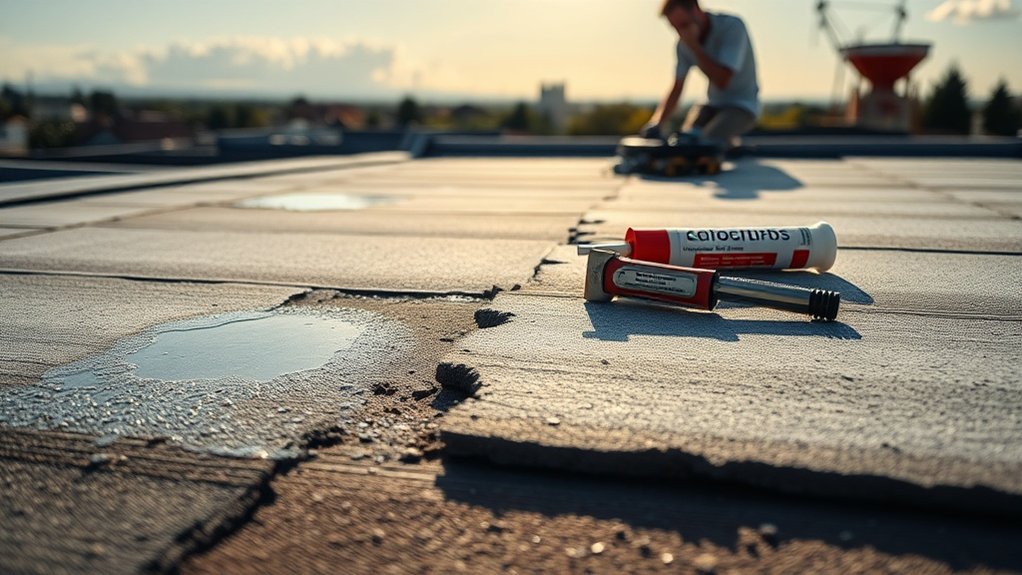
Knowing when to call a professional for flat roof repairs is vital for maintaining your property’s integrity. If you spot extensive or multiple leaks, it’s time to get a professional assessment.
Large cracks, blisters, or soft spots can indicate serious underlying issues that need expert attention. Roofs older than ten years showing signs of damage are also strong candidates for a professional evaluation.
Don’t take unnecessary risks; roofing work involves fall hazards and requires specialised safety equipment that only professionals have.
If your attempts at minor DIY fixes haven’t worked, it’s wise to hire an expert. They can assess the roof’s condition accurately, identify critical problems, and ensure repairs meet safety standards, safeguarding both your property and its occupants.
Frequently Asked Questions
How Long Will a Flat Roof Last Before Needing Replacement?
A flat roof generally lasts between 10 to 40 years, depending on the materials used and how well it’s maintained. Look out for signs of wear, such as cracks or leaks, to ensure you can address any issues promptly.
Can I Walk on My Flat Roof for Maintenance?
Yes, you can walk on your flat roof for maintenance, but it’s important to take safety precautions. Before stepping onto the roof, check its condition and ensure it can support your weight. This helps prevent damage and reduces the risk of injury while you carry out your inspection.
What Materials Are Best for Flat Roof Repairs?
For flat roof repairs, consider using EPDM for its durability, TPO for energy efficiency, or modified bitumen for flexibility. Each material has distinct repair methods and advantages, so assess them based on your specific requirements. For example, EPDM is ideal for long-lasting solutions, while TPO can help reduce energy costs. Choose what suits your needs best.
How Often Should a Flat Roof Be Inspected?
You should inspect your flat roof at least twice a year as part of routine maintenance. These biannual checks help identify potential issues early, particularly after severe weather or if your roof is older or made from certain materials that may need more frequent attention.
Are There DIY Options for Flat Roof Leak Repairs?
Yes, there are several DIY options for repairing leaks in flat roofs. You can use effective methods like roofing cement and sealants. To find the leaks, try simple techniques such as inspecting for visible damage or checking for damp patches inside and outside your home. This will help you accurately identify and fix the problem areas.
Conclusion
To summarise, fixing flat roof leaks is about more than just a quick fix; it’s essential for protecting your investment. By understanding the causes, keeping up with maintenance, and knowing when to call in the experts, you can ensure your roof stands the test of time. A leak today can result in expensive repairs tomorrow, so it’s wise to take action now. This will help maintain the integrity of your roof and boost your property’s value for years to come.


