

Biodegradable Roofing Materials: Performance Evaluation
Biodegradable roofing materials offer a sustainable choice that can significantly enhance building performance. They help reduce energy costs, improve insulation, and extend lifespans, all of which contribute to lowering your carbon footprint. Options such as green roofs not only manage stormwater effectively but also boost urban biodiversity. Each type of material, from cedar shingles to recycled composites, has its own performance traits. Regular maintenance is key to ensuring durability and optimal function. Consider these factors carefully to make the best choice for your project.
Key Takeaways
- Biodegradable roofing materials, such as wood-based shingles and living roofs, can improve energy efficiency, potentially cutting heating and cooling costs by around 10%.
- Living roofs are effective at managing rainwater, retaining up to 80% of rainfall and significantly reducing runoff, which supports urban sustainability.
- Materials like cedar shingles can last between 30 to 50 years with proper upkeep, offering durability levels similar to traditional roofing options.
- Recycled composite tiles and synthetic materials provide excellent durability and resistance to severe weather, reducing the need for frequent replacements.
- Regular inspections and maintenance are essential to optimise the lifespan and performance of biodegradable roofing materials.
Overview of Biodegradable Roofing Materials
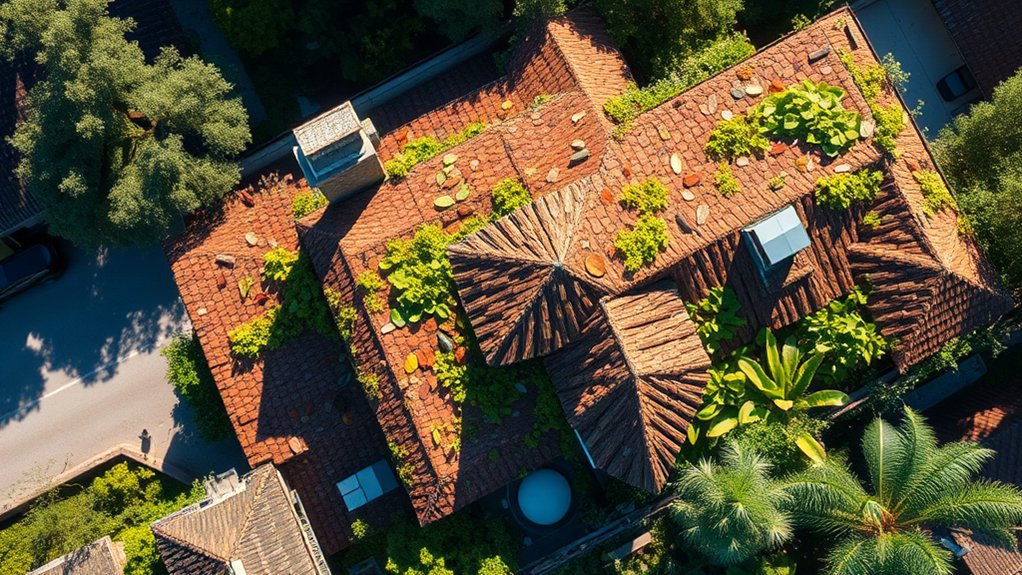
As the demand for sustainable building solutions increases, biodegradable roofing materials have become a practical choice for environmentally conscious homeowners and builders.
These materials include wood-based shingles, fibre cement, reclaimed natural tiles, concrete roof shingles, and synthetic shakes. Each option supports sustainable design by using renewable or recycled components, reducing energy consumption during production, and improving energy efficiency in use. For example, wood shingles provide excellent natural insulation, while fibre cement is both moisture- and fire-resistant. Moreover, opting for biodegradable materials reduces dependence on non-renewable resources, which contributes positively to the environment. Additionally, the use of green roofs can enhance biodiversity and manage rainwater effectively.
Reclaimed slate and clay tiles not only maintain architectural charm but also help reduce waste. By choosing these biodegradable materials, you contribute significantly to sustainability in construction and address the community’s environmental needs.
Environmental Benefits of Biodegradable Roofing
Biodegradable roofing materials provide key environmental advantages due to their ability to decompose naturally. This helps to minimise landfill waste and supports soil health. By using fewer resources in their production and use, these materials align with sustainable building practices. Furthermore, they play a role in reducing carbon emissions, contributing to climate change mitigation and improving ecological balance. For example, a biodegradable roof can break down over time, enriching the soil beneath it rather than contributing to waste. Additionally, the use of eco-friendly materials can significantly reduce the environmental impact of traditional roofing options.
Natural Decomposition Process
When exploring roofing options, it’s essential to understand how biodegradable materials break down naturally and the environmental benefits this brings. Here are some key points:
- Microbial activity decomposes materials into water, carbon dioxide, and biomass.
- Factors like oxygen, moisture, and temperature affect how quickly materials break down.
- Natural roofing materials such as thatch and wooden shingles can fully decompose in a matter of months to years, enriching the soil in the process. This is particularly true for renewable resources like thatch, which can be sustainably harvested and regrow.
- Unlike synthetic roofing options, biodegradable roofs don’t contribute to landfill waste or release harmful toxins.
In summary, choosing biodegradable roofing helps reduce long-term environmental impact while supporting soil health and biodiversity.
Resource Conservation Benefits
Resource conservation is crucial for environmental sustainability, and biodegradable roofing materials are key to this goal. By using sustainable and recycled materials, you improve resource efficiency and reduce the need for new resources.
For example, eco-friendly roofing materials often require less energy to produce, which helps lower the carbon footprint. They also last longer, meaning roofs need replacing less often, further conserving materials and reducing waste.
Moreover, these roofs enhance energy efficiency by reflecting sunlight and providing natural insulation, which can lower heating and cooling costs.
Climate Mitigation Contributions
Using biodegradable roofing materials not only conserves resources but also significantly aids climate mitigation.
By embracing these sustainable practices, you can make a real difference in the following ways:
- Reducing Greenhouse Gas Emissions: Green roofs lower CO2 levels and generate oxygen, helping to combat climate change.
- Energy Efficiency: These roofs offer natural insulation, cutting energy use by about 10%, which reduces our reliance on fossil fuels.
- Improving Air Quality: Biodegradable materials help filter out pollutants, enhancing both indoor and outdoor air quality.
- Managing Stormwater: Green roofs can decrease runoff by up to 65%, protecting our waterways from pollution. Additionally, they help manage stormwater effectively, retaining large volumes of rainfall and reducing runoff by up to 80%.
Durability and Lifespan of Different Materials
When assessing biodegradable roofing materials, it’s essential to consider both their lifespan and weather resistance.
Metal and concrete tiles generally outlast other options, providing excellent durability against harsh weather.
For instance, in the UK, where heavy rain and wind are common, these materials can offer peace of mind. Additionally, the choice of roofing material can significantly affect repair costs, as different materials have varying lifespans and maintenance needs.
Lifespan Comparison Across Materials
When assessing roofing materials, it’s important to consider their durability and lifespan for informed decision-making.
Here’s a straightforward comparison of popular options:
- Clay and Concrete Tiles: 50 to 100 years, very durable.
- Metal Roofing: Over 50 years, great impact resistance.
- Composite Roofing: 25 to 50 years, with eco-friendly choices available.
- Green Roofs: 30+ years, offering longevity and environmental advantages.
For biodegradable materials, keep in mind that performance can vary significantly based on installation quality and maintenance.
Thicker materials generally last longer and provide better durability, helping to lower overall costs and reduce waste.
Weather Resistance Capabilities
Understanding the weather resistance capabilities of roofing materials is crucial for ensuring your roof can handle different environmental challenges. Various materials offer different levels of durability, which can be influenced by climate, installation quality, and composition.
For example, cedar shakes and metal roofs are known for their excellent wind resistance, while Euroshield shingles are particularly effective in heavy rain.
When assessing material performance, it’s important to consider maintenance; regular upkeep can significantly improve weather resistance and help prevent leaks and damage.
Additionally, materials such as slate and metal not only withstand the elements but also support sustainability through their production methods.
Ultimately, choosing a roofing material that can endure specific weather conditions will ensure longevity and minimise the need for frequent replacements, promoting both durability and environmental responsibility.
Energy Efficiency and Insulation Performance
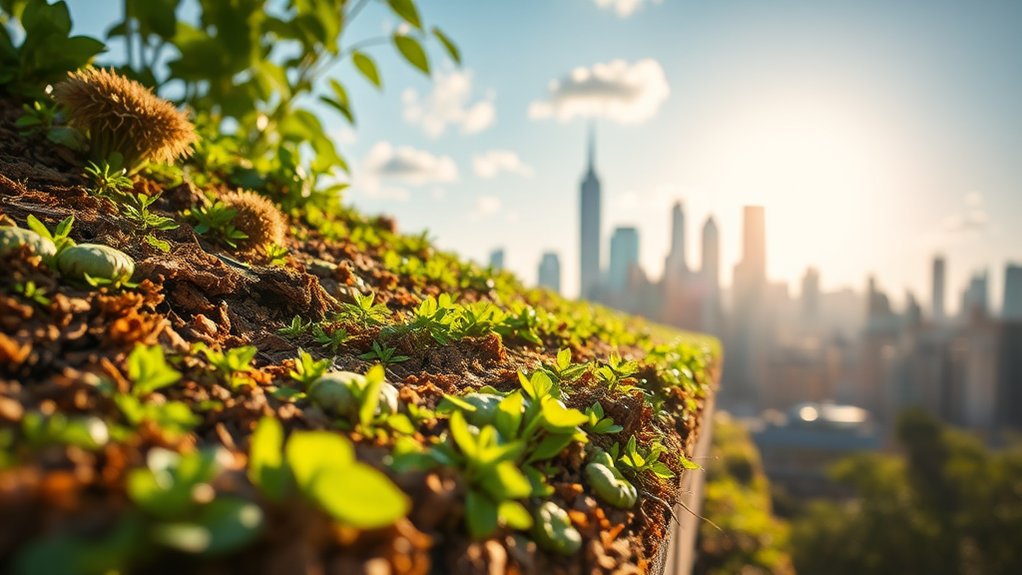
Energy efficiency and insulation performance are vital when choosing biodegradable roofing materials, as they influence both environmental sustainability and long-term savings.
Here’s what to consider:
- Cool Roofs: Can deliver energy savings of 13.2% due to their high reflectivity.
- Green Roofs: Help maintain energy savings through soil heat retention and plant transpiration.
- Metal Roofs: Offer up to 40% savings on energy costs thanks to excellent thermal resistance.
- Recycled Asphalt Shingles: Improve insulation while supporting a circular economy.
When selecting roofing options, keeping these factors in mind can lead to more sustainable and cost-effective choices.
Maintenance Requirements for Biodegradable Roofing

Choosing biodegradable roofing materials requires careful attention to maintenance to ensure their durability and effectiveness. Regular inspections and effective water management are crucial. For instance, if you have a green roof, taking care of the plants is essential for their health and the roof’s integrity.
| Task | Frequency | Purpose |
|---|---|---|
| Regular Inspections | Twice a year | Identify damage or debris |
| Water Management | Seasonally | Prevent water build-up |
| Vegetative Care | Weekly | Ensure plant health |
Using proper installation techniques and specialised knowledge is key to maintaining these roofs. Remember, how well you care for your biodegradable roofing will significantly impact its lifespan.
Aesthetic Appeal and Property Value Enhancement
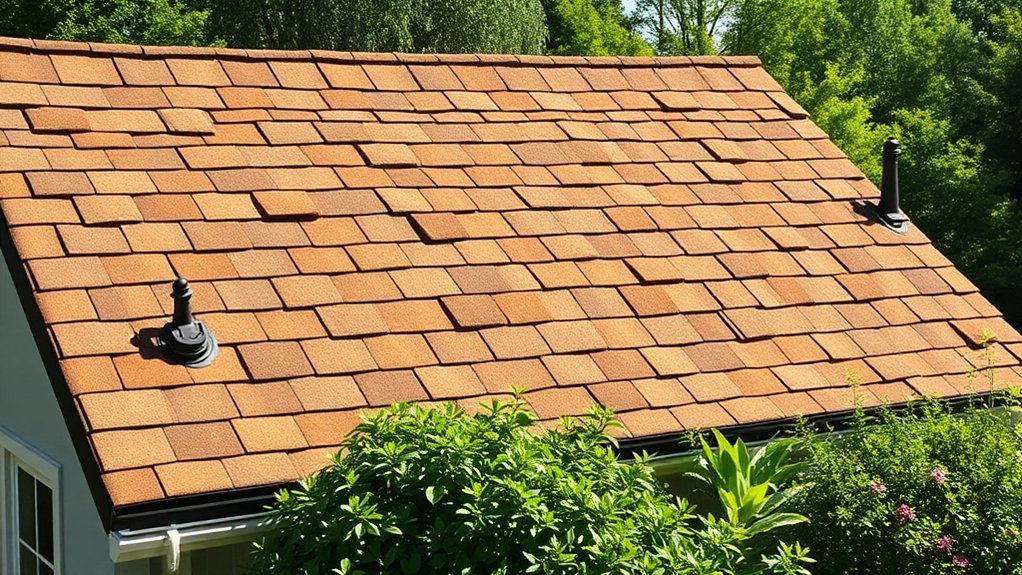
When exploring roofing options, it’s important to consider how biodegradable materials can enhance both the aesthetic appeal and value of your property.
These materials not only align with current design trends but also meet market demands, making your home more attractive.
Here are four key benefits:
- Natural Appearance: They can replicate the look of wood, clay, or stone, seamlessly fitting various architectural styles.
- Enhanced Curb Appeal: Biodegradable roofing offers a high-quality finish that stands out compared to traditional options.
- Higher Property Value: Homes with sustainable roofing often achieve better appraisal values and attract discerning buyers.
- Long-term Savings: Durable materials help lower energy costs and provide solid financial returns.
Opting for biodegradable roofing not only improves your property’s appearance but also caters to eco-conscious buyers, making it a smart investment.
Comparison of Cedar Shake Roofing
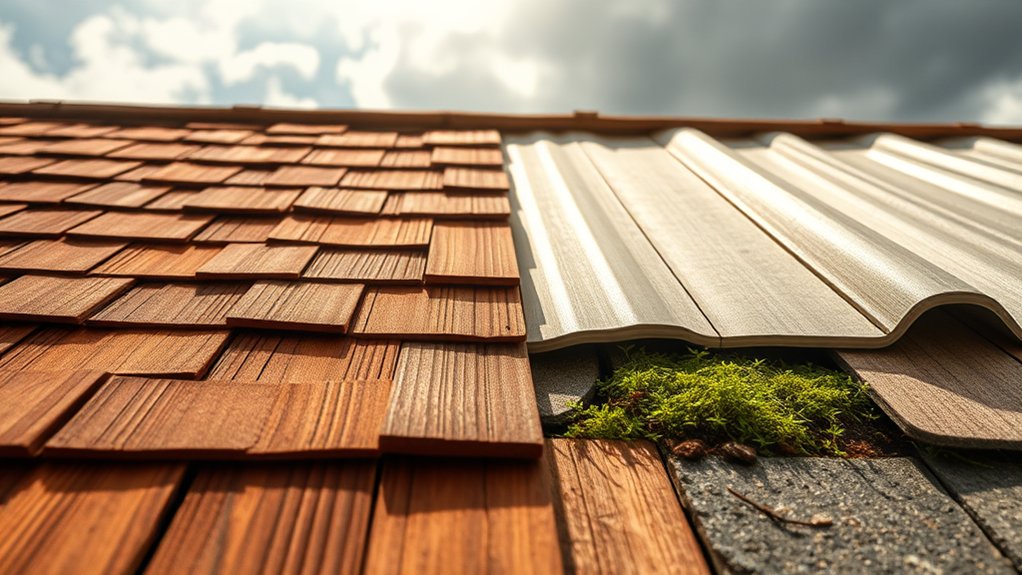
When comparing cedar shake roofing, you’ll notice its strong environmental sustainability benefits, as it’s a biodegradable option.
With a lifespan of 30 to 50 years when well-maintained, cedar shakes can be a durable investment.
However, the requirement for regular maintenance can affect their long-term performance, so it’s important to consider these factors carefully.
Environmental Sustainability Benefits
Cedar shake roofing offers notable environmental sustainability benefits, especially when compared to synthetic options.
Here are four key advantages:
- Energy Efficiency: Cedar shakes help to naturally regulate indoor temperatures, which can lower energy consumption for heating and cooling.
- Sustainable Sourcing: Responsible harvesting through certified sustainable forestry practices ensures a minimal environmental impact.
- Carbon Footprint: The production of cedar shakes uses less energy, resulting in a smaller carbon footprint than synthetic materials.
- Ecosystem Support: Sustainable forest management fosters biodiversity, supporting healthy ecosystems and wildlife habitats.
Durability and Lifespan
Understanding the durability and lifespan of cedar shake roofing is crucial for homeowners looking for a long-term investment. With proper installation and maintenance, you can expect a lifespan of around 30 years; in ideal conditions, this can extend to 40-50 years.
However, neglecting maintenance may cut this down to just 15-20 years. Factors like humidity and rainfall significantly impact performance, with high moisture levels speeding up deterioration.
Regular inspections and cleaning every 2 to 4 years are vital to keep the material resilient. Quality cedar shakes not only have a longer biodegradable lifespan but also withstand environmental damage better than asphalt shingles.
Ultimately, consistent care ensures your roof remains strong and functional for years to come.
Evaluating Green Roofs for Sustainability
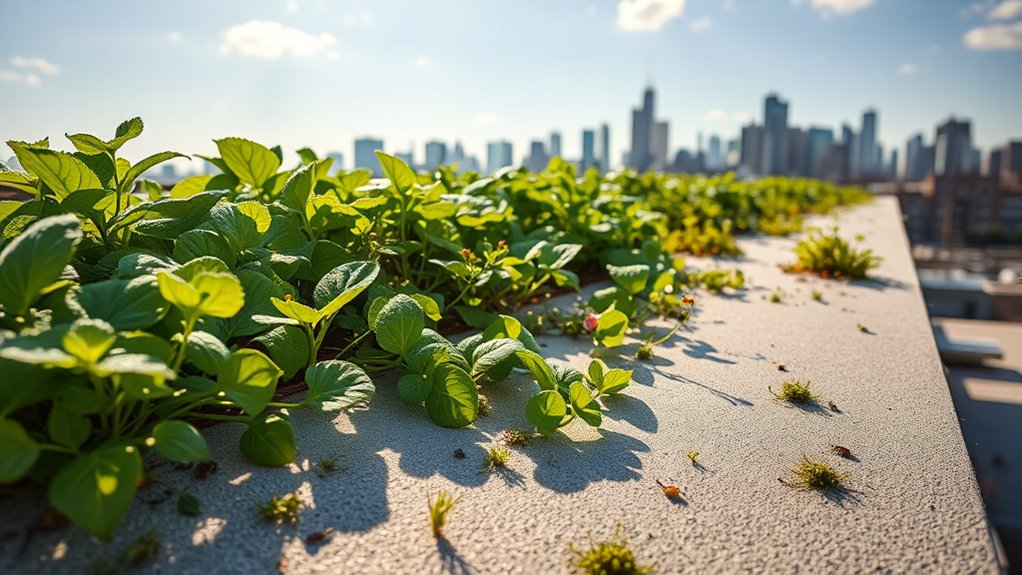
As urbanisation continues to grow, assessing the sustainability of green roofs is vital for reducing environmental impacts and bolstering urban resilience.
Here are four key benefits of green roofs that underscore their significance:
- Energy Efficiency: They can cut cooling energy requirements by up to 35%, leading to lower energy bills and reduced carbon emissions.
- Stormwater Management: Green roofs can retain 22-24% of annual rainfall, minimising urban runoff and the risk of flooding.
- Urban Biodiversity: They create habitats for native species, supporting ecological networks and community gardens.
- Air Quality Improvement: Green roofs filter pollutants, removing around 18 kilograms (40 pounds) of contaminants each year for every 92 square metres (1,000 square feet).
Incorporating green roofs into urban design is a practical step towards a more sustainable future.
Performance of Recycled Composite and Synthetic Tiles

The performance of recycled composite and synthetic tiles presents an excellent alternative to traditional roofing materials, particularly in sustainable urban design.
Made mainly from recycled materials, these tiles help to reduce plastic waste and conserve natural resources. They’re highly durable, offering strong resistance to harsh weather, which ensures a long lifespan with minimal wear and tear.
Moreover, synthetic options offer better insulation, improving energy efficiency and lowering utility bills. With low maintenance needs, they’re also cost-effective, making them a sensible choice for eco-conscious homeowners.
Impact of Rubber Roofing on the Environment
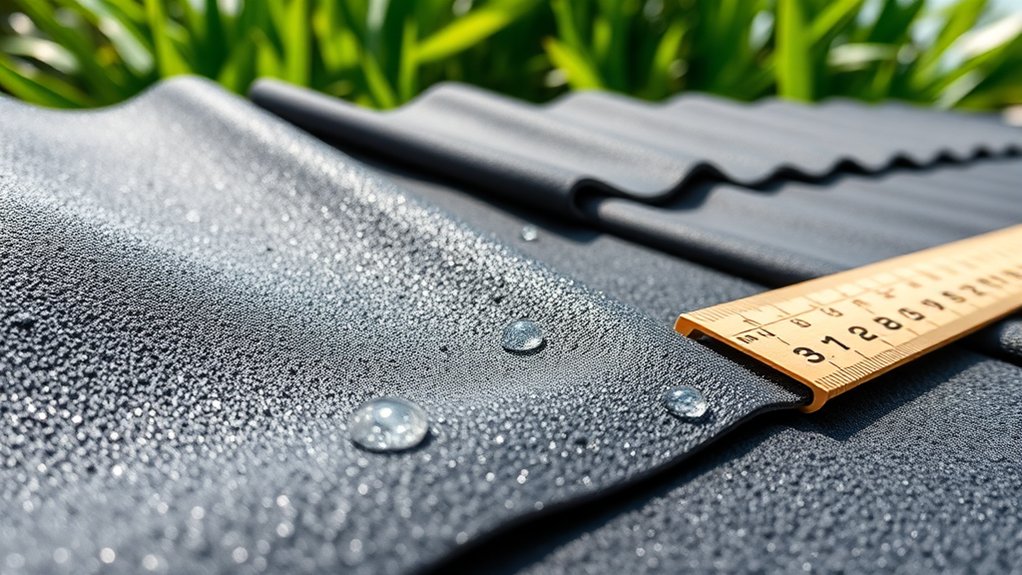
When considering roofing options, it’s crucial to assess the environmental impact of rubber roofing materials, especially EPDM (ethylene propylene diene monomer) roofs. Here are the key points:
- Durability: EPDM roofs can last 30-50 years, which helps reduce waste and the need for frequent resource extraction.
- Recyclability: While rubber can be recycled, logistical issues often complicate the process.
- Energy Efficiency: EPDM’s reflective properties can lower cooling costs, thereby reducing greenhouse gas emissions.
- Installation Methods: Using low-VOC adhesives during installation can lessen environmental impact.
Despite their longevity and recycling potential, a significant amount of EPDM still ends up in landfills.
Frequently Asked Questions
How Do Biodegradable Roofing Materials Compare in Cost?
When comparing costs, biodegradable roofing materials might have a higher initial price, but they can save you money in the long run due to their durability. For instance, while they may cost more than standard options, their longevity and overall value can make them a more economical choice over time.
What Certifications Should I Look for in Eco-Friendly Roofing?
When selecting eco-friendly roofing, look for certifications such as GREENGUARD and LEED. These standards ensure low emissions and sustainable materials, helping you make choices that are better for both people and the environment. For instance, a LEED-certified roof not only reduces your carbon footprint but can also enhance your property’s value.
Can Biodegradable Roofs Be Installed on Any Building Type?
Biodegradable roofs can be installed on various types of buildings, but there are challenges related to structural compatibility. It’s important to assess the load capacity and design complexity to ensure the roofing materials perform effectively and last long. For instance, a flat-roofed commercial building may require different considerations compared to a pitched-roofed residential home. Always consult with a professional to determine the best approach for your specific building type.
What Are the Best Climates for Biodegradable Roofing Materials?
If you’re thinking about biodegradable roofing, temperate climates with moderate humidity are best. Steer clear of regions with extreme temperatures, as they can shorten the lifespan of the materials and harm plant growth, which in turn affects their performance and sustainability. For example, areas like southern England, where the climate is generally mild, are more suited for this type of roofing compared to places with harsher weather conditions.
How Do Biodegradable Roofs Affect Local Wildlife?
Biodegradable roofs support local wildlife by creating habitats that offer food and shelter for various species. They help reduce heat islands and improve air quality, contributing to healthier urban areas and boosting biodiversity. For instance, plants on these roofs can attract pollinators like bees and butterflies, while also providing nesting spots for birds. Overall, they play a vital role in maintaining ecosystem balance in cities.
Conclusion
In the search for sustainable roofing, biodegradable materials stand out as a practical solution. These roofs offer durability alongside environmental benefits, helping to reduce landfill waste and improve energy efficiency. Opting for biodegradable options is more than a passing trend; it’s a vital step in modern building practices. By choosing these materials, you’re not just covering your home—you’re making a commitment to a greener future.


