

What Makes a Roof Eco-Friendly?
An eco-friendly roof uses sustainable materials such as recycled metal or rubber, which can be recycled at the end of their life. Energy-efficient insulation boosts your home’s comfort and reduces energy bills. Durability is also crucial; materials like metal, slate, and clay can last for decades, meaning less frequent replacements. Additionally, features like solar panels and cool roofs can lower your energy costs while minimising environmental impact. Understanding these elements can help you make your roof more sustainable.
Key Takeaways
- Utilises recyclable materials such as metal, rubber, and TPO, which reduces waste and supports a circular economy.
- Features durable options like metal, slate, and clay that can last up to 100 years, cutting down on the need for replacements.
- Incorporates energy-efficient insulation to enhance thermal performance, helping to lower energy consumption and costs.
- Includes green roofs that improve air quality, manage stormwater, and create better urban living spaces.
- Employs cool roofs and solar roofing that reflect sunlight, reduce energy bills, and generate renewable energy sustainably.
Recyclable Roofing Materials
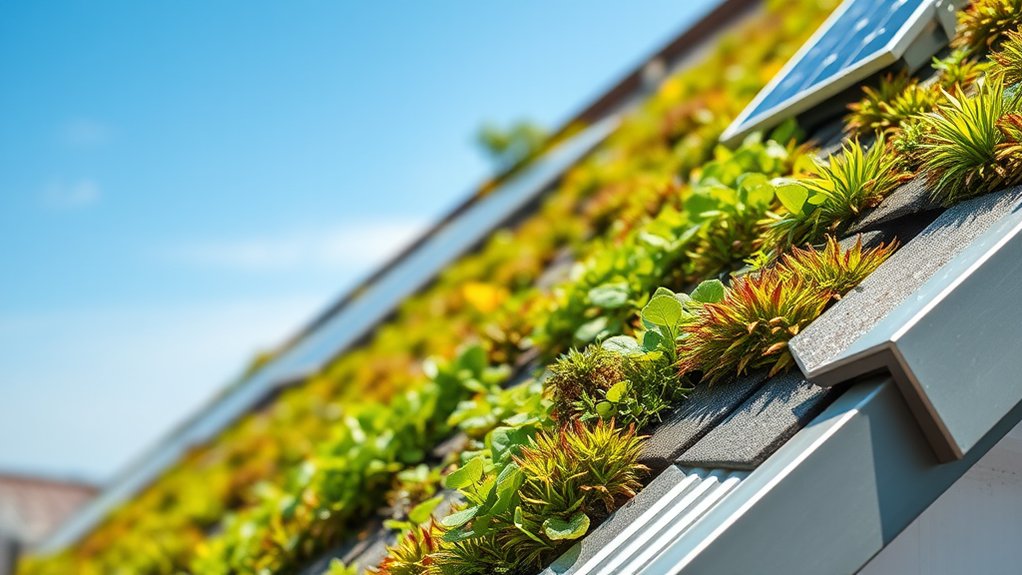
When looking for eco-friendly roofing options, recyclable materials are a wise choice for both the environment and your budget.
Metal roofing, made from materials like Galvalume and aluminium, is energy-efficient and can last over 50 years. Additionally, recycled steel (Galvalume) uses 26% of the energy of new steel, making it a sustainable option.
Recycled shingle roofing, made from plastics and rubber, not only mimics natural looks but also outlasts traditional asphalt and promotes a closed-loop recycling system that enhances sustainability.
Rubber roofing may have a higher initial cost, but it offers exceptional durability and reduces waste.
TPO roofing is highly recyclable and energy-efficient, making it ideal for flat roofs.
Lastly, tile and composite roofing provide aesthetic variety and long-lasting strength while conserving resources.
Choosing these materials not only meets your needs but also benefits the planet.
Sustainable Components in Roof Construction
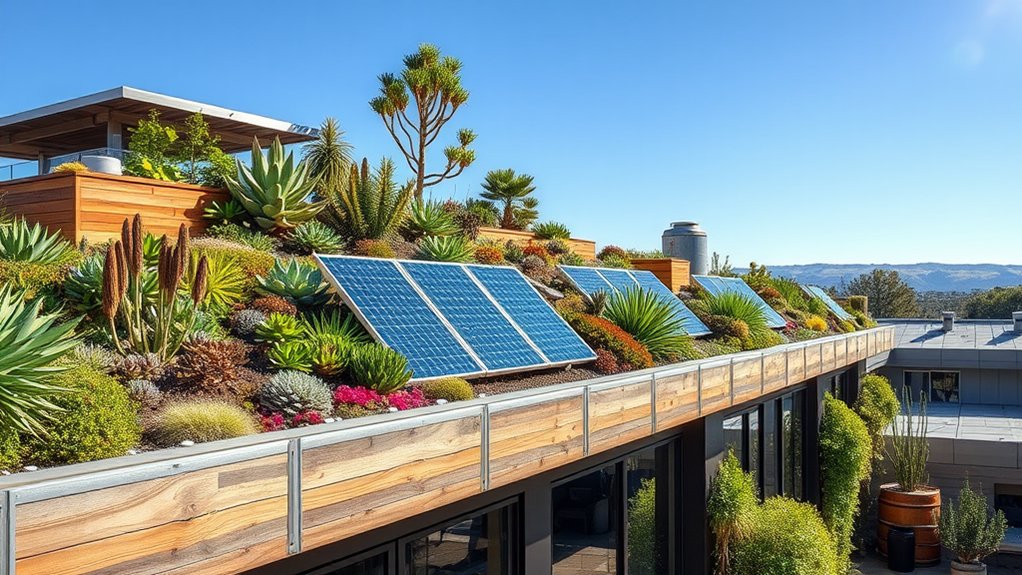
When constructing a roof, consider using recycled materials and energy-efficient insulation to boost sustainability. Using recycled components helps reduce waste and supports a circular economy. For example, reclaimed timber or recycled metal can be effective choices. Effective insulation, such as high-quality loft insulation, maintains comfortable indoor temperatures, which can lower your energy bills and reduce your environmental impact. Additionally, incorporating eco-friendly roofing options can further enhance the sustainability of your roof project. Implementing durable materials can also extend your roof’s lifespan, ultimately reducing maintenance costs and waste.
Recycled Material Utilization
Many homeowners mightn’t realise the benefits of using recycled materials in roof construction, but it offers both environmental and economic advantages.
By opting for eco-friendly shingles made from repurposed asphalt, old tyres, and plastics, you can significantly reduce waste and lower your carbon footprint. These robust materials can last 40 to 50 years, outlasting traditional options and requiring minimal maintenance. Additionally, these materials reduce landfill waste, which further contributes to a more sustainable environment. Green roofs can also support biodiversity by creating habitats for various species, enhancing the ecological benefits of your building.
They also replicate the look of conventional roofing styles, boosting your home’s curb appeal. Choosing recycled materials not only helps conserve natural resources but also supports sustainable manufacturing practices.
Ultimately, your decision contributes to a greener future and reduces the long-term costs associated with frequent replacements. Embracing recycled roofing can make a real difference for both you and the environment.
Energy-Efficient Insulation
Energy-efficient insulation is vital for sustainable roof construction, helping to keep your home comfortable while reducing energy use. Selecting the right insulation types can significantly improve thermal performance.
For example, rigid foam insulation offers high R-values, while spray foam effectively seals air leaks, preventing heat loss. Reflective materials, like aluminium foil, can reflect radiant heat, enhancing energy efficiency further.
Mineral wool is both non-combustible and durable, making it suitable for various roofing applications. These insulation options not only lower heating and cooling costs but also extend the lifespan of your roof and reduce greenhouse gas emissions.
The Importance of Energy-Efficient Insulation
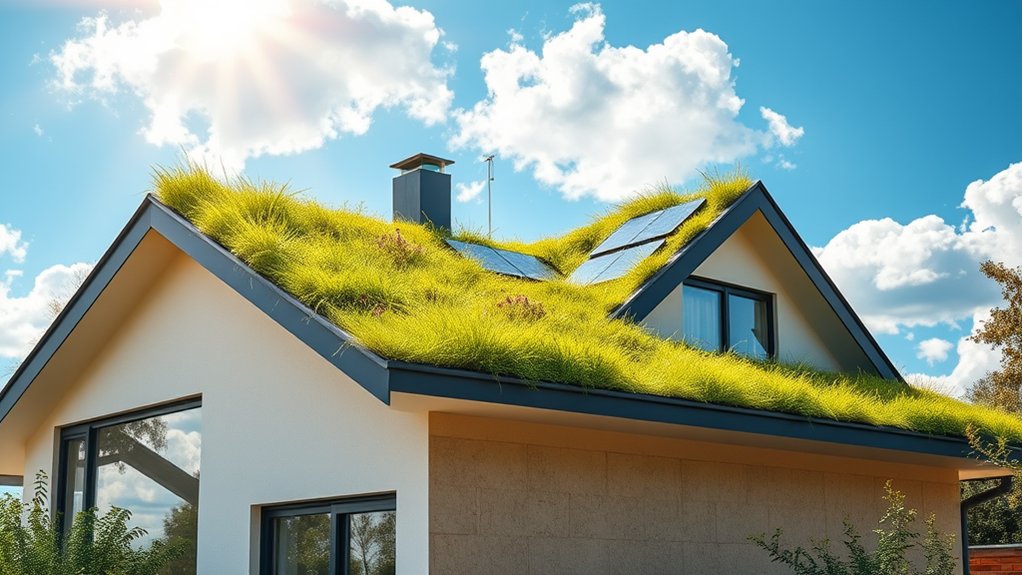
Proper insulation is vital for maximising your home’s energy efficiency, ensuring comfort throughout the year while also lowering energy bills.
By choosing energy-efficient insulation, you’re not only conserving energy but also increasing your home’s value.
Here are some key reasons why it matters:
- Energy Savings: Good insulation can cut energy usage by 12% to 14%.
- Comfort: It keeps indoor temperatures stable, reducing the need for heating and cooling.
- Extended Lifespan: Well-insulated homes put less pressure on heating systems, which can help reduce repair costs.
- Market Appeal: Homes with effective insulation are more attractive to buyers and can increase resale value.
Selecting the right type of insulation is essential for creating a sustainable, eco-friendly home for future generations.
Low Chemical Emissions and Indoor Air Quality
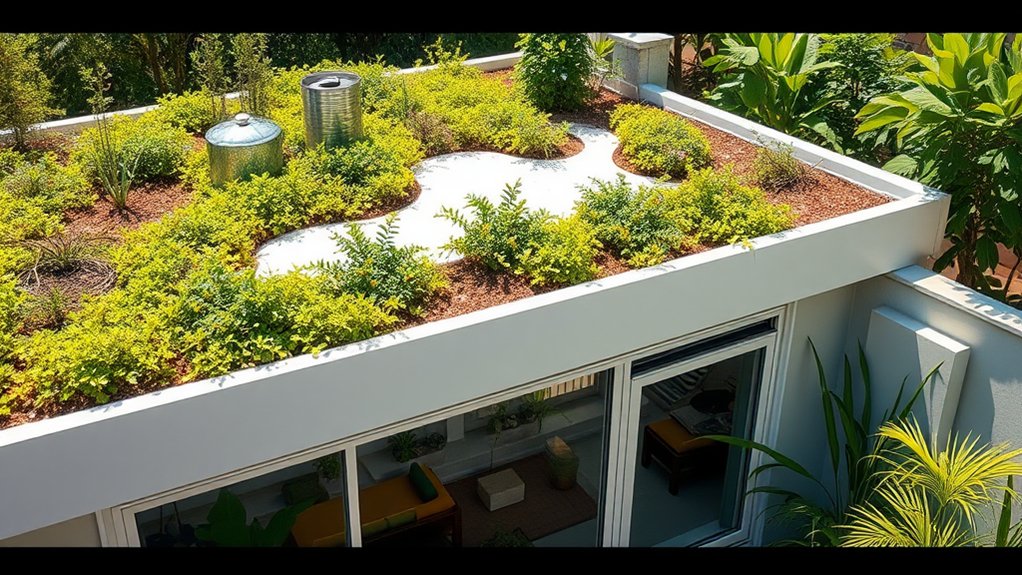
When choosing roofing materials, it’s important to select options that promote low chemical emissions and improve indoor air quality. Materials like slate, metal, and clay tiles help reduce volatile organic compounds (VOCs) in your home.
These natural choices, paired with effective ventilation systems, can significantly enhance indoor air quality by reducing moisture and respiratory problems.
Additionally, green roofs and solar roofing provide extra advantages by filtering out pollutants and lowering energy use, which further improves air quality.
By opting for these eco-friendly materials, you’re not only creating a healthier living space but also contributing to sustainability and reducing harmful emissions.
Make informed choices for a better future.
Durability and Longevity of Eco-Friendly Materials
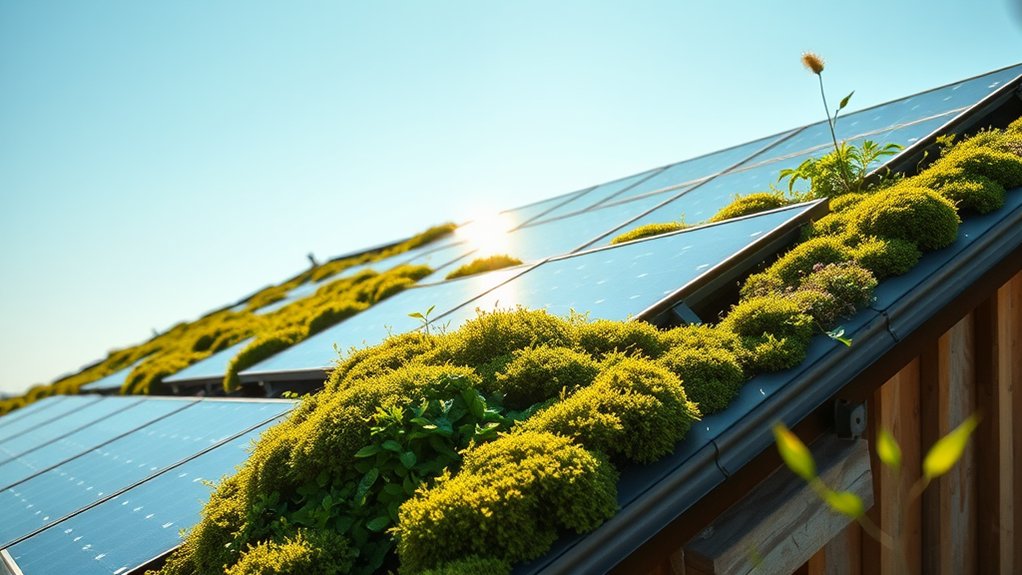
When considering eco-friendly roofs, you’ll be impressed by the durability and lifespan of the materials available.
Options like metal and slate can last over 50 years, significantly reducing the need for frequent replacements.
This not only saves you money in the long run but also cuts down on waste, making a strong case for sustainable building choices.
Material Lifespan Benefits
When selecting roofing materials, it’s essential to consider durability and longevity alongside aesthetics and cost. The lifespan of eco-friendly roofing options can significantly affect your investment.
Here are some key points to keep in mind:
- Metal Roofing: This option lasts between 40 to 70 years and is known for its durability and energy efficiency.
- Slate Tiles: With a lifespan of 75 to 100 years, slate is exceptional for those seeking long-lasting durability.
- Clay Tiles: Offering 50 to 100 years of service, clay tiles are a robust choice, though they can be heavier.
- Asphalt Shingles: These typically last only 20 to 30 years, making them a less sustainable option.
Opting for longer-lasting materials means fewer replacements, which conserves resources and reduces environmental impact.
Reduced Replacement Frequency
Choosing eco-friendly roofing materials impacts not only the look of your home but also its environmental footprint and replacement frequency.
Opting for durable materials like metal, slate, or recycled options can significantly extend your roof’s lifespan—often lasting decades longer than standard materials. This durability means less waste, as fewer materials will end up in landfills.
Moreover, these roofs generally require less maintenance, reducing the likelihood of frequent repairs or replacements. For example, slate roofs can last up to 200 years, while metal roofs typically last between 50 and 70 years.
Benefits of Green Roofs for Urban Environments

Green roofs provide numerous advantages for urban areas, turning grey concrete into lively green spaces. By incorporating these roofs, cities can address problems like urban heat and enhance community spirit with gardens.
Here are four key benefits:
- Reduction in Stormwater Runoff: Green roofs can reduce stormwater runoff by up to 65%, which helps relieve pressure on drainage systems.
- Improved Air Quality: They capture airborne pollutants, resulting in cleaner air for urban residents.
- Energy Savings: By lowering cooling costs, green roofs help save both money and energy.
- Enhanced Community Spaces: They offer recreational areas that improve local quality of life.
Adopting green roofs not only beautifies our cities but also supports sustainability, community wellbeing, and economic growth.
It’s beneficial for everyone involved.
Cool Roofs and Their Role in Sustainability
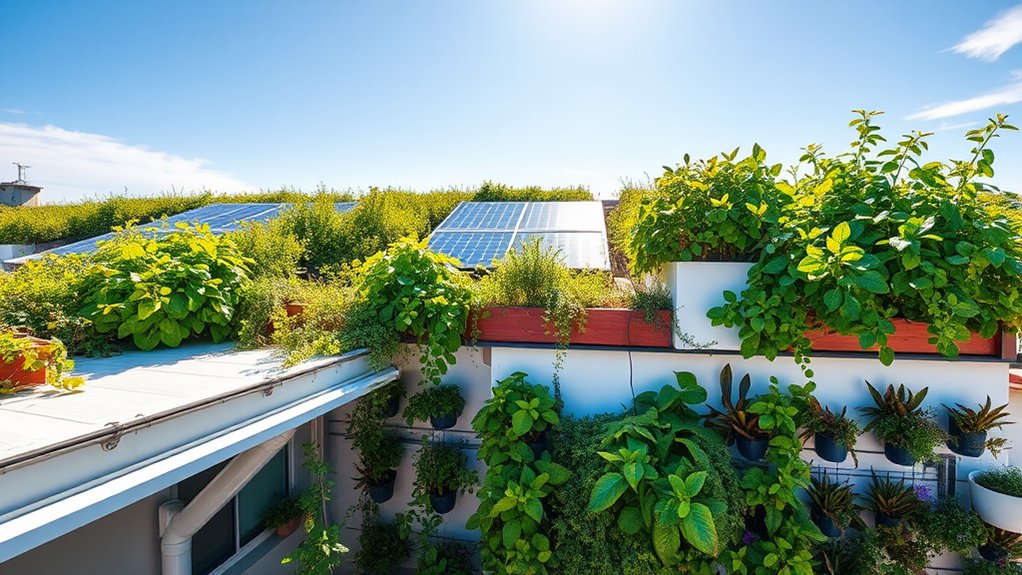
Urban areas face significant challenges with heat management and energy consumption, and cool roofs offer a practical solution. These roofs are designed to reflect more sunlight and absorb less heat, which can significantly reduce the energy needed for cooling. This not only lowers the temperature of buildings but also helps to alleviate the urban heat island effect, making cities more comfortable for everyone.
Moreover, cool roofs support sustainability by reducing greenhouse gas emissions and improving air quality. Although they may require a higher initial investment, the long-term savings on energy bills make them a smart choice.
The Advantages of Metal Roofs for Eco-Friendliness
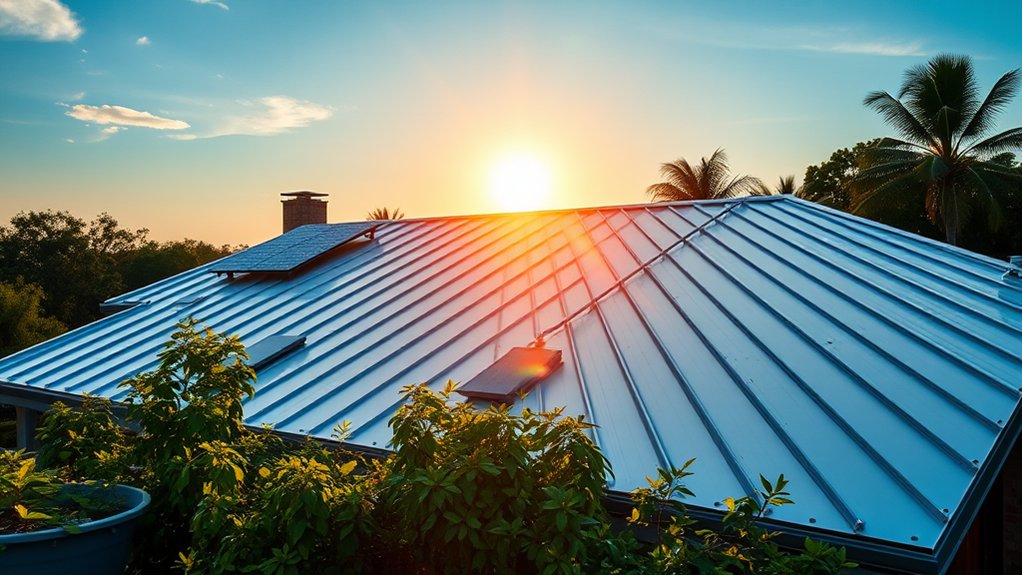
When exploring eco-friendly roofing options, metal roofs are a top choice due to their high recyclability and potential energy savings.
Made from at least 25% recycled materials, they can also be fully recycled at the end of their life.
Moreover, their energy-efficient design can reduce cooling costs by up to 25%, making them a wise investment for both your finances and the environment.
High Recyclability Advantage
As the demand for sustainable building materials increases, the high recyclability of metal roofs offers a significant benefit for environmentally conscious homeowners and builders.
Here’s why metal roofs are a top choice for eco-friendliness:
- Recycled Content: Many metal roofs are made from 25-95% recycled materials, which reduces the need for new metal extraction.
- Fully Recyclable: Metals like aluminium and steel can be completely recycled, thanks to modern recycling processes.
- Energy Efficiency: Recycling metals is energy-efficient, using 26% less energy for steel and just 5% for aluminium.
- Environmental Impact: Using recycled materials helps reduce landfill waste and lessens the environmental damage caused by mining.
Opting for metal roofs not only promotes sustainability but also supports a healthier planet for future generations.
Energy Cost Savings
Metal roofs offer substantial energy cost savings, making them a smart choice for environmentally conscious homeowners.
These roofs can reflect up to 70% of the sun’s energy, which significantly lowers cooling costs and can lead to overall energy savings of up to 40%.
In comparison to traditional materials like asphalt shingles, stone-coated metal roofs boost energy efficiency by nearly 49%.
This reduction means less dependence on air conditioning, resulting in lower bills and a smaller carbon footprint.
Additionally, metal roofs are incredibly durable, lasting three times longer than conventional options, which reduces the need for frequent replacements.
The Environmental Impact of Solar Roofing
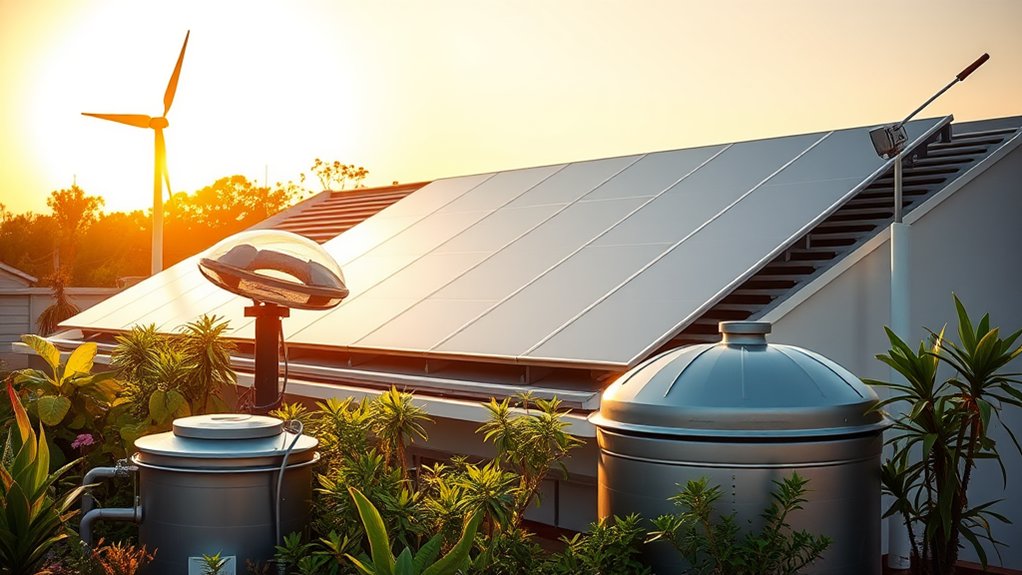
The Environmental Impact of Solar Roofing
Solar roofing is a clean and sustainable alternative to many energy sources that contribute to greenhouse gas emissions. By harnessing solar energy, you can significantly reduce your environmental footprint.
Here are some key benefits of solar roofing:
- Carbon Neutral Operation: Solar panels produce electricity without emitting greenhouse gases.
- Land Conservation: They require far less land than traditional energy sources, making them more efficient.
- Water Efficiency: Solar installations use considerably less water compared to agricultural methods.
- Recyclability: Up to 97% of solar panel materials can be recycled, supporting sustainability efforts.
Investing in solar roofing improves your home’s energy efficiency and contributes to a healthier planet.
Choosing solar reflects your commitment to protecting the environment.
Economic Benefits of Eco-Friendly Roofs
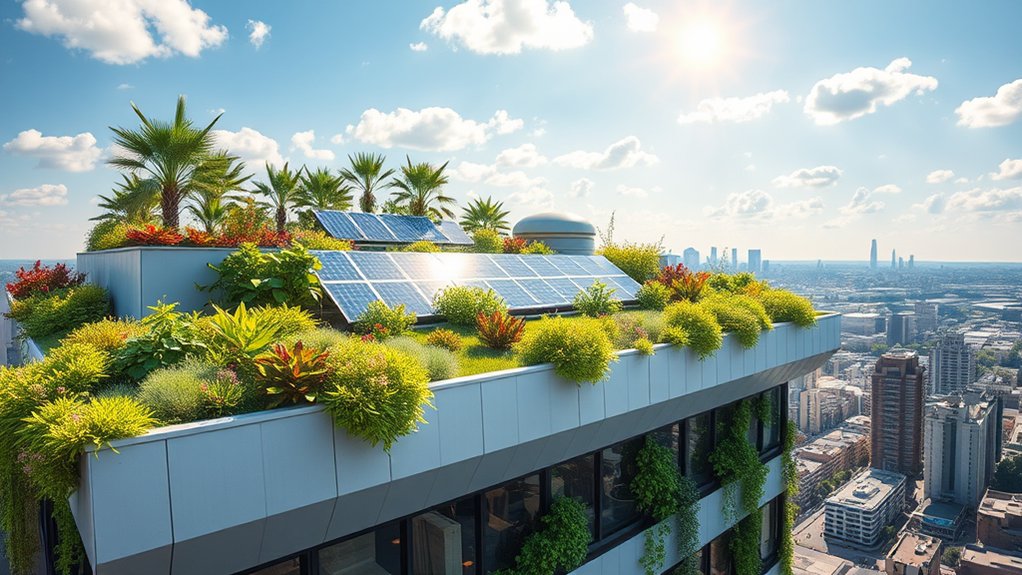
Investing in eco-friendly roofs not only supports the environment but also brings substantial economic benefits for homeowners and businesses. These advantages are clear through energy savings, lower maintenance costs, and enhanced property value. Here are some key points to consider:
| Benefits | Details |
|---|---|
| Energy Savings | Cuts energy use by up to 20%. |
| Cost Reduction | Maintenance expenses can fall by as much as 75%. |
| Lifespan Extension | Protects roofing materials, leading to fewer replacements. |
| Property Value | Improves market appeal and attractiveness. |
| Stormwater Management | Reduces urban drainage costs. |
Government Incentives for Sustainable Roofing

Government incentives for sustainable roofing can significantly lower the initial costs of eco-friendly installations.
By utilising both national incentives and local grants, you can positively impact your finances and the environment.
Here are some key benefits:
- Tax Relief: Schemes like the Energy Saving Trust’s grants can provide valuable financial support.
- Financial Aid: Programmes aimed at low-income households can help improve energy efficiency.
- Enhanced Property Value: Sustainable roofs can increase the market value of your home.
- Long-term Savings: Energy-efficient roofing solutions can lead to lower energy bills over time.
Taking advantage of these incentives not only helps your wallet but also contributes to a greener community.
The Future of Eco-Friendly Roofing Solutions
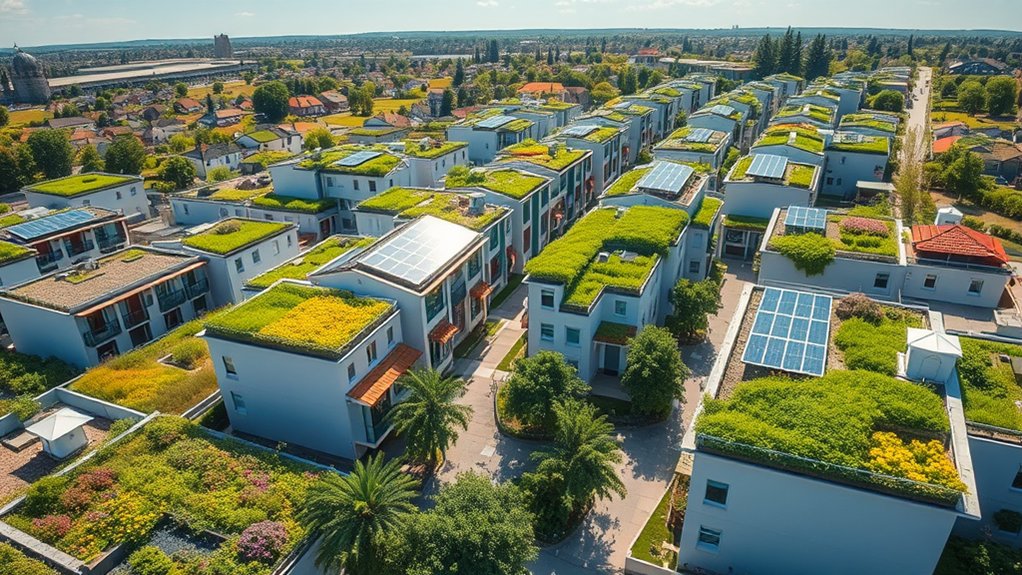
As the demand for sustainable living grows, the future of eco-friendly roofing solutions looks bright. Emerging technologies are creating roofs that reduce environmental impact and improve energy efficiency.
Expect innovations such as smart roofing systems that monitor energy usage and identify leaks, simplifying maintenance. Using recycled materials and incorporating green roofs will further promote sustainability while increasing property value.
As more consumers favour eco-friendly options, investing in these roofing solutions can lead to long-term savings and a lower carbon footprint. Embracing these advancements benefits your home and positively impacts the environment and community.
Frequently Asked Questions
How Do Eco-Friendly Roofs Affect Local Wildlife Habitats?
Eco-friendly roofs serve as vital wildlife corridors, helping to preserve habitats in urban settings. By incorporating a variety of plant species, these roofs boost local biodiversity, enabling wildlife to flourish and move between fragmented areas. This not only supports animals but also contributes to a healthier environment for everyone. For instance, a green roof can attract bees, birds, and other beneficial species, enhancing the ecosystem right in the heart of the city.
What Are the Maintenance Requirements for Eco-Friendly Roofing Materials?
Regular inspections, cleaning, and maintenance of eco-friendly roofing materials are essential for optimal performance. For example, solar panels should be checked periodically to ensure they’re free from debris, while green roofs may require more frequent upkeep to manage plant health and drainage. By keeping an eye on these elements, you can enhance their longevity and efficiency, all while being kind to the environment.
Can Eco-Friendly Roofs Be Installed on Existing Structures?
Yes, you can install green roofs on existing buildings using methods like modular systems or solar tiles. These options improve sustainability, minimise waste, and enhance energy efficiency, benefiting both you and the environment. For instance, a modular green roof can transform a flat roof into a vibrant space that supports biodiversity while reducing heating costs.
How Do I Choose the Right Eco-Friendly Roofing Material for My Home?
When selecting eco-friendly roofing, focus on sustainable materials like metal or synthetic tiles that improve energy efficiency. Consider their durability and maintenance requirements to ensure your choice aligns with your environmental goals while providing long-term comfort and savings. For example, metal roofs can last for decades and are highly recyclable, making them an excellent choice for the environmentally conscious homeowner.
What Are the Aesthetic Options for Eco-Friendly Roofing Solutions?
When considering aesthetic options for eco-friendly roofing, think about green roofs that support biodiversity and sustainable colour choices that blend with your environment. For example, a sedum roof not only looks attractive but also provides habitats for wildlife. These features enhance your home’s appeal while demonstrating a commitment to environmental responsibility.
Conclusion
Investing in eco-friendly roofing solutions may appear daunting at first, but the long-term advantages are significant. These roofs not only lower energy bills and improve indoor air quality, but they also benefit the environment. Many local authorities offer incentives to help cover initial costs. By opting for sustainable materials and technologies today, you’re not just safeguarding your home—you’re contributing to a greener future. Choose eco-friendly roofing for both financial savings and peace of mind regarding the environment.


