
Green Roof Installation Costs: Comprehensive Breakdown
When considering the costs of installing a green roof, it’s important to note that prices can vary significantly depending on the type—extensive, intensive, semi-intensive, or biodiverse. You can expect costs to range from £10 to £200 per square metre, with the average home installation falling between £15,000 and £45,000. Factors like structural reinforcement and the quality of materials will impact the overall cost. Additionally, maintenance plays a crucial role in long-term savings. Understanding the details of installation and ongoing upkeep is key to making a worthwhile investment.
Key Takeaways
- Installation costs for green roofs can vary widely. Extensive roofs typically range from £10 to £20 per square metre, while intensive roofs can go up to £200 per square metre.
- For an average home of 185 square metres, installation costs can fall between £15,000 and £45,000. Larger buildings may incur expenses of £80,000 to £240,000.
- Costs can increase due to the need for structural reinforcement and the use of high-quality materials, especially with intensive and semi-intensive green roofs.
- Don’t forget to factor in annual maintenance costs, which are essential for budgeting, particularly for intensive roofs that need regular care.
- Over time, green roofs can lead to savings on energy bills, with reductions in heating and cooling costs by 10% to 30%.
Types of Green Roofs and Their Characteristics

When choosing a green roof, it’s important to grasp the different types and their distinct features.
Extensive roofs have shallow growing mediums of up to 6 inches, making them low-maintenance and suitable for drought-resistant plants, but they offer limited plant diversity.
Intensive roofs, on the other hand, have several feet of growing medium, allowing for a wider variety of plants and even recreational use, though they require more upkeep and investment.
Semi-intensive roofs find a middle ground, supporting diverse plant life while requiring moderate maintenance.
Biodiverse roofs incorporate local materials, enabling natural colonisation and providing habitats for wildlife, often becoming low-maintenance over time.
Lastly, modular roofs use interlocking grids for straightforward installation and upkeep, making them an attractive option for enhancing urban green spaces.
Installation Cost Per Square Foot

Understanding installation costs per square metre for green roofs is crucial for effective project budgeting. The installation price can vary significantly based on several factors:
- Roof Type: Extensive systems typically cost between £10–£20 per sq.m, while intensive roofs can reach up to £200 per sq.m. Green roofs often involve multiple layers, including stormwater management systems essential for their functionality.
- Location Impact: Urban areas often experience labour costs that are up to 25% higher than those in rural locations.
- Structural Considerations: Proper assessments are necessary; retrofitting can increase costs if reinforcement is needed. Additionally, annual maintenance costs can further impact the overall budget, especially for intensive green roofs which require more regular upkeep.
Overall Installation Costs

Installation costs for green roofs can vary significantly depending on factors like project size and design specifics. For an average home of around 185 square metres (2,000 sq ft), you might expect to pay between £15,000 and £45,000. In contrast, a larger building of about 930 square metres (10,000 sq ft) could cost between £80,000 and £240,000. Most homeowners typically spend around £18,000. When planning, effective budgeting is crucial; compare the costs of green roofs with traditional roofing options. Although the initial investment is often higher, green roofs can provide long-term savings through improved energy efficiency and reduced maintenance. Additionally, they can reduce heating and cooling costs by 10%-30%, further contributing to their cost-effectiveness over time. Furthermore, the incorporation of green roofs not only enhances insulation but also contributes to improved air quality and biodiversity.
Factors Influencing Cost
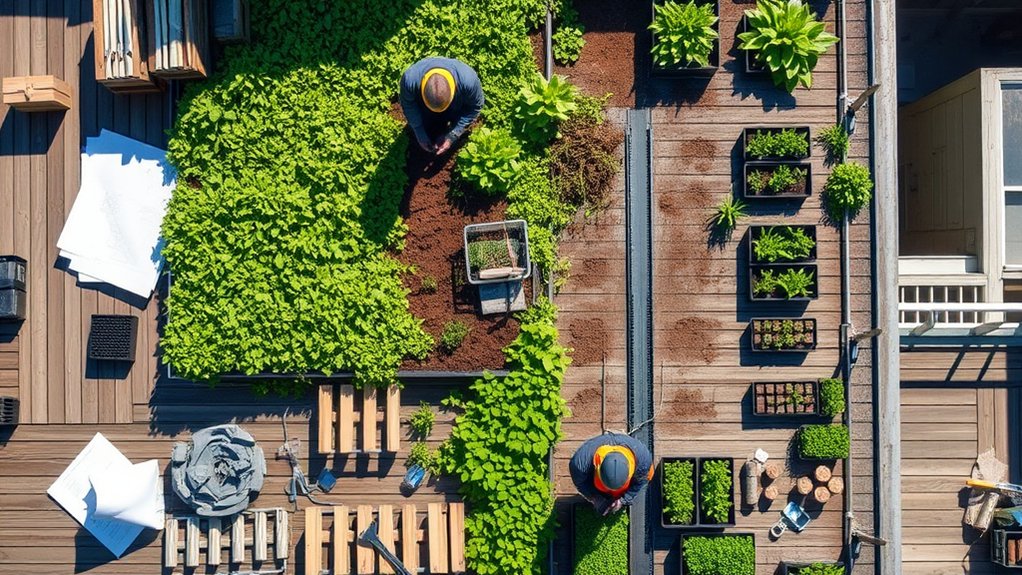
When planning your green roof, choosing the right materials is crucial for managing costs.
Opt for lightweight sedums or go for heavier shrubs and trees, but be aware that this will affect your budget.
You’ll also need to consider whether your roof requires structural reinforcement to handle the added weight and meet safety regulations.
Every choice impacts both your initial outlay and the long-term viability of your green space.
Material Selection Impact
Selecting the right materials for a green roof significantly impacts overall installation costs, as each component is crucial for both performance and durability.
Here are some key factors to consider:
- Waterproofing Membranes: Investing in high-quality membranes ensures longevity, but this can significantly increase costs.
- Soil and Planting Material: Thicker soil layers promote healthier plants but also add to expenses.
- Irrigation Systems: Advanced systems improve water efficiency but can lead to higher upfront costs.
It’s essential to conduct a thorough cost comparison of these materials.
Focus on durability to ensure your green roof can withstand the elements while reducing long-term maintenance.
Structural Reinforcement Needs
Understanding the structural reinforcement needs for a green roof is crucial, particularly as many existing roofs may not support the extra weight. A thorough load-bearing analysis is necessary to check if your roof can accommodate the demands of a green roof, as most are designed for only 30-40 lb/ft².
If your roof has a steep slope, you may need additional reinforcement, which could increase costs and require specialised materials. Consider options like CFRP systems or hybrid solutions to enhance structural integrity without adding excessive weight.
Planning these upgrades during the initial design phase can save money in the long run. Also, be aware of local building regulations, which may have additional requirements for seismic retrofitting or slope reinforcement.
Environmental Benefits of Green Roofs

Green roofs offer significant energy efficiency benefits, helping to reduce your building’s energy bills.
They’re also effective in managing stormwater, capturing rainwater to lessen runoff and lower the risk of flooding.
Furthermore, green roofs boost urban biodiversity by providing vital habitats for local wildlife, while also enhancing green spaces in your community. Additionally, they help combat the urban heat island effect, making cities cooler and more comfortable during hot weather.
Energy Efficiency Improvement
While numerous factors influence a building’s energy efficiency, green roofs offer a compelling solution for improving thermal performance and reducing energy consumption.
Here are three key benefits of green roofs in terms of energy efficiency:
- Temperature Regulation: Green roofs can cool roof surfaces by 30-40%, significantly reducing heat transfer into the building.
- Reduced Energy Use: They can lead to a decrease in energy consumption by 10-25%, which can noticeably lower your utility bills.
- Savings on Cooling Loads: In temperate climates, green roofs can reduce cooling loads by up to 50%.
Stormwater Management Solutions
Green roofs provide an effective solution for managing stormwater, tackling urban runoff issues that often burden traditional drainage systems. They can capture between 50–100% of rainfall during light to moderate storms, preventing up to 15 gallons of stormwater from flowing away each year per square foot.
This approach delays peak flow rates by 50%, easing the pressure on urban infrastructure and aligning runoff with natural water cycles.
Moreover, green roofs help filter pollutants and reduce thermal pollution, enhancing water quality overall. With a 65% reduction in stormwater runoff compared to conventional approaches, green roofs represent a sustainable method of stormwater management.
They not only contribute to healthier urban environments but also meet the needs of the community effectively.
Biodiversity Enhancement Opportunities
Green roofs aren’t just effective at managing stormwater; they also provide vital habitats that boost urban biodiversity.
Here are three key benefits to consider:
- Habitat Creation: Green roofs offer spaces for native plants, birds, and beneficial insects, enhancing biodiversity in cities.
- Habitat Connectivity: These roofs act as stepping stones, linking fragmented habitats and allowing wildlife to move freely, which strengthens ecological resilience.
- Microclimate Stabilisation: They create cooler areas that support a variety of species, particularly during heatwaves.
With careful planting and regular maintenance, green roofs can beautify urban areas while improving habitat connectivity and supporting vibrant ecosystems.
Embrace the chance to enrich urban biodiversity and benefit your community.
Maintenance and Longevity Considerations
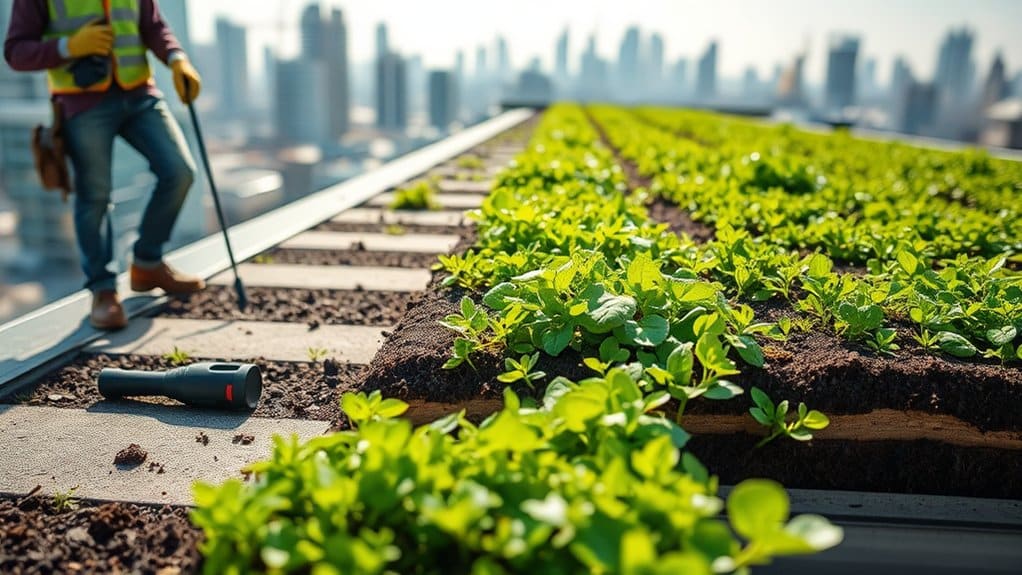
When considering a green roof, it’s crucial to understand that maintenance and longevity go hand in hand, significantly affecting your investment.
Implementing effective maintenance strategies, such as regular weed control and proper irrigation, ensures your green roof remains healthy. The early stages of care are key to managing long-term costs, with labour being the biggest expense.
Selecting drought-tolerant plants and conducting regular inspections can extend the life of your green roof beyond that of traditional roofing systems.
Proper maintenance helps prevent erosion and boosts the resilience of the vegetation. By prioritising these factors, you can lower operational costs and enhance your property’s value, making a green roof a sustainable and cost-effective choice for the future.
Frequently Asked Questions
What Are the Best Plants for Green Roofs?
For your green roof, consider using sedum varieties; they are drought-resistant and require minimal maintenance. Combine them with robust options like Delosperma and Euphorbia to create a lively, sustainable ecosystem that supports pollinators and flourishes in tough conditions.
Can I Install a Green Roof Myself?
Installing a green roof yourself is no small feat. There are significant challenges to consider, such as ensuring structural integrity, proper waterproofing, and ongoing maintenance. These tasks require careful planning and a good level of expertise. For example, without proper waterproofing, you risk water damage to your building. It’s often best to consult a professional to ensure the job is done right.
How Do Green Roofs Affect Building Insurance?
Green roofs can influence your building’s insurance premiums due to associated risks. Insurers assess these risks, looking at aspects like water leaks and fire hazards. Taking preventive measures, such as proper waterproofing and fire-resistant materials, can help reduce these risks and potentially lower your premiums. For instance, a well-maintained green roof can prevent water damage, which might otherwise lead to higher costs.
Are There Any Government Incentives for Green Roofs?
Government grants and tax rebates for green roofs can significantly reduce costs, boost sustainability, and encourage urban biodiversity. These incentives can help you contribute to a greener and healthier environment for all. For instance, local councils may offer funding for projects that enhance green spaces, making it easier for you to invest in a green roof.
How Do Green Roofs Impact Property Taxes?
Green roofs can positively affect your property taxes by boosting property value and potentially lowering tax assessments. They enhance visual appeal and provide energy savings, making your property more marketable. For example, a well-maintained green roof can attract buyers and increase your home’s worth, which may lead to a more favourable financial outcome when it comes to taxes.
Conclusion
When considering the upfront costs of installing a green roof, it’s important to weigh these against the long-term benefits. Although the initial investment may seem high, the potential savings on energy bills and the positive environmental impact can be significant. A well-maintained green roof not only improves the look of your property but also supports urban wildlife. Keep in mind that the money spent today can lead to substantial savings and contribute to a more sustainable future.


