

Sustainable Roofing Solutions for UK Businesses
Sustainable roofing solutions can significantly benefit UK businesses, providing both environmental advantages and cost savings. By choosing materials like recycled metal or cool roofs, you can lower energy bills and increase your property's value. Innovations such as biosolar roofs not only improve energy efficiency but also support urban biodiversity. As the demand for eco-friendly options rises, it becomes easier to align with net-zero targets.
However, there are challenges to consider, including a shortage of skilled labour and the impacts of climate change. Looking at real-world case studies can show how successful businesses have effectively adopted these solutions. Embracing sustainability could unlock new opportunities for your operations.
Key Takeaways
- Sustainable roofing solutions, such as green roofs, can boost energy efficiency, saving UK businesses around 6.7% on heating and cooling costs.
- Eco-friendly options like recycled metal and asphalt shingles help cut greenhouse gas emissions and conserve resources over time.
- Cool roofs can significantly reduce cooling expenses, making them a smart choice for businesses focused on energy savings.
- Installing solar and biosolar roofs enables businesses to produce clean energy, lessening dependence on traditional power sources and supporting sustainability.
- Sustainable roofing investments can lead to financial benefits, including government incentives and increased property values, making them attractive for UK businesses.
Key Benefits of Sustainable Roofing
Sustainable roofing comes with a range of key benefits that go beyond just looks. One major advantage is the use of green roofs, which improve energy efficiency. By insulating your building, green roofs can lower heating and cooling costs, leading to significant energy savings over time. This not only cuts your expenses but also helps to reduce greenhouse gas emissions.
In addition, green roofs help to tackle the urban heat island effect, cooling the surrounding air and improving local air quality. They also manage stormwater runoff, which can reduce the risk of flooding and protect local ecosystems. By providing habitats for urban wildlife and supporting pollinators, green roofs promote biodiversity, contributing to a healthier environment. Furthermore, the cooling effects of vegetation on solar panel efficiency can lead to an increase in energy production during hot weather.
From an economic standpoint, investing in sustainable roofing can increase property value, attract environmentally-conscious tenants, and potentially qualify you for tax incentives or grants.
These materials are durable, extending the lifespan of your roof and reducing maintenance costs and waste. Overall, adopting sustainable roofing solutions benefits your business and shows your commitment to environmental responsibility, helping to build a positive public image and serve your community effectively.
Types of Sustainable Roofing Options
Exploring sustainable roofing options reveals a range of innovative materials and systems that improve energy efficiency and reduce environmental impact.
Recycled metal roofs stand out as a durable choice that can be recycled again at the end of their life. Reclaimed wood roofs not only look unique but also significantly cut down on waste. Slate roofs offer long-lasting durability, although it's worth considering transportation distances for their sustainability. Additionally, many roofing options can contribute to enhanced thermal efficiency, helping to reduce energy consumption.
For energy efficiency, cool roofs reflect sunlight and can significantly lower cooling costs. Solar and bio-solar roofs incorporate clean energy generation into your roof, helping to reduce energy bills while promoting sustainability.
Green roofs, or living roofs, enhance biodiversity and manage rainwater effectively, contributing to a healthier ecosystem. Lightweight sedum roof systems are ideal for various structures, while eco-friendly materials like terracotta and composite roofs also promote sustainability. Additionally, these green roofs can lower energy bills by up to 6.7% through improved insulation.
Market Trends in Roofing Industry

In recent years, the roofing industry in the UK has experienced significant changes, largely driven by sustainability and energy efficiency goals. As a business owner, you'll notice that the market is increasingly favouring innovative materials and new technologies.
The commercial roofing sector is focusing on sustainable systems that align with net-zero carbon targets, which can improve your building's energy performance. The rise in demand for eco-friendly roofing solutions is evident as businesses seek to reduce their environmental impact. The incorporation of recycled materials in roofing products can further enhance sustainability and resource efficiency.
The demand for green buildings is on the rise, thanks to government initiatives aimed at increasing housing supply and encouraging eco-friendly renovations. With a projected compound annual growth rate of 4.5% from 2023 to 2031, there are plenty of opportunities for those willing to adapt.
However, be aware of challenges such as a shortage of skilled labour and fluctuating raw material costs, which may affect your project timelines.
You may have seen the growing popularity of composite roofing materials, which play a significant role in market growth, particularly in residential construction.
As you navigate these trends, think about how climate resilience and long-term durability can improve your roofing choices. By embracing these market shifts, you not only advance your business interests but also make a positive impact on the environment and your community.
Successful Case Studies
Numerous successful case studies highlight the transformative benefits of green roofs in urban areas.
For example, the Stockport Interchange demonstrates that integrating green roofs into designs not only boosts urban biodiversity but also offers significant cost savings. With energy savings of 6% and the capacity to capture 75% of rainfall, these roofs present a strong financial argument. Additionally, accessible green roofs can increase property values by 7%, showcasing their value beyond aesthetics. This aligns with the company's expertise in installing guaranteed green roof systems, emphasizing their commitment to quality.
Implementing green roofs requires careful planning and stakeholder involvement.
The Unicorn Grocery project illustrates how thoughtful design and funding can lead to effective maintenance and enhanced ecological benefits. Innovative approaches, such as biosolar roofs, combine green roofing with solar technology, further improving energy efficiency and biodiversity.
Including features like blue roofs can also aid sustainable water management, resulting in lower wastewater charges.
Challenges in Sustainable Roofing
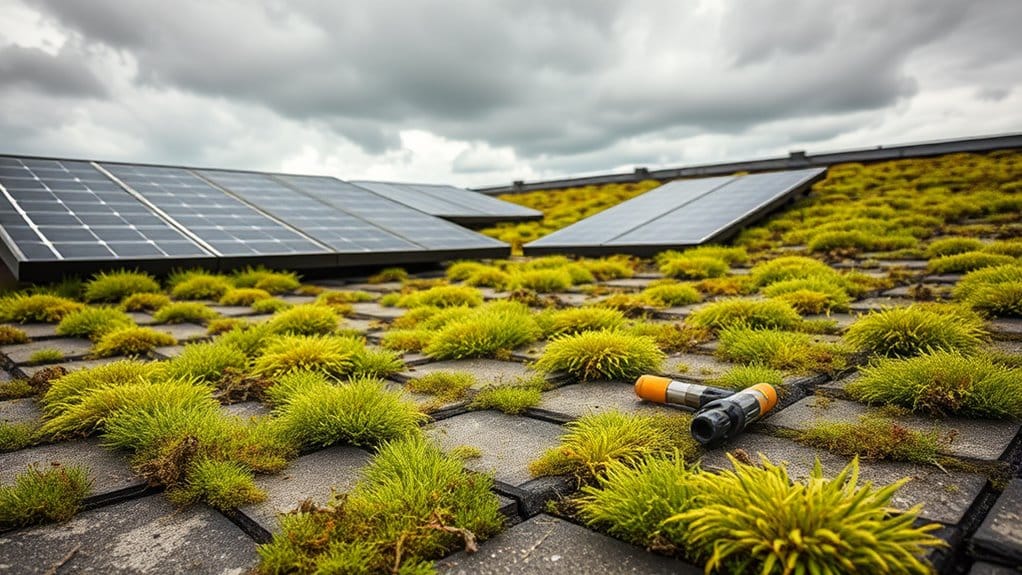
The advantages of green roofs are clear, but several challenges must be tackled to ensure their successful adoption in sustainable roofing. The sector faces various hurdles that can obstruct progress.
Key challenges include:
- Labour shortages: An ageing workforce and a lack of young talent entering the trade create a significant skills gap.
- Material costs: Disruptions in the supply chain and increasing transport fees can significantly inflate project budgets. Furthermore, the production of sustainable materials often requires minimal fuel for production, which can help mitigate costs over time.
- Compliance pressures: Stricter environmental regulations introduce added complexity and expense.
- Climate impacts: Extreme weather events can complicate both installation and maintenance.
- Health and safety risks: The roofing industry has a high rate of accidents, necessitating rigorous adherence to safety protocols. Additionally, the industry's challenges are compounded by a skilled labour shortage, which further complicates the adoption of innovative practices.
To ensure the long-term success of sustainable roofing solutions, these challenges must be addressed.
Investing in training programmes, exploring innovative materials, and advocating for supportive policies are crucial steps.
Collaborating with industry leaders and stakeholders can also foster a more resilient approach to sustainable roofing, helping to meet current demands and paving the way for future advancements.
Insights From Industry Leaders
As you delve into the world of sustainable roofing, you'll see how leading companies are redefining the sector with innovative materials and designs.
These firms aren't just concerned with looks; they're adopting strategies that significantly reduce environmental impact and boost energy efficiency.
For instance, advancements like green roofs and blue roofs are changing our perception of roofing and its relationship with the environment. Furthermore, the use of energy-efficient roofs contributes to reduced carbon emissions and enhances environmental sustainability.
Leading Market Innovations
Driving innovation in the sustainable roofing market, industry leaders are transforming our approach to energy efficiency and eco-friendliness in homes and businesses.
By prioritising green technology, they're introducing roofing materials that not only offer protection but also enhance sustainability. Here are some key innovations to consider:
- Energy-Efficient Materials: Cool roofs and recycled metal shingles improve efficiency and reduce carbon footprints.
- Smart Roofing Systems: IoT-enabled roofs provide real-time data on conditions, extending their lifespan and cutting costs.
- Solar Roofing: Solar tiles integrate seamlessly into buildings, decreasing reliance on conventional energy sources.
- Durable Materials: Impact-resistant shingles and TPO membranes provide excellent protection against harsh weather.
- Long-Term Value: More homeowners are choosing low-maintenance options with extended lifespans.
These advancements not only boost building performance but also meet the rising consumer demand for eco-friendly solutions.
Additionally, integrating energy-efficient roofing materials can significantly enhance a building's overall performance and sustainability.
By adopting these innovations, you can play a significant role in fostering a sustainable future while making wise investments that benefit the environment.
Embracing these trends positions you as a forward-thinker in the movement towards responsible roofing.
Ecological Impact Strategies
The move towards sustainable roofing solutions is crucial for reducing ecological impact. Choosing sustainable materials, such as recycled asphalt shingles or metal roofs, can significantly lower your business's carbon footprint.
Implementing green infrastructure, like green and blue roofs, enhances biodiversity and effectively manages rainwater, helping to mitigate flood risks in urban areas.
These eco-friendly roofing options can also reduce heating costs by around 6.7%, leading to substantial long-term savings. Additionally, they can extend the lifespan of roofs by up to 23 years, which means fewer replacements and less resource consumption.
Incorporating solar roofing into your projects not only generates renewable energy but also aligns your business with broader sustainability objectives.
Working alongside architects to design custom green roofs ensures your building meets aesthetic standards while positively impacting the environment.
Frequently Asked Questions
How Do I Choose the Right Sustainable Roofing Solution for My Business?
To choose the right sustainable roofing solution for your business, start by evaluating the materials based on their environmental impact and longevity. Think about energy efficiency—roofs that reflect sunlight can help reduce energy bills. Also, consider how the roofing will look; it should complement your business's image. Ensure your choice reflects your values and benefits the community. For example, green roofs can promote biodiversity while enhancing aesthetics.
What Maintenance Is Required for Green and Living Roofs?
For green and living roofs, focus on root care and plant health with maintenance twice a year. Regularly remove debris, check for any issues, and manage watering and fertilisation to ensure lush vegetation and durability. A little regular attention can yield significant benefits.
Are There Financial Incentives for Installing Sustainable Roofing in the UK?
Yes, there are financial incentives for installing sustainable roofing in the UK. Homeowners can take advantage of tax credits and energy savings, making it both eco-friendly and cost-effective. For example, using solar panels or green roofs can reduce energy bills significantly, benefiting not just your property but the wider community as well.
How Can Sustainable Roofing Improve My Building's Resale Value?
By adopting sustainable roofing, you're boosting energy efficiency while meeting a rising market demand. Eco-friendly features can significantly increase your building's resale value, attracting buyers who value sustainability and long-term savings. For instance, a property with solar panels or a green roof not only reduces energy bills but also stands out in a competitive housing market.
What Are the Installation Timelines for Various Sustainable Roofing Options?
When it comes to installation timelines, different roofing materials and their complexities can significantly affect the duration. For example, installing solar panels can take several weeks, from initial planning to final inspection. In contrast, green roofs require more careful preparation and extended installation times to ensure they thrive.
Conclusion
In conclusion, adopting sustainable roofing solutions is not only environmentally responsible but also a smart investment for the future of your business. Consider it like planting a tree; while it may take time to flourish, the benefits can endure for years to come. As the roofing industry progresses, you have the opportunity to lead the way in sustainability, boosting your brand and supporting a greener UK. By making informed choices, you're not just protecting a building—you're building a legacy.


