

The Pros and Cons of Flat Roofing for UK Homes
Flat roofing has its pros and cons for UK homes. On the plus side, it offers design flexibility, is often more cost-effective, and is easier to maintain compared to pitched roofs. For example, a flat roof can be used to create a rooftop garden or terrace, providing extra outdoor space.
However, there are downsides to consider. Flat roofs can face drainage problems, especially in heavy rain, and may struggle with temperature control, leading to potential heating issues. They also require regular maintenance to prevent water damage and insulation problems.
While flat roofs can improve your home’s look and functionality, it’s essential to stay on top of their upkeep. Understanding installation and long-term care is crucial for making the most of a flat roofing option.
Key Takeaways
- Flat roofing provides design flexibility, complementing various architectural styles and allowing for additional outdoor space or storage.
- Although initially cost-effective, flat roofs demand regular maintenance to avoid problems like standing water and membrane wear.
- Temperature control can be challenging, with potential overheating in summer and increased heat loss in winter if insulation isn’t adequate.
- Effective drainage is essential to prevent structural damage from water pooling, which means installing gutters and downspouts is crucial.
- It’s important to consider future maintenance costs in your budget, as routine inspections and repairs are vital for durability and meeting safety standards.
Advantages of Flat Roofing
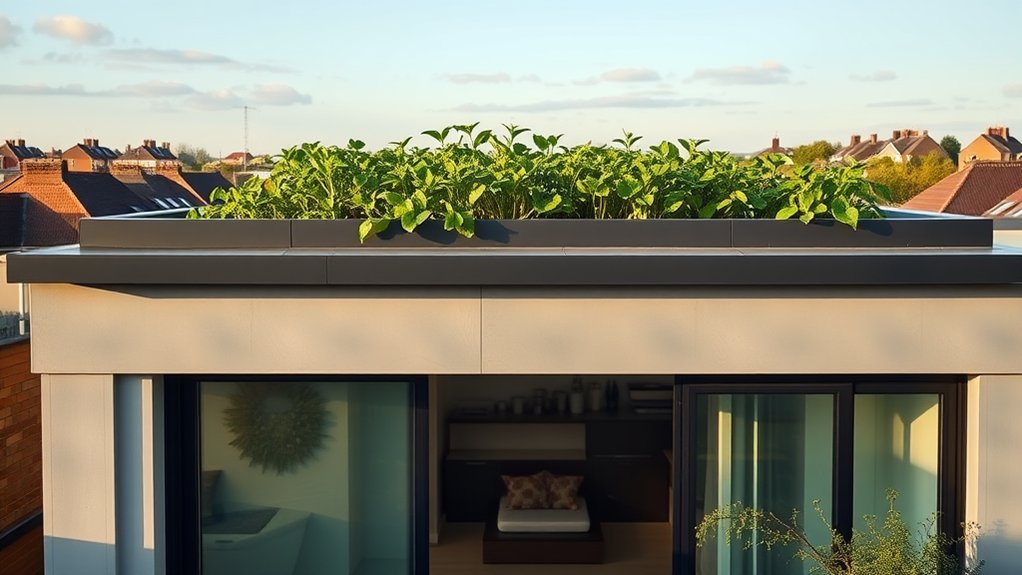
When choosing a roofing option for your home, flat roofing presents several clear advantages.
One key benefit is its design flexibility; flat roofs can easily complement various architectural styles, boosting your home’s appearance. They also make the most of available space, allowing for outdoor living areas, storage, or even rooftop gardens, which can enhance your property’s value. Additionally, the installation of flat roofs typically requires fewer materials and less labour, making them a cost-effective choice. Their straightforward design also simplifies maintenance and repairs, contributing to their durability. Furthermore, the use of high-performance membranes can significantly extend the lifespan of a flat roof, enhancing its overall value. Moreover, reflective properties of certain materials can lead to reduced cooling costs, further improving energy efficiency.
Disadvantages of Flat Roofing
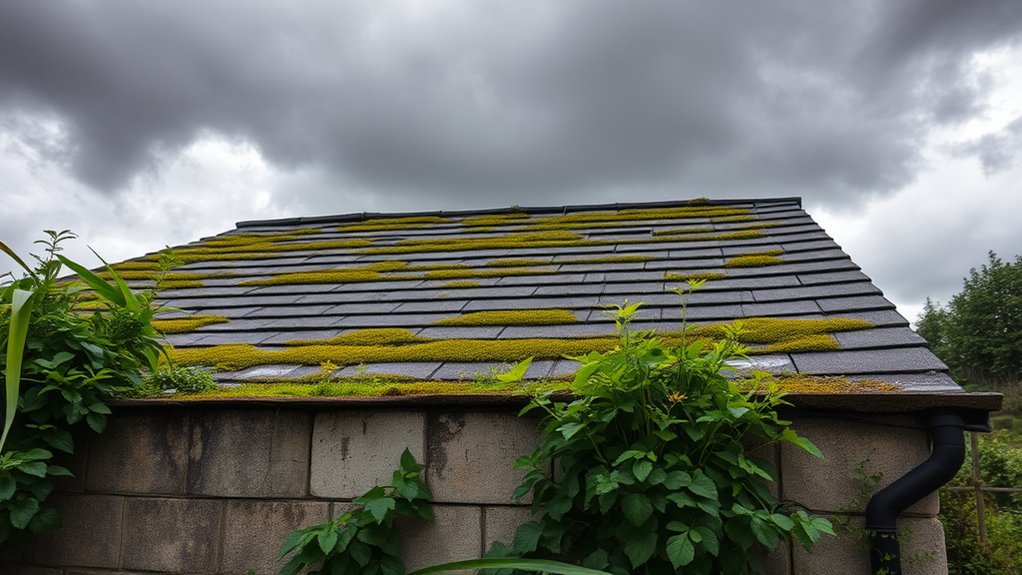
While flat roofing has its advantages, it also comes with notable drawbacks, especially regarding maintenance and temperature control. These roofs require more regular inspections and upkeep to avoid issues like water pooling and membrane deterioration. Moreover, their design can result in overheating during summer and increased heat loss in winter, making it harder and more expensive to regulate indoor temperatures. Additionally, the low maintenance costs associated with flat roofs can be misleading, as ongoing upkeep is crucial to ensure longevity. Furthermore, proper drainage design is essential to prevent ponding water, which can lead to significant structural damage if not addressed promptly.
Maintenance Challenges
Flat roofing poses several maintenance challenges that homeowners need to tackle to ensure their roofs last and function properly. A significant issue is ponding water, which arises from inadequate drainage and can lead to leaks and material deterioration. It’s essential to check the slope during installation and regularly remove debris to avoid blockages. Proper drainage design, including the installation of gutters, downspouts, and scuppers, is crucial for preventing ponding. Regular inspections help to identify signs of roofing emergencies, which can mitigate the risk of extensive damage.
Frequent inspections are crucial; checking for damage such as tears or punctures can prevent more serious problems down the line. Additionally, UV damage can make roofing materials brittle over time, so regular assessments of the roof’s condition are important.
Temperature Regulation Issues
Flat roofs, while popular for their sleek look, often come with significant temperature regulation challenges for homeowners.
When insulation is placed above the structural deck, it can be exposed to cold winter temperatures, leading to moisture build-up. This can result in decay and structural damage if not managed properly.
Cold deck roofs are particularly prone to interstitial condensation, which can foster mould and rot.
In the UK, where temperature swings are common, this can cause thermal shock, putting stress on roofing materials and shortening their lifespan.
Poor insulation can lead to excessive heat loss in winter and heat retention in summer, driving up energy bills.
To maintain a comfortable living environment, it’s essential to focus on effective moisture management and proper insulation placement.
Design Considerations for Flat Roofs
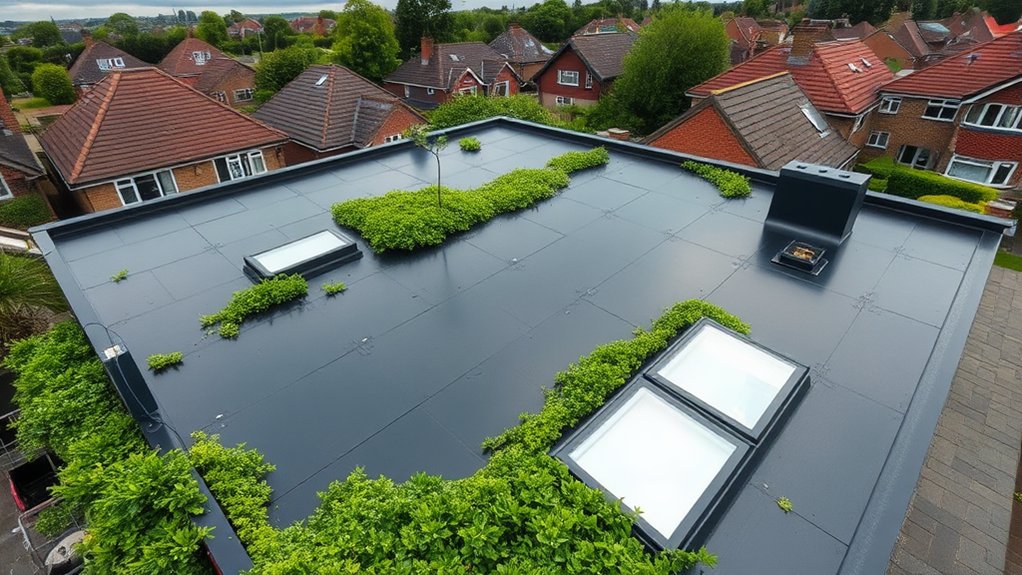
When designing flat roofs, it’s crucial to consider the necessary pitch for effective drainage. A slight slope ensures water runs off, reducing the risk of pooling and subsequent damage.
Choosing the right materials also plays a key role in the roof’s durability and performance, especially given the unpredictable UK weather. For instance, using high-quality waterproof membranes can significantly enhance longevity and reduce maintenance needs.
Pitch Requirement Importance
Understanding the importance of pitch in flat roofing design is crucial for ensuring effective drainage and structural integrity.
In the UK, flat roofs must have a pitch of 10 degrees or less, as outlined in BS 6229. Even with this minimal slope, it’s important to design the roof to encourage water runoff.
Using solutions like tapered insulation can help prevent water pooling, which can lead to serious issues such as leaks and deterioration.
A flat roof with insufficient pitch not only raises maintenance costs but also shortens its lifespan.
Material Selection Impact
Material selection is vital for the performance and lifespan of flat roofs. When choosing materials, assess their weather resistance and durability.
For instance, EPDM is known for its longevity and low maintenance, making it suitable for a range of climates. Fibreglass GRP performs exceptionally well in harsh conditions, often lasting over 20 years.
Modified bitumen offers flexibility and includes recyclable elements, while roofing felt is cost-effective but may need more frequent repairs. Asphalt is durable but requires ongoing maintenance.
Each material has specific installation requirements, so ensure your choices align with your design objectives and practical needs. Selecting the right material can significantly affect the roof’s functionality and durability.
Environmental Impact of Flat Roofing
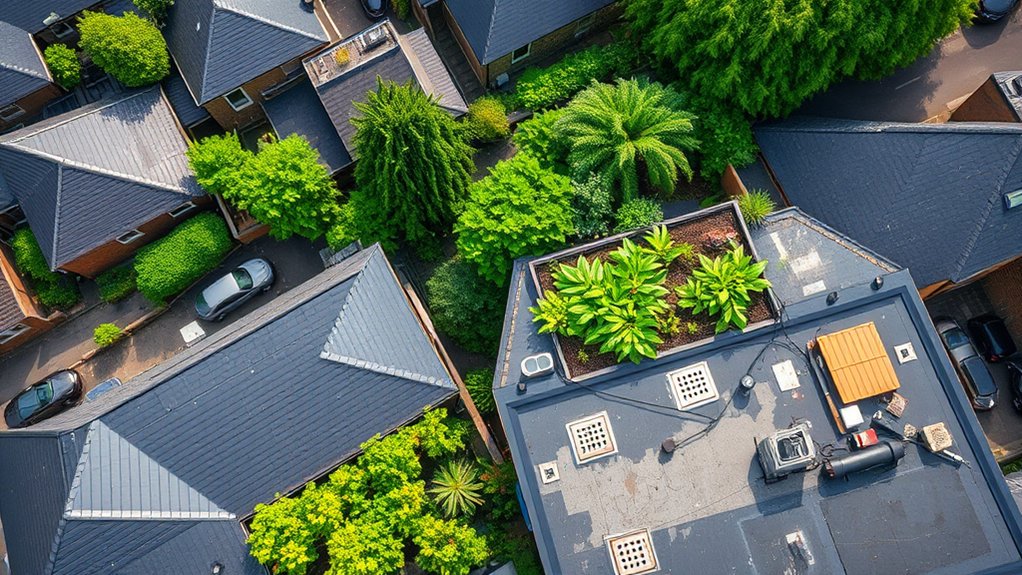
As flat roofing systems grow in popularity across the UK, their environmental impact becomes more important to consider.
Here are four key points to help you make sustainable choices:
- Material Choice: Opt for eco-friendly materials, such as single-ply membranes, to reduce your carbon footprint.
- Green Roofs: Adding green roofs can improve air quality and efficiently manage stormwater.
- Energy Efficiency: Quality insulation can lower energy consumption, helping to cut carbon emissions.
- Waste Management: Flat roofs often generate less construction waste, and many materials can be recycled, supporting a circular economy.
Cost Considerations for Flat Roof Installation
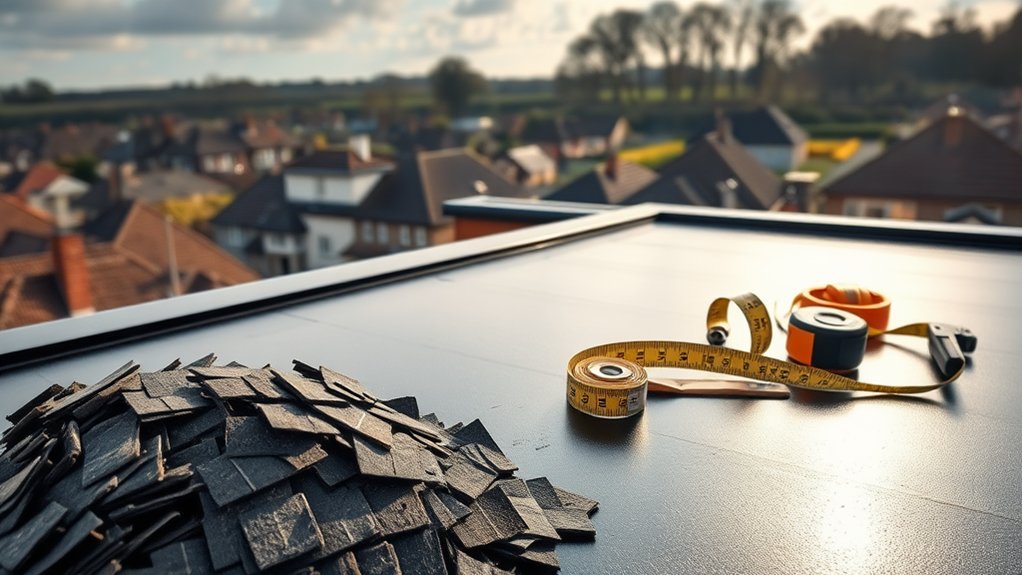
When considering flat roofing for your home, it’s essential to account for installation costs. Material prices range from £50 to £110 per m², depending on your choice. For instance, felt roofing is a budget-friendly option at around £65 per m², while rubber and fibreglass can vary in cost.
Installation costs can total between £1,000 and £5,000, depending on the size and complexity of your roof. Labour rates can vary, particularly in London, where costs tend to be higher.
Remember, larger roofs may take more time to install, which can increase overall expenses.
Don’t forget to factor in future maintenance and replacement costs. Flat roofs usually need attention within 20–30 years, so include these potential expenses in your long-term budget.
Installation Process for Flat Roofs

To ensure a successful flat roof installation, follow a clear process that starts with proper preparation and assessment.
Here are the essential steps:
- Surface Inspection: Remove any debris and fix any damage to the surface.
- Material Selection: Opt for materials that balance durability with cost-effectiveness.
- Waterproofing Methods: Install the chosen membrane carefully to ensure a robust seal against leaks.
- Final Inspection: Carry out a detailed quality check and test for any leaks.
Maintenance Requirements for Flat Roofing
Regular maintenance is vital for ensuring the longevity and performance of flat roofing systems. Inspect your roof at least twice a year, in spring and autumn, to identify issues like cracks or blocked drains. These inspections help maintain a watertight roof and ensure debris is cleared away.
During visual checks, look for surface damage and assess structural integrity, especially around gutters and downpipes.
Consider setting up maintenance contracts with professional roofing contractors for ongoing support and timely service. This proactive approach may include applying new coatings or sealants, which can extend your roof’s lifespan.
Following British Standards, such as BS 8217:2005, ensures you adhere to best practices for maintenance, effectively serving both your roof and your home.
Common Issues With Flat Roofs

Flat roofs are popular for their modern look and efficient use of space, but they can present several common issues that may threaten their durability.
Here are some key problems to be aware of:
- Ponding Water: Water collects in low areas, leading to material deterioration and leaks.
- UV Damage: Extended exposure to sunlight can make roofing materials brittle and susceptible to cracking.
- Structural Issues: Poor installation or insufficient support can create significant problems down the line.
- Material Deterioration: Ageing materials, such as EPDM, may dry out and develop tears.
To prevent these issues, it’s crucial to have effective drainage solutions in place.
Regular inspections can catch problems early, helping to ensure your flat roof stays functional and lasts for years.
Tips for Extending the Lifespan of Flat Roofs
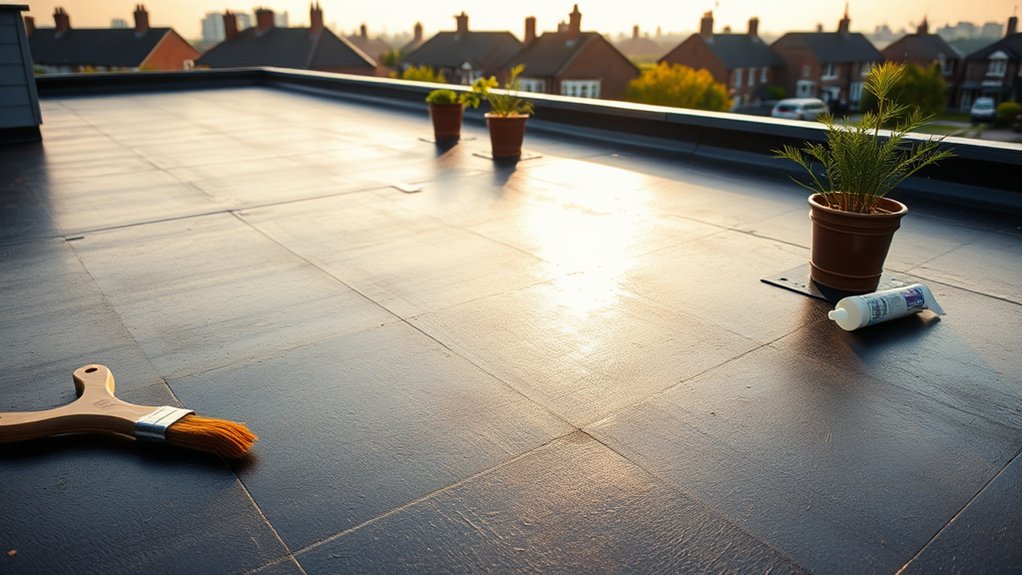
Maintaining a flat roof may seem simple, but taking proactive steps is essential to extend its life and performance. Conducting biannual visual inspections can help you identify debris build-up and potential leaks early.
Ensure that gutters and drains are cleared regularly to allow proper water flow and prevent blockages. Using reflective coatings can protect your roof from weathering and UV damage.
It’s also important to keep an eye on drainage systems; address any standing water without delay. Regularly trim overhanging trees to reduce debris falling onto the roof, and consider adding extra drainage solutions if necessary.
Frequently Asked Questions
How Long Do Flat Roofs Typically Last?
Flat roofs generally last between 15 to 30 years, depending on the materials used and how well they are maintained. Regular maintenance can significantly extend their lifespan. However, keep in mind that the costs of repairs can affect your overall investment in a durable roof.
What Types of Materials Are Best for Flat Roofing?
For flat roofing, EPDM membranes are a solid choice due to their durability and affordability. TPO roofing is also excellent, particularly for its energy efficiency. Both options are reliable and offer long-lasting performance, making them some of the best materials for flat roofs in the UK.
Can Flat Roofs Support Heavy Installations Like Solar Panels?
Think of your flat roof as a solid base; it can support solar panel installations as long as it remains structurally sound. Regular inspections and reinforcements are crucial to ensure it can safely bear the extra weight. For example, if your roof already supports air conditioning units or a heavy water tank, it’s likely equipped to handle solar panels too. Just make sure to consult with a professional to assess its condition and get the right support.
Are Flat Roofs More Prone to Leaks Than Pitched Roofs?
Yes, flat roofs are generally more susceptible to leaks than pitched roofs. To help prevent leaks, it’s important to carry out regular inspections, ensure proper drainage, and promptly address any standing water. For example, if you notice water pooling on the roof after a rain, it’s crucial to investigate and resolve the issue to avoid future problems.
How Do Flat Roofs Perform in Extreme Weather Conditions?
Flat roofs, constructed with quality materials, can withstand extreme weather conditions effectively. Good installation and regular maintenance are crucial to manage temperature changes, heavy rainfall, and strong winds, ensuring they perform well over time. For instance, a properly maintained flat roof can prevent leaks during storms, protecting the interior of your property.
Conclusion
In summary, flat roofing can provide a modern look and cost-saving advantages, but it’s important to consider the potential downsides, such as maintenance issues and susceptibility to weather. Understanding the pros and cons of flat roofs allows you to make an informed choice for your home. If you’re prepared to invest in maintenance, flat roofing could be a stylish and practical update that enhances your property.


