

Rainwater Harvesting Regulations and Building Compliance
Rainwater harvesting regulations differ greatly across the UK. Some local authorities have stringent compliance requirements, while others are more relaxed. If you’re installing a larger system or one intended for drinking water, you’ll likely need a permit to avoid potential fines. Regular inspections and maintenance are essential to ensure the water remains safe and of good quality. Familiarising yourself with these regulations is crucial for a successful installation. Understanding the specifics of compliance can help you make the most of your rainwater harvesting system.
Key Takeaways
- Local regulations for rainwater harvesting differ across regions; always check with your local council for specific compliance and permitting requirements.
- Larger rainwater systems, typically those over 22,700 litres, usually require permits, so ensure you follow local building regulations.
- It’s crucial to implement effective water quality measures; regularly check turbidity and E. coli levels to meet health standards.
- Engaging with the community and providing education on rainwater management can raise awareness and encourage sustainable practices.
- Homeowners might find financial benefits such as tax relief, VAT exemptions, and local grants for installing rainwater harvesting systems.
Federal and State Legal Framework for Rainwater Harvesting

The federal government in the UK doesn’t directly regulate rainwater harvesting, but it influences local policies through guidelines and research support. Regulations for rainwater harvesting can vary widely among local authorities; some have strict requirements, while others are more permissive. For example, in some areas, larger systems must be registered to ensure proper water management. In contrast, other regions have moved from outright bans to allowing limited rainwater collection. It’s essential to understand these local regulations if you’re considering a rainwater harvesting system, as compliance helps ensure effective use and meets regional water needs. Many places in the U.S. allow rainwater harvesting, reflecting a growing recognition of its benefits for water conservation.
Permitting and Compliance Requirements

When planning your rainwater harvesting system, ensure you adhere to local building regulations that govern installation standards and safety measures. It’s also important to prepare and submit comprehensive documentation, including design diagrams and specifications for each component. Meeting these permitting and compliance requirements is crucial for a successful and lawful installation. For instance, if you’re installing a system for garden irrigation, following the correct guidelines won’t only keep you within the law but also ensure your system operates efficiently. Additionally, obtaining the necessary zoning and land use permits is essential for legal installation and to avoid potential fines.
Local Building Codes
Local building regulations are essential for managing rainwater harvesting systems, setting out the necessary permits and compliance requirements for safe installation. Regulations can vary significantly, so it’s important to be aware of the specific codes in your area.
Generally, tanks larger than 22,700 litres (about 5,000 gallons) require a permit, whereas smaller tanks may not. If you intend to use rainwater for drinking, be prepared for stricter compliance, as this necessitates detailed design specifications and oversight from health authorities. Additionally, a Water Safety Plan is mandated to improve water quality for both potable and non-potable uses.
For non-drinking uses, the requirements are usually less demanding, but you’ll still need effective measures to prevent cross-contamination with the mains water supply. Always check with your local council to navigate the permitting process and ensure your system complies with all relevant standards.
System Documentation Standards
Understanding local building regulations is just the first step in ensuring your rainwater harvesting system complies with all necessary standards. Proper documentation is essential for this compliance. By adopting best practices in documentation, you enhance transparency and accountability. It’s important to establish operational guidelines, clarify maintenance responsibilities, and develop a Water Safety Plan (WSP) to tackle water quality issues.
| Documentation Component | Purpose |
|---|---|
| Operational Guidelines | Ensure correct system usage |
| Maintenance Responsibilities | Define accountability |
| Water Safety Plan (WSP) | Reduce water quality risks |
| Compliance Checklists | Confirm adherence to standards |
Regular inspections and thorough documentation are crucial for compliance. Following these standards not only safeguards public health but also extends the lifespan of your system.
Distinctions Between Commercial and Residential Systems
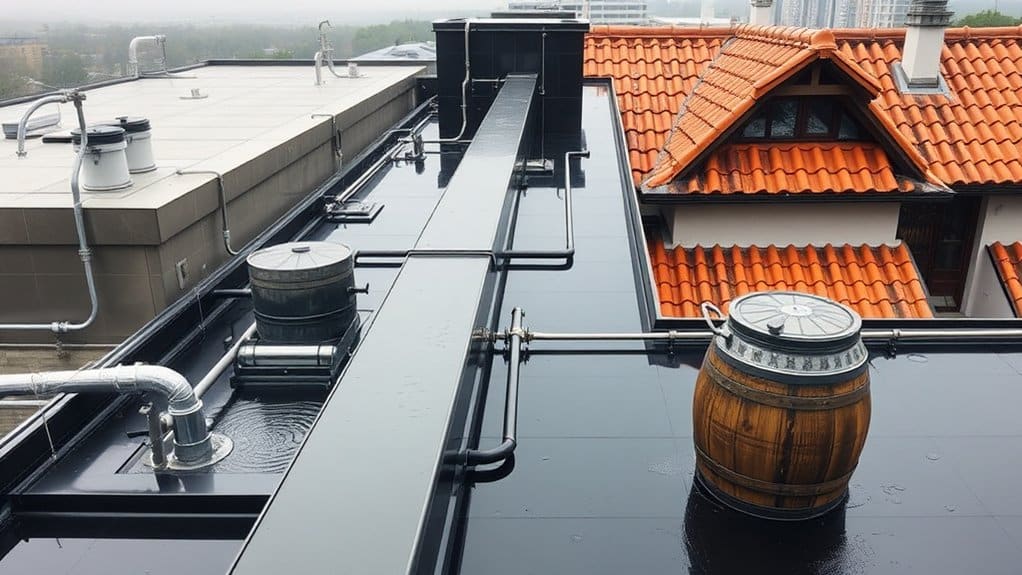
While the principles of rainwater harvesting apply to both commercial and residential systems, there are notable differences due to scale, infrastructure, and regulatory requirements.
Commercial systems handle larger volumes of water, often using underground tanks and advanced filtration for purposes such as irrigation and industrial processes. In contrast, residential systems usually consist of smaller barrels or cisterns primarily for garden use.
The regulatory landscape also varies; commercial setups must navigate stringent permitting and comply with federal guidelines, while residential systems often require only minimal approvals.
Cost is another significant factor, with commercial installations frequently exceeding £50,000, whereas residential systems typically range from £1,000 to £5,000.
Understanding these differences is crucial for effective implementation and compliance in rainwater harvesting projects.
System Design and Maintenance Considerations
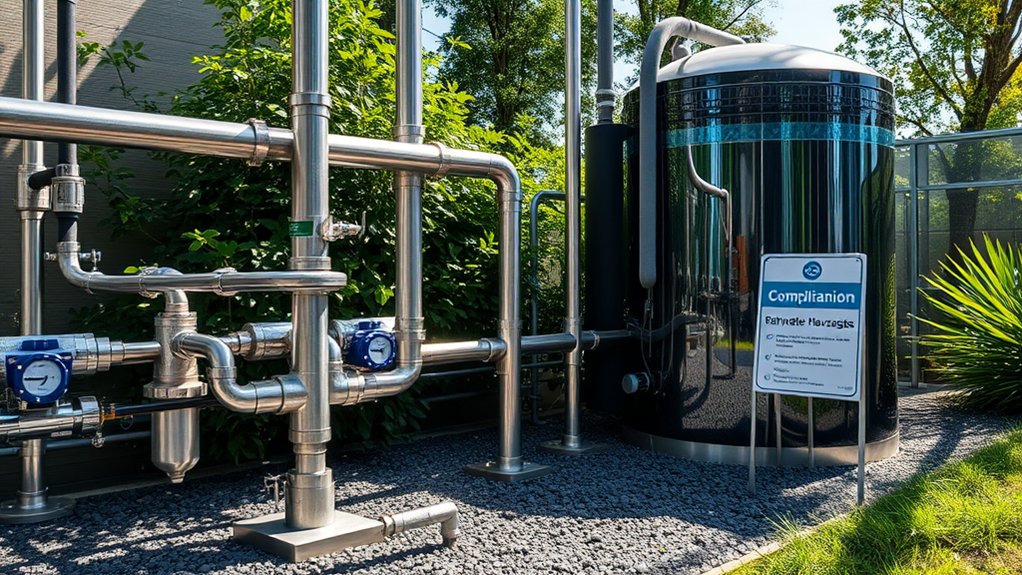
When designing a rainwater harvesting system, it’s crucial to prioritise filtration and treatment standards to ensure water quality.
Establishing clear maintenance protocols will help keep your system running smoothly. Regular inspections and cleaning are vital for preventing contamination and optimising performance.
For instance, checking and clearing debris from filters and storage tanks can greatly enhance efficiency.
Filtration and Treatment Standards
Effective filtration and treatment standards are essential for ensuring the safety and quality of harvested rainwater. Implement multi-stage filtration technologies, including coarse and fine filters, to achieve optimal treatment efficiency. Pre-tank filtration captures debris, while post-storage filtration ensures microbial safety before disinfection.
| Filtration Stage | Requirement |
|---|---|
| Coarse filtration | 100+ microns |
| Fine filtration | ≤5 microns |
| Disinfection method | Chlorine or UV light |
It’s crucial to maintain appropriate residual chlorine levels for ongoing pathogen control. Additionally, verifying UV dosage is necessary to meet log-reduction targets. By following these standards, you can ensure that rainwater is safe and suitable for drinking.
Maintenance Protocols and Practices
To ensure your rainwater harvesting system operates effectively and lasts longer, it’s crucial to follow a solid maintenance routine.
Begin by setting up regular inspections for your roof and gutters, ideally 2 to 4 times a year, and particularly after heavy rainfall or storms.
Consider installing snap-in leaf guards to help keep debris out.
Regularly check and clean first flush systems to ensure they’re properly diverting contaminated rainwater.
Keep an eye on your storage tanks for leaks or algae growth, and clean filter baskets after rain events.
Adjust your maintenance frequency with the changing seasons, especially during autumn when leaves fall.
Ensuring Water Quality and Safety
Ensuring water quality and safety in rainwater harvesting systems is vital, as pollutants can easily compromise stored water.
Adhere to minimum water quality standards and monitor key parameters such as turbidity, E. coli, and pH. Keep turbidity below 1 NTU for clarity, and regularly test for E. coli, ensuring levels remain below 2.2 MPN/100 mL.
Employ effective safety measures, including 5-micron absolute filters and disinfection methods like UV light or chlorination.
Regular maintenance and inspections of these systems are crucial to minimise health risks from contaminants introduced during collection or storage.
Educating the community on proper rainwater management can further protect public health and ensure compliance with health regulations.
Incentives and Enforcement Mechanisms

Many homeowners mightn’t realise the benefits of rainwater harvesting, but there are several incentives and regulations designed to encourage its use. These measures not only offer financial benefits but also ensure adherence to local laws.
Here are some key points:
- Tax Relief: In some regions, rainwater harvesting systems may be exempt from VAT.
- Local Grants: Councils often provide grants for installing rainwater systems, which helps promote water conservation.
- Planning Permissions: Local authorities can’t refuse planning permission for rainwater harvesting systems if they comply with national guidelines.
- Supportive Legislation: Homeowner associations are prohibited from banning rainwater harvesting installations, ensuring wider acceptance.
Frequently Asked Questions
How Can I Find Local Rainwater Harvesting Resources?
To find local rainwater harvesting resources, check out community workshops and online guides. Look into rainwater collection methods and understand local regulations for successful system setup. Connect with organisations that provide support and financial incentives for sustainable practices. For example, local councils may offer grants or advice on implementing rainwater systems.
What Are Common Misconceptions About Rainwater Harvesting?
Don’t judge a book by its cover—myths about rainwater harvesting can obscure the facts. In reality, even small systems can deliver considerable benefits, offering safe and adaptable water use while supporting sustainability and self-sufficiency. For example, collecting rainwater can reduce your water bill and lessen demand on local water supplies.
Can I Use Rainwater for Swimming Pools?
Yes, you can use rainwater for swimming pools in the UK, but it’s essential to have proper filtration systems in place. This ensures the water is free from contaminants, providing a safe and enjoyable swimming experience without relying solely on mains water.
How Does Climate Affect Rainwater Harvesting Effectiveness?
Climate significantly impacts the effectiveness of rainwater harvesting. Fluctuating rainfall patterns and climate variability can affect how much water you need to store, how efficiently you collect it, and how you design your system. For instance, in areas with heavy rain, larger storage tanks may be necessary, while drier regions might require more efficient collection methods. Adapting your approach to suit local weather conditions is essential for maximising your water yield.
Are There Specific Rainwater Harvesting Certifications Available?
Explore the various certification programmes available for rainwater harvesting in the UK. These programmes ensure compliance with industry standards, enhancing your skills and enabling you to assist communities seeking sustainable water solutions effectively. For instance, the Rainwater Harvesting Association offers certifications that can boost your credibility and knowledge in this essential field.
Conclusion
Navigating rainwater harvesting regulations in the UK can seem daunting, but it opens up many opportunities for sustainable living. By familiarising yourself with the legal requirements, you can make the most of rainwater while ensuring safety and compliance. Imagine your home or business benefiting from a system that collects rain, reducing your water bills and environmental impact. By following these guidelines, you not only adhere to the law but also play a part in creating a more sustainable future, one drop at a time.


