

Salvaged vs. New Slate Tiles: Which Is Better for UK Roof Restoration?
When it comes to roof restoration in the UK, opting for salvaged slate tiles has several benefits over new tiles. For starters, they help minimise waste and lessen your environmental footprint. They’re often cheaper too, making them a cost-effective choice. With a lifespan that can exceed 100 years, salvaged slate can provide significant long-term savings.
Reclaimed slate also offers unique aesthetic variations, adding character while preserving the historical look of your property. It’s important to ensure compliance with building regulations, so be sure to obtain the necessary approvals.
Overall, these factors can greatly enhance the success and sustainability of your restoration project.
Key Takeaways
- Salvaged slate tiles are more eco-friendly, helping to reduce waste and lower carbon emissions compared to the quarrying of new slate.
- They are cost-effective in the long run, generally priced between £10 and £30 per square metre, whereas new slate tends to be pricier.
- Salvaged slate is incredibly durable, often lasting over 100 years with proper care, making it a sustainable option for roof restoration.
- The unique look of salvaged slate adds character to roofs, helping to preserve historical features and enhance architectural design.
- However, sourcing salvaged slate can be inconsistent, while new slate offers a reliable supply, though it may lack the distinctive charm of reclaimed materials.
Environmental Benefits of Salvaged Slate Tiles
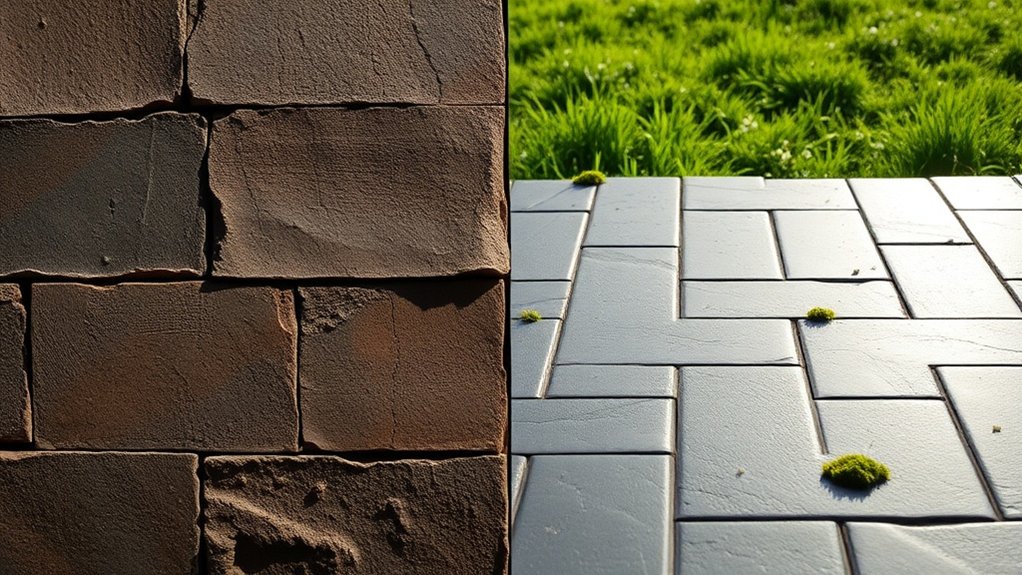
Choosing salvaged slate tiles for your roof restoration is a smart move that benefits the environment. By using these tiles, you help reduce waste that would otherwise end up in landfills, as they’re made from materials that would be discarded.
Reclaimed slate also lessens the environmental impact of new quarrying, which helps conserve natural resources and protects ecosystems. Furthermore, sourcing slate from UK quarries minimizes transportation distances, further reducing carbon emissions. Slate roofing is incredibly durable, lasting over 100 years, which means fewer replacements are needed and less overall resource consumption. Additionally, this longevity contributes to lower environmental impact, as it reduces the frequency of roofing material production and waste generation.
By opting for salvaged slate, you contribute to a circular economy, making the most of existing materials while cutting down on the carbon emissions associated with producing new tiles.
This choice not only improves your roof but also supports a healthier planet.
Cost Comparison: Salvaged vs. New Slate Tiles
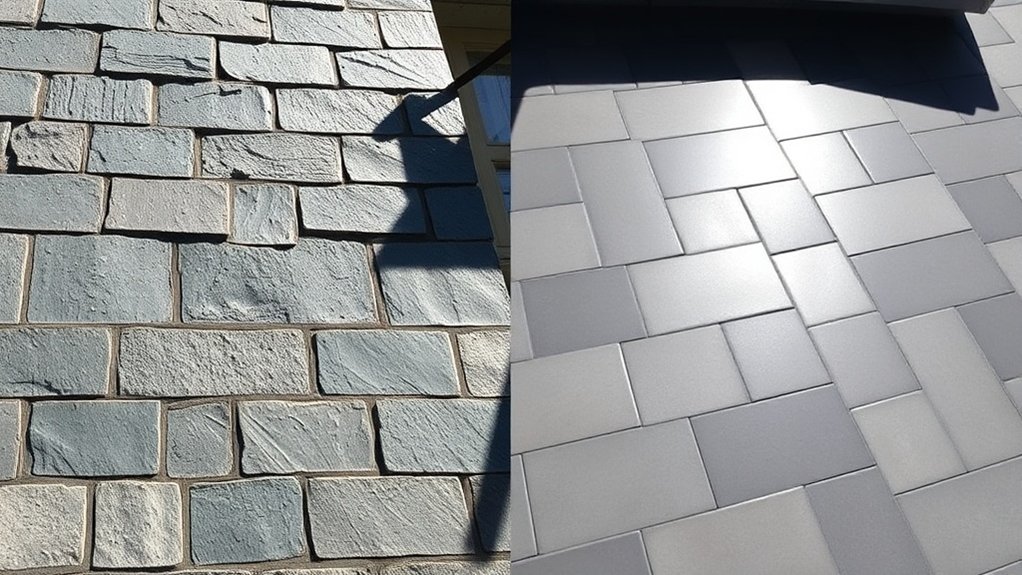
When considering roof restoration, it’s important to compare the costs of salvaged and new slate tiles. Salvaged slate typically ranges from £10 to £30 per square metre, whereas new slate costs between £25 and £90 per square metre. Knowing these price ranges can help you make informed choices based on your budget and project requirements. Additionally, slate roofing’s durability is a significant advantage, as it can last over 100 years with proper maintenance, making it a worthwhile investment for homeowners.
| Type | Price Range (per m²) | Additional Costs |
|---|---|---|
| Salvaged Slate | £10 – £30 | Sorting & fitting |
| New Slate | £25 – £90 | Installation & extras |
| Labour Costs | £150 – £200 | Complexity & location |
Durability and Lifespan of Slate Tiles
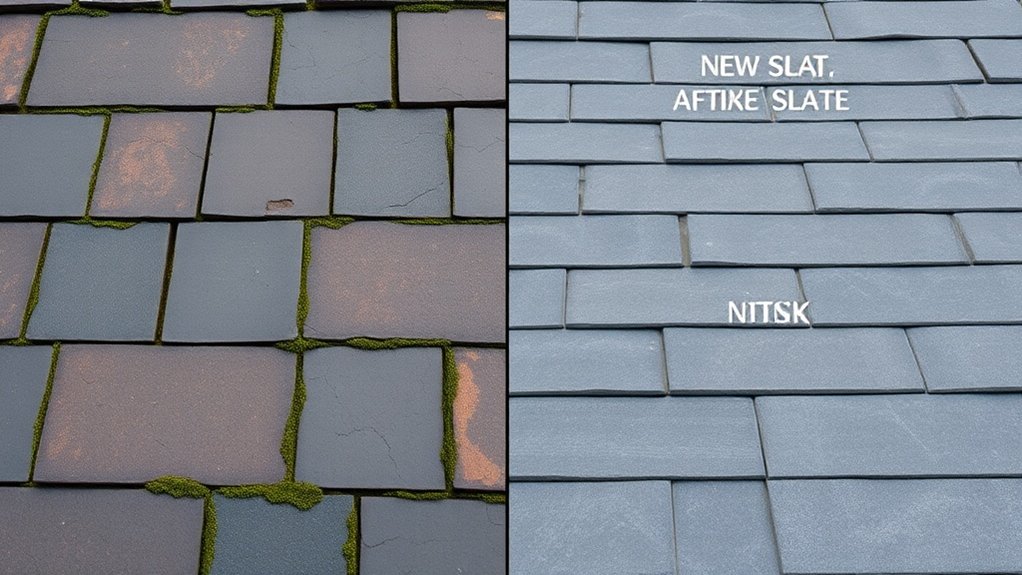
Slate tiles are highly regarded for their durability and long lifespan, making them a preferred option for roofing across the UK. Typically, natural slate lasts between 50 and 200 years, with robust types like Welsh and Spanish slate often lasting over a century. Their remarkable resistance to the elements is influenced by factors such as thickness, roof pitch, and installation quality. Thicker slates (at least 5mm) are better at weathering, and steeper roofs help shed water effectively, reducing the risk of freeze-thaw damage. Regular maintenance, including yearly inspections and clearing debris, can significantly extend the lifespan of your tiles. Salvaged slate can remain durable if carefully selected and installed, but new slate offers consistent quality and thickness, ensuring it stands the test of time in various UK weather conditions. Investing in slate roofs can pay off over time compared to frequent replacements of other materials. Additionally, understanding the importance of regular inspections ensures that any potential issues are caught early, further enhancing the longevity of your roof. Prioritising quality and maintenance is key to maximising your roof’s longevity.
Aesthetic Appeal of Salvaged Slate
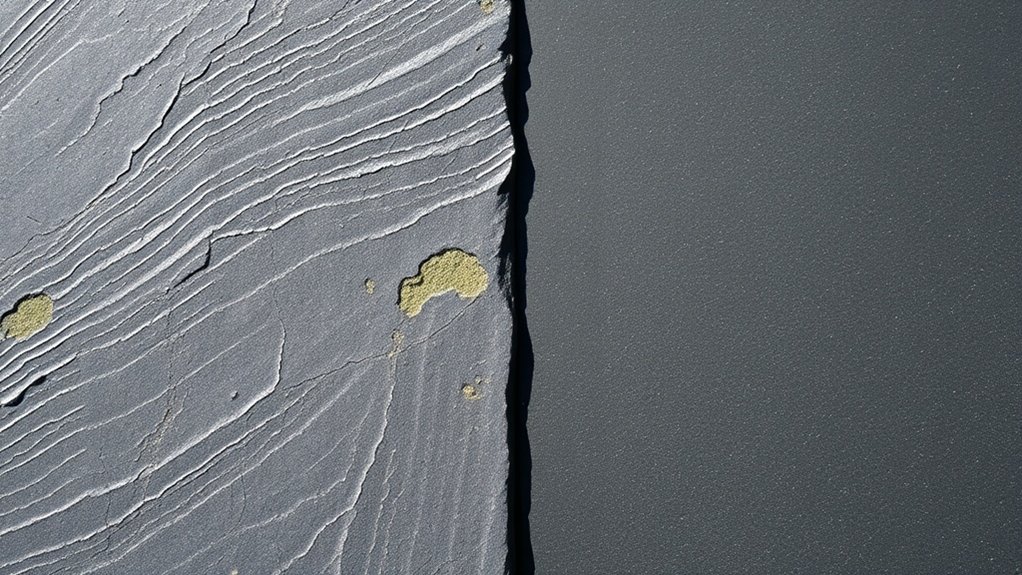
Salvaged slate tiles have a distinctive weathered look that new slates simply can’t match.
Their subtle tonal variations add character to your roof. Each tile maintains its historical integrity, telling a story that enhances the aesthetic of heritage buildings.
The natural colour variations, ranging from earthy browns to deep blues, create a visually appealing palette that suits various architectural styles.
Unique Weathered Appearance
When considering roof restoration, reclaimed slate tiles offer a unique weathered look that’s both rich and distinctive.
These salvaged tiles feature authentic textures and a natural patina developed over decades, giving your roof character that new slates simply can’t match. The irregularities and subtle colour variations—from deep blues to warm browns—create a weathered aesthetic that adds depth and visual interest.
Each piece has its own story, contributing to a multi-tonal roof that enhances your home’s appeal. The natural wear patterns give a three-dimensional quality that complements traditional materials beautifully.
Historical Integrity Preservation
Choosing reclaimed slate tiles not only enhances the distinctive, weathered look of your roof but also helps preserve its historical integrity. By opting for reclaimed slate, you ensure that the architectural significance and historical context of your property are maintained, which is essential for meeting conservation regulations.
This choice helps guarantee that the roof’s texture, size, and shape are consistent with its period style, avoiding any visual disruption. Working with roofing specialists and conservation officers ensures compliance with strict standards, protecting the original character of your building.
Additionally, the durability of reclaimed slate aids long-term heritage preservation, reducing the need for future repairs and helping maintain your property’s listed status. In the end, this decision not only supports cultural continuity but also contributes to broader heritage conservation efforts.
Natural Color Variations
Natural colour variations in salvaged slate tiles enhance their aesthetic appeal, giving them a unique character that new materials often lack. These variations arise from the mineral content in the slate, such as iron compounds that produce rich reds and browns.
Different sources yield distinct colour profiles; for example, Welsh slate offers deep blue-grey hues, while Yorkshire stone features warm buff tones. Geological processes create a range of colours within a single batch, resulting in subtle shifts and patterns that enrich the overall look.
Over time, natural weathering stabilises these contrasts, providing a pleasing “lived-in” appearance. This varied palette complements period architecture, making salvaged slate an excellent choice for authentic restoration projects.
Architectural Considerations for Restoration Projects

When starting a roof restoration project, it’s essential to consider several architectural factors that impact both the look and the stability of the building.
Firstly, ensure that the slate types you choose match the original design. This is particularly important for listed buildings, as it helps maintain their historical character.
Be mindful of where you source materials; using salvaged slate can preserve authenticity, but it may require skilled craftsmanship to align with existing patterns.
Also, evaluate the roof’s structure for necessary reinforcement, as both salvaged and new slate are heavy materials.
Don’t forget to select corrosion-resistant fasteners that can withstand local weather conditions.
Striking the right balance between the unique appeal of salvaged slate and the consistency of new slate is key to enhancing your project while complying with heritage preservation regulations.
Installation Process for Salvaged Slate Tiles

When installing salvaged slate tiles, preparation and assessment are crucial for ensuring a strong and weather-resistant roof.
Pay attention to installation techniques that accommodate the distinct characteristics of each tile, while ensuring proper alignment and waterproofing.
Lastly, don’t forget to conduct post-installation checks to confirm the integrity and performance of your new roof.
Preparation and Assessment
Before installing salvaged slate tiles, it’s crucial to prepare and assess the materials to ensure they’re suitable for your roof. Here are the key steps:
- Condition Assessment: Check for any cracks, chips, or signs of wear to gauge the tiles’ lifespan and suitability.
- Compatibility Evaluation: Ensure the salvaged slates match your existing roof in size, thickness, and weight.
- Sorting and Cleaning: Remove any damaged tiles and clean off moss or debris to keep both the appearance and functionality of your roof intact.
Installation Techniques
Once you’ve assessed and prepared your salvaged slate tiles, it’s time to focus on the installation techniques to ensure a secure and weatherproof roof.
Start by using stainless steel or copper nails to prevent rusting. Nail through pre-drilled holes at the top of the slates to avoid cracking, and use lead tags to secure the bottom slates for added stability.
Handle the slates carefully, ensuring they overlap correctly for optimal drainage. Aim for a 50mm overhang to promote effective water run-off.
As you install each slate, slide them into place above the fixing points to hide the nails and maintain a clean appearance.
Finally, seal the nail heads with silicone to enhance waterproofing and ensure a long-lasting installation.
Post-Installation Considerations
After installing salvaged slate tiles, it’s crucial to carry out a detailed post-installation inspection to ensure the roof’s integrity and durability.
This step helps identify any potential issues before they escalate into major maintenance problems. Here are some key points to consider:
- Examine each tile for any cracks or chips that may have been overlooked during installation.
- Check that nails or hooks are correctly placed to avoid breakage.
- Ensure tiles are properly aligned to prevent an uneven surface.
Structural Implications of Using Different Slate Types
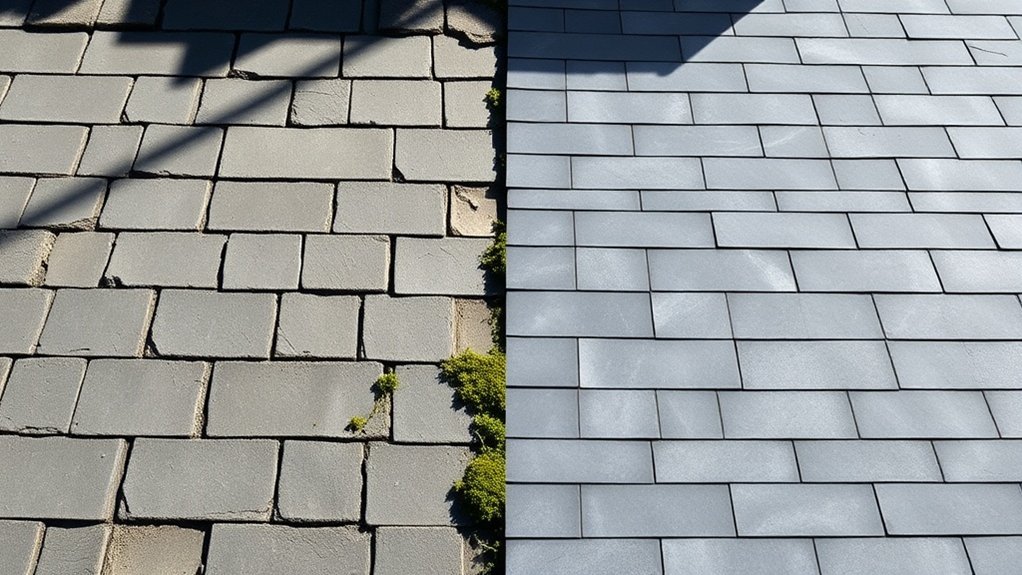
When deciding between new and salvaged slate tiles, it’s important to consider the structural implications for your roof restoration project.
Both types generally weigh around 6-10 lbs per square foot, which means your support structures need to be strong.
Many older UK buildings have timber rafters that may not be able to handle this load. This can lead to installation challenges and potential extra costs for structural reinforcement.
It’s essential to ensure that your building can safely support the weight of the slates to maintain safety and longevity.
Additionally, salvaged slates must be thoroughly inspected for hidden damage that could weaken the roof over time.
Taking these factors into account can help you make a more informed choice for your project.
Availability of Salvaged vs. New Slate
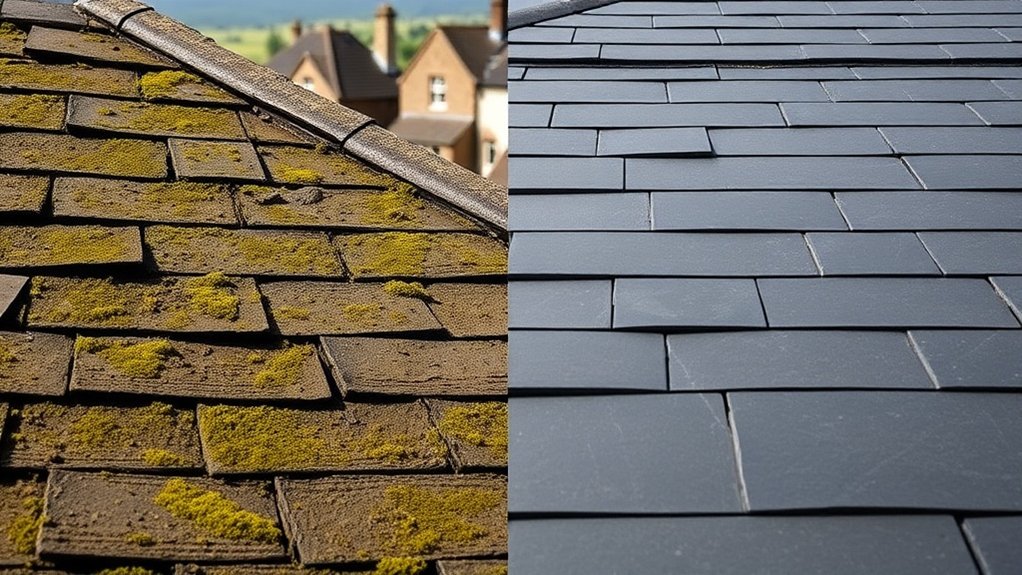
When considering slate for your roofing project, it’s important to weigh the availability of salvaged versus new slate.
Sourcing reclaimed slate can be inconsistent due to varying demolition activities and differing quality, which can affect your choices.
On the other hand, new slate typically offers more reliable stock levels but may lack the unique character of salvaged materials.
For example, if you’re after a more traditional look, salvaged slate might be the way to go, but be prepared for potential supply issues.
Sourcing Challenges
When tackling the sourcing challenges of slate tiles for roofing projects, it’s essential to understand the differences between salvaged and new slate.
Salvaged slate can be tricky to source due to the irregular cycles of demolition and renovation. This often leads to supply fluctuations, making specific sizes hard to come by, particularly for heritage projects.
On the other hand, new slate tiles are generally more readily available, with suppliers maintaining consistent stock levels.
While salvaged Welsh slate is prized for its authenticity, sourcing these tiles can be complex. They require careful sorting and inspection, which can add time and effort to your project.
In contrast, new slates are ideal for larger, modern builds, thanks to their predictable supply chains that help you stay on schedule without the worry of delays.
Quality Variability
The quality variability between salvaged and new slate tiles can significantly affect your roofing project. Salvaged slate often varies in thickness, flatness, and surface integrity due to the conditions in which it was originally quarried and years of exposure. This inconsistency can complicate installation and impact durability.
In contrast, new slate tiles undergo rigorous quality control, ensuring uniform thickness and surface quality, often backed by certifications like ISO 9001:2000, which guarantees performance.
While salvaged slate brings unique aesthetic charm and historical value, its variability can make it challenging to match colours and textures. For projects where reliability is crucial, new slate usually offers predictable long-term performance, making it a reliable choice for restoration work.
Market Availability Limits
Salvaged slate tiles have a unique historical appeal, but their availability can be quite limited due to several factors:
- Regional availability: Salvaged slate often comes from specific areas undergoing renovations, which can lead to inconsistent supply.
- Market fluctuations: Popular types, such as Welsh slate, can be in high demand, making them harder to source.
- Supplier networks: Access relies on specialised reclaimers, so availability can vary depending on their stock levels.
In comparison, new slate tiles offer more reliable quality and consistent availability, thanks to ongoing production from active quarries.
This makes them a more dependable choice for your restoration projects.
Impact on Building Regulations and Compliance
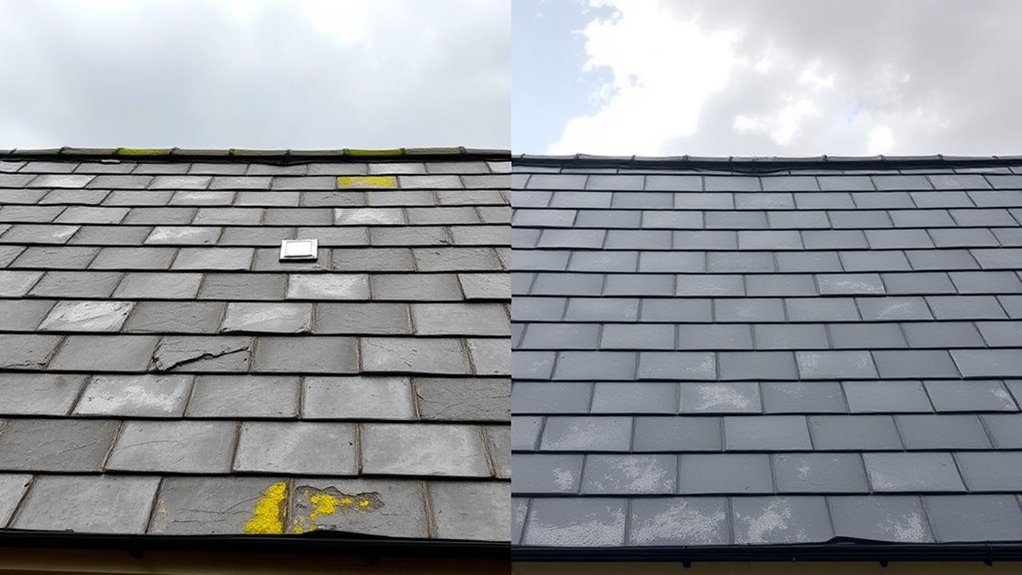
When renovating a roof, it’s crucial to understand the building regulations and compliance requirements to ensure a smooth restoration. Key elements to consider include thermal performance, structural integrity, and fire safety. For example, if you’re replacing 25% or more of your roof, you’ll need to upgrade insulation and follow specific installation standards.
| Aspect | Requirements |
|---|---|
| Roof Coverage Change | Approval required for any changes in weight or performance |
| Insulation Standards | Must meet current thermal efficiency criteria |
| Structural Safety | Consult engineers if there’s a significant change in material weight |
| Fire Safety | Material selection must comply with Approved Document Part B |
Staying on top of these regulations is essential to avoid complications and ensure your renovation meets safety standards.
Support for Sustainable Building Practices
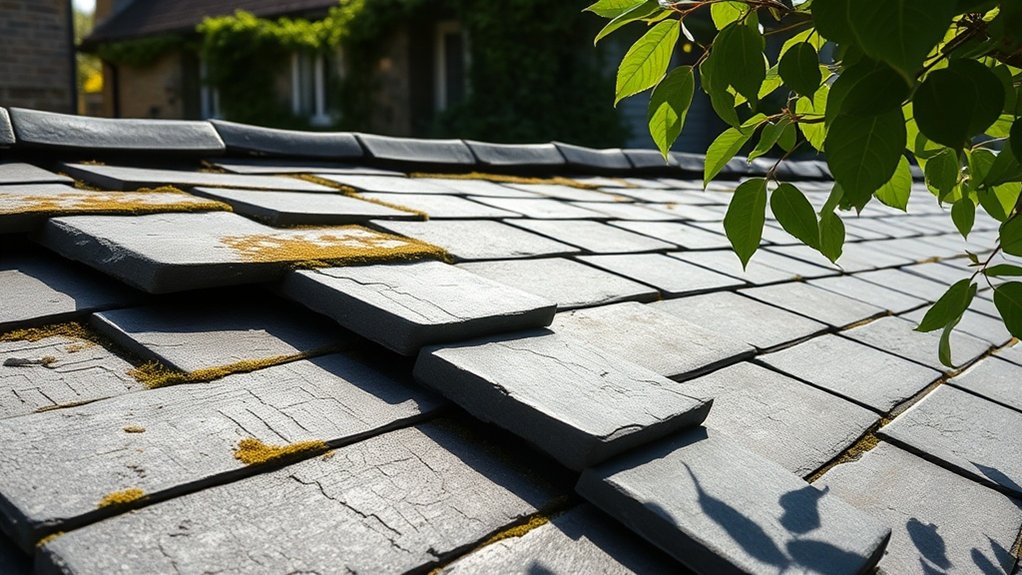
Understanding building regulations and compliance is essential for incorporating sustainable practices in roof restoration. Choosing slate tiles—whether reclaimed or new—supports eco-friendly initiatives that align with the UK’s sustainability goals.
Here’s how you can promote sustainable building:
- Select sustainable materials that reduce carbon footprints.
- Follow circular economy principles by reusing existing resources.
- Keep up to date with energy efficiency regulations that encourage greener buildings.
These steps not only fulfil regulatory requirements but also contribute to a healthier environment.
As the UK green building market expands, your dedication to sustainable practices will help minimise waste and conserve resources, fostering a more sustainable future in construction.
Long-Term Value of Salvaged Slate Tiles
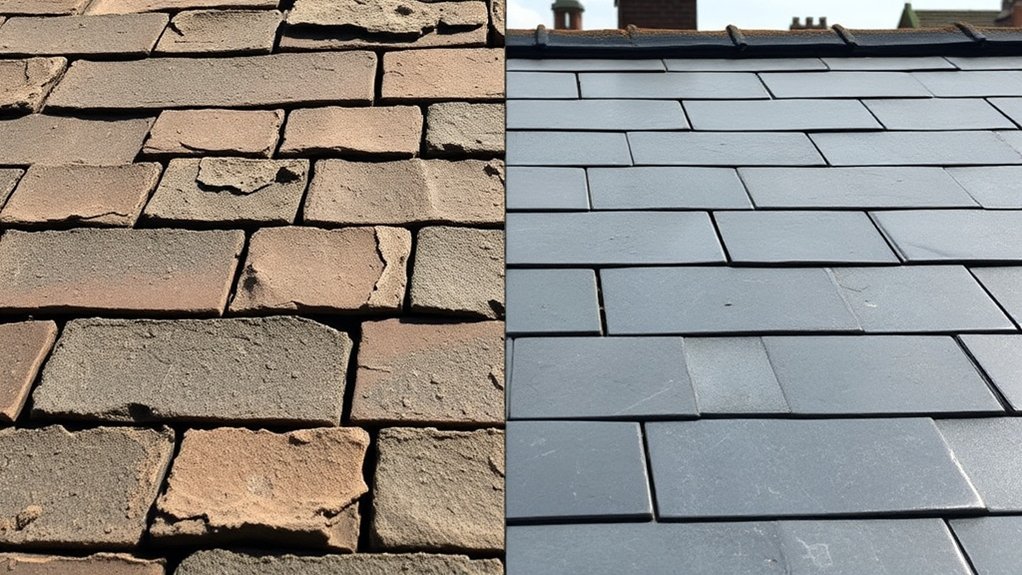
The long-term value of salvaged slate tiles is significant, thanks to their exceptional durability and cost efficiency. When properly installed, these tiles can last over 100 years, making them an excellent choice for roof restoration projects.
While the initial installation cost can be higher, typically between £3 and £5 per tile, their longevity means you’ll save money in the long run. Additionally, opting for reclaimed slate reduces waste disposal costs and provides stable pricing, unlike the fluctuations often seen with new imports.
Choosing salvaged slate not only supports a circular economy but also preserves your roof’s architectural character, ultimately boosting your property’s value over time.
Case Studies: Successful Restoration With Salvaged Slate
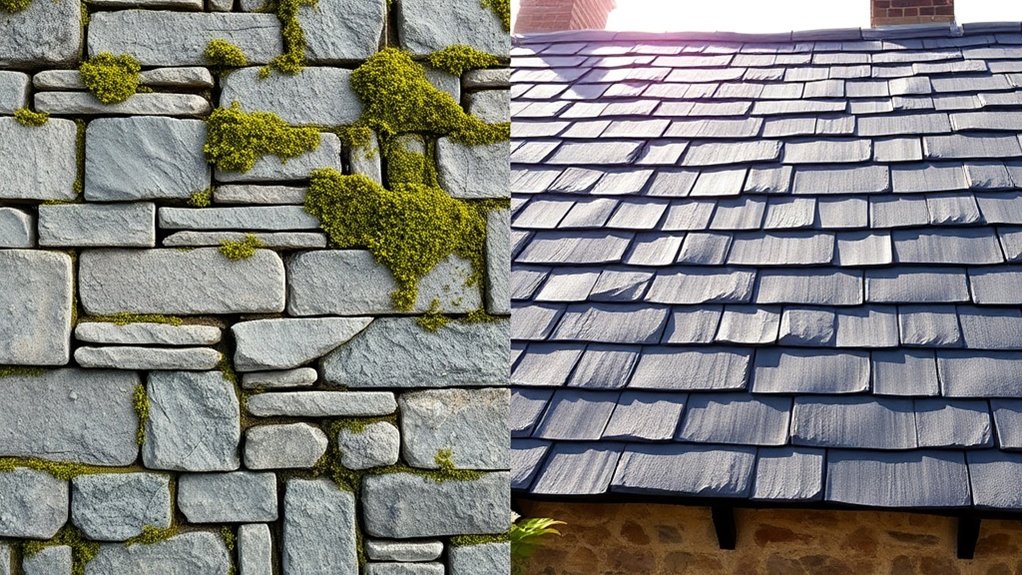
Salvaged slate tiles have shown their value in various restoration projects across the UK, proving their durability and historical authenticity.
Successful examples highlight restoration techniques that focus on aesthetics while preserving architectural integrity:
- The John Clifford School in Nottingham used Cambrian Slate, retaining its 125-year heritage.
- Houndsfield Primary School refurbished its roof with Redland Cambrian Slate, balancing performance with historical charm.
Both projects were recognised at the Pitched Roofing Awards for their quality execution.
Expert teams, such as Central Roofing, ensured careful installation, demonstrating that reclaimed slate meets high performance standards while enhancing the visual appeal of heritage buildings.
These cases illustrate the benefits of using salvaged slate in sensitive restorations.
Frequently Asked Questions
How Do I Determine the Quality of Salvaged Slate Tiles?
To assess the quality of salvaged slate tiles, check for any cracks or signs of wear, and carry out sound and weight tests. Also, test their water absorption and flexural strength. This comprehensive evaluation ensures the slate’s durability and its suitability for your roofing projects.
Can Salvaged Slate Tiles Be Painted or Treated?
Painting salvaged slate tiles isn’t effective because they are non-porous. Instead, think about sealing them. This treatment not only maintains their integrity but also boosts durability, ensuring they can handle harsh weather while still looking good.
What Maintenance Is Required for Salvaged Slate Roofs?
For maintaining salvaged slate roofs, carry out regular inspections, remove debris, and promptly repair any damaged slates. These straightforward steps can significantly extend the life of your roof, keeping it functional and visually appealing while maintaining its historical charm. For instance, clearing leaves and moss can prevent water pooling, which may lead to further damage.
Are There Any Warranties for Salvaged Slate Tiles?
Salvaged slate tiles typically do not come with any warranty, which can raise concerns about their durability. Unlike new tiles, these salvaged options generally lack guarantees, making them a less reliable choice for major roofing projects where certainty is crucial. For example, if you’re considering a long-term investment in your home, opting for new tiles with a warranty might provide peace of mind that salvaged tiles simply cannot.
How Do I Find Reputable Suppliers for Salvaged Slate?
To find reliable suppliers for salvaged slate, start by researching companies known for their recycling practices and have good customer reviews. Look for those that specialise in sourcing materials, guarantee quality, and provide expert advice for your roofing projects. For instance, suppliers that have been in the industry for years often have a proven track record and can offer valuable insight.
Conclusion
In summary, choosing salvaged slate tiles is a great way to support sustainable building practices while saving money—potentially up to 40% compared to new tiles. Their durability and unique look can add value to your home and comply with local architectural standards. As more homeowners in the UK embrace eco-friendly options, salvaged materials are becoming increasingly popular for roof restoration. In short, investing in salvaged slate tiles benefits both your property and the environment.


