

10 Signs Your Slate Roof Needs Repair: UK Homeowner’s Guide
If you spot loose, missing, or cracked slates on your roof, it’s vital to act promptly to prevent further issues. Slipped slates and exposed nails can cause leaks, while mould growth suggests moisture problems. Keep an eye on the condition of the flashing and any granule loss, as these can indicate your roof’s age. Structural issues like sagging or warped areas need immediate attention. Stay vigilant for these signs to safeguard your investment; more information on roof maintenance is available.
Key Takeaways
- Check for loose, missing, or cracked slates, as these can lead to water leaks and structural damage if not fixed quickly.
- Look for signs of internal water damage, such as stains on ceilings or walls, which may indicate leaks from the roof.
- Inspect for granule loss on slates; this indicates deterioration and can reduce the lifespan of your slate roof.
- Examine the flashing for cracks or gaps; damaged flashing can let water in and result in significant leaks.
- Be alert to structural issues like sagging rooflines or doors that stick, as these may signal compromised integrity that requires urgent attention.
Loose Tiles and Their Implications

When you spot loose tiles on your slate roof, it’s crucial to address the issue promptly, as the consequences can be serious.
Loose tiles often result from mechanical damage, improper fixings, or severe weather. If ignored, they can lead to water leaks, causing structural damage and higher maintenance costs. Furthermore, loose tiles can ruin your home’s appearance and create safety risks. To avoid these problems, it’s important to conduct regular inspections to catch issues like loose tiles before they escalate. Additionally, routine maintenance can significantly extend the lifespan of your roof, reducing the likelihood of such issues arising.
To fix the problem, consider hiring professionals who’ve the right tools and expertise.
Acting quickly is essential; regular maintenance checks can help you catch issues early, ensuring the integrity of your roof and the safety of your home.
The Dangers of Missing Tiles

Missing tiles on your slate roof can lead to serious problems. Gaps allow water to seep in, which can cause leaks and damage to ceilings and walls, as well as promote mould growth. Over time, moisture can rot wooden structures, weakening the roof’s integrity. Furthermore, missing tiles leave your roof exposed to wind and rain, increasing the risk of structural damage and making your home less energy-efficient. Regular maintenance helps identify minor issues before they escalate, and heat can escape in winter and enter during summer, driving up energy bills. These gaps can also attract pests, leading to further issues. It’s crucial to address missing tiles promptly; neglecting them can result in significantly higher repair costs later on. Prolonged water exposure can weaken roof structural integrity Regular inspections and timely repairs are key to keeping your roof in good condition and protecting your home.
Identifying Cracked Tiles

Identifying cracked slate tiles is crucial for maintaining their durability and preventing further damage. Start by visually inspecting for cracks, flaking edges, or chipped corners, all signs of slate deterioration. Gently lift the slates with a thin blade; if they slide easily or move sideways, they may be cracked. Check each slate from the ridge to the eaves, taking note of any that lift or shift unusually. Remember that hidden breaks may occur above nail fixings and might not be immediately visible. Regular inspections can help identify common roof issues early and prevent further deterioration.
Keep in mind that wear and tear, impacts, and poor installation can lead to cracks, which may result in water leaks and additional structural problems. Quick identification and replacement of cracked tiles will help keep your roof watertight and efficient, protecting your home from expensive repairs.
Understanding Slipped Slates

After spotting cracked tiles, it’s crucial to be aware of another frequent issue with slate roofs: slipped slates. This problem often arises from ageing materials, rusty fixings, or poor installation.
Look out for visible gaps, misalignment, and signs of leaks, as these can jeopardise your roof’s structural integrity. If not addressed, slippage can lead to water ingress, resulting in expensive internal damage and a shorter roof lifespan.
Regular maintenance is key—make it a habit to inspect your roof for early signs of trouble.
Replace any damaged fixings and realign slipped slates as soon as possible. Using high-quality materials for repairs can boost durability and help prevent future slippage.
Taking care of these issues not only safeguards your home but also maintains its value and functionality.
The Risks of Exposed Nails
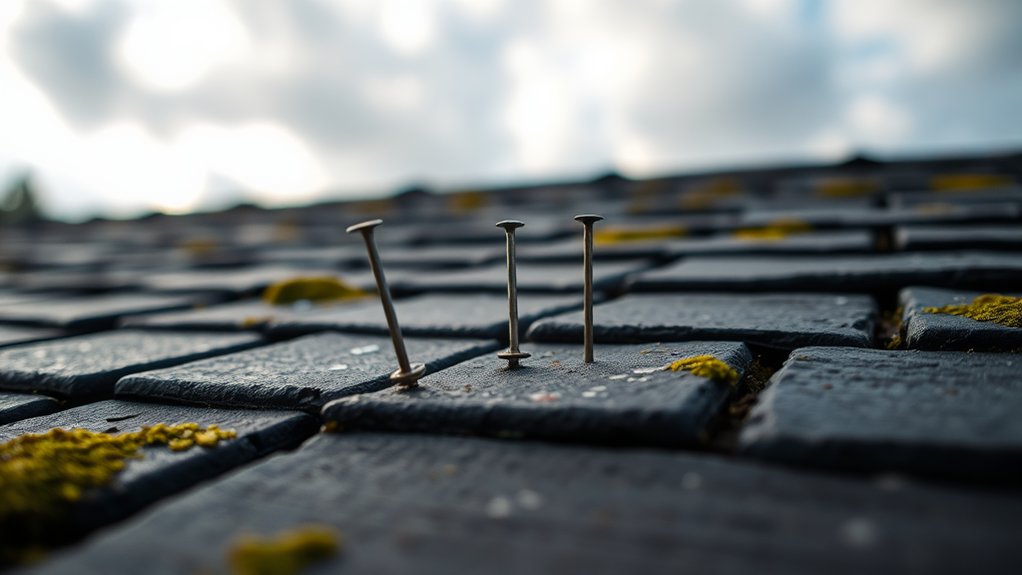
When you spot exposed nails on your slate roof, it’s important to recognise the risks they bring to both your roof’s integrity and your home’s safety.
Exposed nails are prone to corrosion, which can weaken the structure of your roof. Corroded nails can allow moisture in, leading to leaks and further damage. Ignoring these issues may result in dislodged slates and increased repair costs.
Additionally, a compromised roof can pose safety risks, such as falling debris. Visibly exposed nails can also detract from your home’s appearance, potentially lowering its value.
Regular inspections and timely repairs are essential to prevent these problems from worsening, ensuring your roof remains in good condition.
Signs of Water Damage Inside Your Home

How can you tell if your slate roof is causing water damage inside your home? Look for water stains on the ceilings; these often appear brown or discoloured, indicating leaks from missing or damaged tiles.
After heavy rain, check for discolouration on the walls, as this suggests water seepage and potential structural damage. If you notice sagging in the roof structure, this may indicate water accumulation and needs immediate attention.
Be alert for unusual noises like dripping or creaking, which can signal active leaks or deeper structural issues.
Lastly, inspect your attic for moisture on beams or rafters, as attic leaks can lead to significant damage if not dealt with promptly.
Recognizing Mold and Mildew Issues
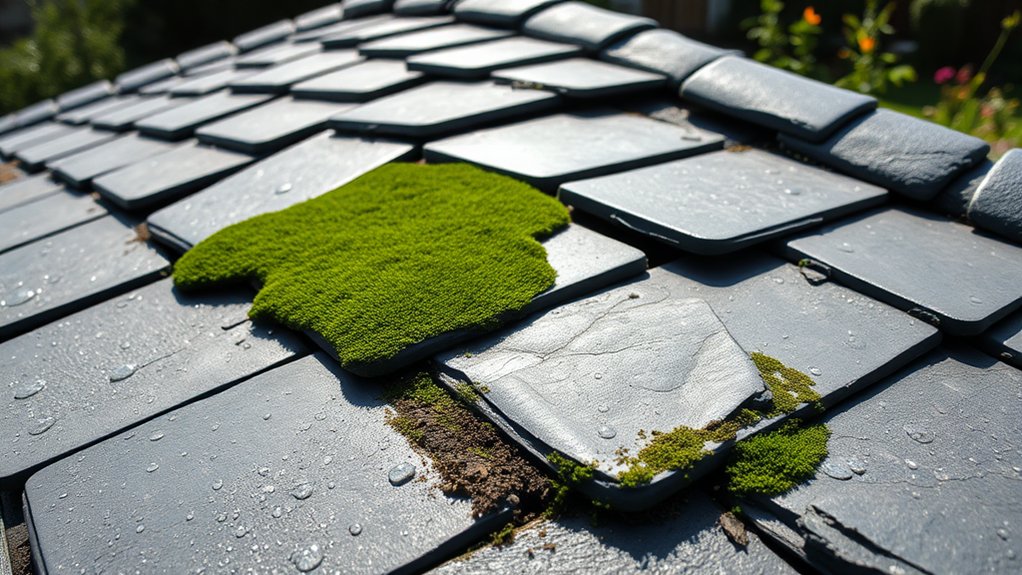
Mould and mildew often develop on slate roofs due to moisture retention from rain and humidity, particularly in shaded areas that receive little sunlight.
To tackle these issues, it’s essential to implement preventative measures such as regular cleaning and ensuring adequate ventilation.
Causes of Mold Growth
As moisture builds up on your slate roof, it creates a perfect breeding ground for mould and mildew.
It’s important to understand the causes to effectively prevent mould. Here are the main factors:
- Moisture sources: Poor drainage and debris can trap water on your roof, leading to damp conditions.
- Organic growth: Moss and algae hold onto moisture, which worsens deterioration and promotes mould growth.
- Inadequate ventilation and insulation: These can increase indoor humidity, allowing mould to flourish beneath the slate.
Addressing these issues can help keep your roof mould-free.
Prevention Strategies for Mildew
When maintaining your slate roof, it’s crucial to promptly tackle any mildew issues to prevent further damage.
Regular cleaning is essential; clear away debris and moss using suitable cleaning products that won’t harm the slate. Avoid high-pressure washers, as they can cause damage; instead, consider alternatives like Wet & Forget patio cleaner.
Keep an eye out for black spots, discolouration, or signs of water damage during visual inspections.
Improving ventilation is also important—ensure proper airflow by installing intake and exhaust vents and keeping them clear of dust and debris.
Regularly check for insulation gaps that could trap moisture. By following these strategies, you can effectively reduce mildew growth and preserve the integrity of your slate roof.
Aging Roof Indicators to Watch For
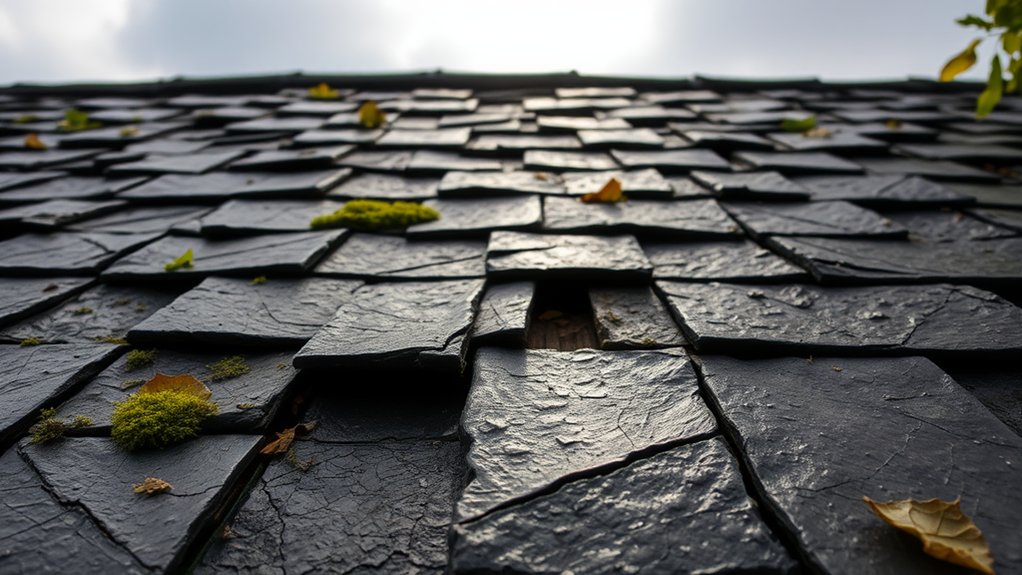
As your slate roof ages, monitor the condition of the flashing, as worn areas can jeopardise waterproofing at key joints.
Also, be alert for granule loss on the slates; this can significantly diminish their protective function.
Spotting these signs early can help you tackle potential problems before they lead to expensive repairs.
Worn Flashing Signs
Five key signs indicate that your slate roof’s flashing may require repair as it ages. Spotting these signs can help you prevent leaks effectively.
- Cracks, splits, or gaps: These are clear signs of damage and could lead to water entering your home.
- Colour changes: A dull or powdery surface indicates weathering and deterioration of the material.
- Water stains: Moisture marks on ceilings suggest that the flashing is failing and leaks may be occurring.
Identifying these issues early is crucial to avoid expensive water damage.
Regular inspections can help you catch these signs and take action before they worsen, ensuring your roof stays watertight and structurally sound for years.
Granule Loss Indicators
Granule loss is a key sign of your slate roof’s ageing and overall condition. If you spot sand or granule-like particles in your gutters, it may indicate that your roof is deteriorating.
Over time, excessive granule loss can shorten your roof’s lifespan, leaving the underlying materials vulnerable to UV rays and heat damage. Look out for visible signs, such as bald patches on tiles, which suggest significant granule loss and potential structural issues.
Regular inspections are essential to catch this problem early, allowing for timely action.
Weather-Related Damage Assessment

When assessing weather-related damage to your slate roof, it’s important to identify key signs of potential problems.
Weather can significantly impact the lifespan of slate, so regular inspections are crucial.
Watch out for the following indicators:
- Cracks and Breaks: These may occur due to freezing and thawing cycles or physical impacts, which can allow water to penetrate and lead to leaks.
- Discolouration and Stains: These might suggest water damage or mineral deposits, which can weaken the slate over time.
- Moss and Algae Growth: Excess moisture can promote growth that traps further moisture, increasing the risk of slate damage.
Keeping an eye on these signs will help maintain the integrity of your slate roof.
Addressing Structural Issues Promptly

Addressing structural issues promptly is crucial for maintaining the integrity of your slate roof, as even small defects can lead to major problems.
Regular inspections should look for signs like sagging rooflines, cracks in ceilings, or doors that stick—these are all signs that structural integrity may be compromised. If you spot warped surfaces or water stains indoors, take action quickly to prevent further damage.
Delaying repairs can result in wood rot, corrosion of metal fixtures, and even the risk of roof collapse. It’s wise to hire professionals to assess and fix any sagging or damaged areas.
Also, ensure your gutters and flashing are properly maintained to stop water from getting in. By prioritising these steps, you protect not just your roof but also the safety and value of your home.
Frequently Asked Questions
How Often Should I Inspect My Slate Roof for Damage?
You should inspect your slate roof once a year for any signs of damage. If your roof is older or located in a harsher climate, it’s wise to check more frequently. This helps you spot potential issues early and keeps your roof in good condition.
What Are the Costs Associated With Slate Roof Repairs?
Slate roof repair costs can catch you off guard, much like a hidden leak. Depending on the extent of the damage and the type of slate used, you can expect to pay between £200 and £8,000. Factors such as labour rates and your location can significantly influence these costs. For instance, repairs on a small, localised issue may only set you back a couple of hundred pounds, while extensive damage or high-end slate materials could escalate the charges considerably.
Can I Repair My Slate Roof Myself?
You can attempt DIY repairs on your slate roof, but prioritise safety. Ensure you have the right tools and skills, and be prepared to dedicate several hours to the job. For instance, if you’re replacing a slate tile, you’ll need a hammer, slate ripper, and possibly some new slates. Always take care when working at height and consider enlisting professional help if you’re unsure.
How Do I Choose a Roofing Contractor?
Did you know that 70% of roofing failures are due to poorly qualified contractors? When selecting a roofing contractor, focus on their experience with the specific materials you need. Check their qualifications and ensure they comply with industry standards for quality. For instance, if you’re using slate tiles, make sure they have a proven track record in that area. It’s crucial to choose wisely to avoid costly mistakes.
What Type of Maintenance Does a Slate Roof Require?
Maintaining your slate roof requires regular cleaning to clear away debris, moss, and algae. Check for any cracked or loose slates, and address any damage quickly to ensure the roof lasts longer and to prevent leaks or structural problems.
Conclusion
In conclusion, regularly checking your slate roof’s condition is crucial to avoid expensive repairs later. By tackling issues such as loose or cracked tiles, exposed nails, and early signs of mould, you can stop minor problems from escalating. As the saying goes, a stitch in time saves nine, so don’t hesitate to call in a professional if you spot anything worrying. Your home’s integrity relies on it, and taking proactive steps will save you money and hassle in the long run.


