

How to Properly Clean a Slate Roof in the UK Climate
To clean a slate roof effectively in the UK, plan your maintenance for spring or autumn. Use soft washing methods to remove moss, algae, and lichen without harming the slate. Avoid high-pressure washing, as it can damage the surface. After cleaning, apply a biocide to prevent regrowth and inspect your roof every few years for any signs of wear. By following these steps, you’ll keep your roof looking good and in good condition.
Key Takeaways
- Plan roof cleanings for spring and autumn when the weather is milder and effective for removing growth.
- Use soft washing techniques to clean organic growth without damaging the slate tiles.
- Carry out annual inspections to spot any damage or contamination before they escalate.
- After cleaning, apply biocides to prevent the regrowth of moss, algae, and lichen.
- Regularly trim overhanging branches to decrease shade and moisture, helping to limit fungal and biological growth.
Understanding Common Contaminants on Slate Roofs

What common contaminants affect slate roofs?
One of the most frequent issues is moss growth, particularly in damp, shaded areas where moisture lingers, leading to accelerated weathering. Slate roofs’ remarkable durability can be compromised by the presence of these contaminants if not addressed promptly. You might also notice algae stains, which appear as green or black patches in humid or polluted environments. Lichen can be problematic too, as it produces acids that gradually break down the slate. In persistently moist regions, fungal damage can weaken the roof’s structure. Additionally, bird droppings leave acidic residues that encourage further biological growth. Atmospheric pollutants, such as sulphur dioxide and nitrogen oxides, can cause chemical erosion, while the accumulation of organic debris and dirt traps moisture, resulting in further complications. Regular visual inspections can help identify early signs of damage before they escalate. You may also see rust stains and efflorescence, which can affect both the appearance and integrity of the slate.
The Importance of Regular Maintenance

Regular maintenance of your slate roof is crucial for preventing structural damage and ensuring its longevity. By promptly addressing minor issues, you improve the roof’s durability and appearance, keeping it in excellent condition. Taking the time for upkeep not only enhances functionality but also helps maintain the value of your property. For instance, a small crack left unattended can lead to leaks and costly repairs. Additionally, regular inspections are essential for identifying hidden problems that may affect the roof’s longevity and durability. Regular roof inspections can help detect leaks early and prevent them from escalating into expensive repairs.
Prevent Structural Damage
Neglecting regular maintenance may appear harmless, but it can lead to serious structural damage to your slate roof over time.
To maintain its structural integrity, consider these key practices tailored for the UK climate:
- Arrange annual inspections to spot early signs of damage, allowing for prompt repairs. Regular inspections should include checking for common roofing issues, such as leaks and tile deterioration.
- Use gentle cleaning techniques to avoid eroding the slate and steer clear of high-pressure washing.
- Regularly clear gutters and valleys to prevent water pooling, which can compromise support. Additionally, proper installation ensures no water seepage into the structure, further protecting against moisture damage. Regular gutter cleaning is essential to prevent blockages that can lead to severe damage.
Enhance Longevity of Slate
Neglecting maintenance can significantly reduce the lifespan of your slate roof, so regular upkeep is vital for its integrity.
Conduct annual inspections to spot any loose or cracked slates early, which helps prevent water ingress and reduces moisture-related decay.
Keep gutters and downpipes clean to avoid water buildup, and remove any organic growth that may trap moisture against the slates.
Additionally, ensure that flashings and fixings are well-maintained to keep your roof secure against environmental stresses.
Improve Aesthetic Appeal
To enhance the aesthetic appeal of your slate roof, regular maintenance is essential.
Keeping up with maintenance not only preserves the roof’s natural beauty but also ensures its longevity.
Here are three key practices to consider:
- Regular Cleaning: Clear away dirt, moss, and algae to retain the slate’s original colours and texture.
- Routine Inspections: Check for cracks and discolouration regularly, enabling prompt repairs that maintain the roof’s visual integrity.
- Preventing Biological Growth: Apply environmentally friendly treatments to combat moss and lichen, avoiding unsightly patches.
Appropriate Cleaning Methods for Slate Roofs
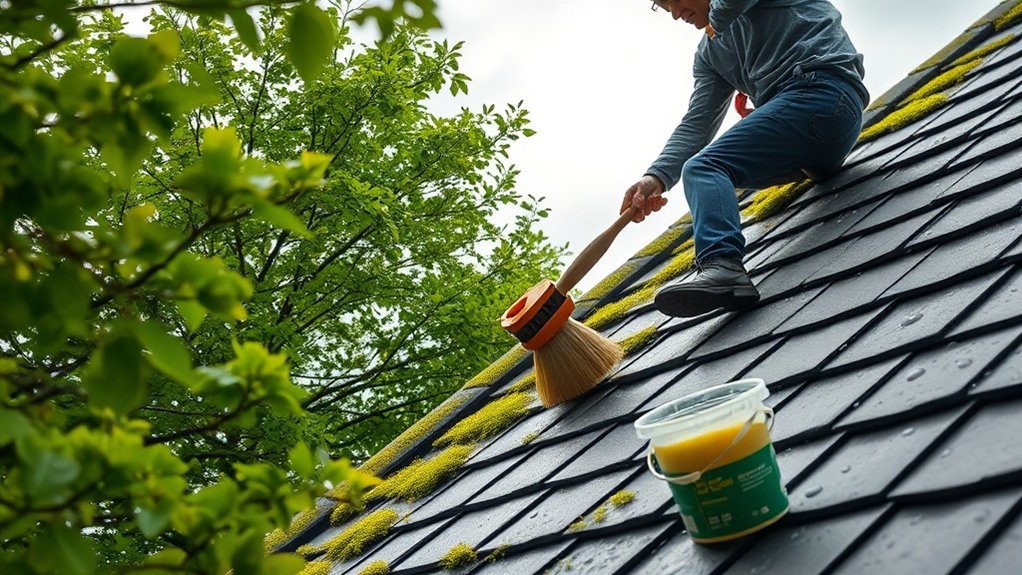
When cleaning a slate roof, it’s essential to use methods that preserve the slates while effectively removing moss, lichen, and debris. Start with a thorough inspection to assess the type of slate and the roof’s condition.
| Cleaning Method | Description |
|---|---|
| Soft Washing | Utilises low-pressure water mixed with cleaning agents, ideal for delicate slates. |
| Steam Cleaning | Uses heated water to gently eliminate stubborn growth. |
| Manual Cleaning | Involves specialist brushes for careful debris removal. |
| Biocides | A treatment applied after cleaning to prevent regrowth. |
| Mild Acids | Safe agents, such as diluted vinegar, for tackling organic matter. |
Always opt for low-pressure techniques and steer clear of harsh chemicals. Ensure you have the right tools and safety equipment ready before you begin, to protect both roof integrity and your safety.
Advantages of Soft Washing
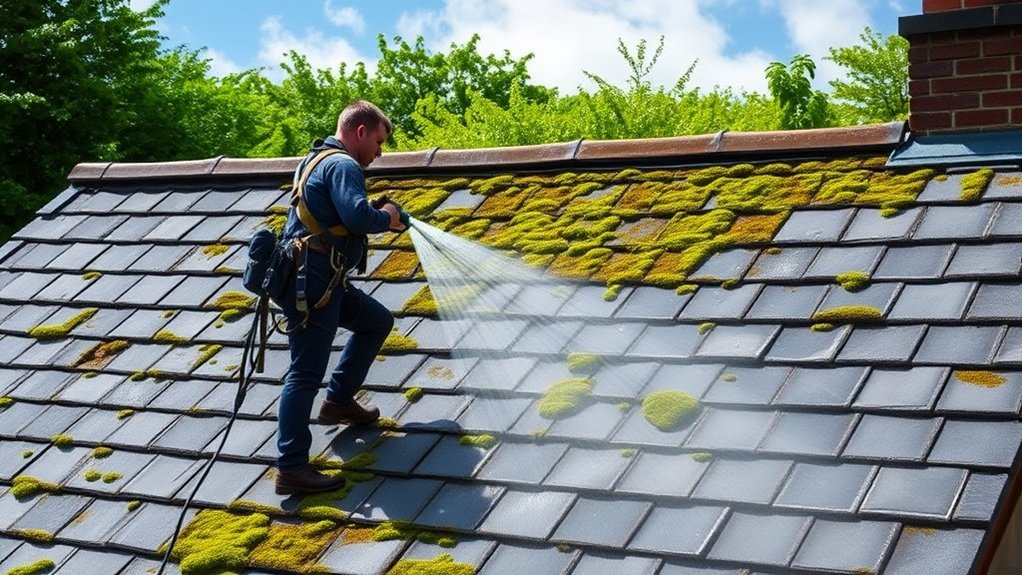
When you opt for soft washing your slate roof, you’re choosing a gentle cleaning method that safeguards delicate materials while effectively eliminating dirt and contaminants.
This technique uses low-pressure water combined with biodegradable solutions, ensuring your roof remains undamaged.
Moreover, it helps prevent the regrowth of moss and algae, offering long-lasting results and reducing the need for frequent cleanings.
Gentle Cleaning Method
While traditional cleaning methods can harm delicate slate roofs, soft washing provides a gentle and effective alternative that protects the material.
Here are three benefits of soft washing for roof cleaning:
- Low-Pressure Application: Soft washing uses low-pressure water and eco-friendly solutions to avoid damaging the tiles.
- Thorough Cleaning: It effectively targets moss, algae, and other growths at their roots, ensuring complete removal without being abrasive.
- Extended Roof Lifespan: Regular soft washing can prolong the life of your slate roof and enhance its appearance.
Prevents Regrowth Effectively
Soft washing not only cleans your slate roof but also effectively prevents the regrowth of moss, algae, and lichen. By using specialised biocidal solutions, this method targets these organisms at their root, ensuring complete removal and preventing them from returning.
Treatments can provide long-lasting protection, sometimes lasting up to ten years, depending on environmental conditions. Unlike pressure washing, soft washing disrupts harmful biofilms, tackling the problem at its source.
This approach significantly reduces the need for frequent cleanings, saving you on maintenance costs. Additionally, the biodegradable agents used are eco-friendly, helping to protect the environment while maintaining the integrity of your slate roof.
Manual and Mechanical Cleaning Precautions
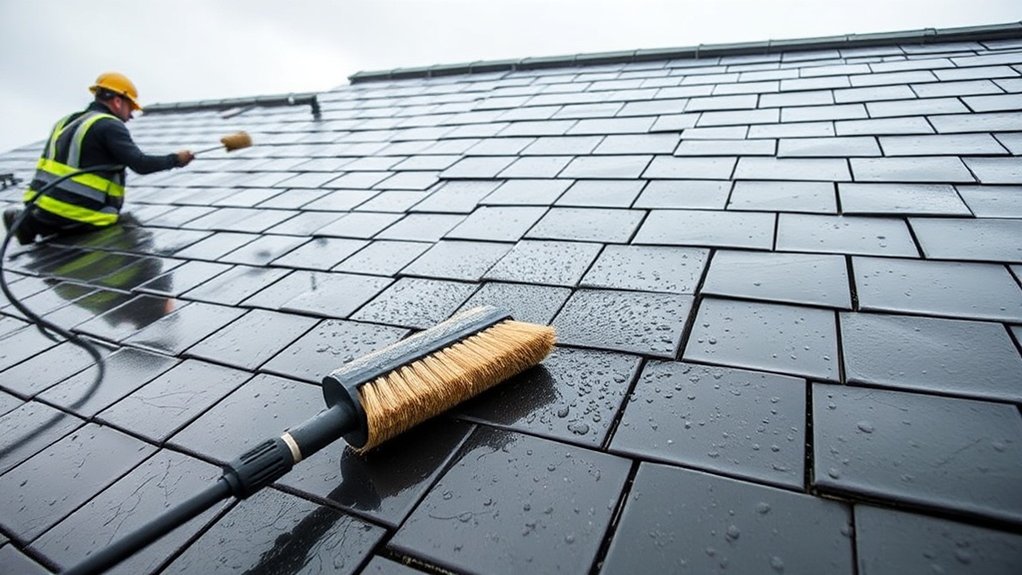
To ensure safe and effective cleaning of a slate roof, it’s important to follow specific precautions for both manual and mechanical methods. Here are three key points:
1. Manual Cleaning: Use handheld scrapers and thick, soft-bristle brushes to gently clear debris without damaging the slates.
Metal tools can chip the stone, so it’s best to avoid them.
2. Mechanical Cleaning: Choose soft washing or steam cleaning over pressure washing to prevent damage.
Always conduct a test on a small area first to check for any adverse effects.
3. Safety Measures: Wear appropriate safety gear and ensure your footing is secure when working on sloped roofs to prevent falls during manual cleaning.
Timing Your Cleaning: UK Climate Considerations

Timing your slate roof cleaning is vital for its upkeep, especially given the UK’s varied climate.
To create an effective cleaning schedule, consider the seasons. Spring and autumn are ideal due to milder temperatures and less rain. Early spring is perfect for removing winter debris and moss, while late summer or early autumn is the right time to tackle organic growth before the wetter months set in.
Avoid cleaning in winter because of the cold and safety hazards. It’s best to schedule cleanings after dry spells or following heavy rain to ensure effectiveness.
Post-Cleaning Maintenance and Protective Measures
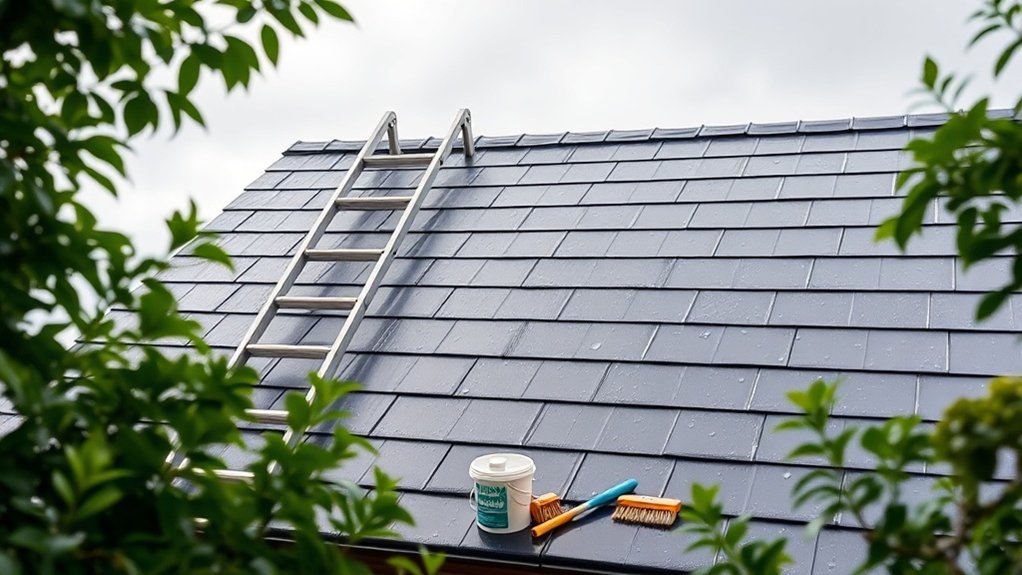
After cleaning your slate roof, it’s vital to implement a solid maintenance and protection plan to ensure its durability.
Here are some straightforward steps to follow:
- Inspect regularly every 2-3 years for any damage and to secure loose slates.
- Use breathable sealants for protective treatments that help water run off while allowing moisture to escape.
- Manage moss, algae, and lichen growth with biocide treatments and keep nearby tree branches trimmed to reduce shade.
These steps not only prevent damage but also keep your roof looking good and functional.
Monitoring for Signs of Regrowth and Damage

Implementing a thorough monitoring strategy for your slate roof is essential for spotting signs of regrowth and damage. Regular inspections allow you to identify issues early, concentrating on regrowth indicators and carrying out damage assessments. Here’s a quick reference table to guide your observations:
| Monitoring Aspect | Regrowth Indicators | Damage Assessment |
|---|---|---|
| Visual Inspection | Green or black moss patches | Cracked or brittle slates |
| Seasonal Check | Algae or lichen colonies | Missing or slipped slates |
| Moisture Retention | Darker slate appearance | Exposure of underlay or battens |
| Debris Accumulation | Signs of poor drainage | Surface erosion or scaling |
| Interior Warning Signs | Water stains on ceilings | Musty odours in living spaces |
Stay proactive to ensure your slate roof remains in excellent condition!
Frequently Asked Questions
Can I Use Bleach to Clean My Slate Roof?
You shouldn’t use bleach to clean your slate roof, as it can damage the slate and harm the environment. Instead, consider alternatives like biocides or soft washing. These methods effectively maintain your roof without risking its structural integrity or causing ecological harm.
How Do I Know if My Slate Roof Needs Cleaning?
Did you know that regular maintenance of your slate roof can extend its lifespan by as much as 50%? If you notice moss, dark patches, or damaged slates, it’s a good idea to consider increasing the frequency of your cleaning.
Is It Safe to Walk on My Slate Roof During Cleaning?
Walking on your slate roof while cleaning it isn’t safe, as it can cause damage and create slip hazards. Instead, consider safer cleaning methods like soft washing, which reduce the need to access the roof physically and help maintain its safety.
What Tools Do I Need for Manual Cleaning?
Cleaning a slate roof isn’t as simple as just using a bucket and soap. For proper maintenance, you’ll need telescopic scrapers, sturdy blades, wire brushes, and protective gear. These tools will help you carry out advanced cleaning techniques safely and effectively.
How Long Does a Typical Cleaning Process Take?
A typical roof cleaning process takes between 1 to 3 days. For optimal upkeep, it’s advisable to schedule cleanings every few years, particularly after heavy rainfall. Following essential maintenance tips can help extend your roof’s lifespan.
Conclusion
Now that you know how to clean your slate roof properly, remember: it’s not just a roof; it reflects your style and care for your home. While you’re up there, keep an eye out for any signs of moss or lichen – they can create problems if left unchecked. Regular maintenance and cleaning will ensure your roof stays in good condition, protecting your home rather than becoming an overgrown eyesore.


