Noise Pollution From Metal Roofing: Mitigation Strategies
Noise pollution from metal roofing can affect your home, but there are effective ways to reduce it. Ensure proper installation by using sound-absorbing materials and robust roof decking to minimise vibrations. Employ layered underlayment and insulation to improve sound absorption. Regular maintenance and inspections can help identify loose panels that may increase noise levels. By taking these steps, you can significantly diminish noise disturbances. Explore more tips on selecting the right roofing and enhancing comfort in your home.
Key Takeaways
- Use high-quality underlayment and insulation materials to improve sound absorption and reduce noise from metal roofing.
- Ensure professional installation to minimise gaps and vibrations that can increase noise levels during rain.
- Apply sound-deadening paints and Mass Loaded Vinyl (MLV) to effectively block both airborne and impact sounds.
- Regularly check and maintain the roof to fix any loose panels or damage that could worsen noise issues.
- Consider retrofitting existing roofs with sound-dampening features to enhance overall acoustic comfort.
Understanding Noise Levels of Metal Roofing

When evaluating noise levels from metal roofing, it’s important to note that they can generate sounds quite different from traditional materials.
For example, metal roofing typically measures around 52 dBA during rainfall, compared to approximately 46 dBA for asphalt shingles. While there’s a 6 dBA difference, the human ear usually requires an 8 dBA change to notice a difference clearly.
Several factors can affect how we perceive these sounds, such as the installation method and the thickness of the materials. Thicker steel panels tend to absorb sound better than thinner aluminium ones. Moreover, installing metal roofs over solid decking can help reduce noise, and using proper insulation and underlayment can further limit sound transmission indoors. Additionally, proper insulation is crucial as it absorbs sound and blocks external noises, contributing to a quieter indoor environment.
Understanding these aspects is crucial for effective noise management with metal roofing systems.
Comparing Noise Levels: Metal vs. Asphalt Shingles
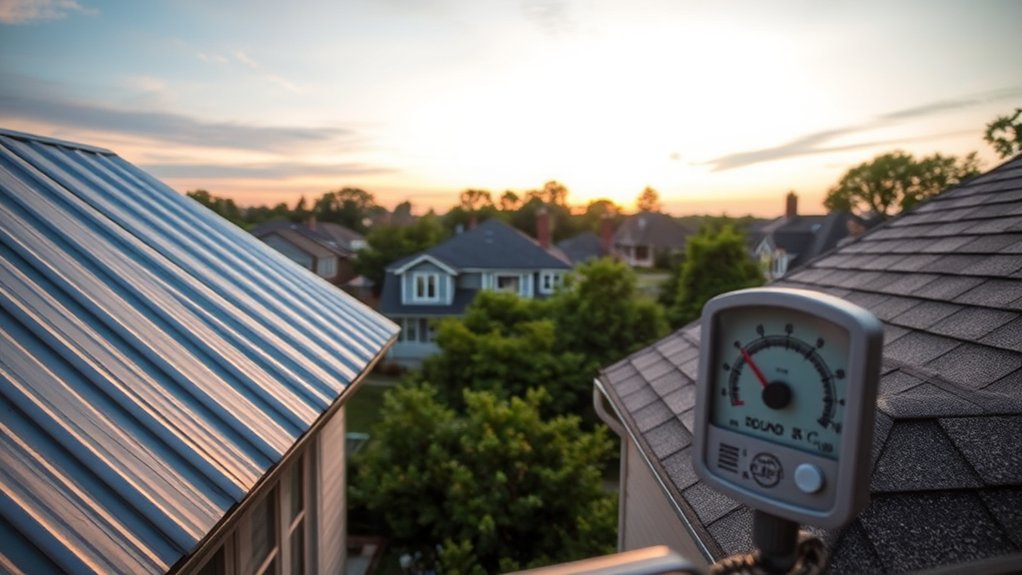
When comparing noise levels, metal roofing tends to be louder than asphalt shingles, but the difference may not be as significant as it seems.
Here are the key points to consider:
- Metal roofs can reach noise levels of around 52 dBA during rain, whereas asphalt shingles average at 46 dBA.
- A 6 dBA difference is generally imperceptible to the human ear, which can hardly detect changes under 3 dBA.
- Asphalt shingles have a fibrous, granular structure that absorbs sound better than the denser metal materials.
Additionally, complete roof assembly significantly dampens sound from rainfall, making the overall noise levels more manageable.
Although metal roofs may appear noisier, the actual impact on daily life is often minimal, especially with appropriate insulation and installation.
Understanding these differences can help you make informed decisions regarding noise control.
The Role of Installation in Noise Reduction
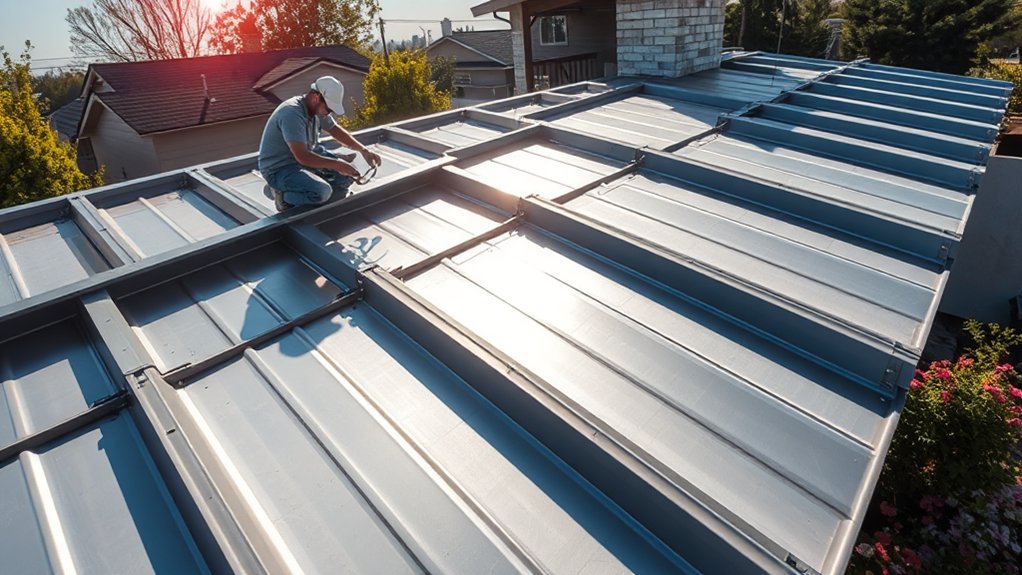
When installing metal roofing, it’s crucial to have professional expertise to reduce noise pollution. Using sound-absorbing materials like high-quality underlayment and suitable substrates can significantly improve noise reduction. Proper installation methods ensure that gaps and loose fittings, which can increase noise, are effectively addressed. Additionally, proper installation of roofing fasteners plays a vital role in minimizing movement that contributes to unwanted sound.
Importance of Professional Installation
Professional installation is crucial for minimising noise pollution from metal roofing, as it directly affects the roof’s structural integrity and ability to dampen sound.
Relying on skilled installers ensures optimal performance and durability. Here are some key factors to consider:
- Gap Prevention: Effective sealing stops gaps that can allow sound to pass through.
- Secure Fastening: Properly tightened fasteners help reduce vibrations and rattling noise.
- Staggered Panel Installation: This method disrupts sound pathways, significantly improving noise reduction.
Sound-Absorbing Materials Usage
Incorporating sound-absorbing materials during the installation of metal roofing can significantly reduce noise.
Using viscoelastic sound deadening materials, such as liquid-applied polymers, helps dissipate vibration energy, which is particularly effective against impact noise from rain. For larger areas, these materials can be easily sprayed or rolled on, while vibration damping sheets work well for smaller roofs.
Furthermore, roofing underlayment adds density and separates the metal sheets from interior spaces, further lessening sound transfer.
Insulation batts or blown-in materials placed in the roof cavity absorb airborne noise, improving both acoustic and thermal performance.
Lastly, soundproofing sealants applied to seams and gaps prevent sound leakage, complementing other soundproofing materials and ensuring effective noise reduction for your metal roofing system.
Sound-Dampening Materials for Metal Roofs

Sound-dampening materials are crucial for reducing noise from metal roofing. By using effective underlayment and soundproofing methods, you can significantly lower impact noise.
Here are some options to consider:
- Multi-layered underlayment: This serves as a strong sound barrier while providing moisture protection.
- Mass Loaded Vinyl (MLV): This dense and flexible material effectively blocks both airborne and impact sounds.
- Wood strapping: This creates an air gap that dissipates sound vibrations and prevents any rattling.
Incorporating these materials during the initial roof installation yields the best results, but there are also retrofit options available.
Additionally, sound-deadening paints can be applied to enhance noise reduction without requiring major alterations.
Together, these solutions can help create a quieter indoor space, improving comfort for you and your occupants.
Importance of Adequate Insulation
Adequate insulation is crucial for improving sound absorption and energy efficiency in metal roofing systems.
It effectively blocks and absorbs sound vibrations, helping to reduce interior noise levels while enhancing thermal performance.
This means you can create a quieter living space and save on energy bills through better temperature control.
Sound Absorption Benefits
Many people believe that metal roofing is noisy, but with effective insulation, sound transmission can be significantly reduced. Quality insulation enhances the acoustic performance of your roofing system, creating effective noise barriers.
Here are some benefits of sound absorption:
- Insulation materials trap sound energy, keeping unwanted noise out of your home.
- Specialised underlayments reduce the sound of rain and storms, providing a quieter living environment.
- Textured metal panels disrupt sound waves, further minimising noise penetration.
By investing in proper insulation, you can turn metal roofs into quieter options, allowing for a more peaceful indoor atmosphere. Additionally, ensuring proper roof ventilation can further enhance your home’s comfort by regulating attic temperatures and reducing moisture levels.
With the right materials and installation, you can dispel the myths surrounding metal roofing noise and appreciate its many advantages.
Energy Efficiency Improvement
Insulation is essential for improving the energy efficiency of metal roofing systems, as it impacts thermal resistance and heat transfer.
By choosing suitable insulation materials with thicknesses between 67mm and 241mm and R-values up to R-30, you can significantly reduce heat flow and keep your interiors comfortable.
Effective insulation lowers heat transfer, which in turn reduces HVAC loads and energy usage, leading to cost savings.
Moreover, when combined with the reflective qualities of metal roofs, proper insulation can cut energy costs by 20-25%.
This not only helps your finances but also lowers CO2 emissions, promoting a more sustainable future. Additionally, selecting insulation materials with lower thermal conductivity can further enhance overall insulation effectiveness and energy savings.
Choosing the Right Metal Roof Type
When selecting the right type of metal roof, it’s crucial to consider both the material and design to minimise noise pollution.
The style of metal roofing you choose can significantly affect sound transmission. Here are a few important factors to keep in mind:
- Material Thickness: Thicker panels help reduce vibrations, which in turn lowers noise levels.
- Roof Profile: Standing seam designs can minimise rattling, while interlocking panels provide better sound insulation.
- Underlayment: Incorporating sound-dampening layers can effectively absorb impact noise.
Advanced Roofing Systems and Their Benefits
Choosing the right type of metal roofing is crucial for exploring advanced roofing systems that boost performance and comfort. By incorporating innovative materials and soundproofing technologies, you can significantly enhance your roof’s efficiency and reduce noise.
| Feature | Benefit |
|---|---|
| Insulation Materials | Sound-dampening, energy-efficient |
| Underlayment Systems | Noise absorption, moisture protection |
| Acoustic Panels | Reduce sound transmission |
| Thicker Metal Panels | Disrupt sound waves effectively |
These advanced systems not only minimise rain noise but also improve durability and thermal insulation. By using strategic layering and sound-dampening underlayment, you can ensure a quieter, more effective roofing solution tailored to your requirements. Additionally, the use of energy-efficient materials can further enhance the overall performance of your roofing system.
Effective Installation Practices for Noise Control
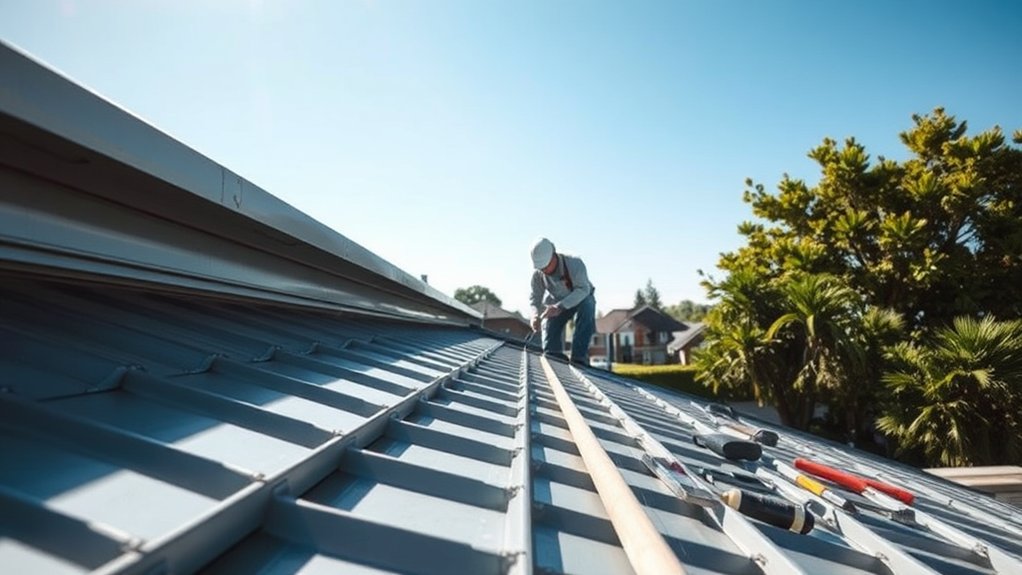
To effectively control noise during metal roofing installation, certain techniques are essential.
Here are some straightforward practices for optimal sound reduction:
- Solid Roof Decking: Opt for plywood or OSB to reduce vibration.
- High-Quality Underlayment: Add a sound barrier layer to enhance noise reduction.
- Tight Fastening: Ensure screws with gaskets are used for a secure fit.
These steps will help create a quieter environment once the roofing is complete.
Compliance With Local Building Codes
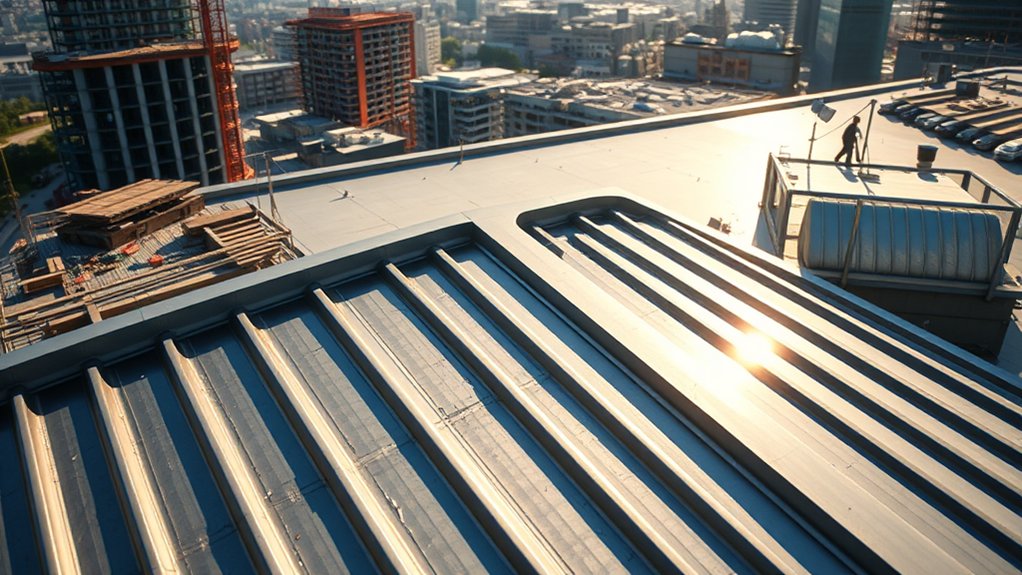
Effective noise control during metal roofing installation is crucial, but adhering to local building codes is equally essential.
Stay updated on regulations that specify requirements for materials such as roof underlayment, insulation, and sound barriers, as these can differ between localities and may pose challenges, especially in noise-sensitive areas.
Failing to meet required thicknesses and sound transmission class ratings could lead to non-compliance with community noise ordinances.
Proper documentation and inspections are vital to prove compliance.
Regular Maintenance for Sustained Performance
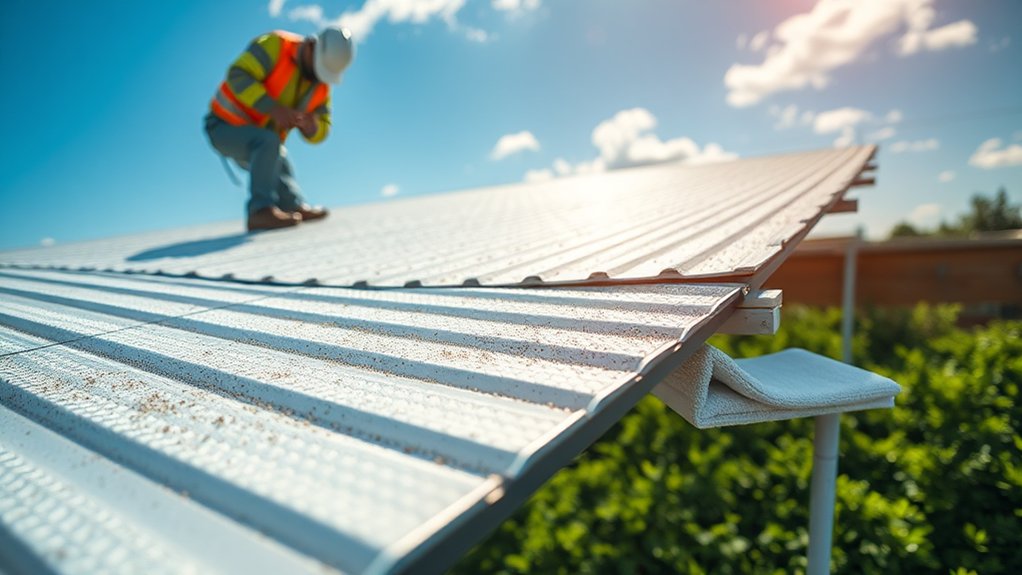
To keep your metal roofing performing at its best, regular inspections are crucial.
This allows you to spot loose panels or damage early on, preventing bigger issues down the line. Make sure to clean away debris and fix any problems promptly; this can significantly minimise noise from wind or vibrations.
Consistent maintenance not only prolongs your roof’s lifespan but also improves its ability to dampen sound.
Routine Inspections Importance
Many homeowners overlook the significance of routine inspections, but regular maintenance is vital for the ongoing performance of metal roofing systems. A solid inspection schedule can significantly improve your roof’s lifespan and efficiency.
Here are some important points to consider:
- Conducting inspections twice a year can help spot minor damage before it becomes a major issue.
- Checking the condition of panels ensures they’re aligned properly and reduces noise transmission.
- Keeping an eye on flashing and sealants can prevent leaks, which can lead to further noise problems.
Cleaning Debris Regularly
Routine inspections are essential for maintaining metal roofing systems, but regular debris cleaning is just as vital for optimal performance. Accumulated debris can cause noise from movement and impacts, and it traps moisture, leading to corrosion.
Establishing a maintenance schedule for debris removal helps prevent noise issues from weakened panels and ensures effective drainage, which reduces drumming sounds.
For cleaning, use soft-bristle brooms or low-pressure water, avoiding harsh chemicals that could damage the finish. Aim to clean at least twice a year, ideally before and after storm seasons, to enhance noise reduction.
This proactive approach not only protects acoustic properties but also extends the lifespan of your metal roof, ensuring reliable performance for years to come.
Addressing Damages Promptly
Regular maintenance is crucial for promptly addressing damages and ensuring the longevity of your metal roofing system.
Here are some straightforward strategies to consider:
- Carry out damage assessments twice a year, paying particular attention to seams, fasteners, and any signs of rust.
- Use effective repair methods for sealants and flashing around roof penetrations to keep your roof watertight.
- Keep an eye on fasteners and panels to prevent movement and ensure they remain securely attached.
Staying proactive with these measures will help maintain your roof’s performance and protect your investment.
Environmental and Health Considerations

As metal roofing becomes more popular for its durability and aesthetic appeal, it’s important to consider its environmental and health impacts.
Noise pollution from metal roofs can interfere with wildlife communication and disrupt habitats, raising valid concerns. However, with proper design, noise levels typically remain below 70 dBA, which is generally acceptable for everyday activities, reducing health risks from prolonged exposure to loud noise.
Modern installations often include sound-dampening features that improve indoor acoustics, benefiting mental well-being.
Aesthetic Benefits of Metal Roofing
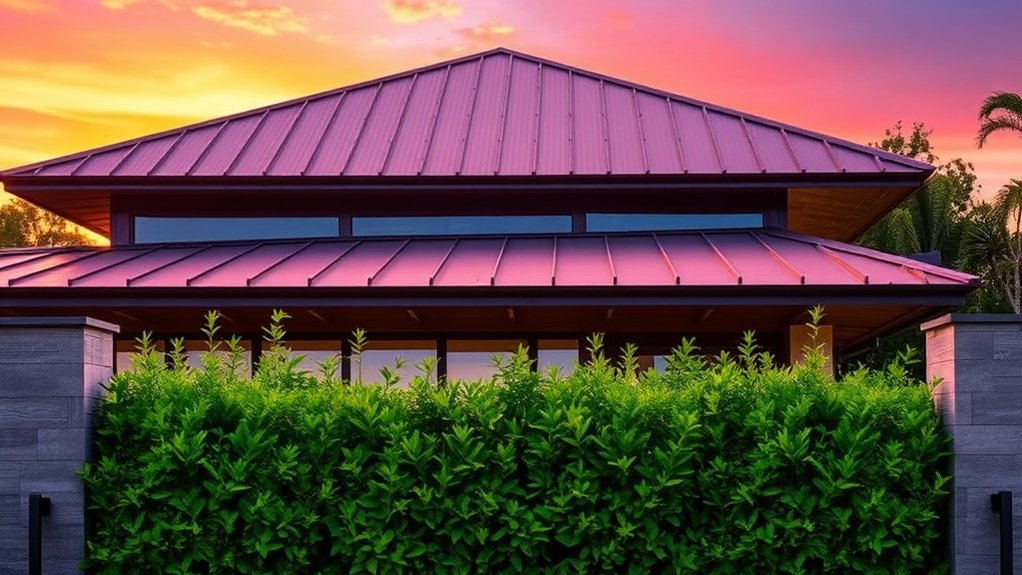
Metal roofing provides notable aesthetic advantages that can enhance both the appearance and value of a property.
Its versatility allows for a customised look that complements your architectural style through:
- Colour options: Select from a broad range of shades to perfectly match your home’s existing features.
- Style compatibility: Metal roofing integrates effortlessly with various designs, from contemporary to traditional, preserving the integrity of your overall aesthetic.
- Durable appearance: High-quality coatings ensure colour retention and resistance to fading, keeping your roof looking vibrant for many years.
Frequently Asked Questions
How Does Weather Affect Noise Levels From Metal Roofing?
Weather significantly affects noise levels from metal roofing. For instance, rain can increase sound intensity, making it louder inside the building. Wind can also create flapping or rattling noises, which can be quite distracting. Being aware of these factors is essential when selecting roofing materials and installation methods to reduce noise disturbances.
Can Metal Roofs Be Retrofitted for Better Noise Control?
Yes, you can retrofit metal roofs for improved noise control using soundproofing methods. Adding insulation materials, such as acoustic panels or mass-loaded vinyl, can significantly reduce noise, creating a quieter space and boosting energy efficiency.
What Are the Costs Associated With Noise Mitigation Strategies?
When looking into noise mitigation, it’s important to analyse costs, as installation expenses can differ significantly. Factors such as the choice of materials, type of insulation, and labour costs all play a role in the total investment needed for effective soundproofing. For instance, using acoustic panels may be more expensive than simple wall insulation, but they could provide better results in reducing noise. Understanding these elements can help you make informed decisions.
Are There Specific Brands Known for Quieter Metal Roofing?
If you’re looking for quieter metal roofing options, consider standing seam systems and stone-coated steel. These types incorporate advanced sound-dampening technologies, which help reduce noise while providing excellent performance and durability for your roof.
How Does Tree Cover Influence Noise Perception From Metal Roofs?
Tree cover significantly impacts how we perceive noise from metal roofs by improving sound absorption. A denser tree canopy acts as an effective barrier, reducing noise levels and making sounds from the roof less bothersome. For instance, living near a metal-roofed building surrounded by trees can result in a quieter, more enjoyable outdoor space.
Conclusion
To manage the noise associated with metal roofing, consider a few effective strategies. Choose sound-dampening materials, improve insulation, and ensure proper installation to minimise sound disruption. Regular maintenance is essential for optimal performance and compliance with local building regulations, helping to maintain a peaceful home environment. With careful planning, you can enjoy the durability and aesthetic appeal of metal roofing without the unwanted noise.


