
Thatched Roof Lifespan: Maintaining Your UK Heritage Property
Maintaining your thatched roof is vital for the longevity of your heritage property in the UK. With the right materials and skilled craftsmanship, a thatched roof can last up to 60 years. Key factors such as environmental conditions and the pitch of the roof significantly impact its durability.
Regular inspections and maintenance, including checking the ridge and clearing debris, can help prevent moisture problems. Hiring professional thatchers ensures that work complies with heritage regulations. For tips on extending your roof’s lifespan and preserving its historical charm, consider seeking expert advice.
Key Takeaways
Thatched roofs can last up to 60 years with proper care, depending on the quality of the materials and local environmental conditions. It’s advisable to have regular inspections at least twice a year to spot any issues early and prevent moisture damage, which can significantly extend the life of the roof.
Proper installation is essential; skilled thatchers ensure the layers are tightly packed and dense, which helps resist water damage and meets heritage regulations. Key maintenance tasks include clearing debris, checking for damp areas, and replacing thatch on ridges every 10 to 15 years.
Community support and available grants can play a vital role in preserving traditional thatching methods for heritage properties, ensuring these beautiful roofs remain part of our architectural landscape.
Understanding Thatched Roof Lifespan

When considering the lifespan of a thatched roof, several key factors come into play. The quality of materials is crucial; for example, water reed thatch can last up to 60 years with proper care, whereas combed wheat thatch typically lasts around 30 years. Additionally, the average lifespan of a good thatched roof is around 60 years, which highlights the importance of proper maintenance and skilled craftsmanship.
The insulation properties of thatch also enhance energy efficiency, making it an eco-friendly choice for heritage homes. Additionally, the steepness of the roof and local weather conditions can influence water runoff and moisture retention, which are vital for longevity.
Regular maintenance every 12 to 15 years, particularly focusing on ridge replacement and necessary repairs, is essential. By prioritising skilled craftsmanship and choosing sustainable materials, you can help maintain the unique character and functionality of your thatched roof for many years to come.
The Role of Thatching Materials
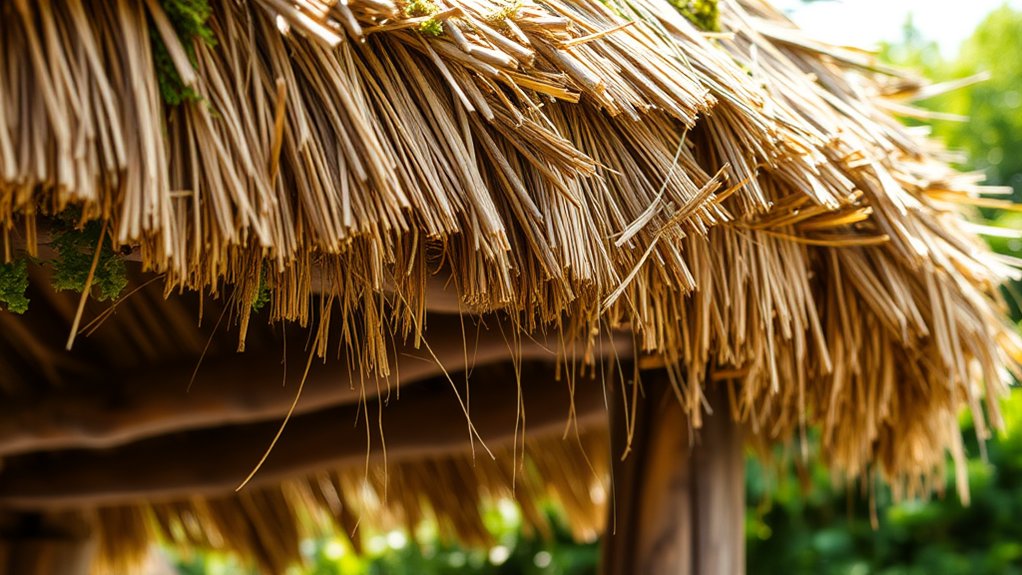
Thatched roofs are made from a variety of materials, each crucial for their durability and performance.
The main thatching materials include water reed, combed wheat reed, and long straw, each with distinct features. Water reed is known for its strength and sleek look, making it ideal for modern builds. Combed wheat reed has a rounded appearance, perfect for listed buildings. Long straw, with its traditional shaggy style, is well-suited to historic English properties. Choosing water reed can significantly increase the longevity of your thatched roof, as it has the longest lifespan of over 50 years.
These materials not only enhance the aesthetic but also promote environmental sustainability. By choosing the right thatching material, you can help maintain the architectural charm and cultural heritage of your property while ensuring it can withstand the UK climate.
Factors Influencing Longevity
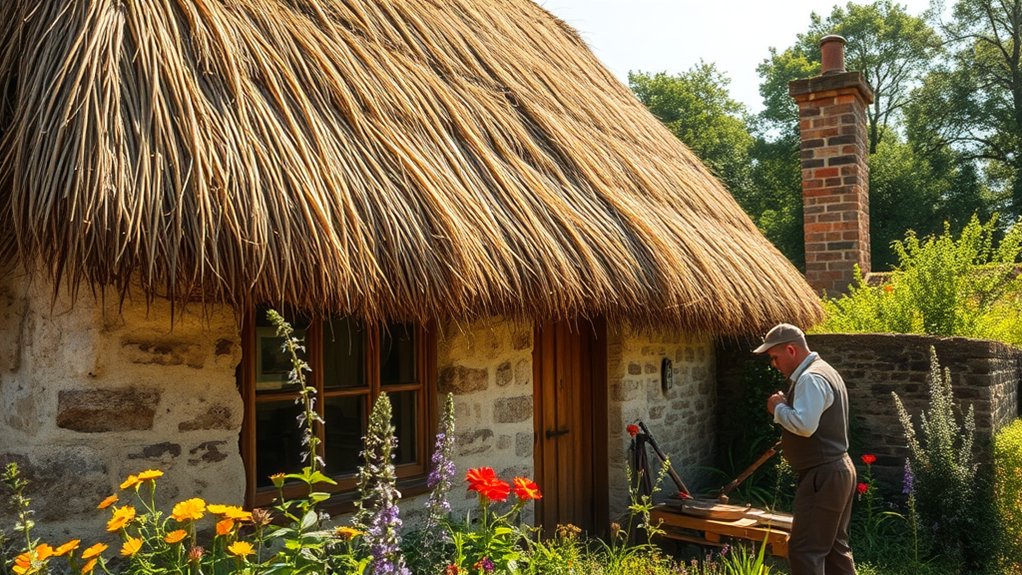
Several key factors influence the longevity of a thatched roof, and understanding these can help you with maintenance and care.
Environmental conditions, such as humidity and wind, significantly affect durability. A steep roof pitch, ideally between 45-50 degrees, allows for effective water runoff, which helps prevent moisture damage. Proper installation techniques are also essential for a long-lasting roof, ensuring that the thatch can withstand environmental stresses.
Geographic location matters too; areas with heavy rainfall or coastal salt exposure require more diligent upkeep. Your choice of thatching material also impacts lifespan, as different substances react differently to environmental stresses.
Regular maintenance, including timely repairs and inspections, is crucial. Additionally, managing the surrounding landscape to reduce moisture accumulation and ensuring proper airflow can improve durability.
Importance of Skilled Installation

While the beauty of a thatched roof is clear, the importance of skilled installation is crucial. Properly trained thatchers use traditional techniques to create tight, dense layers, which significantly reduces the need for early repairs.
They’re adept in regional methods, ensuring materials are oriented and interlaced correctly, and pay close attention to important details such as eaves and ridges to prevent water damage.
It’s also vital to comply with heritage regulations, as professional thatchers know how to work with listed buildings and conservation areas.
By using authentic materials and following tried-and-true practices, skilled installation helps maintain the historic character and authenticity of your property, which can enhance its market value and appeal. Additionally, choosing natural thatch materials not only preserves the aesthetic but may also lead to reduced insurance premiums.
In short, investing in skilled thatching preserves your heritage for future generations.
Regular Maintenance Practices
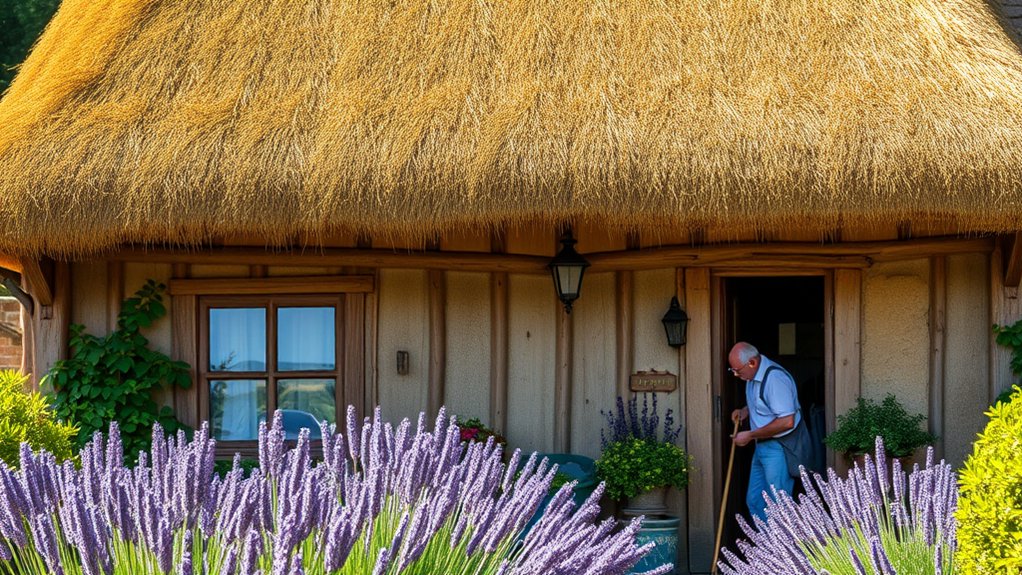
To keep your thatched roof in top shape, it’s important to carry out inspections at least twice a year.
Regularly clearing away debris and looking after the ridge will significantly extend the roof’s lifespan and help prevent any moisture-related problems.
Routine Inspections Importance
Routine inspections of thatched roofs are vital for their longevity and structural integrity. Conducting these checks at least twice a year, particularly after severe weather, helps identify potential issues before they worsen.
It’s wise to hire professional thatchers during these inspections, as they can spot hidden problems that may not be obvious to the untrained eye. Regular assessments also allow you to evaluate the effectiveness of fire retardant treatments and the overall stability of the thatch. Additionally, annual inspections can help prevent up to 95% of potential roofing issues.
Debris Removal Techniques
Proper debris removal is crucial for the health and longevity of thatched roofs. Regularly clear away leaves and branches to prevent moisture retention, which can lead to moss and algae growth.
Use soft brushes or brooms; avoid sharp tools that may damage the thatch. While cleaning, look for animal nests or droppings to avoid pest problems.
For stubborn moss or algae, gentle brushing and a mild bleach solution can effectively manage growth without harming the thatch. Aim to clear debris at least once a season or after storms to keep your roof in good condition.
Consistent maintenance not only protects your heritage property but also enhances its appearance and structural integrity.
Ridge Maintenance Frequency
Regularly clearing debris from your thatched roof not only improves its look but also lays the groundwork for effective ridge maintenance.
Aim to inspect the ridge at least once a year for signs of wear, like raised netting or exposed fixings. Typically, thatch repair or ridge replacement is necessary every 10-15 years to ensure optimal performance.
For minor issues, conducting a visual check twice a year can help you identify problems early. Always consult a qualified master thatcher for thorough evaluations and repairs; their experience ensures quality work.
Budgeting between £500 and £1,000 annually for inspections and repairs can help protect your roof’s structural integrity, ultimately prolonging its lifespan and avoiding expensive repairs down the line. Additionally, regular inspections are crucial for detecting hidden issues that may compromise the roof’s longevity.
Common Repairs and Their Frequency

Maintaining thatched roofs can be straightforward if you’re aware of common repairs and their timing.
Regular upkeep helps to prevent issues from worsening. Here are three key repairs to watch for:
- Ridge Replacement: You should replace the ridge thatch every 10-15 years due to natural wear.
- Moss Removal: It’s essential to check for moss build-up, particularly around chimneystacks, at least once a year to avoid moisture problems.
- Mortar Fillet Repairs: Mortar fillets can deteriorate, so keeping an eye on them is crucial to ensure watertight seals around chimneys.
By using the right repair methods, you can keep your thatch in good condition and maintain the integrity of your historic property.
Regular inspections will help you identify minor issues early, saving you from more expensive repairs later on.
Environmental Considerations
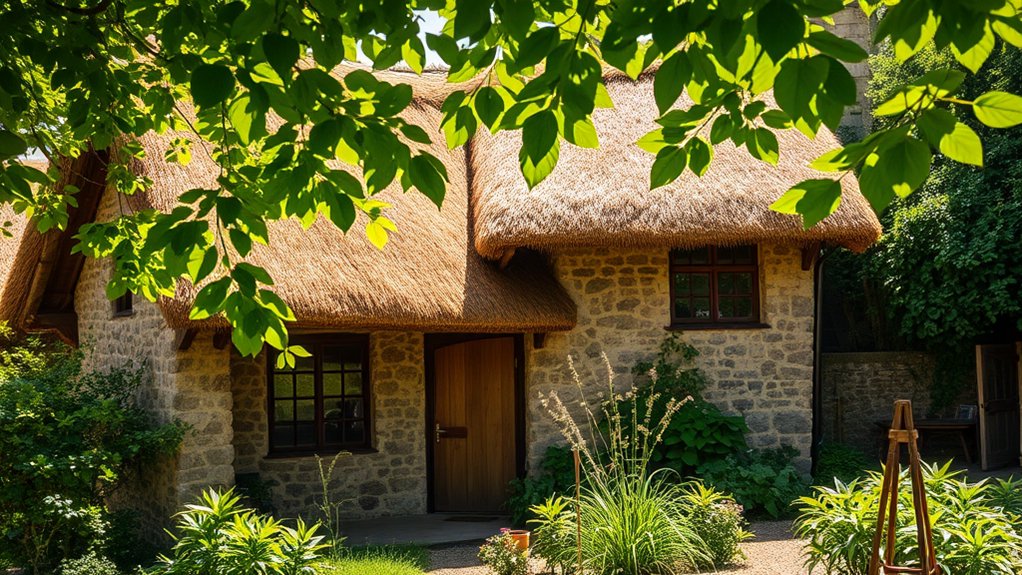
When considering thatched roofs, it’s essential to factor in environmental influences that can affect their lifespan.
Weather conditions, like heavy rainfall and high humidity, can lead to moisture issues that weaken the thatch.
Moreover, if your roof is near trees, this can worsen the situation by creating a habitat for harmful microorganisms, making it even harder to maintain your thatched roof.
Weather Impact on Thatch
Understanding how weather impacts thatch is crucial for its longevity and integrity. Several environmental factors can significantly affect the durability of thatch, particularly in the context of climate change. Here are three key points to consider:
- Moisture: Heavy rainfall and high humidity can lead to deterioration, reducing the lifespan of thatch.
- Wind: Strong winds can cause damage to thatched roofs, especially in exposed areas.
- Sunlight: Extended exposure to sunlight can accelerate ageing and deterioration.
Moreover, changing weather patterns due to climate change are increasing the frequency of storms, which further hastens wear on thatched roofs.
Regular inspections and proper drainage are vital in mitigating these effects, ensuring your heritage property stays protected from the elements.
Exposure to Trees
Trees can significantly affect the condition and lifespan of thatched roofs due to the environmental challenges they pose. Overhanging branches may shed leaves and debris, leading to moisture build-up that can damage your roof.
Additionally, excessive shading can hinder air circulation, preventing proper drying after rain and encouraging fungal growth.
To reduce these risks, it’s important to maintain your trees by routinely trimming branches and ensuring a safe distance between them and your roof.
This not only enhances fire safety by minimising combustible materials nearby but also makes inspections and maintenance easier.
Keeping your trees in check is crucial for preserving the integrity of your thatched roof and ensuring its beauty for years to come.
Moisture Retention Issues
Moisture retention can seriously threaten the lifespan of thatched roofs, particularly in humid areas with inadequate airflow.
Here are some straightforward strategies to tackle moisture issues:
- Regularly check for damp spots to pinpoint problem areas.
- Control the growth of moss and algae, as these can trap moisture and lead to decay.
- Ensure your roof has the right pitch and sufficient ventilation to promote drying.
Cost Factors in Thatched Roofing
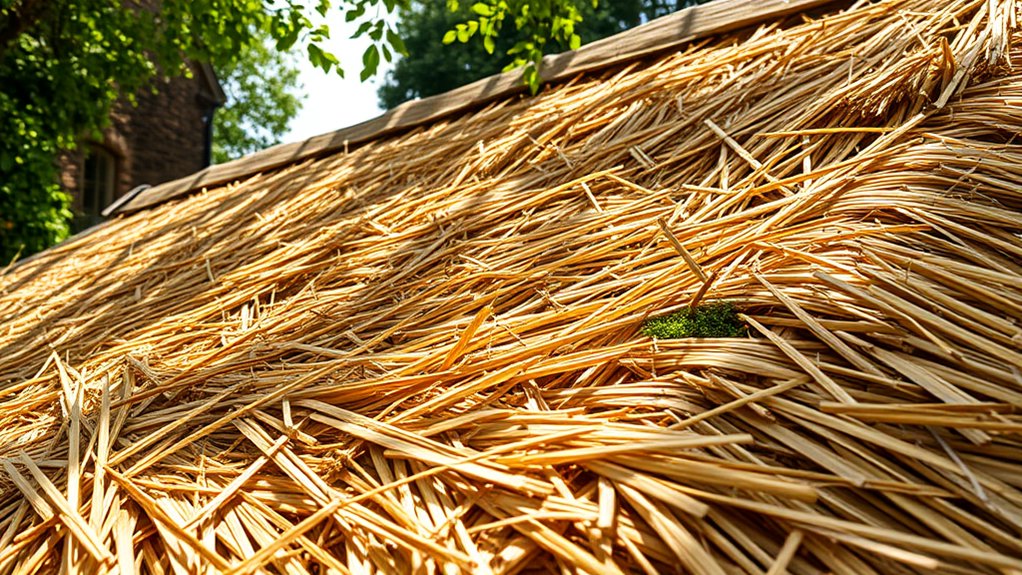
When considering thatched roofing, several cost factors can significantly impact your investment.
Material prices vary based on the type of thatch: for example, combed wheat reed can cost between £60 and £120 per square metre.
Labour rates for skilled thatchers typically range from £100 to £225 per day, and you’ll likely need a team of two or three for several weeks, depending on the job’s size.
The design and pitch of your roof also play a crucial role in the overall cost; more complex shapes require additional materials and time to complete.
Don’t forget to factor in ongoing maintenance and potential replacement cycles. Proper upkeep can extend the lifespan of your thatched roof, ultimately saving you money in the long run.
Historical Significance of Thatching
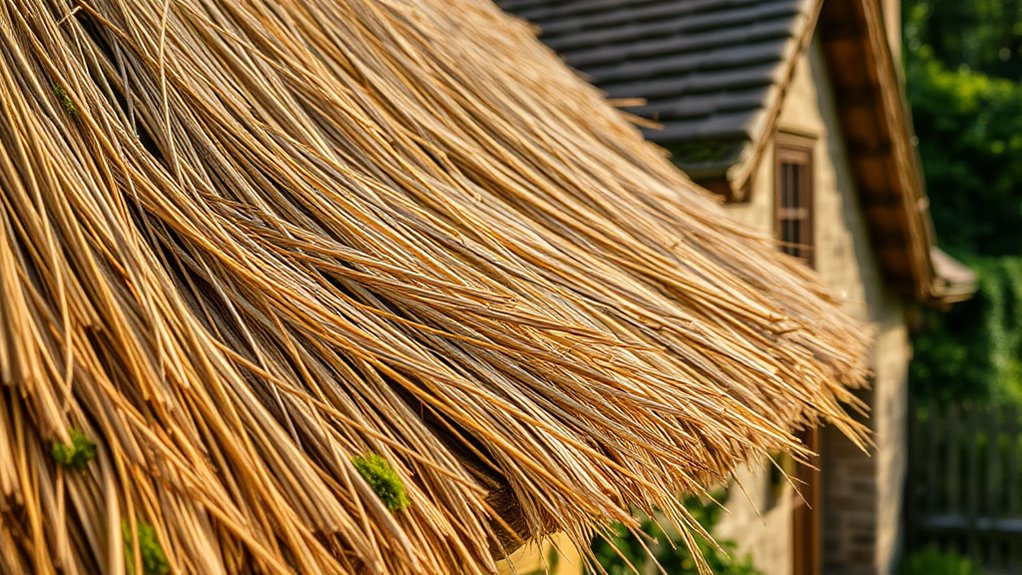
Thatching may not be at the forefront of modern architecture, but it holds significant historical value that mirrors the cultural and social development of the UK.
The methods of thatching reveal much about the communities and their surroundings. Here are three main points to consider:
- Origins: Thatching likely began in the Neolithic period and became common during the Dark Ages.
- Architectural Evolution: Thatched roofs can be found on everything from humble cottages to grand castles, showcasing various styles and purposes over the centuries.
- Regional Variations: The use of different materials, such as combed wheat reed and water reed, illustrates how local conditions influenced thatching techniques.
Recognising this history not only pays tribute to our architectural heritage but also supports efforts to preserve these traditional skills for future generations.
Preserving the Aesthetic Appeal
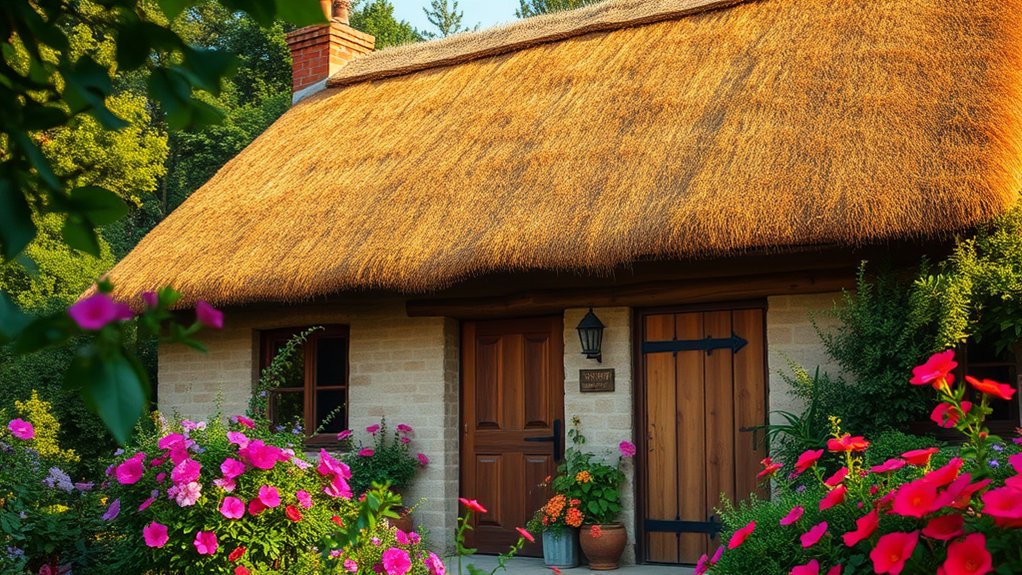
To maintain the aesthetic appeal of your thatched roof, it’s essential to use traditional craftsmanship techniques that respect its historical value.
By keeping its visual integrity intact, you enhance your property’s charm and honour cultural heritage.
Regular upkeep ensures the roof remains both functional and attractive for future generations.
Traditional Craftsmanship Techniques
Traditional craftsmanship techniques are vital for preserving the charm of thatched roofs, ensuring both authenticity and durability.
To keep your roof true to its heritage, consider these essential practices:
- Use Traditional Materials: Choose locally sourced materials, such as water reed or combed wheat reed, to ensure your roof matches the original construction.
- Implement Traditional Repair Techniques: Carry out patch repairs using time-honoured methods. This approach minimises disruption and enhances the roof’s lifespan.
- Engage Skilled Craftsmen: Hire experienced thatchers who are knowledgeable in traditional techniques to ensure proper inspection and repair of your roof.
Aesthetic Value Preservation
Preserving the aesthetic appeal of thatched roofs is just as crucial as maintaining their structural integrity. Regular cleaning and removing debris are essential for keeping their visual charm intact.
By promptly clearing away fallen leaves, moss, and algae, you can prevent moisture buildup and protect the thatch’s appearance. Applying sealers can enhance durability, helping to resist humidity and bacterial growth while ensuring a consistent look.
When repairs are needed, using authentic materials that match the existing thatch ensures a seamless finish, preserving the roof’s traditional elegance. Hiring professional thatchers guarantees quality craftsmanship and maintains the roof’s historical character.
Cultural Heritage Significance
Thatched roofs are more than just charming features of the countryside; they hold significant cultural heritage. Preserving them is vital for understanding our history.
Here are three key points to consider:
- Cultural Legacy: Thatched roofs represent centuries of farming traditions and local craftsmanship, which continue to be relevant in modern times.
- Historical Craftsmanship: The skills involved in thatching have been handed down through generations, ensuring that age-old techniques are kept alive.
- Community Identity: These roofs contribute to the unique character of local areas and instil a sense of pride among residents, connecting them to their heritage.
In essence, thatched roofs serve as a vital link to our past, enriching our communities today.
Working With Professional Thatchers

When you opt for professional thatchers, you ensure your thatched roof looks great and is structurally sound.
Look for qualifications such as membership in the National Society of Master Thatchers, which shows they’ve received proper training. A skilled thatcher usually completes a two-year apprenticeship, followed by years of mentorship to refine their skills.
It’s important to choose someone experienced with traditional materials like reeds and straw, as their attention to detail is vital for both the roof’s strength and appearance.
Additionally, adhering to safety regulations and using protective gear guarantees a secure working environment.
Frequently Asked Questions
How Can Weather Conditions Affect My Thatched Roof’s Lifespan?
Weather conditions significantly influence the lifespan of your thatched roof. High moisture and strong winds can speed up wear and tear. To protect your roof, regular maintenance is essential. This includes checking drainage systems and clearing away debris to help maintain its integrity against harsh weather.
What Signs Indicate My Thatched Roof Needs Immediate Attention?
When your thatched roof shows clear signs of wear—such as discolouration, gaps, or water stains—it needs immediate attention. Keep an eye out for these issues to ensure your thatch stays in good condition and retains its character for years to come. Regular maintenance is essential.
Can I DIY Repairs on My Thatched Roof?
You can handle minor repairs on your thatched roof with the right techniques and materials. For instance, if you notice a few loose strands or small patches, you can replace them yourself. However, for more significant damage or structural problems, it’s wise to call in a professional. This ensures that your roof is properly maintained and lasts longer.
Are There Specific Insurance Considerations for Thatched Roofs?
When it comes to thatched roofs, it’s crucial to understand your insurance coverage. Premiums can increase significantly if you don’t carry out regular inspections and maintenance. For instance, insurers may require a yearly inspection by a qualified thatcher to ensure the roof’s condition. Adhering to these specific requirements not only safeguards your investment but also preserves the character of your property.
What Are the Common Pests That Damage Thatched Roofs?
Common pests that can damage thatched roofs include birds, rodents, and various insects. To protect your thatch, consider using netting to deter birds and humane traps for rodents. These pest prevention methods help maintain the longevity and structural integrity of your thatched roof.
Conclusion
Maintaining your heritage property’s thatched roof not only extends its lifespan but also preserves a slice of history. Each maintenance task you complete adds to the unique story of the roof. By hiring skilled thatchers and committing to regular upkeep, you ensure that future generations can enjoy the beauty and craftsmanship of thatching. Take on the responsibility of preservation, and let your roof continue to share its story for years to come.