

Flat Roof Insulation Standards: Meeting UK Building Regulations
To comply with UK building regulations for flat roof insulation, aim for a U-value of 0.18 W/m²K for new builds and between 0.16 and 0.18 W/m²K for renovations. You can choose between warm or cold roof systems, with warm roofs generally providing better thermal performance. Proper insulation placement and the use of vapour control layers are crucial to prevent moisture problems. Regular inspections and quality checks are vital to ensure standards are upheld. For more insights on best practices and advantages, keep searching.
Key Takeaways
- New builds must achieve a maximum U-value of 0.18 W/m²K, with some projects requiring a stricter 0.16 W/m²K to comply with UK Building Regulations.
- Flat roof insulation must include vapour control layers to prevent moisture build-up when U-values fall below 0.20 W/m²K.
- Warm roofs, where insulation is placed above the structural deck, offer better thermal performance and moisture management than cold roofs.
- Regular inspections and post-installation testing are vital to ensure compliance and maintain insulation effectiveness.
- It’s essential to use non-combustible materials for insulation that is more than 150mm from the roof surface for safety and to meet regulations.
U-value Requirements for Flat Roofs

When planning a flat roof installation, it’s crucial to grasp U-value requirements to ensure compliance with UK regulations. For new builds, aim for a U-value of 0.18 W/m²K, with certain applications needing 0.16 W/m²K.
If you’re renovating an existing flat roof, target a U-value between 0.16 and 0.18 W/m²K, depending on the type of insulation used and its placement. Generally, you’ll need about 120–130mm of rigid PIR or PUR insulation to meet these standards. Proper insulation with a high R-value can significantly improve energy efficiency, making it essential for effective heating and cooling.
Keep in mind that U-values lower than 0.20 W/m²K require vapour barriers to prevent condensation, which can affect the building’s performance. Optimizing U values can significantly enhance energy efficiency and reduce heating costs, making it essential for both compliance and long-term savings.
Meeting these specifications isn’t just about compliance; it also impacts SAP assessments and the marketability of the property. Ensuring you adhere to these guidelines is key to a successful installation and avoiding potential penalties.
Understanding Cold vs. Warm Roofs

Understanding the differences between cold and warm roofs is crucial for making informed choices about flat roof insulation. Here are the main points to consider:
- Insulation placement: In warm roofs, insulation is laid above the structural decking. In contrast, cold roofs have insulation positioned between or below the rafters.
- Condensation management: Cold roofs require ventilation to prevent condensation build-up. Warm roofs, on the other hand, use vapour barriers to reduce moisture risk. Additionally, warm roofs effectively prevent condensation by keeping moisture away from the cold roof deck. Proper roof ventilation is essential in both systems to manage airflow and humidity levels.
- Energy efficiency: Warm roofs provide better thermal performance, effectively retaining heat compared to cold roofs.
Components of Flat Roof Insulation Systems
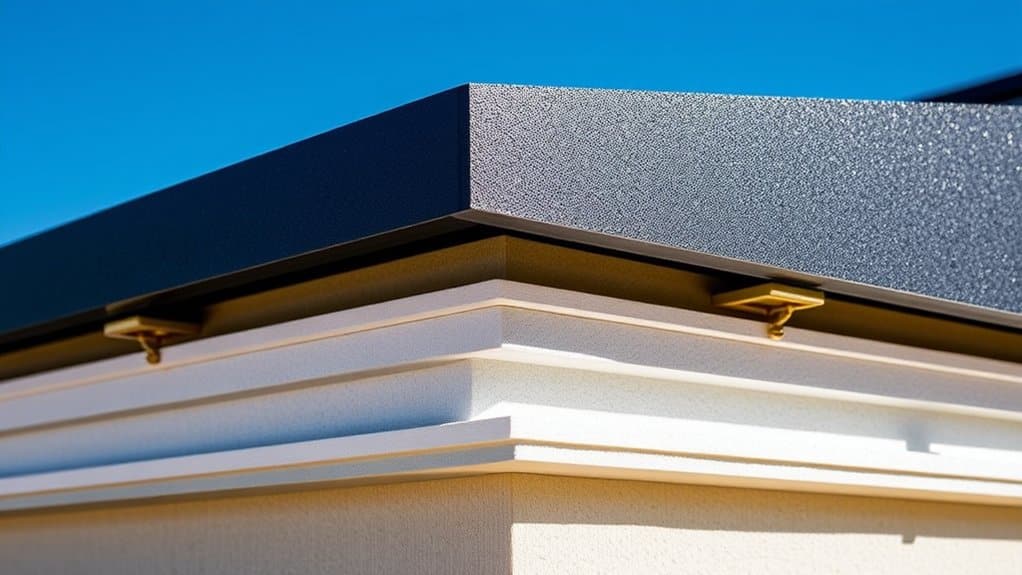
Flat roof insulation systems are made up of several components that work together to ensure optimal thermal performance, moisture control, and safety.
Key insulation materials, such as extruded polystyrene, rigid glass, and rock fibre boards, provide essential thermal resistance. To meet Part L of the Building Regulations, your flat roofs should achieve a maximum U-value of 0.18 W/m²K. Proper insulation placement is crucial as it minimizes heat losses in winter and controls solar gains in summer.
When installing insulation, consider the placement around external wall abutments and thermal bridging to maintain energy efficiency.
Incorporating vapour control layers is crucial to prevent moisture accumulation, which can compromise structural integrity.
Always opt for non-combustible materials, especially in areas above 150mm from the roof surface, to ensure safety.
This way, your insulation system will comply with both performance requirements and regulatory standards.
Compliance for New Builds
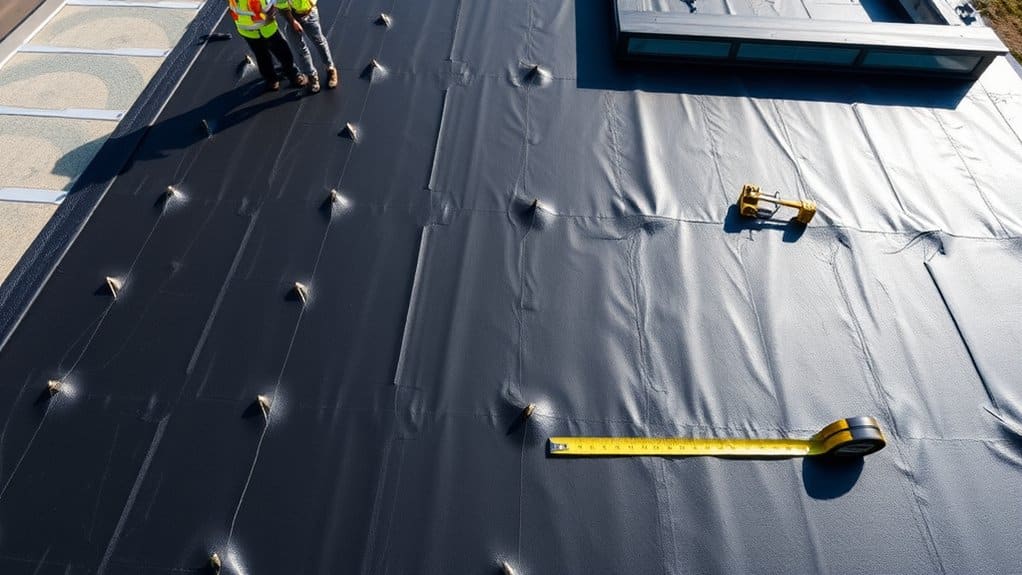
When working on new builds, it’s crucial to meet the stricter U-value requirements for compliance. Achieving targets of 0.11 to 0.13 W/m²K not only aligns with regulations but also boosts energy efficiency. For example, good insulation in walls and roofs can significantly reduce heating costs. Professional installation is vital to ensure these standards are upheld throughout the building’s lifespan. Additionally, utilizing high-quality insulation materials can further enhance compliance and reduce energy bills.
Stricter U-value Requirements
With the new UK building regulations enforcing stricter U-value requirements, builders and contractors must adapt to improve energy efficiency in new builds.
- U-value calculations are crucial for assessing insulation effectiveness.
- A maximum U-value of 0.11 W/m²K is now required for flat roofs.
- It’s essential to choose high-quality insulation materials to comply with these regulations.
These changes stem from the 2021 edition with 2023 amendments of Part L in England, aimed at cutting energy consumption and carbon emissions.
To ensure compliance, pay attention to insulation thickness and eliminate any air gaps. Regular inspections are key to maintaining these standards.
Professional Installation Importance
Professional installation is crucial for meeting the latest building regulations for new flat roofs in the UK. By following the installation techniques outlined in Part L 2010, you can achieve a U-value of 0.18W/m²K, helping you avoid expensive penalties.
It’s also vital to properly integrate vapour control layers to prevent interstitial condensation, which is often a problem in poorly executed installations.
Taking safety precautions, like ensuring insulation joints are sealed correctly and assessing load-bearing capacities, helps reduce risks associated with thermal bridging and condensation.
Working with local authorities to obtain the necessary documentation and certification also confirms your compliance during inspections.
In short, professional installation not only meets regulatory requirements but also improves energy efficiency and extends the lifespan of your flat roof system.
Key Considerations for Retrofits

What factors should you consider when retrofitting flat roof insulation?
- Moisture Control: It’s crucial to ensure proper ventilation and install vapour barriers to prevent condensation and maintain insulation effectiveness.
- Material Selection: Opt for materials like PIR boards, which offer good thermal resistance. Avoid moisture-retaining materials, such as fibreglass or cellulose.
- Regulatory Compliance: Make sure your design adheres to UK building regulations, specifically targeting a U-value of 0.18 W/m²K for flat roofs.
Upgrading insulation can be complex and often involves removing existing layers, which may affect waterproofing.
It’s important to document all procedures and seek advice from professionals to stay updated on changing regulations.
Strive for the best possible U-value while taking into account the structural and environmental limitations of your building.
Best Practices for Installation

When retrofitting insulation on a flat roof, it’s essential to follow best practices for optimal performance and compliance.
Start by checking that the substrate is in good condition and install a vapour control layer to prevent moisture ingress. Use effective installation methods, such as staggering insulation board joints to enhance thermal efficiency.
Ensure the insulation meets U-value requirements and is compatible with the adhesives and membranes you’ll use.
Make sure to incorporate a minimum gradient for drainage and manage ventilation effectively to minimise the risk of condensation.
Always consider fire safety by using fire-rated materials and installing fire barriers where necessary.
Lastly, keep a record of the process and ensure quality assurance through independent certifications and post-installation testing to confirm compliance.
Economic and Environmental Benefits

Investing in flat roof insulation can lead to substantial energy savings, potentially cutting your household energy bills by up to a third.
This not only reduces your expenses but also lowers greenhouse gas emissions, benefiting the environment.
Energy Savings Potential
Investing in flat roof insulation significantly improves energy efficiency and offers both economic and environmental advantages. Upgrading your insulation can lead to reduced energy bills and enhanced home performance.
- Save an average of £230 each year on energy costs.
- Enjoy savings of up to one-third with effective insulation.
- Create a quieter indoor space with improved insulation.
Flat roofs can contribute to 25% of heat loss in homes, making effective insulation crucial.
With potential annual savings exceeding £1,500 from comprehensive upgrades, the financial incentives are strong. Additionally, better insulation can raise your home’s Energy Performance Certificate (EPC) rating, helping you comply with regulations and increasing attractiveness to buyers.
Don’t overlook the long-term benefits of investing in quality insulation for your flat roof.
Environmental Impact Reduction
Effective flat roof insulation not only boosts energy efficiency but also significantly reduces your environmental impact.
Choosing sustainable materials, such as recycled or natural fibres, can dramatically lower your building’s embodied carbon. This helps mitigate carbon emissions by improving thermal regulation, which reduces the energy required for heating and cooling.
Additionally, moisture-resistant insulation can prolong your building’s lifespan, cutting down on demolition waste and emissions from new construction.
Using recyclable materials supports a circular economy, while opting for non-toxic products helps avoid harmful byproducts.
These practices contribute to net-zero targets, create local jobs, and enhance air quality, fostering a healthier environment for all.
Regulatory Frameworks and Inspections
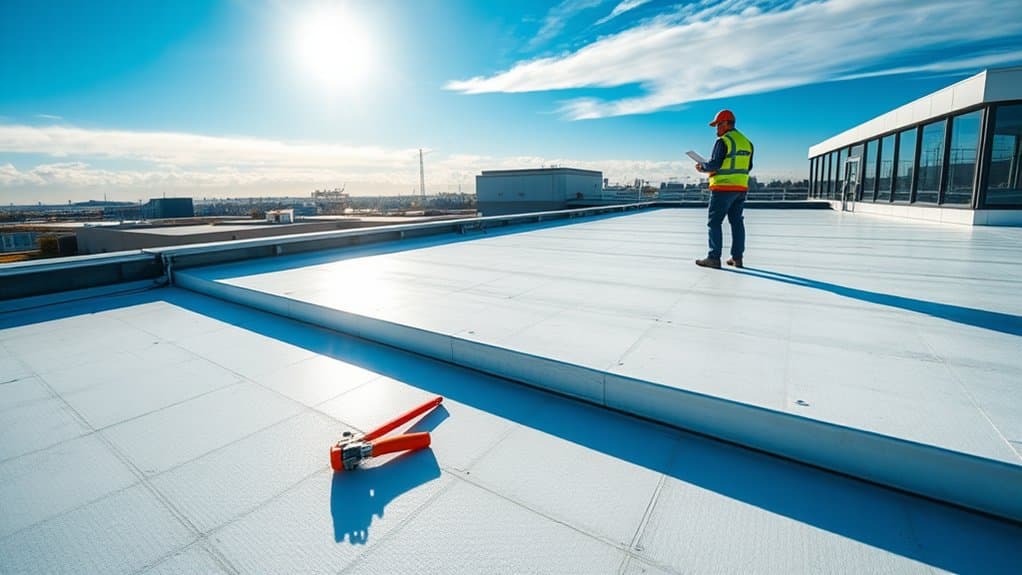
Understanding the regulatory frameworks and inspection processes for flat roof insulation is crucial for ensuring compliance and improving energy efficiency. Keeping up with the latest regulations is vital for smooth implementation.
- Conduct regular compliance checks to ensure standards are upheld.
- Use specialised equipment for accurate measurements.
- Maintain proper documentation during inspections.
It’s important to refer to various Approved Documents, particularly Document L for England, to meet U-value standards.
Both cold and warm roof insulation typically require a thickness of 120mm to 150mm of rigid foam boards. Given the complexities of inspection protocols and the risk of penalties for non-compliance, seeking professional advice is recommended.
Frequently Asked Questions
What Are the Common Materials Used for Flat Roof Insulation?
Common materials for flat roof insulation in the UK include:
- Polyurethane foam: Known for its efficiency in thermal insulation.
- Mineral wool: Excellent for soundproofing, making it ideal for noisy areas.
- Expanded polystyrene (EPS): A cost-effective option that provides good insulation.
- Glass wool: Offers great thermal performance, keeping homes warm.
- Rigid boards: Durable and suitable for various roofing applications.
- Reflective barriers: Help to enhance energy efficiency by reflecting heat.
These materials are designed to meet different needs, whether it’s budget, soundproofing, or thermal performance.
How Can I Assess My Existing Roof’s Structural Integrity?
Assessing your roof’s structural integrity may seem daunting, but with the right inspection techniques, you can easily evaluate its condition. Look out for signs like cracks, damp patches, and sagging areas, which can indicate moisture problems or structural weaknesses. For example, if you notice water stains on your ceiling, it could be a sign of a leak. Regular checks can help ensure your roof remains safe and sound.
What Is the Best Time of Year for Installation?
The ideal time for installation is late spring, thanks to the stable weather conditions. This season reduces potential disruptions, allowing work to proceed efficiently. For example, installing a garden shed or patio during this period ensures you won’t face unexpected rain delays. Overall, late spring helps your project stay on track and meet your expectations without seasonal hitches.
How Do I Choose a Qualified Installer?
When looking for a qualified installer, approach it like choosing a reliable bicycle. Verify their qualifications and experience in installations to ensure they have the expertise to provide quality work that meets all required standards.
What Are the Signs of Poor Insulation Performance?
Signs of poor insulation include rising energy bills, fluctuating indoor temperatures, and the appearance of mould. These issues point to inadequate insulation performance, which can result in further damage and higher costs.
Conclusion
In conclusion, ensuring your flat roof insulation complies with UK building regulations is crucial for energy efficiency and durability. Remember, “a stitch in time saves nine.” By understanding U-value requirements and the differences between cold and warm roofs, you can make informed choices. Whether you’re working on a new build or retrofitting an existing structure, following best practices in installation and compliance will yield both economic and environmental benefits. Stay informed to safeguard your investment and improve building performance.


