

Flat Roof Failures: Warning Signs for UK Property Owners
If you have a flat roof in the UK, it’s crucial to keep an eye out for signs of failure. Look for water pooling that lasts more than 48 hours, as well as any low spots that show staining or sagging ceilings inside your property. Cracks or blisters on the roof surface often indicate moisture issues beneath, while peeling paint can suggest trapped moisture. Regular inspections and maintenance can save you from expensive repairs down the line. By recognising these warning signs, you can protect your investment and ensure the longevity of your flat roof. There are proactive measures you can take to maintain your flat roof effectively.
Key Takeaways
- Watch for water pooling on the roof for more than 48 hours after rain, as this suggests drainage problems.
- Look for low spots with dirt-stained rings and discolouration on ceilings, which could indicate leaks or structural issues.
- Examine the roof membrane for cracks, splits, or tears that can compromise waterproofing and cause further damage.
- Regularly check for sagging or bowing in ceilings, as these signs may point to structural damage from trapped moisture.
- Establish a routine of visual inspections and ensure drainage systems are clear to avoid water build-up and expensive repairs.
Understanding Flat Roof Design and Drainage
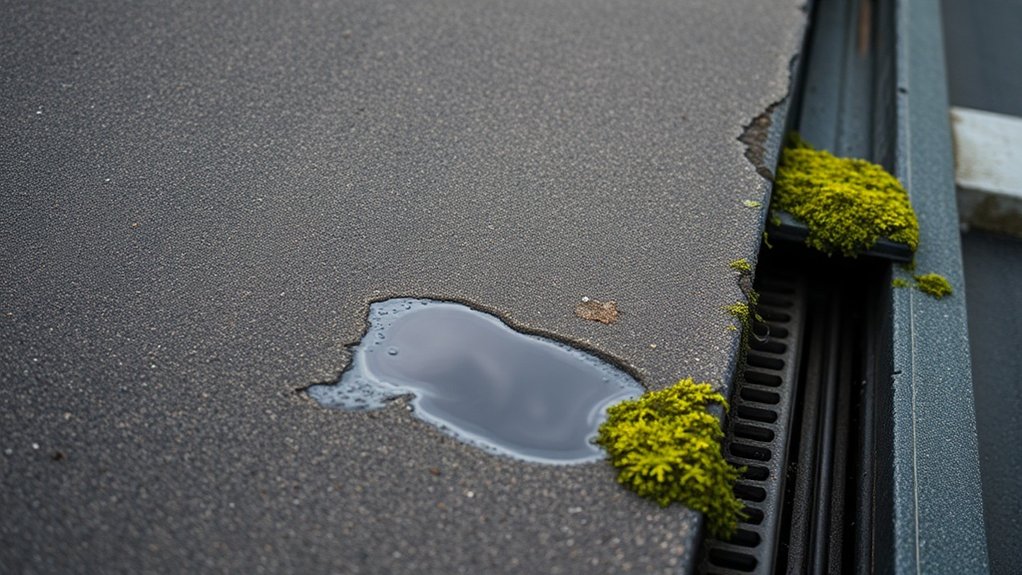
When designing a flat roof, it’s crucial to focus on structural integrity and effective drainage, as these elements significantly influence the roof’s lifespan and functionality.
A good drainage system is vital; BS 6229:2018 specifies a minimum slope of 1:80 to ensure surface water is managed effectively. Adequately sized outlets and gutters, in line with Building Regulations Part H, help remove water quickly. Additionally, proper insulation placement is essential as it affects ventilation needs and overall thermal performance. Incorporating reflective properties in materials can further enhance energy efficiency and reduce cooling costs.
Thermal performance is also key in preventing condensation and heat loss. Using continuous insulation and airtight layers can reduce the risks associated with thermal bridging.
Ensure that waterproofing membranes extend sufficiently at junctions to avoid water ingress. By prioritising these factors, you can minimise the chances of flat roof failures and improve overall durability.
Identifying Water Pooling and Drainage Issues
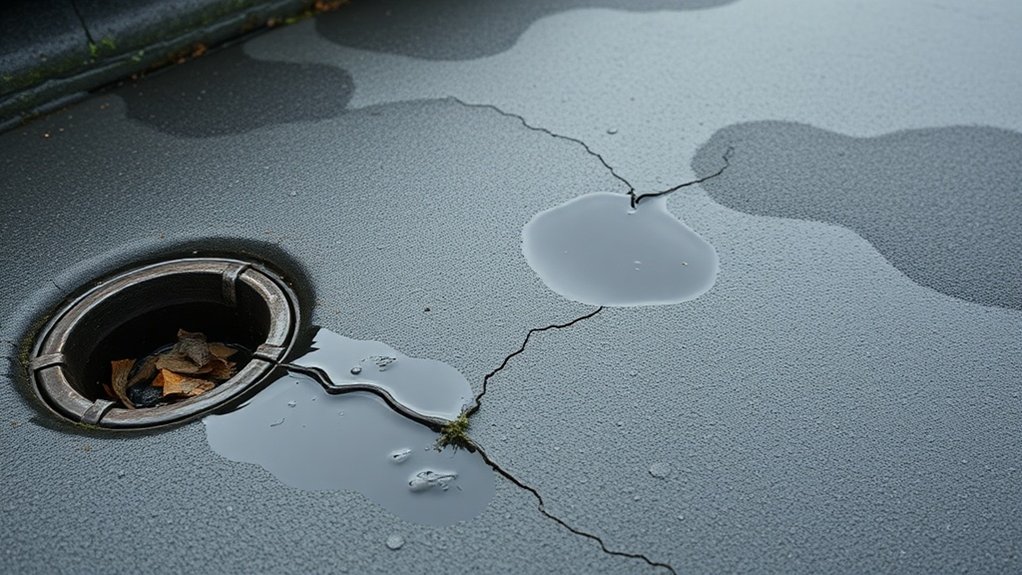
Keep an eye out for signs of water pooling on your flat roof, as this can signal drainage issues. Regular maintenance of your drainage systems is crucial to prevent blockages that worsen pooling. For instance, leaves or debris can easily clog gutters, leading to standing water. Recognising the effects of stagnant water isn’t only key to spotting potential problems but also essential for preserving the roof’s structural integrity. Additionally, inadequate drainage systems can significantly contribute to water accumulation, making it vital to address any drainage concerns promptly. Implementing regular inspections can help identify early signs of pooling and prevent costly repairs down the line.
Signs of Water Accumulation
Identifying water accumulation on flat roofs is crucial for maintaining structural integrity and avoiding costly damage.
Look for pooling water, which happens when water remains on the surface for more than 48 hours after rainfall. Signs to watch for include low spots with dirt-stained rings, cracks, or blisters on the roofing membrane. Regular inspections should be conducted biannually and after severe weather to catch early signs of wear.
Discolouration or staining on ceilings below may indicate water damage from surface ponding. You might also notice peeling paint or musty odours due to trapped moisture. Visible water stains can arise as moisture seeps down through walls and ceilings, further indicating the need for immediate attention.
Damp insulation can affect thermal performance and signal ongoing water issues. Addressing these signs promptly is essential for effective moisture management and to prevent further deterioration of your roof and the interior of your property. Implementing a regular inspection program can significantly enhance early detection of these issues.
Drainage System Maintenance
Keeping an effective drainage system is crucial to prevent water accumulation. Regular inspections should be conducted biannually, particularly after heavy rainfall.
Focus on maintaining gutters by clearing them of leaves, dirt, and other debris to ensure proper water flow. Watch for any signs of backup or slow drainage, as these may indicate underlying issues.
It’s wise to hire professionals for a thorough annual inspection to identify any subtle problems. When removing debris, use gentle methods to avoid damaging the roof membrane.
Installing gutter guards can help reduce the amount of debris that enters your drainage system, keeping it efficient and functional.
Impact of Pooling Water
Pooling water on flat roofs presents serious challenges, making early detection crucial for maintaining the roof’s integrity.
Even slight slope variations can create low spots where water accumulates, leading to ponding and potential structural issues. Regular inspections after rain are essential to identify areas where water remains for over 48 hours, as this indicates drainage problems.
To prevent pooling, consider resurfacing or installing tapered insulation to restore proper slope. Ensure that outlet detailing is correct to promote effective drainage and minimise localised ponding.
Recognizing Surface Defects: Cracks, Blisters, and Bubbling

How can you effectively spot surface defects such as cracks, blisters, and bubbling on flat roofs? Regular inspections are crucial for early identification. Here’s what to look for:
- Cracks: Keep an eye out for visible cracks, particularly in asphalt roofs, as these can allow water to seep in, causing leaks.
- Blisters: Look for dome-shaped blisters, which indicate moisture trapped beneath the membrane, potentially compromising its strength.
- Bubbling: Identify any raised areas caused by air pockets; these can disrupt the flatness of the roof and lead to water pooling.
Addressing these issues quickly can prevent significant damage and extend your roof’s lifespan.
Acting early is key to maintaining your property’s integrity!
The Importance of Flashing in Roof Integrity

Surface defects such as cracks, blisters, and bubbling can seriously undermine the integrity of a flat roof if not addressed promptly.
Flashing is crucial in maintaining this integrity, as it forms a waterproof barrier at joints and penetrations. Using reliable materials like lead, zinc, copper, or rubberised asphalt ensures durability against the UK’s unpredictable weather.
Proper installation techniques, such as overlapping and sealing, are essential to prevent water ingress that could lead to structural damage and expensive repairs.
Regular inspections of flashing can help catch potential issues before they worsen. Combining materials, such as metal and rubberised flashings, can provide enhanced protection against water seepage.
Investing in quality flashing not only safeguards your roof but also improves energy efficiency and preserves the value of your property.
Spotting Flashing Damage Around Roof Features

When inspecting your flat roof, it’s crucial to check for signs of flashing damage around features like chimneys, skylights, and vents.
A thorough inspection can help you spot potential issues that may lead to expensive repairs. Here are some key indicators to look out for:
- Cracks, splits, or dents in the metal flashing, which can increase the risk of water getting in.
- Rust or corrosion on exposed flashing, indicating it has been exposed to moisture for too long.
- Loose or missing sections of flashing, often found near roof features, which can allow water to penetrate.
Keeping an eye on these signs can save you from costly repairs down the line.
Assessing Structural Issues: Sagging and Support Problems

When assessing sagging roofs, it’s crucial to pinpoint the underlying causes, such as water pooling and structural weaknesses.
Regular maintenance is vital to prevent excessive loads and material decay that can worsen sagging. For example, ensure gutters are clear to allow proper drainage.
Causes of Sagging Roofs
Sagging roofs typically occur due to a mix of structural problems that undermine the strength of the supporting framework.
Here are the main causes:
- Deterioration of roof materials: Over time, roofing materials can weaken, leading to cracks and brittleness that compromise the roof’s integrity.
- Water damage: Leaks can allow moisture to seep into timber supports, resulting in rot and a diminished load-bearing capacity.
- Excessive weight: Buildups of snow, ice, or debris can place significant strain on the roof structure.
These factors can lead to visible sagging and pose safety risks.
It’s essential to regularly check your roof’s condition to catch these issues early, ensuring your property remains safe and sound.
Prevention and Maintenance Tips
To keep flat roofs in good shape and prevent sagging, it’s crucial to carry out regular inspections and maintenance. Conduct visual checks at least twice a year, as well as after severe weather events. Look for any sagging areas or bulging surfaces, as these can signal structural issues.
Establish a maintenance routine to clear away debris and ensure gutters and drainage systems are clear, preventing water from pooling. Regularly inspect the roofing membrane for any damage and address problems swiftly to stop moisture from getting in.
Also, check interior ceilings for signs of sagging or water stains, as these could indicate underlying issues.
Age-Related Deterioration of Flat Roofs

As flat roofs age, they inevitably deteriorate, revealing various visual and structural issues. Regular inspections are crucial to catch these problems early, as material degradation can lead to significant complications later on.
Watch for:
- Water stains on ceilings or walls, indicating potential leaks.
- Visible sagging or bowing, which may suggest damage to the timber beneath.
- Cracks, splits, or tears in the roof membrane, risking waterproofing failure.
Neglecting these signs can lead to further deterioration and expensive repairs.
By understanding the signs of age-related deterioration, you can maintain your flat roof effectively, ensuring its longevity and protecting your property.
Stay vigilant for these indicators to safeguard both your home and your investment.
Lifespan Limitations of Different Flat Roof Materials
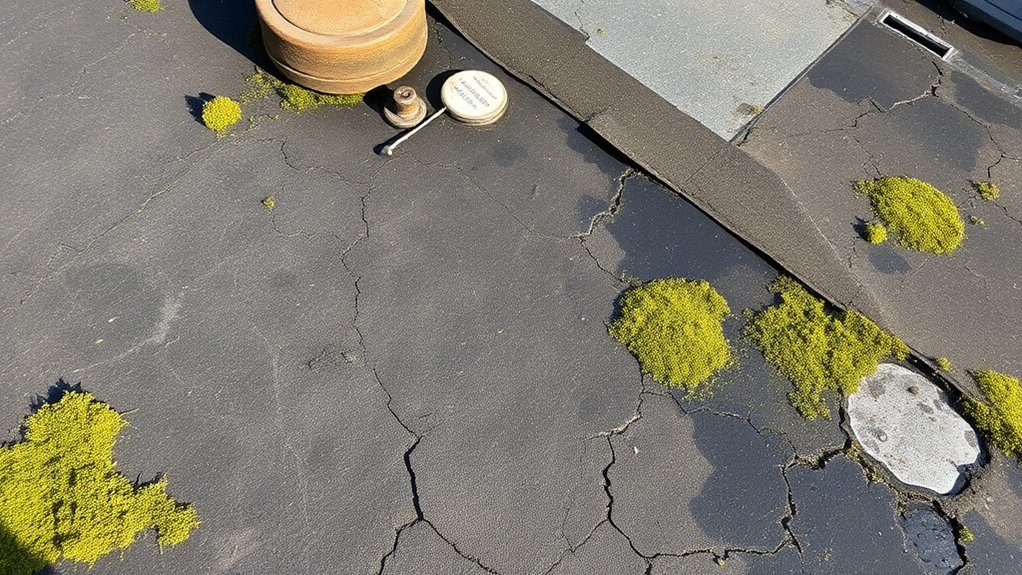
When choosing flat roof materials, it’s important to know their lifespans and what affects their durability.
For instance, EPDM roofs can last up to 50 years, whereas felt roofing generally lasts between 10 to 20 years.
The longevity of each material largely depends on how well it’s installed, how often it’s maintained, and the environment it’s exposed to.
Assess these factors to ensure you get the best lifespan out of your roof.
Common Flat Roof Materials
When it comes to flat roof materials, each option has its own lifespan and maintenance needs. Here’s a quick overview:
- EPDM: This synthetic rubber roof can last over 50 years with proper care. It’s durable and resistant to various weather conditions, making it a solid choice.
- GRP (Glass Reinforced Plastic): Known for its seamless finish, GRP is tough against the UK climate. However, it does require professional installation, which can add to the cost.
- Roofing Felt: This is a budget-friendly option that’s easy to install, but it typically lasts less than 20 years, so you may need to replace it more often.
Other alternatives include PVC, which offers good durability and flexibility for intricate designs, and green roofs, which improve insulation but need regular maintenance.
Lifespan Comparison Analysis
When choosing flat roof materials, understanding their lifespan is crucial.
EPDM roofs can last up to 50 years, providing excellent durability and resistance to the elements.
Green roofs, which incorporate natural vegetation, typically last between 40 to 50 years, offering both strength and environmental benefits.
Built-Up Roofing (BUR) generally lasts 15 to 30 years, but with ideal conditions, it can exceed 60 years.
Fibreglass roofing typically endures for 20 to 30 years, although proper maintenance can extend its life.
PVC and TPO roofs are reliable options as well, lasting around 20 to 30 years, and their longevity largely depends on the quality of installation.
Factors Affecting Durability
When choosing flat roofing materials, it’s important to consider factors that can significantly affect their durability and lifespan.
Key points to keep in mind include:
- Material choice: Opt for high-quality materials like EPDM and TPO, which provide excellent weather resistance and UV protection.
- Quality of installation: Ensuring proper fitting and workmanship helps to reduce weaknesses at seams and edges.
- Regular maintenance: Carrying out routine inspections and making prompt repairs can prevent major damage from wear and environmental factors.
The Consequences of Neglected Roof Maintenance

Neglecting roof maintenance can lead to serious consequences that go beyond mere appearance, affecting both your finances and the integrity of your property.
Water leaks can cause extensive damage to interiors, compromising ceilings and insulation, which can result in costly repairs. Small issues can quickly escalate into major structural problems, leading to emergency repairs that can be financially taxing.
Furthermore, standing water and moisture infiltration can weaken the roof’s integrity, potentially necessitating an early replacement and decreasing your property’s overall value.
A poorly maintained roof also hampers insulation efficiency, which can drive up energy costs as heating and cooling systems work harder to keep indoor temperatures comfortable.
Understanding Repeated Repairs and Maintenance Challenges

Repeated repairs on flat roofs often arise from environmental stressors and poor maintenance practices.
Common issues include:
- Persistent water pooling due to blocked drains and ineffective drainage design.
- Freeze/thaw cycles causing cracks and splits in roofing membranes.
- UV radiation degrading materials, making them brittle.
To reduce repair frequency, it’s essential to adopt effective maintenance strategies.
Regular inspections and prompt attention to minor issues can help prevent significant failures. Here are some practical steps:
- Schedule inspections twice a year and after storms.
- Keep drainage systems clear to prevent water build-up.
- Address minor problems immediately to avoid escalation.
Knowing When to Consider Roof Replacement

Regular inspections and proactive maintenance can significantly prolong the life of a flat roof, but eventually, every roof needs to be replaced.
Consider the lifespan of the roofing material: asphalt roofs generally require replacement after 20 to 25 years, whereas metal roofs can last up to 50 years.
Keep an eye out for visible signs such as cracks, sagging, or water pooling, which can indicate structural problems or drainage issues.
If you’re facing ongoing leaks or signs of internal water damage, it’s crucial to assess the roof’s condition.
Regular evaluations will help you judge when replacement is necessary, allowing you to tackle issues before they lead to expensive repairs.
Seeking advice from a professional can provide valuable guidance on the right time to replace your roof.
Proactive Measures for Flat Roof Longevity

To ensure the longevity of your flat roof, taking proactive measures is essential. Regular inspections and scheduled maintenance can significantly minimise long-term problems.
Here are some key strategies to consider:
- Regular Cleaning: Clear away debris and moss twice a year to avoid water blockages and material damage.
- Scheduled Inspections: Perform comprehensive inspections biannually, focusing on vulnerable areas to identify any issues early.
- Effective Drainage Management: Maintain a minimum roof slope and keep drainage systems clear to prevent water pooling.
Frequently Asked Questions
How Can I Improve My Flat Roof’s Drainage System?
To enhance your flat roof’s drainage system, consider using tapered insulation to promote effective water flow. Regular maintenance of gutters ensures they remain clear, preventing water build-up. This not only extends the lifespan of your roof but also protects the structural integrity of your property.
What Materials Are Best for Flat Roof Repairs?
For flat roof repairs, consider EPDM membranes for their outstanding durability and weather resistance, or TPO roofing for its energy efficiency and cost-effectiveness. Both materials offer excellent longevity, protecting your investment against the elements effectively.
When Is the Best Time for Roof Inspections?
The ideal times for roof inspections are spring and autumn. Aim for two inspections a year, coinciding with these seasons, to spot any potential issues and ensure your roof stays in excellent condition. For instance, checking your roof in spring helps to identify damage from winter weather, while an autumn inspection can prepare your roof for the harsher winter months ahead.
Can I Perform DIY Repairs on My Flat Roof?
About 60% of DIYers face safety concerns during repairs. You can carry out DIY repairs on your flat roof, but it’s essential to follow proper techniques and prioritise safety to avoid accidents and ensure lasting results. For example, always use a sturdy ladder and wear non-slip shoes when working at height.
What Are the Costs Associated With Flat Roof Replacement?
When planning a flat roof replacement, consider the costs associated with materials and labour. Generally, these projects take between 2 to 3 days to complete, with average costs around £2,500, though this can vary based on the size and complexity of the job. For instance, opting for high-quality materials may increase initial costs but could save you money in repairs down the line.
Conclusion
In summary, it’s crucial to keep a close watch on your flat roof to protect your property. Imagine a gentle summer rain, but instead of a calming sound, you hear the unsettling drip of water pooling in unexpected areas. By regularly checking for cracks, blisters, and damaged flashing, you can avoid expensive repairs and ensure your roof can withstand the weather. Don’t wait for severe weather—take action now to safeguard your investment and prolong the life of your roof.


