

Key Differences Between Residential and Commercial Roofs
When comparing residential and commercial roofs, there are notable differences in design, functionality, and materials. Residential roofs typically have steeper pitches for aesthetic appeal, often using asphalt shingles for insulation. In contrast, commercial roofs are usually flat or low-slope, designed to support heavy equipment and constructed with durable materials like EPDM and TPO.
The installation and maintenance of commercial roofs tend to be more complex due to their size and functionality. Additionally, while residential roofs typically last around 20-30 years, commercial roofs often have a longer lifespan. Understanding these differences can help in making informed decisions about roofing options.
Key Takeaways
- Residential roofs often emphasise aesthetics, featuring steeper pitches and materials such as asphalt shingles. In contrast, commercial roofs prioritise functionality, typically adopting flat or low-slope designs.
- Commercial roofs are designed to bear heavier loads, requiring durable materials like EPDM and TPO. Residential roofs, however, are lighter and use a wider variety of materials.
- Installing a residential roof is usually quicker, often completed within a few days. Conversely, commercial roofing projects can take several weeks due to their complexity and size.
- Maintenance for commercial roofs is more frequent, necessitating annual inspections, while residential roofs require less upkeep due to lower foot traffic.
- In terms of energy efficiency, residential roofs often incorporate materials for insulation, whereas commercial roofs might feature reflective coatings and green designs to enhance energy savings.
Design Differences
The design differences between residential and commercial roofs are significant and reflect their different functions.
Residential roofs often focus on aesthetics, featuring styles such as gable, hip, and mansard, which enhance the overall appearance of a home. These roofs usually have a steeper pitch for effective water runoff and commonly use simpler materials like asphalt shingles. Here, comfort and personal taste are key, making the visual appeal a top priority. Additionally, the use of high-quality materials can improve energy efficiency, contributing to long-term cost savings.
In contrast, commercial roofs prioritise functionality, designed to support heavy equipment like HVAC systems. These roofs are typically flat or have a low slope, incorporating features such as parapet walls and waterproofing materials for durability and easy maintenance. Flat commercial roofs often use membranes, gravel, or tar for protection, making them well-suited for the demands of commercial buildings. The design requires sturdy materials to handle additional systems, leading to more complex layouts and specialised installation techniques. While some commercial roofs may include solar panels for energy efficiency, the main goal remains practicality over aesthetics.
Understanding these design differences is crucial for roofing professionals.
Whether you’re working with residential homeowners or commercial property managers, recognising the unique needs of each will help you provide tailored solutions that address their specific requirements.
Slope Variations
When considering slope variations, there are notable differences between residential and commercial roofs. Residential roofs usually have steeper pitches, which improves drainage and adds to their visual appeal. In contrast, commercial roofs tend to have lower slopes, prioritising practicality and ease of maintenance. It’s crucial to understand these differences when choosing materials and ensuring effective drainage systems. The choice of roof slope is significantly influenced by the type of building and its intended use. Additionally, the materials selected for commercial roofs, such as single-ply membranes, can greatly impact their performance in varying slope conditions.
Roof Pitch Differences
How do the pitch variations between residential and commercial roofs affect their design and functionality?
Residential roofs usually have steeper slopes, typically between 4/12 and 9/12. This not only enhances the aesthetic appeal but also improves rainwater drainage, helping to extend the roof’s lifespan by effectively shedding water and reducing exposure to UV rays. Additionally, most residential roofs do not exceed a 12:12 pitch (approx. 45 degrees), which is the common maximum slope for these structures.
On the other hand, commercial roofs tend to have lower slopes, often flat or with minimal pitch, to accommodate mechanical equipment and ease of access. This design suits larger structures like warehouses and shopping centres, where space is limited.
However, the lower pitch can lead to drainage issues, necessitating efficient solutions to avoid water pooling.
When it comes to roofing materials, pitch is crucial. Steep slope systems are ideal for residential properties due to their ability to manage water runoff effectively, while low slope materials like built-up roofing (BUR) and modified bitumen are designed for commercial buildings.
Understanding these pitch differences is vital for ensuring durability and functionality in both residential and commercial roofing projects.
Drainage Considerations
Drainage considerations are crucial when comparing roof pitches in residential and commercial buildings. Commercial roofs often have a slight pitch designed to facilitate effective drainage, directing rainwater towards internal drains. This design is vital for preventing water pooling, which can cause structural damage or even roof collapse. Regular assessments of these systems can help identify issues before they lead to long-term damage. Additionally, proper roofing ventilation is essential in preventing moisture-related issues that can compromise the integrity of the roof structure.
In commercial settings, there are primarily two types of drainage systems: gravity and siphonic. Gravity drainage relies on a natural slope to move water, while siphonic systems use fully filled pipes to efficiently transport water away from the roof.
Installation methods differ significantly; commercial roofs incorporate internal pipes and drains, as opposed to the external gutter systems commonly found in residential buildings. This requires specific techniques, such as heat welding rather than nailing.
Regular maintenance is essential for these systems; inspecting and cleaning siphonic drains and gutters helps prevent clogs and ensures optimal water flow. An effective drainage system should dry the roof within 24 hours after rainfall, minimising the risk of damage and costly repairs.
Additionally, backup drainage systems can improve reliability, ensuring that water is effectively managed even if blockages occur.
Size Comparisons
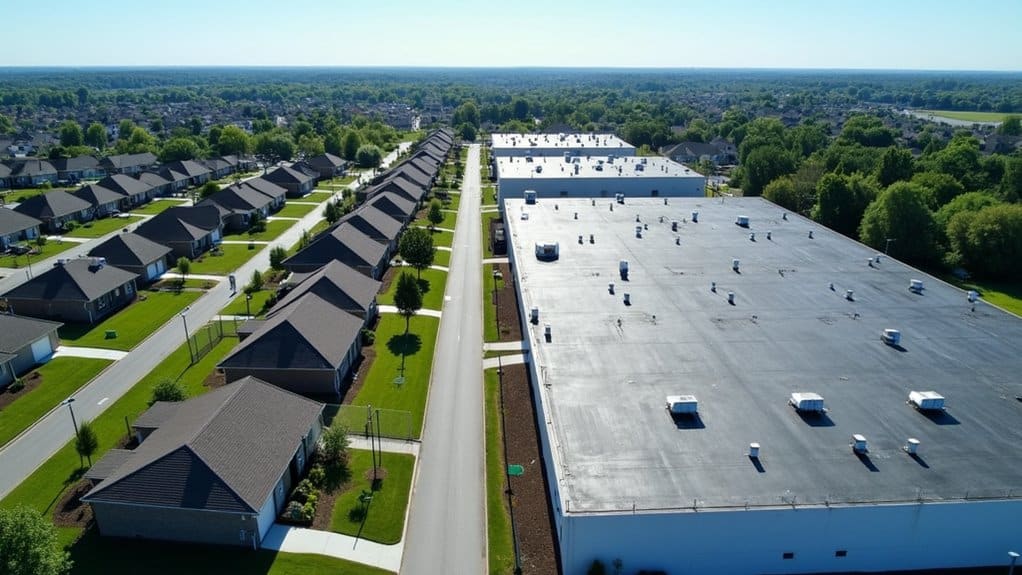
Roof size is a key factor that differentiates residential buildings from commercial structures. Residential roofs typically range from 120 to 280 square metres, often being less than half the size of larger commercial roofs. In contrast, the average commercial roof spans around 1,800 square metres, with some facilities covering millions of square metres. This substantial size difference impacts installation complexity and overall costs.
Residential roofs usually have steeper slopes, generally not exceeding a 1:1 pitch, which is vital for effective rainwater drainage. On the other hand, commercial roofs are mainly flat or low-slope, allowing for the installation of equipment like HVAC systems. Additionally, the average replacement cost for residential roofs is often lower than that of commercial roofs, further reflecting the differences in scale and complexity. According to industry standards, residential roofs generally incur costs ranging from £3,000 to £20,000, influenced by various factors including material choice.
The simpler designs of residential roofs enable quicker installations, often completed in just a few days, while commercial projects can take weeks due to their larger dimensions and increased complexity.
Furthermore, the costs associated with roofing projects vary significantly. Residential roofs typically incur lower costs per square metre, thanks to their smaller scale and simpler designs. Understanding these size comparisons can help you make informed decisions about roofing options, ensuring you meet the specific needs of each building type.
Equipment Support
When considering equipment support on commercial roofs, it’s important to factor in the requirements for heavy equipment and the structural load.
These roofs should be designed to support the weight of HVAC systems and other installations to ensure safety and stability.
Moreover, easy access for maintenance is crucial, as technicians need to reach the equipment promptly and efficiently.
Heavy Equipment Requirements
For both residential and commercial roofing projects, choosing the right heavy equipment is crucial for efficiency and safety.
In residential settings, you typically use ladder hoists, service vehicles, and roofing conveyor trucks to manage materials effectively. These tools minimise manual lifting and streamline material transport, which helps reduce labour time and overall project costs.
Safety must always be a top priority. Proper use of equipment like forklifts requires strict adherence to safety protocols, especially in the often confined spaces of residential sites. Additionally, steep roof designs demand equipment that can safely navigate inclined surfaces.
For commercial roofing, the equipment needs expand to include heavy haul tractors and specialised vehicles to handle larger projects. The increased volume of materials and the necessity for swift transport highlight the importance of selecting equipment that meets specific weight and handling requirements.
Structural Load Considerations
When planning roofing projects, it’s crucial to consider the structural load requirements that impact equipment support. Commercial roofs typically need to bear more weight than residential ones, due to the installation of HVAC units, solar panels, and other heavy machinery. Proper load distribution is vital for safety and longevity, ensuring the roof can handle these weights without risking structural damage.
Commercial roofs usually have flat or low-sloped designs, which facilitate the placement of equipment and effective drainage. This design must accommodate larger surface areas and robust drainage systems to manage potential chemical runoffs.
It’s essential to choose durable materials, such as EPDM rubber or TPO, that can withstand harsh weather and heavy foot traffic. Additionally, specialised installation techniques are necessary to ensure all components are securely integrated for effective weight management. For example, using metal roofing materials can enhance durability and longevity.
Regular maintenance is key to maintaining the roof’s structural integrity, highlighting the importance of understanding these load considerations in your roofing projects. By prioritising these factors, you can achieve safer and more reliable commercial roofing solutions.
Equipment Accessibility Needs
Ensuring equipment accessibility on commercial roofs is essential for safe maintenance and efficient operations. Thoughtful planning for equipment placement improves safety and maintenance access, facilitating regular inspections and repairs without unnecessary risk.
| Consideration | Details |
|---|---|
| Distance from Roof Edge | Equipment should be positioned at least two metres from the edge. |
| Safe Walkways | If placement near edges is unavoidable, install walkways with railings. |
| Permanent Platforms | These provide safe access while maintaining structural integrity. |
| Legal Compliance | Adhere to UK regulations such as those from HSE for access and safety. |
Designing commercial roofs with flat or low-sloped features simplifies equipment access. Custom access systems, including stairs and crossovers, promote safer maintenance and minimise hazards associated with rooftop clutter. Regular access to critical systems like HVAC is vital for seamless operations, making proper equipment placement and accessibility key priorities. By following these guidelines, you can ensure that maintenance teams work safely and efficiently, keeping your building operating at its best.
Openings and Features
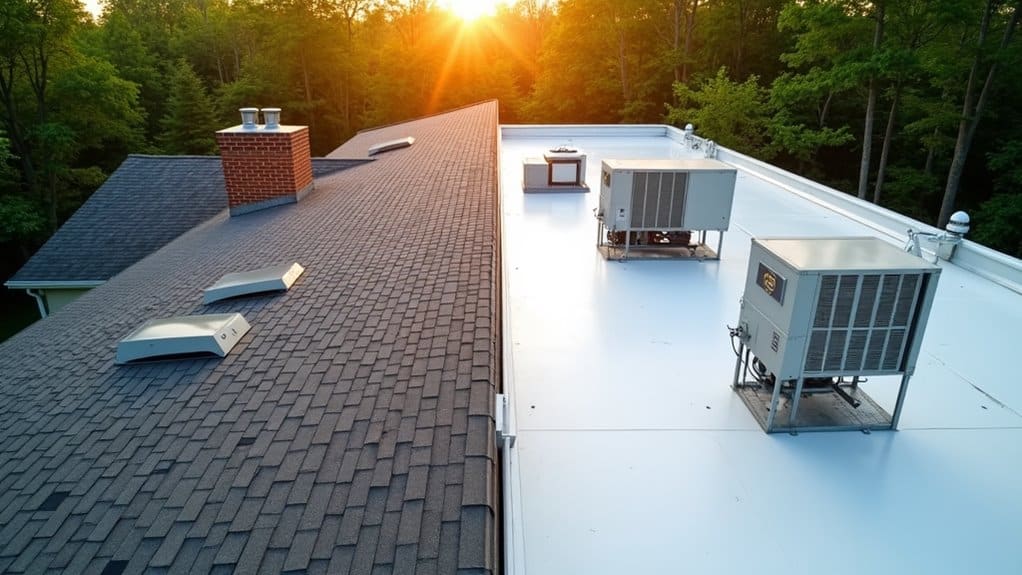
Roofs are crucial for the functionality of both residential and commercial buildings, and the openings and features they include significantly influence their design and upkeep.
In residential roofs, you’ll commonly find minimal openings like chimneys, vent stacks, skylights, and solar panels. This limited number of openings leads to a smaller surface area, which isn’t built to support heavy equipment or frequent access.
The steeper pitches of residential roofs help with water drainage and reduce maintenance, while also looking appealing.
On the other hand, commercial roofs often incorporate numerous openings such as blower outlets, smokestacks, HVAC systems, and access hatches. This variety indicates a larger surface area that can handle heavy machinery and requires regular maintenance access.
Due to their flat or low-slope designs, commercial roofs need more intensive upkeep, as they can struggle with water drainage.
In summary, recognising the differences in openings and features between residential and commercial roofs is essential for effective maintenance and design.
Material Choices
When choosing roofing materials, it’s important to recognise the differences between residential and commercial options.
Residential roofs typically emphasise aesthetic appeal and insulation, often using materials like asphalt shingles or metal sheeting.
In contrast, commercial roofs prioritise durability and ease of maintenance, commonly employing materials such as TPO (Thermoplastic Polyolefin) and EPDM (Ethylene Propylene Diene Monomer).
Each material comes with its own durability and adaptability characteristics, which can significantly affect long-term performance and costs.
Commercial Roofing Materials Overview
Choosing the right commercial roofing material is crucial for ensuring durability, energy efficiency, and low maintenance costs. Among the most widely used options are Single Ply Membranes, which include TPO, EPDM, and PVC.
TPO is known for its excellent UV resistance and affordability, while EPDM offers superior durability and versatility. PVC is particularly suitable for properties exposed to harsh chemicals, due to its puncture and fire resistance.
Metal Roofing is another robust option, featuring materials like corrugated galvanised steel, aluminium, and stone-coated steel. These roofs can last between 40 and 70 years and effectively reflect UV rays, enhancing energy efficiency.
Built-Up Systems, such as Built-Up Roofing (BUR) and Modified Bitumen, provide outstanding waterproofing and durability. Modified Bitumen combines asphalt with polymers, offering flexibility and resistance to temperature fluctuations and storms.
Asphalt is a cost-effective choice with an appealing appearance, typically lasting 15 to 30 years with proper maintenance.
Whichever material you choose, being aware of these options ensures you select a roofing system that meets your commercial needs effectively and sustainably.
Residential Roofing Material Options
Choosing the right roofing material for your home can significantly affect its durability, energy efficiency, and visual appeal.
Asphalt shingles are a popular option in the UK due to their affordability and straightforward installation, typically lasting between 15 to 30 years. For a more natural aesthetic, wooden shingles and shakes offer charm but raise concerns regarding sustainability and fire risk.
Metal roofing, such as standing seam options, is exceptionally durable, often lasting over 40 years, making it a solid investment. Clay tiles require skilled installation but can last an impressive 50 to 100 years, making them suitable for certain climates.
Composite shingles combine durability with attractive designs, gaining popularity among homeowners.
When selecting roofing materials, consider their longevity and environmental impact. While asphalt shingles are less eco-friendly, there have been improvements in their sustainability.
Wooden shingles are renewable but need treatments to enhance their lifespan. Metal roofs, particularly copper, are recyclable, and clay tiles reduce the need for frequent replacements, ultimately cutting down waste.
Your choice won’t only affect your home’s value but also its long-term sustainability and appearance.
Durability and Adaptability Differences
In commercial roofing, durability and adaptability are crucial due to the specific demands on these structures. Unlike residential roofs, commercial roofs often have flat or low-sloped designs, necessitating materials that can efficiently cover large areas and withstand significant environmental stresses.
Common materials like EPDM rubber, TPO, and modified bitumen are preferred for their durability and ability to support heavy loads from equipment.
Durability testing is vital to assess these materials, ensuring they can endure heavy foot traffic and harsh weather conditions. With proper maintenance, commercial roofs are designed to last 30 years or more, involving regular inspections to prevent water pooling and maintain the integrity of the materials.
Adaptability is also key, as these roofs need to accommodate additional systems such as HVAC and drainage to manage water accumulation. Implementing specialised installation techniques can further enhance the roof’s longevity and structural soundness.
Durability Requirements
Durability Requirements
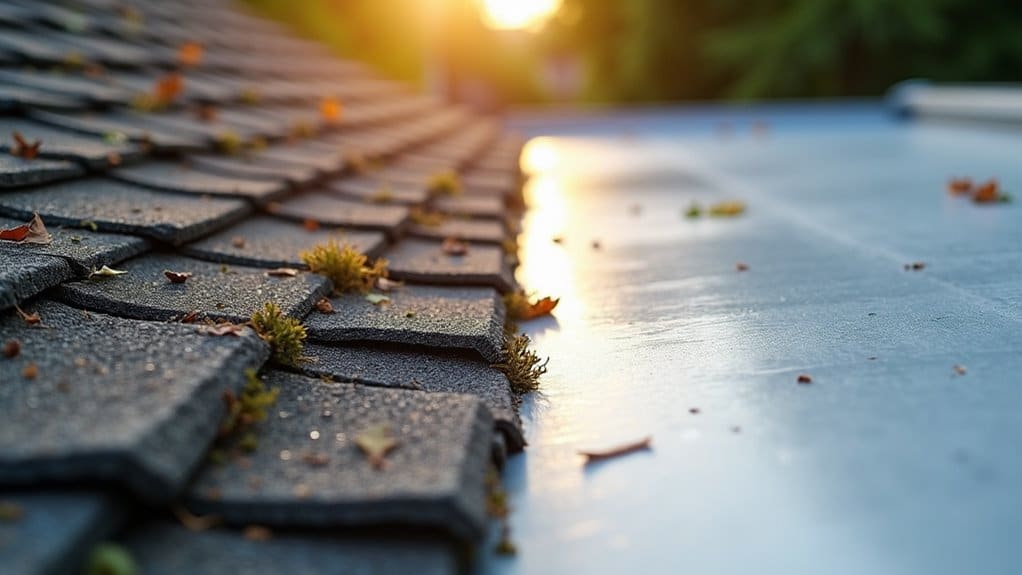
Residential and commercial roofs serve different purposes, and their durability needs vary due to factors like materials, design, and maintenance. Residential roofs commonly use materials such as asphalt shingles, cedar shakes, and metal, chosen for both their durability and visual appeal. These roofs must comply with local roofing standards and withstand typical weather, making regular inspections and maintenance crucial to prevent deterioration.
On the other hand, commercial roofs often employ materials like EPDM rubber or TPO, which are built to endure heavy foot traffic and provide long-lasting durability. With their flat or low-slope designs, these roofs accommodate HVAC systems and require effective drainage solutions. This type of roofing necessitates strict maintenance schedules, including bi-annual inspections to prevent issues like water pooling and mould growth.
Both types of roofs must adhere to building regulations to ensure safety and reliability. For residential roofs, this includes a focus on insulation and ventilation for comfort, while commercial roofs face more stringent compliance requirements.
Ultimately, understanding these durability needs will aid you in making informed decisions for roofing projects, ensuring safety and longevity for the structures involved.
Installation Complexity
Understanding durability requirements is essential for grasping the complexities of roof installations.
Residential roofs are generally easier and quicker to install. Their smaller scale means projects can often be finished in just a few days, using standard roofing tools and techniques. Typically, a small crew suffices, and the straightforward designs further simplify the process.
In contrast, commercial roofs are more challenging. Their larger size and complex low-sloped designs require specialised installation techniques, potentially extending the timeline to weeks or even months. Larger teams and specialised equipment are essential to handle these projects effectively.
Additionally, ensuring proper drainage and preventing leaks adds another level of complexity, necessitating careful project management.
Safety considerations also vary significantly; commercial projects require stricter safety protocols due to their height and scale.
While residential projects may need minimal planning, commercial installations demand extensive coordination and preparation. Recognising these differences helps highlight the distinct approaches required for residential versus commercial roof installations.
Expert Involvement

When undertaking roofing projects, especially in commercial settings, engaging experts is essential. Commercial roofing demands specialised knowledge and skills that differ significantly from residential roofing. Professionals in this field have specific training, ensuring they are well-versed in the unique materials and designs crucial for commercial properties. Their qualifications, including proper licensing and certifications, ensure compliance with UK regulations.
Furthermore, effective project management is key in commercial roofing. Experts streamline processes, uphold timelines, and manage budgets while prioritising safety. They provide detailed project estimates and ensure quality assurance by adhering to industry standards.
Here’s a brief overview of the critical factors regarding expert involvement:
| Aspect | Details | Importance |
|---|---|---|
| Expert Qualifications | Licensed and certified in specialised areas | Ensures compliance and safety |
| Project Management | Efficiently manages timelines and budgets | Delivers projects on time and within budget |
| Communication | Offers updates and educates clients | Builds trust and clarity regarding the project scope |
Engaging experts not only enhances the quality of the project but also provides peace of mind throughout the roofing process.
Maintenance Needs
Maintaining roofs is crucial for both residential and commercial properties, though the needs and frequency of maintenance can differ significantly.
Commercial roofs generally require at least annual inspections, while residential roofs tend to need upkeep less often due to their smaller size and reduced foot traffic. Factors such as age, weather conditions, and roof complexity can affect how often commercial roofs require attention, with some needing inspections more than once a year.
To ensure effective maintenance, keep the following in mind:
- Scheduled Inspections: Regular checks can catch minor issues before they turn into major problems.
- Debris Removal: Clearing leaves, branches, and other debris is vital to prevent deterioration and drainage issues.
- Professional Tools: Commercial roof maintenance often requires specialised equipment.
- Post-Storm Assessments: Inspecting your roof after severe weather is essential to identify any potential damage early.
By sticking to these maintenance practices and setting up a regular inspection schedule, you can prevent costly repairs in the long run.
Understanding the specific maintenance needs of your roof type will help you protect your property and extend its life.
Cost Considerations
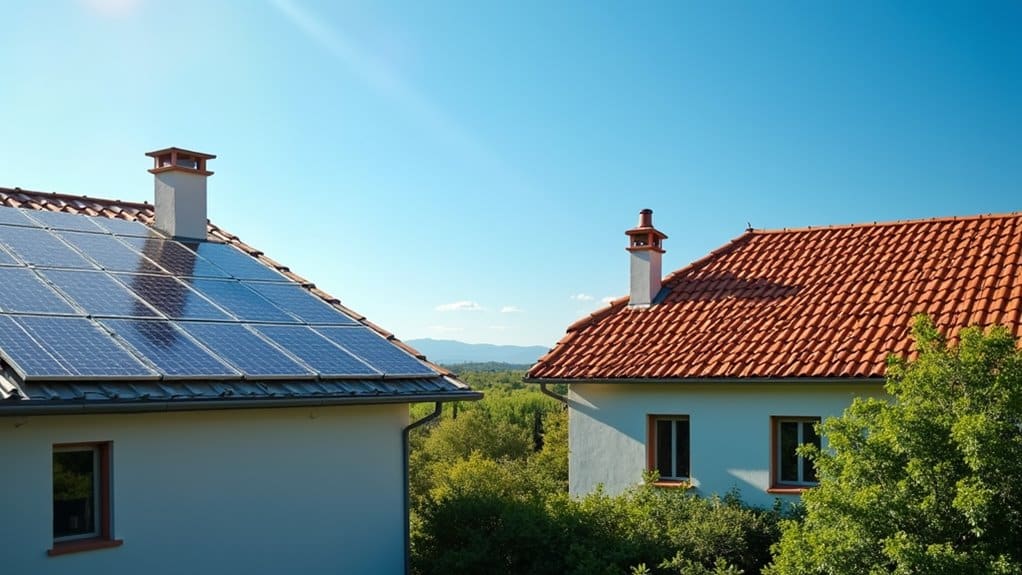
Cost considerations for commercial roofs can significantly affect your budget and long-term financial planning. When you carry out a thorough cost analysis, you’ll find several key factors influencing overall expenses.
The roof size is crucial; larger roofs require more materials and labour. Different materials—such as single-ply, modified bitumen, or metal—also vary in cost per square metre, impacting your pricing strategies.
Complexity is another important aspect. Sloped or pitched roofs generally incur higher costs due to increased labour and safety requirements. The existing condition of your roof will also affect expenses; replacing a damaged roof is more costly than making repairs.
Additionally, labour costs can vary based on the project’s complexity and the need for specialised skills.
In the UK, pricing can vary significantly; for instance, asphalt shingles might cost around £300-£450 per square, while metal roofing could reach £700-£1,000 per square.
Understanding these factors helps you make informed decisions that align with both your financial objectives and your business’s operational needs.
Purpose and Function
The purpose and function of roofs vary significantly between residential and commercial properties, which affects their design and structural requirements. In residential buildings, the primary aim is to protect inhabitants and the interior from the elements. Aesthetic appeal is also important, often resulting in sloped roofs that may include features like dormers and skylights.
In contrast, commercial roofs prioritise practicality, ensuring the building, its equipment, and inventory are well protected.
Here are some key differences:
- Structural Requirements: Residential roofs typically have lower demands, whereas commercial roofs require stronger materials to support heavier loads.
- Maintenance Needs: Residential roofs generally need less frequent inspections, while commercial roofs require regular maintenance due to their size and weight.
- Design Trends: Current trends in commercial roofing focus on energy efficiency, often using reflective coatings or solar panels.
- Regulatory Requirements: Commercial roofs must adhere to stricter building codes for safety and functionality.
Recognising these differences enables you to better assist clients, providing tailored solutions for their specific roofing needs.
Longevity Expectations

When considering longevity expectations for roofs, it’s important to know the typical lifespan of both residential and commercial roofs.
Factors like weather conditions and the quality of installation play a significant role in determining how long a roof will last.
For instance, a well-installed slate roof can last over 100 years, while a flat roof may only last 15 to 20 years.
Typical Lifespan Comparison
When comparing the typical lifespan of residential and commercial roofs, notable differences can influence your choice of roofing material. Residential options like asphalt shingles and wooden shakes usually last between 15 to 30 years.
On the other hand, commercial materials such as EPDM and TPO roofing also have a lifespan of 15 to 30 years, but they often incorporate more durable options that enhance longevity.
Here’s a brief comparison of lifespans:
- Asphalt Shingles: 15 to 30 years (Residential)
- EPDM Roofing: 15 to 25 years (Commercial)
- Metal Roofing: 40 years or more (Both)
- Tile and Slate Roofs: Over 100 years (Residential)
While both residential and commercial roofs can perform well, commercial roofs typically outlast residential ones due to their design and materials.
For instance, metal roofing can last up to 70 years in residential settings, whereas it generally lasts over 40 years in commercial applications. Understanding these differences can help you make informed decisions that suit your needs.
Factors Affecting Longevity
Understanding the factors that affect roof longevity is crucial for making informed decisions about both residential and commercial roofing systems. The choice of roofing material is key; for example, asphalt shingles typically last 20-30 years, whereas metal or tile roofs can endure for 50 years or more. Selecting the right material significantly impacts your roof’s lifespan.
Environmental conditions, such as severe weather, also play a vital role. Proper installation techniques are essential; a well-installed roof can better withstand environmental stress and reduce the risk of early failure.
Regular maintenance is equally important; routine inspections and prompt repairs can identify minor issues before they become major problems, helping to keep your roof in good condition.
For commercial roofs, which experience more wear and tear, it’s crucial to adhere to higher maintenance standards. The design and slope of the roof can influence water runoff, affecting its structural integrity.
Lastly, consider your local climate when choosing materials to enhance longevity.
Energy Efficiency
Energy efficiency in roofing is vital for both residential and commercial properties, significantly affecting energy costs and indoor comfort. By investing in suitable roofing technology, you can achieve considerable energy savings while extending the lifespan of your roof.
Here are the key factors that influence energy efficiency:
- Materials: Choose energy-efficient materials like metal and tiles for residential roofs, as they provide better insulation and reflectivity.
- Reflective Coatings: Apply reflective coatings on commercial roofs, such as TPO or built-up roofing, to reduce heat absorption.
- Ventilation: Ensure proper attic ventilation to maintain optimal roof temperatures and enhance energy performance.
- Solar Reflectance Index (SRI): Select materials with a high SRI to lower roof surface temperatures and improve overall efficiency.
Both residential and commercial roofs can benefit from energy-efficient designs. For example, green roofs can lead to energy savings of between 18.8% to 43.3%.
Additionally, integrating solar panels on commercial roofs offers further opportunities for sustainable energy practices. By prioritising energy efficiency, you not only cut costs but also create a more comfortable indoor environment.
Future Adaptability

As energy efficiency takes precedence, the focus on adaptable roofing systems is increasing.
It’s important to consider how innovative materials can prolong the lifespan and improve the function of roofs. These materials respond to environmental changes, while sustainable practices ensure that you’re opting for eco-friendly and recyclable choices.
Integrating smart technology enables real-time monitoring and proactive maintenance, enhancing resilience against severe weather.
Modular designs facilitate quicker installations without compromising quality. Custom solutions, such as 3D-printed components, offer aesthetic versatility that balances style and practicality.
Energy integration is essential; roofs that incorporate solar panels enhance energy efficiency and climate resilience.
Advanced installation techniques, including drone-assisted roofing, further boost efficiency.
Frequently Asked Questions
How Do Weather Conditions Affect Roof Choices for Residential and Commercial Properties?
Weather significantly influences your roofing decisions. It’s essential to consider how various roofing materials withstand heat, cold, rain, and snow to ensure durability and longevity for both residential and commercial properties. For instance, slate tiles are excellent for wet climates due to their water resistance, while metal roofs are ideal for snowy regions as they allow snow to slide off easily, reducing the risk of damage.
What Are the Common Signs of Roof Damage for Both Roof Types?
Your roof is like an umbrella during a downpour; it must shield your home. Watch out for leaks, sagging, or any damage that affects its structural integrity. Regular leak checks are vital for ensuring your roof remains strong and safe overhead.
How Do Local Building Codes Differ for Residential and Commercial Roofs?
Local building regulations in the UK differ significantly between residential and commercial roofs. Residential roofing codes tend to prioritise aesthetics and comfort, ensuring that homes blend well with their surroundings. For instance, the choice of roofing materials might be influenced by the character of the neighbourhood. In contrast, commercial roofing regulations place a greater emphasis on durability and energy efficiency, often requiring materials that can withstand heavy use and varying weather conditions.
Both types of roofs must adhere to strict inspection requirements to ensure safety and compliance. For example, a new residential roof might need to meet specific criteria regarding insulation and ventilation, while a commercial roof may be assessed for its load-bearing capacity and energy performance. Understanding these differences is crucial for anyone involved in roofing projects, whether for a home or a business.
Can Residential Roofing Materials Be Used for Commercial Applications?
Some residential roofing materials can be used for commercial projects, but they need to meet certain durability standards. For example, materials like asphalt shingles may work for small commercial buildings, but they must be able to withstand heavier foot traffic and harsher weather conditions. Always assess the material’s performance to ensure it can handle the demands of a commercial setting.
What Is the Typical Lifespan of Residential Versus Commercial Roofs?
When comparing lifespans, residential roofs usually last between 20 to 30 years, while commercial roofs can last from 30 to 50 years. Regular maintenance is essential for both types, significantly affecting their longevity and ensuring they function well throughout their lifespan.
Conclusion
In conclusion, recognising the key differences between residential and commercial roofs is crucial when considering a new installation or replacement. The variations in slope and size can cater to your specific requirements, while factors like longevity and energy efficiency are vital for your long-term investment. By understanding these elements, you can make informed choices that ensure your roof meets both practical and aesthetic needs for many years.


