

How Long Does a Roof Replacement Take?
A roof replacement usually takes between one day and a few weeks. The total duration depends on factors such as the size of the roof, the type of materials used, and the complexity of the design. For instance, replacing asphalt shingles may take 1-2 days, while a tile roof could take 3-5 days. Weather conditions and access to the property can also lead to delays. Effective project management and securing necessary permits early on can help speed up the process. Understanding these elements will give you a clearer picture of your roof replacement timeline.
Key Takeaways
How Long Does a Roof Replacement Take?
- Residential roof replacements usually take between 1 to 6 days, depending on the materials used and the complexity of the design.
- Conversely, commercial roofs can take several weeks due to their larger scale and the intricate planning involved.
- Weather can have a major impact, causing delays, particularly during severe conditions.
- Good project management and scheduling are vital for ensuring that roof replacements are completed on time.
- Additionally, local planning permissions may affect the overall timeline for roof replacement projects.
Factors Influencing Roof Replacement Timelines
When planning a roof replacement, several key factors can influence the project's duration.
Firstly, the size of your roof is crucial; larger roofs require more time due to increased labour and materials. The type of roofing material also plays a significant role; some materials are more complex to install than others, which can extend the timeline. Additionally, the complexity of the roof can add to the installation time, as more intricate designs necessitate careful handling and more precise work. For instance, labour costs can account for approximately 60% of total replacement costs, affecting time management.
Weather conditions can cause delays, particularly during bad weather. Accessibility issues, such as difficult-to-reach areas or complicated roof designs, can further complicate the process. Additionally, how well the crew is organised matters; a skilled and efficient team can speed things up considerably.
Finally, adherence to local building regulations may require structural repairs, which can prolong the project. Understanding these factors will help you set realistic expectations and ensure a smoother roof replacement experience.
Average Timeline for Residential Roofs

Replacing a residential roof typically takes between one to three days, depending on several factors. Considerations include the size, complexity, and accessibility of the roof, as well as weather conditions and the skill level of your roofing team. Here's a summary of average timelines based on different roofing types:
| Roof Type | Average Duration | Factors Affecting Time |
|---|---|---|
| Asphalt Shingles | 1-2 days | Simple design, easy access |
| Metal Roofs | 2-4 days | Complex design, potential weather delays |
| Cedar Shakes | 2-3 days | Installation techniques required |
| Tile Roofs | 3-5 days | Heavy materials, labour-intensive work |
| Slate Roofs | 3-6 days | Weight, specialised installation needed |
Being aware of these factors will help you plan your roof replacement project more effectively. Additionally, the replacement method you choose can significantly impact the overall timeline, as the overlay method is generally quicker than the tear-off method. Proper site preparation is essential to ensure efficiency and safety during the roof installation process.
Roofing Materials and Their Impact on Timelines
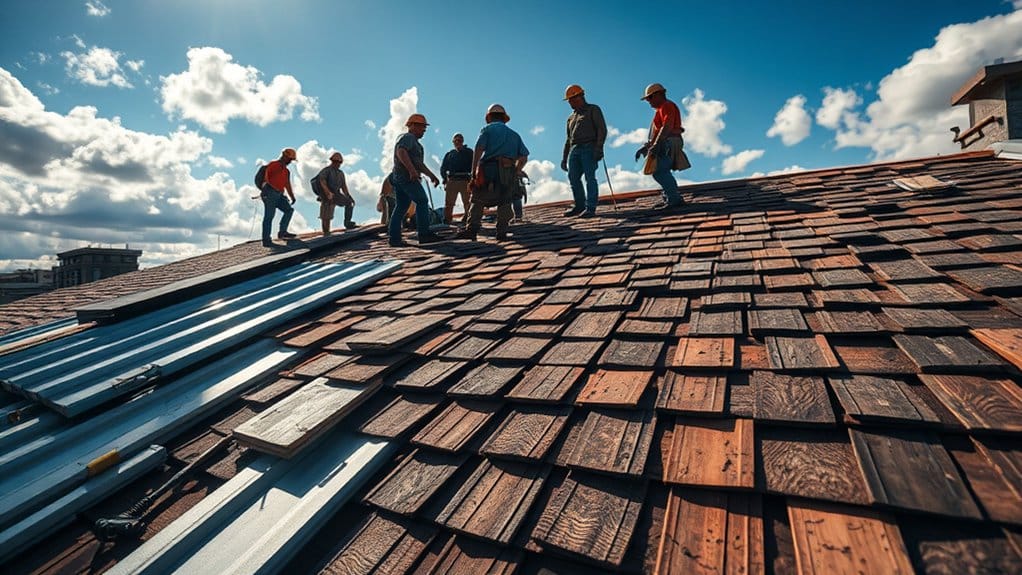
The choice of roofing materials significantly affects the timeline for your roof replacement project, as each type has its own installation requirements.
For example, asphalt shingles can be fitted quickly, typically within 1 to 3 days. In contrast, metal roofs may take between 4 to 14 days, depending on the design. Cedar shakes usually require 2 to 8 days, while slate installations take around 6 to 7 days. Clay or concrete tiles are heavier and generally demand about 8 to 12 days for installation. Roof complexity can further influence the overall timeline, making it essential to assess the intricacies of your home's design. Additionally, labor costs can impact the speed at which the project is completed, as higher rates may incentivize quicker work.
Your choice of material impacts not only the installation techniques but also the overall efficiency of the project. Larger roofs or those with complex designs will extend the timeline further, so it's vital to consider both the materials and the complexity of your project when planning your roof replacement.
Challenges and Delays in Roof Replacement

While many homeowners look forward to a hassle-free roof replacement, various challenges and delays can disrupt even the most well-planned projects.
Unforeseen issues, such as structural problems or bad weather, can significantly extend timelines. Here are some common factors that may cause delays:
- Weather: Heavy rain or snow can bring work to a standstill.
- Material shortages: A lack of roofing materials can lead to rescheduled work.
- Communication issues: Misunderstandings between homeowners and contractors can introduce unexpected hold-ups.
- Permit delays: Lengthy approval processes can slow down progress.
Being aware of these potential hurdles can help homeowners prepare for a smoother roof replacement experience. Additionally, understanding the typical replacement costs associated with different roofing materials can help in planning for contingencies.
Residential vs. Commercial Roof Replacements

When it comes to roof replacements, there are notable differences between residential and commercial projects.
Commercial roofs tend to be larger and more complex, often leading to longer timelines that can last from a few weeks to a month.
In contrast, residential roof replacements usually take just 1 to 3 days.
Moreover, commercial projects face unique challenges, such as the potential for business disruptions and specific material requirements, which can further affect the duration and planning of the work.
For instance, replacing a flat roof on a shop might require after-hours work to minimise disruption to customers, while a simple pitched roof on a home can be completed swiftly during the day. Additionally, regular inspections are crucial throughout the replacement process to ensure compliance with health and safety regulations.
Size and Complexity Differences
Understanding the differences in size and complexity between residential and commercial roof replacements is essential for effective project planning. Here are some key considerations:
- Roof Size: Residential roofs vary in size, typically taking one to five days for replacement, while commercial roofs can take several weeks.
- Roof Design: Complex residential designs may prolong replacement time, but commercial roofs often feature multiple levels and numerous penetrations, complicating the process.
- Access and Logistics: Access is generally simpler for residential projects, whereas commercial sites require careful management to ensure crew mobility and safety.
- Material Installation: The choice of materials affects installation time. Commercial roofs often require specialised materials, which can extend the installation process.
These factors significantly influence project timelines and help ensure efficient execution.
Timeline Variability Factors
Several factors can significantly affect the timeline for roof replacements, differing between residential and commercial projects.
For residential roofs, you can typically expect completion within 1 to 5 days, largely depending on the type of materials used and how accessible the property is for the workers.
On the other hand, commercial roofs generally take longer due to their size, structural complexities, and variety of materials involved.
Weather conditions also play a crucial role; bad weather can halt work and cause delays.
Additionally, contractor availability is important, particularly during busy seasons when demand is high.
Experienced contractors with the right resources usually manage timelines more effectively, ensuring that projects run smoothly while adhering to safety regulations.
Being aware of these factors can help you plan your roof replacement more efficiently.
Unique Project Challenges
Roof replacements come with distinct challenges that differ notably between residential and commercial projects. Recognising these differences is crucial for effective project management and adherence to roofing regulations.
- Weather Delays: Unpredictable weather can disrupt progress for both types of projects.
- Unexpected Damages: Hidden structural problems may arise during replacement, impacting both timelines and costs.
- Complexity: Commercial roofs often feature intricate designs and multiple sections, complicating installation and planning.
- Occupancy Considerations: When working on occupied buildings, careful planning is essential to minimise disruption.
Addressing these challenges with a strategic approach is vital for ensuring quality, compliance, and cost management.
Identifying unique factors early can help reduce delays and improve overall project success.
Planning and Efficiency in Roof Replacement
When planning a roof replacement, efficiency relies on careful preparation and an understanding of various factors. Effective project management and scheduling are vital to minimise downtime and ensure timely completion.
For instance, installing asphalt shingles typically takes 1-2 days, while metal roofs can take 2-5 days, and slate or concrete roofs may take between 5-14 days.
Complex designs, steep slopes, and accessibility issues can complicate timelines further. Additionally, unforeseen structural damage or environmental factors may cause delays.
Don't forget to consider permitting requirements and local regulations, as these can also affect your schedule. By addressing these elements early on, you can streamline the process, maintain safety, and achieve a successful roof replacement that meets your clients' needs efficiently.
Frequently Asked Questions
What Permits Are Needed for a Roof Replacement?
When replacing a roof, you'll need to comply with local regulations. This typically involves obtaining a roofing permit and possibly additional permits for any plumbing or HVAC changes. The requirements can differ depending on your local council, so it's important to check with them for specific guidelines and associated fees.
How Do I Choose the Right Roofing Contractor?
When selecting a roofing contractor, it's essential to ensure their credentials are solid. Look for their experience with quality roofing materials, verify their licenses, and read reviews to find someone who meets your requirements. For instance, if you're considering a contractor for a tiled roof, check if they have specific experience with that type of roofing.
Can I Stay in My Home During the Replacement?
Yes, you can remain in your home during the roof replacement, but expect significant noise. Ensure safety measures are in place, such as securing furniture and keeping emergency exits clear, to reduce disruption and improve comfort.
What Should I Do if My Roof Leaks During Replacement?
If your roof leaks during replacement, carry out a quick leak assessment. Make temporary repairs to minimise damage, and inform your contractor right away. They will sort out the issue promptly, keeping the project on track and your home protected. For example, using a tarp can help shield your interior until the problem is resolved.
How Can I Maintain My New Roof After Installation?
A little prevention goes a long way; carry out regular roof inspections and seasonal maintenance. Clear away debris, clean your gutters, and ensure your insulation is adequate. These simple steps can help extend your roof's lifespan and avoid costly repairs down the line.
Conclusion
In summary, the timeline for a roof replacement varies based on factors like materials and weather. Typically, a residential project can take anywhere from a few days to a week. However, unforeseen issues can cause delays, much like waiting for your turn at the bar for a pint. By planning carefully and being aware of your specific circumstances, you can help ensure a smoother process that will safeguard your home for years to come.