

Choosing the Right Roof Design for New UK Homes
When selecting the ideal roof design for your new home in the UK, consider materials such as durable slate or eco-friendly metal that can withstand local weather. Incorporating smart technology can improve energy efficiency, while green roofs offer sustainable options that support biodiversity. Look at roof shapes—gabled or hipped styles combine traditional charm with modern appeal. Don’t forget to assess the costs and maintenance requirements of each option to ensure long-lasting performance. There’s plenty more to learn about finding the right roofing solution for your home.
Key Takeaways
- Take into account local weather conditions when selecting roofing materials and designs to effectively deal with rain, snow, and heat for better weather performance.
- Opt for sustainable roofing materials, such as green roofs or metal, to boost energy efficiency and promote environmental health.
- Assess the lifespan and maintenance needs of roofing options; durable choices like slate or metal can reduce long-term costs.
- Blend modern design with traditional roof shapes, such as gabled or hipped roofs, to ensure both visual appeal and practicality.
- Incorporate smart roofing technologies, including drone inspections and AI-driven estimates, for streamlined project management and timely maintenance notifications.
Understanding Popular Roofing Materials in the UK

When selecting roofing materials for your new home, it’s important to consider the various options available in the UK.
Asphalt shingles are a popular choice due to their cost-effectiveness and straightforward installation. However, alternatives like metal roofing offer distinct advantages, such as durability and recyclability, which can appeal to environmentally conscious homeowners. Given that the UK roofing market is projected to grow at a CAGR of 3.1% from 2025 to 2034, investing in quality roofing materials now can yield long-term benefits. Notably, materials like clay tiles provide excellent insulation properties, helping to further enhance your home’s energy efficiency.
Traditional materials like clay and slate tiles add aesthetic value, while flat roofing systems suit contemporary designs.
Sustainable options, like reclaimed timber and green roofs, can improve energy efficiency and promote biodiversity.
Advances in Roofing Technology for Contemporary Homes
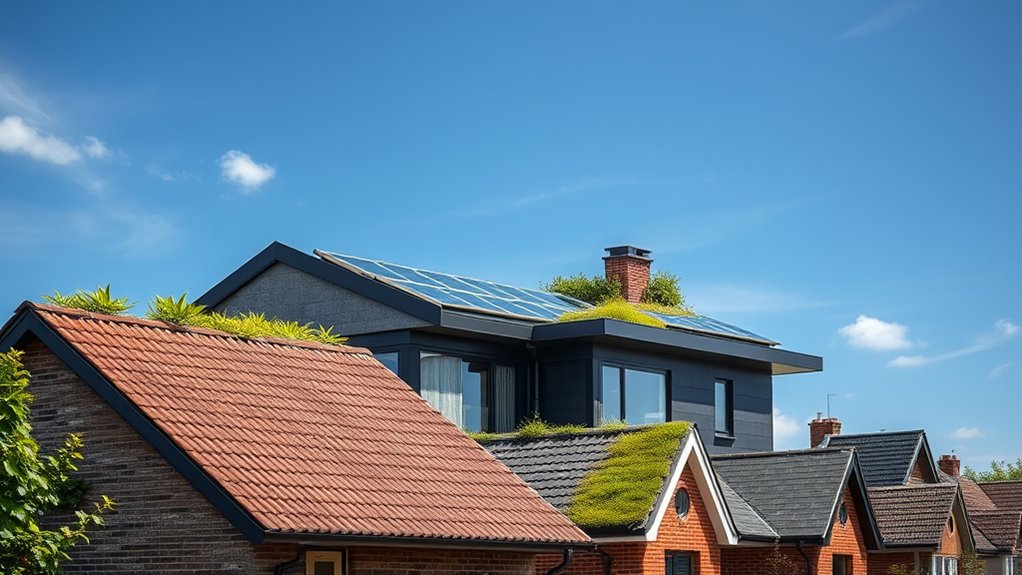
As technology advances, homeowners in the UK are reaping the rewards of innovative roofing solutions that improve both functionality and aesthetics.
Key advancements in roofing technology include:
- Smart Roofing Systems: These systems feature intelligent monitoring for energy efficiency, providing automated maintenance alerts to extend their lifespan. Additionally, implementing energy-efficient roofing materials can significantly lower energy costs and enhance overall performance.
- Drone Inspections: Drones offer a safer and more cost-effective way to inspect roofs, capturing high-resolution images that reduce labour costs.
- AI Estimates: AI technology enhances the accuracy of roofing estimates, streamlining project management and improving customer service. Furthermore, the integration of energy-efficient roofs not only contributes to reduced carbon emissions but also offers long-term savings for homeowners.
In addition, the use of eco-friendly materials and solar panels not only increases sustainability but also aligns with modern design principles.
Emphasizing Sustainability and Energy Efficiency

Sustainability and energy efficiency have become essential in roof design, significantly influencing your home’s functionality and market value. By incorporating sustainable options like green roofs and effective insulation, you can boost your home’s energy efficiency while supporting environmental health. Recent data indicates that roof attributes such as shape and material play a crucial role in assessing energy efficiency and sustainability. Green roofs can also improve energy efficiency by enhancing insulation and reducing heating and cooling costs.
| Sustainable Solutions | Energy Efficiency Benefits |
|---|---|
| Green Roofs | Lower energy bills |
| Slate Roofing | Long-lasting durability |
| Roof Insulation | Reduced heat loss |
| Solar Roofing | Generates renewable energy |
| Climate Resilience | Enhanced drainage systems |
Opting for these features not only enhances your property’s attractiveness but also shows your commitment to a greener future. Investing in sustainable roofing leads to long-term benefits in durability, efficiency, and overall value.
Exploring Roof Shapes and Their Architectural Styles

Choosing the right roof shape can significantly affect your home’s architectural style and overall attractiveness. Each roof design offers distinct benefits and visual appeal.
- Gabled Styles: These triangular roofs effectively shed rainwater and add a timeless charm.
- Hip Designs: With slopes on all sides, hip roofs provide strength and weather resistance, ideal for changeable British weather.
- Mansard Advantages: The dual slopes of mansard roofs create additional attic space, boosting functionality.
Consider flat roofs for a modern aesthetic or M-shaped roofs for a striking look. Curved designs, such as barrel roofs, lend a unique touch that stands out.
Pay attention to the roofline details, as they help define your home’s character. Ultimately, selecting the right roof shape should align with your vision while reflecting your community’s architectural heritage.
Regulatory Considerations for Roof Design

When designing your roof in the UK, it’s crucial to consider regulatory requirements that could affect your project. Ensure you comply with height limits and U-value standards set by Building Regulations. For instance, skylights shouldn’t protrude more than 150mm above the roof surface to avoid needing planning permission.
Aim for U-values of 1.2 W/m²K for windows by 2025.
Safety is another key factor; obscure-glazed side windows must be at least 1.7m high. If your design involves complex shapes, getting approval from qualified engineers is essential.
Regular inspections and obtaining compliance certificates will help you avoid penalties and ensure your construction meets the necessary standards.
Cost Analysis of Different Roofing Options

When considering roofing options, it’s important to compare material costs, lifespan, and maintenance requirements.
Each material impacts your initial expenditure and ongoing costs for upkeep and durability.
For example, while slate may have a higher upfront cost, its longevity can offset maintenance expenses over time.
Material Cost Comparison
When choosing roofing materials, understanding costs can save you money over time. Here’s a quick breakdown of popular options:
- Clay or Concrete Tiles: £0.40 – £4 per tile; durable and visually appealing.
- Natural Slate: £25 – £50 per square metre; elegant and long-lasting.
- Felt Roofing: Economical choice for flat roofs, though less durable.
Keep in mind that installation costs, roof size, and complexity can significantly affect your budget.
Additionally, your location in the UK may impact prices, so consider these factors to ensure your roofing choice meets both your budget and aesthetic preferences.
Lifespan and Maintenance Costs
When selecting roofing materials, it’s essential to consider not just the initial costs but also the lifespan and maintenance expenses.
For example, slate roofs can last over 100 years with minimal upkeep, making them a worthwhile investment despite the higher initial price.
On the other hand, concrete tiles last around 40 to 50 years but need resealing every decade, which can add to long-term costs.
Metal roofs are durable for 40 to 70 years, but they require periodic coatings to prevent corrosion, which can also affect your budget.
While cedar and asphalt options may appear cheaper at first, they often require frequent repairs, leading to higher overall ownership costs.
Keep these maintenance factors in mind when choosing your roofing material, as they significantly influence both your budget and the longevity of your investment.
Maintenance Factors for Various Roofing Materials
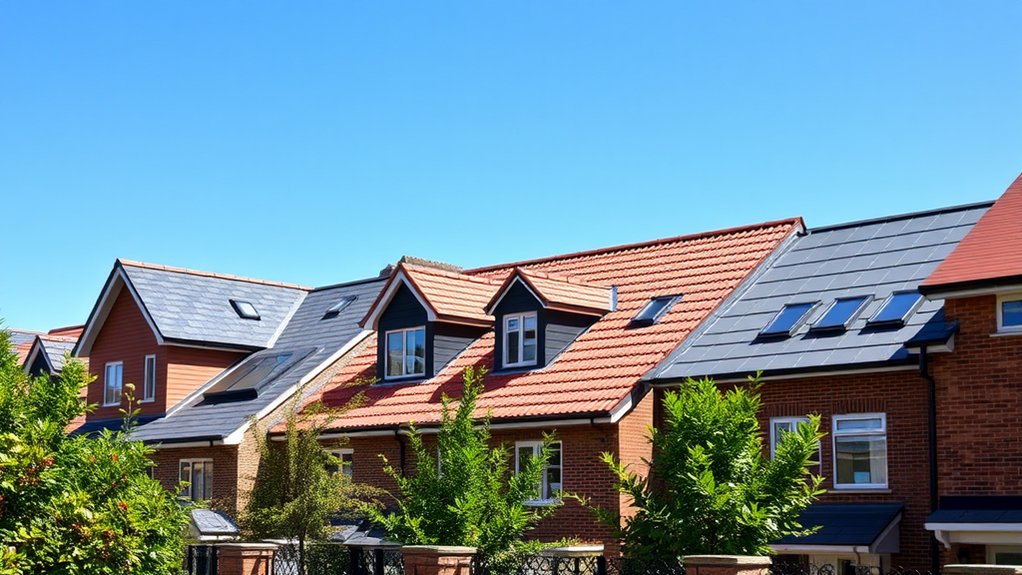
When choosing a roofing material for your new home, it’s important to consider the maintenance requirements of each option.
Understanding these factors can help ensure the material lasts longer and remains effective. Here are three key points:
- Clay and Concrete Tiles: These require little cleaning but should be inspected regularly for cracked tiles and mortar joints to keep them in good shape.
- Metal Roofing: This type needs frequent checks for rust and debris, along with protective coatings every 10 to 15 years to guard against corrosion.
- Asphalt Roofing: Regular inspections for damage are necessary, and while replacing shingles is straightforward, it’s vital for maintaining a watertight roof.
Longevity and Durability of Roofing Choices

When choosing roofing materials, it’s essential to prioritise longevity and durability for a worthwhile investment.
Clay and slate tiles can last over a century, whereas asphalt shingles typically need replacing every 20 years.
Knowing how various materials cope with British weather will guide you in selecting a roof that effectively protects your home for many years.
Material Lifespan Comparison
When choosing roofing materials for your new home, understanding their longevity and durability is crucial.
Here’s a straightforward comparison of popular options based on how long they last and their cost implications:
- Slate: Lasts over 100 years and is known for its outstanding durability, though it comes with a higher initial price tag.
- Metal Roofing: Offers a lifespan of 40 to 70 years, striking a good balance between durability and long-term affordability.
- EPDM: With regular maintenance, it can last over 50 years and is generally a mid-range cost option.
Each material has its unique advantages.
By considering their lifespan, you can save money and avoid future headaches.
Prioritising durability ensures your new roof will endure while aligning with your budget.
Weather Resistance Factors
When selecting roofing options for your new home, it’s essential to consider weather resistance factors that influence longevity and durability. The UK’s varied climate necessitates roofing systems that can handle seasonal challenges and ensure robust weather resilience.
| Weather Factor | Considerations |
|---|---|
| Seasonal Variations | Ensure design accommodates rain, heat, snow, and ice |
| Geographic Impact | Choose materials suited to local conditions |
| Load Management | Ensure roofs can support the weight of snow |
| Thermal Expansion | Opt for materials that resist heat stress |
| Wind Resistance | Use strong installation methods to withstand high winds |
Integrating Modern Aesthetics With Traditional Elements
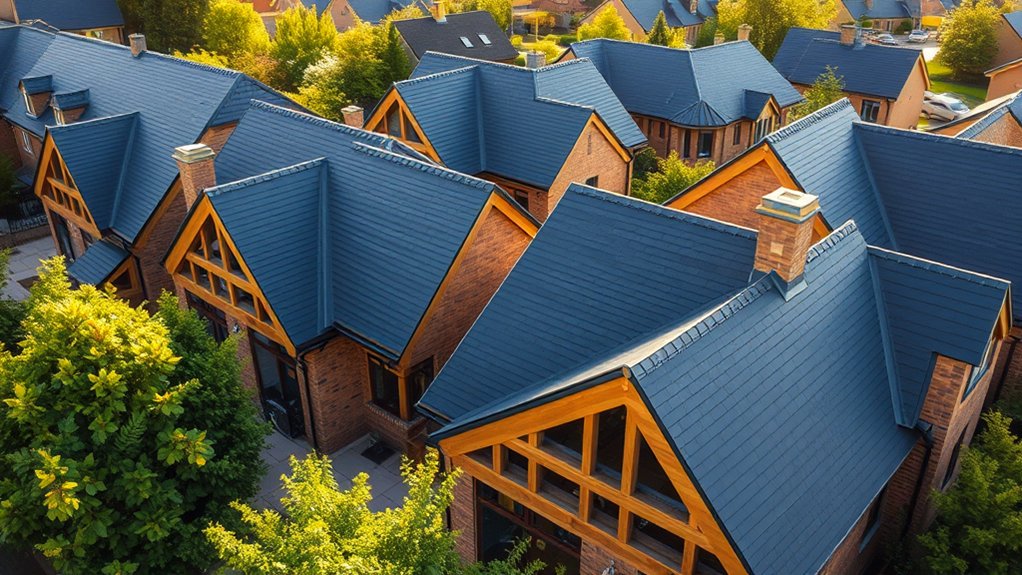
Integrating modern aesthetics with traditional elements in roof design enhances a home’s visual appeal and respects its heritage. To achieve this balance, consider the following:
- Choose Roof Shapes: Opt for gable or hip roofs to merge traditional aesthetics with modern design; these shapes provide character and adaptability.
- Incorporate Natural Light: Use dormers or skylights on classic rooflines to increase functionality while preserving a timeless appearance.
- Select Materials Wisely: Choose durable materials such as metal or eco-friendly options that reflect traditional styles, ensuring longevity and sustainability.
Frequently Asked Questions
Which Roofing Materials Are Best for Coastal Areas in the UK?
For coastal areas in the UK, opt for materials such as metal, slate, and tiles. These options are durable and resistant to the harsh effects of wind and salt exposure, ensuring your roof remains strong and requires minimal maintenance over time.
How Do Roof Designs Affect Home Insurance Premiums?
The shape of your roof can significantly impact your home insurance premiums. A sloping roof typically leads to lower insurance costs, while a flat roof may result in higher premiums. For instance, if you have a classic pitched roof, you might benefit from reduced rates compared to a modern flat design. Choose your roof wisely to help keep your insurance costs in check.
What Are the Noise Levels Associated With Different Roofing Materials?
When it comes to noise levels, different roofing materials vary in their ability to reduce sound. For example, terracotta tiles are excellent for sound insulation, making them a good choice for quieter homes. On the other hand, metal roofs can amplify noise, especially during heavy rain, and may need additional damping materials to improve sound attenuation. It’s important to compare materials based on their noise-reducing properties to find the best fit for your needs.
Can I Install Solar Panels on Any Roof Type?
You can’t install solar panels on every type of roof. It’s essential to check the compatibility of your roof’s materials, such as tiles and metal. Avoid roofs that are fragile, and ensure your roof has the proper pitch for optimal energy efficiency and structural support. For instance, a flat roof may require additional mounting systems, while a sloped roof can often accommodate panels more easily.
How Do I Choose a Roofing Contractor for My Project?
To choose a roofing contractor, start by assessing their qualifications and experience. Discuss project timelines from the outset to ensure they match your expectations. Always verify references and check for insurance to ensure reliability. This groundwork will help create a solid foundation for your roofing project.
Conclusion
Choosing the right roof design for your new home may seem like a minor decision, but it significantly impacts your home’s character and energy efficiency. You might be tempted to go for a stylish design, only to find it requires constant upkeep or incurs high repair costs. Prioritising sustainability and durability isn’t just a passing trend; it’s essential. As you consider your roof design, keep in mind that making the right choice now can save you from expensive regrets later on. It’s an important decision worth careful thought.


