
Top Residential Roofing Trends in 2025
In 2025, expect a noticeable shift towards sustainable roofing materials such as recycled plastics and metals, prompted by a growing demand for eco-friendly alternatives. Energy-efficient designs will be popular, featuring cool roofs and impact-resistant materials that help address climate challenges. The integration of solar technology will be more seamless, with advanced solar shingles that enhance both the look of your home and your energy independence. Metal roofing will gain popularity for its durability and performance. Additionally, smart roofing technologies will emerge, monitoring and adapting to environmental conditions to ensure optimal efficiency. There’s much to discover about these trends and their implications for your home.
Key Takeaways
- Sustainable Materials: There’s a growing interest in eco-friendly roofing options, such as recycled materials and those sourced from natural resources. These choices help reduce carbon footprints and waste.
- Climate-Resilient Designs: Roofing designs are adapting to handle extreme weather conditions. Homeowners are opting for durable materials and innovative features that enhance energy efficiency.
- Solar Integration: Sleek solar shingles and advanced energy storage systems are becoming popular, offering homeowners energy independence and potential long-term savings on bills.
- Metal Roofing Popularity: Metal roofs are on the rise due to their durability, weather resistance, and energy efficiency, projected to make up 18% of the residential market by 2025.
- Smart Technologies: The use of smart roofing technology, such as drone inspections and automated maintenance systems, is increasing, ensuring roofs perform optimally and receive proactive care.
Sustainable Roofing Materials
In 2025, sustainable roofing materials are leading the way in residential construction, responding to the growing demand for eco-friendly options. Homeowners are increasingly opting for recycled materials like rubber, plastic, and metal, which help reduce waste and lower carbon footprints. By choosing these products, you support a circular economy while improving your roof’s durability. Additionally, many of these materials are sourced from natural resources, ensuring a minimal environmental impact during production.
Green roofs are also becoming popular. These systems not only provide insulation but also manage stormwater and enhance air quality by integrating plants and soil. Additionally, tax incentives for eco-friendly roofing may encourage more homeowners to invest in these sustainable practices.
Cool roofing systems, which feature reflective materials, effectively reduce heat absorption, helping to combat urban heat island effects and lower energy bills. Moreover, metal roofing is gaining attention for its energy efficiency and recyclability. As trends progress, expect advancements in thermoplastic and impact-resistant materials that offer better resilience against severe weather.
Solar Integration Solutions
As you look into solar integration solutions, you’ll see a growing trend towards sleek solar shingle designs that not only improve your home’s appearance but also generate energy efficiently. Synergy between solar and roofing ensures that homeowners can enjoy enhanced functionality while boosting their property value. Furthermore, solar installations like the recent project by Northstone Materials demonstrate the increasing commitment to sustainability in the building materials sector. Advancements in energy storage are changing how you harness solar power, providing greater energy independence and potential cost savings.
Seamless Solar Shingle Designs
Seamless solar shingle designs are transforming the roofing sector by combining renewable energy generation with traditional aesthetics.
These innovative shingles offer impressive solar efficiency while maintaining the visual appeal that homeowners want. Unlike standard solar panels, which can disrupt a roof’s appearance, solar shingles replicate traditional roofing materials, providing a sleek, low-profile look that integrates easily into your home. Additionally, these shingles can be complemented by various types of roof insulation, enhancing overall energy efficiency.
Leading brands like CertainTeed’s Solstice Shingle and Timberline Solar are known for their cutting-edge technology, delivering high photovoltaic conversion rates and durability.
These systems can be installed directly onto the roof, eliminating the need for bulky racking, which streamlines installation and enhances your home’s appearance. Furthermore, solar shingles contribute to sustainability by lowering energy bills and reducing carbon footprints, catering to the growing interest in eco-friendly solutions. As energy-efficient roofing options become more sought after, the demand for these shingles continues to increase, giving roofers and solar dealers a competitive edge.
Choosing seamless solar shingle designs means investing not only in your roof but also in a sustainable future.
Energy Storage Innovations
Combining energy storage innovations with solar roofing systems is transforming how UK homeowners and businesses utilise renewable energy. By integrating advanced battery technology, you can achieve greater independence from the grid while optimising your energy usage. This combination allows you to store excess energy generated during the day for use during peak times or outages, improving reliability and efficiency. Additionally, implementing green roofs(1) alongside solar systems can further enhance energy efficiency and environmental sustainability.
Here are three key benefits of this integration:
- Reduced Reliance on the Grid: By using stored solar energy, you can rely less on the grid, which helps lower your energy bills and reduces your carbon footprint.
- Backup Power: Energy storage systems provide crucial backup power during outages, ensuring that your home remains operational when the grid goes down.
- Long-Term Savings: With solar roofing and energy storage, you can significantly cut your long-term energy costs by optimising how you consume energy.
Furthermore, energy storage solutions can be seamlessly incorporated into both new and existing properties, making them accessible for all homeowners. Additionally, as solar-integrated smart shingles(1) become more prevalent, homeowners will have even greater options for energy-efficient roofing solutions. As these technologies advance, they not only enhance your energy independence but also contribute to a more sustainable future. Embracing these innovations means you’re investing not just in your home, but also in the health of our planet.
Popularity of Metal Roofing
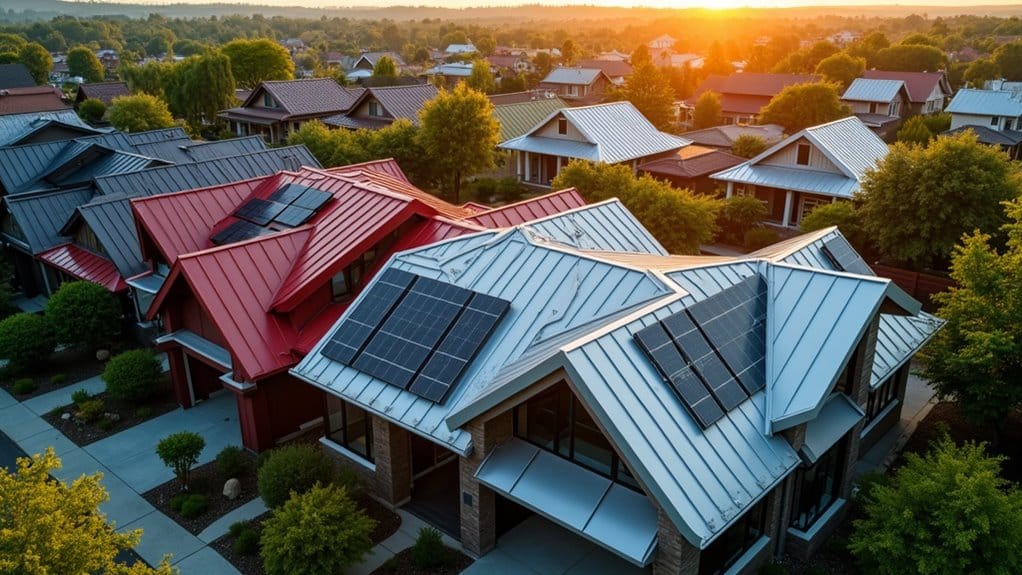
You may have noticed a growing trend in residential roofing choices, particularly the increasing popularity of metal roofing. This rise is largely due to its key benefits, such as durability, energy efficiency, and aesthetic appeal.
By 2025, the residential market for metal roofing in the UK is expected to grow significantly, with its overall share reaching around 18%. Homeowners are increasingly opting for materials that can withstand harsh weather conditions, making metal roofs a popular choice. Metal roofs can last 50+ years with proper installation and maintenance, offering exceptional weather resistance against hail, high winds, and heavy snow.
Metal roofs also provide an effective solution for reducing energy costs. Advances in design mean they can resemble traditional materials like slate or tile, enhancing the overall look of a property. Additionally, the demand for residential roofing is projected to grow through 2025, further supporting the trend towards metal roofing.
Furthermore, the demand for integrated solar roofing systems is on the rise, as more homeowners seek sustainable, energy-efficient options.
Although the initial investment for metal roofing may be higher, the long-term benefits often justify the cost. Raising awareness about these advantages is crucial for encouraging adoption. The longevity and low maintenance needs of metal roofs also contribute to their appeal.
As more homeowners invest in renovations, the popularity of metal roofing in the residential sector is likely to keep growing.
Climate-Resilient Roofing Designs
As climate change accelerates, homeowners in the UK are increasingly opting for climate-resilient roofing designs that enhance durability and energy efficiency.
These innovative roofs are crucial for coping with extreme weather while also benefiting the environment.
Here are three key elements of climate-resilient roofing:
- Wind-Resistant Systems: Products like GAF Timberline HDZ shingles, with their LayerLock Technology, are essential for regions prone to high winds, ensuring roofs can withstand severe storms.
- Green Roofs: Living roofs provide excellent insulation and manage stormwater runoff, supporting urban wildlife and reducing heat retention.
- Impact-Resistant Materials: Modern polymer and composite shingles offer excellent protection against hail and debris, extending the lifespan of roofs.
Energy-Efficient Roofing Options

When exploring energy-efficient roofing options, cool roof coatings can significantly reduce heat absorption, improving comfort and cutting energy bills.
Solar shingles not only generate power but also blend well with traditional styles.
Reflective asphalt shingles offer a practical way to lower energy consumption while still looking stylish.
Cool Roof Coatings
Cool roof coatings are an important step forward in energy-efficient roofing solutions, providing a viable way for homeowners and businesses to tackle rising energy expenses and environmental issues.
By reflecting sunlight and minimising heat absorption, these coatings offer several key benefits:
- Energy Savings: You could reduce air conditioning energy use by up to 25% and lower your monthly utility bills by as much as 40%.
- Urban Heat Mitigation: Cool roofs can help ease the urban heat island effect, absorbing 80% less heat compared to traditional roofing materials.
- Extended Roof Lifespan: Keeping your roof cooler can extend its lifespan, preventing premature wear and tear.
With various installation incentives such as rebates and credits available in many regions, investing in cool roof coatings becomes even more attractive.
These coatings not only boost your building’s energy efficiency but also significantly lower carbon emissions.
If you’re considering options for your home or business in 2025, cool roof coatings emerge as a sustainable choice that balances economic benefits with environmental responsibility.
Solar Shingle Integration
Solar shingle integration is a modern solution for energy-efficient roofing that combines traditional aesthetics with advanced technology.
These innovative materials function as both roofing shingles and solar panels, allowing homeowners to generate electricity without compromising the visual appeal of their homes. With recent advancements in solar technology, solar shingles are now more durable and efficient, making them an attractive option for those who prioritise sustainability.
The aesthetic advantage of solar shingles is notable; they blend in with your roof’s design, preserving the overall look of your home.
This versatility means they can be fitted on various roof styles without affecting the design integrity. Additionally, their installation process is similar to that of traditional shingles, ensuring minimal disruption to your roof’s waterproofing.
Reflective Asphalt Shingles
As homeowners increasingly prioritise energy efficiency in their roofing choices, reflective asphalt shingles have become an appealing option, especially alongside innovations like solar shingles.
These shingles offer notable reflective benefits, helping to lower cooling costs by reflecting a greater amount of the sun’s infrared radiation. This not only reduces energy consumption and greenhouse gas emissions but also prolongs the lifespan of the roof by minimising thermal stress.
Here are three key features to consider:
- Material and Coating: Various materials and coatings boost reflectivity, making these shingles more effective than traditional options.
- Durability Comparison: Reflective asphalt shingles tend to be more durable and long-lasting, offering a reliable roofing solution.
- Style Options: They come in a range of styles and colours, allowing them to blend seamlessly with different home aesthetics.
Beyond their energy efficiency, these shingles contribute to greener building standards and support efforts to reduce urban heat island effects.
When assessing roofing options, consider the long-term environmental impact and any potential tax incentives linked to these advanced materials.
Reflective asphalt shingles represent a smart choice for sustainable roofing.
Innovative Roofing Technologies
Innovative roofing technologies are changing how homeowners manage their roofs, offering advanced systems that boost performance and efficiency. With smart roof technologies, you can monitor real-time temperature, moisture levels, and structural integrity using integrated sensors. This proactive approach enables early leak detection, alerting you before significant damage occurs and potentially saving money on repairs.
Automated roof maintenance systems respond to changing weather, ensuring optimal performance year-round. Drones provide precise inspections, making maintenance safer and more efficient than traditional methods. When combined with IoT connectivity, these systems offer valuable insights into energy efficiency and roof lifespan.
Adaptive roofing systems go even further by adjusting shading and ventilation based on weather changes, maximising energy efficiency. These roofs use smart materials that change their properties in response to temperature or sunlight.
Real-time adjustments, facilitated by sensors and actuators, enhance comfort and efficiency while advanced ventilation manages heat and moisture effectively. By adopting these innovative technologies, you can significantly enhance your roof’s durability and performance, ensuring it stands the test of time.
Aesthetic Roofing Trends

In recent years, aesthetic roofing trends have gained popularity, reflecting homeowners’ wishes for both style and practicality.
These trends not only boost curb appeal but also support sustainability. Here are three key trends to consider:
1. Unique Shapes and Textures: Many homeowners are choosing unconventional roofing styles that feature textured finishes and architectural tiles, creating a more dynamic appearance.
Mixing materials can give your property a distinctive look and potentially increase its value.
2. Bold Colours and Material Variety****: Homeowners are now embracing bolder colours like deep blue and terracotta.
Metal roofing, with its wide range of vibrant finishes, is also on the rise.
Combining materials, such as asphalt tiles with metal, adds visual interest and personality.
3. Eco-Friendly Aesthetics: Living roofs are becoming increasingly popular, turning rooftops into green spaces.
Using recycled materials not only enhances durability but also promotes environmentally friendly designs that help reduce your carbon footprint.
Adopting these aesthetic roofing trends can significantly enhance your home’s value and sustainability, allowing you to achieve your design goals while being kind to the environment.
Frequently Asked Questions
How Do I Choose the Right Roofing Material for My Climate?
To select the right roofing material, focus on your local climate and the durability of the materials. Consider how various options perform against typical weather conditions in your area. For instance, slate tiles are excellent for wet climates due to their durability, while metal roofs are great for areas prone to high winds. Make sure your choice provides long-lasting protection and energy efficiency suited to your environment.
What Is the Average Lifespan of Different Roofing Materials?
When comparing roofing materials, here’s what you can expect in terms of lifespan: asphalt shingles typically last 15-30 years, metal roofs can endure for 50-100 years, wood shingles are good for 25-30 years, while slate or tile roofs also last 50-100 years. Each option significantly affects your home’s durability and environmental impact.
Are There Financing Options for Installing Solar Roofing Systems?
Yes, there are several financing options for solar roofing systems in the UK, such as Green Deal financing and local authority grants. These schemes can help you take advantage of solar incentives, making installation more affordable while boosting your property’s value and sustainability. For instance, a Green Deal loan allows you to pay for energy-saving improvements through your energy bills, making it easier to manage costs.
How Can I Maintain My Roof for Longevity?
Consider your roof as a vital barrier against the elements. Regular inspections, seasonal cleaning, and gutter maintenance are essential for its longevity. Ensure proper ventilation to prevent damp and mould. Applying roof coatings and weatherproofing techniques can also help. Don’t forget to prioritise emergency repairs to maintain performance and durability.
What Are the Insurance Implications of Installing a New Roof?
When installing a new roof, it’s essential to think about your insurance coverage and roofing warranties. A robust, new roof can potentially reduce your premiums. For instance, if you opt for energy-efficient materials, your insurer may offer discounts. Additionally, warranties protect against defects, which not only enhances your home’s value but also ensures long-term reliability. Always check with your insurance provider to understand how your new roof might affect your policy.
Conclusion
As you consider your roofing options for 2025, think about the choice between traditional shingles, which can be charming but often leak, and modern solutions like sustainable materials and solar panels. Why not transform your roof into an energy-efficient hub while enjoying a sleek metal finish? With climate change being a pressing issue, your roofing decision could be one of the most significant you make—perhaps only rivalled by choosing between a full English breakfast or a healthier smoothie.