

Choosing Between Roof Overlay and Complete Replacement for UK Homes
When deciding between a roof overlay and a complete replacement for your home in the UK, it’s essential to consider both cost and long-term durability. Roof overlays are generally 30–50% cheaper and quicker to install, but they can conceal underlying issues that may lead to problems down the line. On the other hand, a full roof replacement includes a thorough inspection, which helps improve energy efficiency and ensures a longer lifespan. The choice of materials also affects both performance and appearance. Take the time to weigh these factors, and you’ll make a more informed decision.
Key Takeaways
- Roof overlays can save you 30-50% compared to full replacements, providing immediate cost benefits.
- A complete tear-off allows for a detailed inspection of the roof structure, ensuring any hidden damage is properly addressed.
- Full replacements generally offer a longer lifespan and improved energy efficiency compared to overlays.
- The type of material you choose affects durability; for instance, asphalt shingles are budget-friendly, while slate and tile can elevate your home’s appearance.
- Overlays may require more frequent maintenance and tend to have shorter lifespans, making full replacements a more sustainable choice in the long run.
Cost Considerations: Overlay vs. Replacement
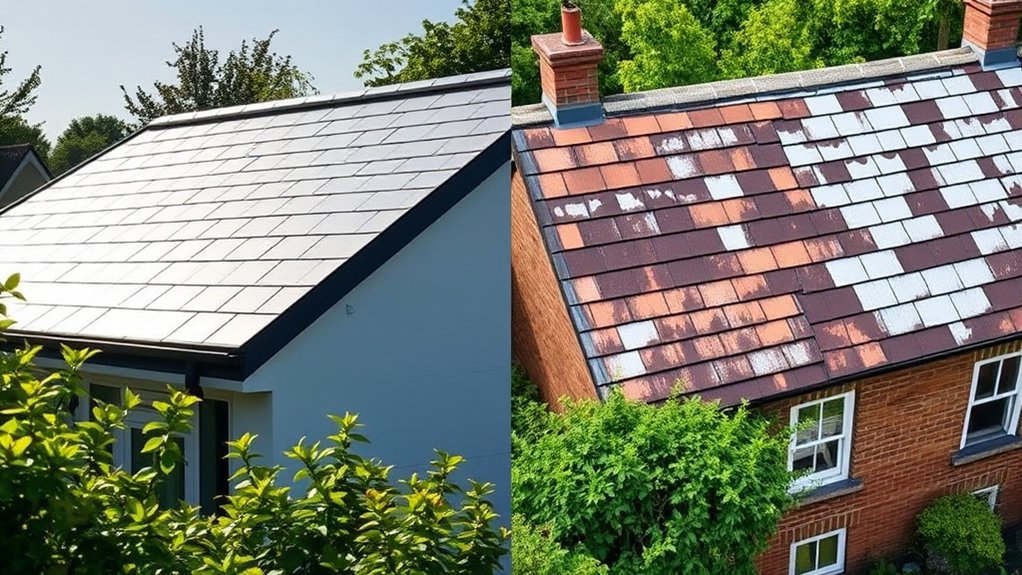
When choosing between a roof overlay and a full replacement, it’s important to consider the costs involved. Generally, overlays are 30–50% cheaper than full replacements since you can skip the removal fees, which can range from £1,000 to £2,500. However, while overlays may save you money upfront, they can hide underlying damage that could lead to expensive repairs down the line. Additionally, a complete removal allows for a comprehensive inspection of the underlying structure, which can prevent future issues. It’s also wise to think about long-term value; full replacements often last decades longer than overlays. Additionally, replacements typically come with better energy efficiency upgrades and warranty coverage. Regular inspections can help identify potential problems early, further safeguarding your investment.
Installation Process: Time and Efficiency
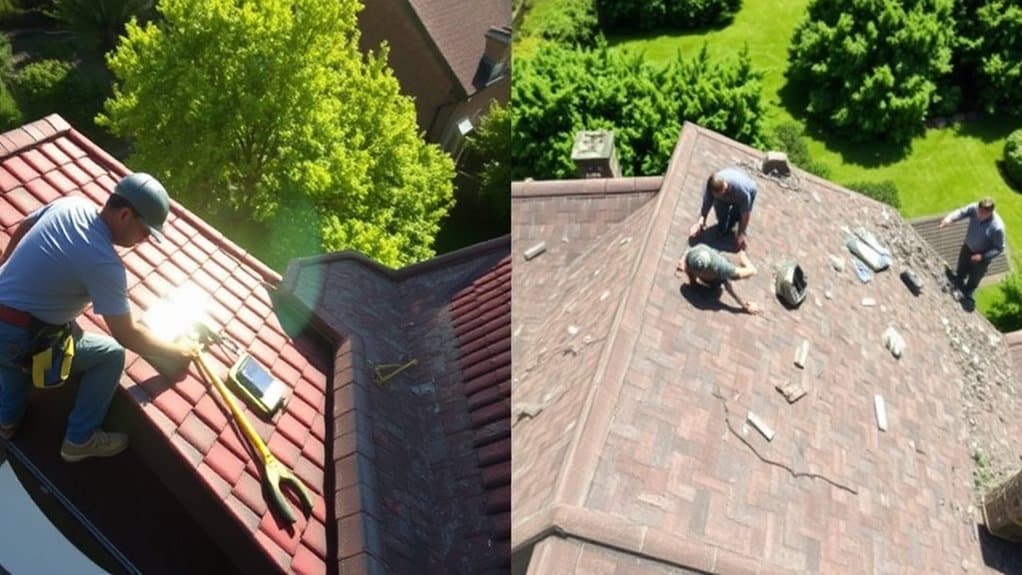
When deciding between a roof overlay and a full replacement, the choice significantly affects the installation process, especially in terms of time and efficiency. A complete tear-off generally takes 1 to 3 days, depending on how complicated it’s to remove the old materials. A roof tear-off allows for a thorough inspection of the roof deck for damage or decay, which can be crucial in preventing future issues. Additionally, regular inspections can help identify hidden problems that may arise during the installation.
On the other hand, overlays can be completed more quickly, which speeds up the installation. Labour efficiency differs as well; overlays skip the debris removal step, making the process simpler and faster. Although a larger team can expedite a tear-off, overlays usually need fewer workers due to their straightforward application. Plus, overlays are less risky in bad weather, as the existing roof offers immediate protection.
Understanding these factors can help you make informed decisions that fit your project’s timeline and efficiency needs.
Assessing Structural Integrity and Risks
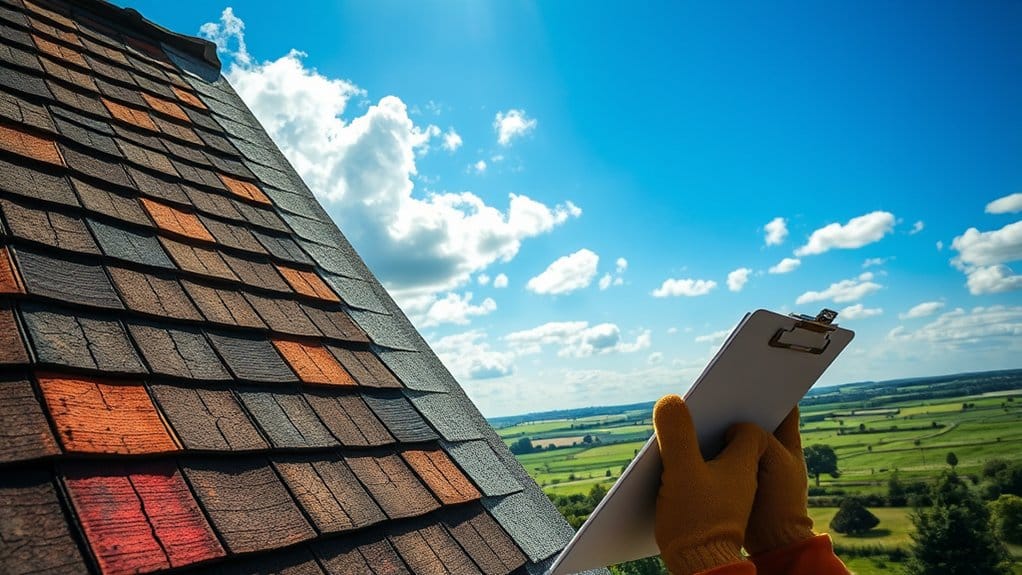
Before undertaking a roof overlay, it’s crucial to assess the structural integrity of your existing roof to prevent future issues.
Begin with a detailed inspection, looking for any leaks, sagging, or signs of standing water. These elements are vital for your risk evaluation. Ensure that the current roofing materials are compatible with the new layers and that the structure can handle the extra weight. Additionally, proper roof maintenance is essential to extend the lifespan of your roofing system. Regular inspections can help identify early detection of issues that may affect the overlay’s performance.
Ignoring existing damage can affect the overlay’s effectiveness and lifespan, which could also diminish your home’s aesthetic appeal and market value.
It’s advisable to consult roofing professionals for load calculations and to resolve any underlying problems prior to installation.
Additionally, establishing a regular maintenance schedule can help reduce potential risks, ensuring a safe and long-lasting roofing solution for your home.
Material Choices and Their Impact
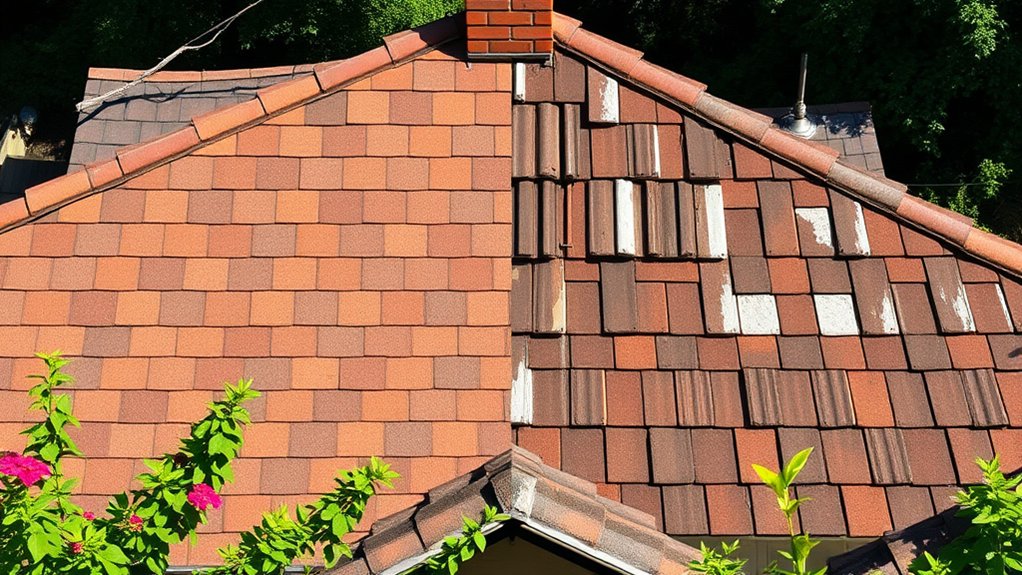
Once you’ve ensured your roof’s structural integrity, choosing the right materials is crucial for your roofing project.
The materials you select can significantly affect both durability and appearance. For example, asphalt shingles provide a good balance of cost and resilience, making them a popular choice. In contrast, slate or tile can enhance your home’s visual appeal but typically come with higher upfront costs and additional weight.
It’s also important to consider how materials perform in your local climate and their maintenance requirements. By opting for durable materials, you invest in your roof’s longevity, boosting your home’s value and curb appeal.
In the end, making informed choices leads to a roof that effectively protects your home.
Long-Term Outcomes and Environmental Effects
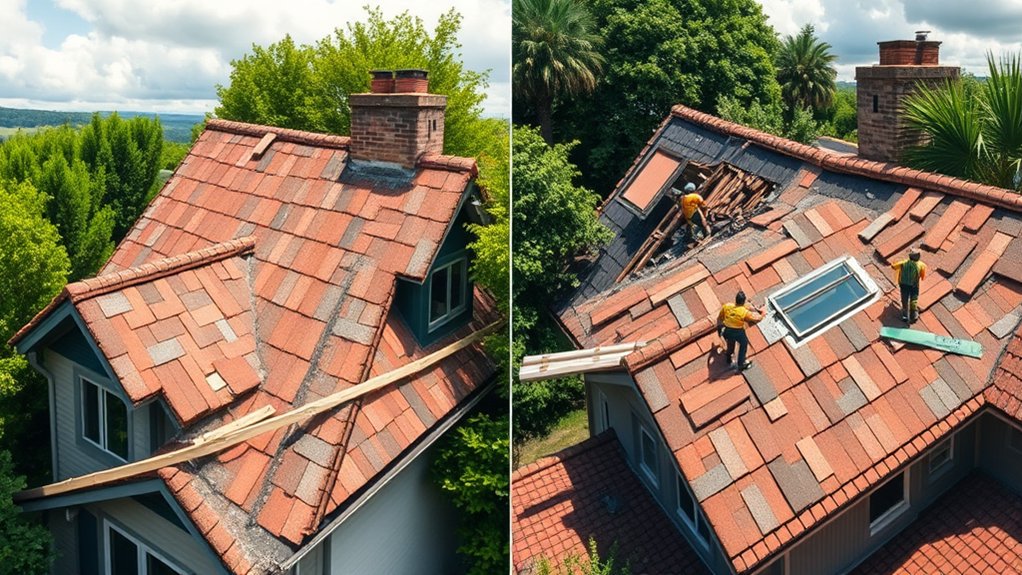
When considering a roof overlay or full replacement, it’s important to think about the long-term outcomes and environmental impact. Roof overlays may seem cheaper initially, but they often lead to shorter lifespans and require more frequent maintenance, which can affect durability over time. In contrast, a full roof replacement offers better durability and energy efficiency, though it comes with a higher upfront cost.
| Aspect | Roof Overlay | Full Replacement |
|---|---|---|
| Initial Cost | Lower | Higher |
| Long-Term Durability | Generally shorter | Typically longer |
| Maintenance Frequency | More inspections needed | Less frequent |
| Environmental Impact | Reduced waste | Higher waste |
| Energy Efficiency Savings | Quicker returns | Long-term savings |
Your decision can significantly affect your finances and the environment, highlighting the need for sustainable choices.
Frequently Asked Questions
Can I Choose Different Materials for an Overlay Compared to Full Replacement?
You can’t choose overlay materials as freely as you can for a full replacement. The existing condition of your roof and compatibility with current materials limit your options for overlays. In contrast, a full replacement lets you select from a wider range, including heavier and higher-quality materials that better meet your needs.
What Are the Potential Insurance Impacts of Selecting an Overlay?
Choosing an overlay can complicate your insurance coverage and claims. For instance, if there’s pre-existing damage, it might not be covered. Insurers could closely examine your documentation, which may affect whether claims are approved and how much you receive for any future damage. Always ensure you understand your policy and document everything thoroughly to avoid issues down the line.
How Do Weather Conditions Affect the Overlay Installation Process?
Did you know that more than 70% of roofing problems arise from poor weather resistance? Weather conditions can significantly affect your installation process. For example, extreme temperatures and moisture can impair adhesion, which may result in reduced durability and safety during the overlay installation. It’s essential to consider these factors to ensure a successful outcome.
Are There Specific Building Regulations for Overlays in My Area?
To ensure compliance, it’s essential to check local regulations concerning roofing standards. These rules outline requirements for thermal performance and structural integrity of overlays, helping to maintain energy efficiency and durability. For instance, adhering to these guidelines can prevent costly fines or the need for rework down the line.
How Can I Verify the Compatibility of Existing Materials for an Overlay?
To verify the suitability of an overlay, carry out a comprehensive assessment of the existing materials. Check for compatibility between your current materials and the new options, ensuring they bond effectively. For example, if you’re considering a new roofing material, ensure it can adhere well to the existing surface. It’s wise to consult professionals for their insights, as this will help ensure a durable and effective roofing solution that meets your requirements.
Conclusion
When considering roofing options, a quick overlay may appear to save costs, but it can hide serious underlying issues that may lead to costly repairs later on. While it might seem like a time-saver, opting for a full replacement can prevent more extensive problems down the line. Remember, a quick fix can often turn into a bigger headache. Make your choice carefully.


