

What Permits Are Required for Roofing Projects in the UK?
When carrying out roofing projects in the UK, the permits you’ll need can vary based on the nature of your work. For minor changes, you may be covered under Permitted Development Rights, which means you won’t need planning permission. However, if you’re making substantial alterations or working in a conservation area, you’ll likely need to obtain planning consent.
It’s also essential to comply with building regulations to ensure safety and meet insulation standards. Always check with your local authority to confirm what permits are required for your specific project. This way, you can avoid any potential issues down the line. Stay tuned for more tips on navigating the permit process and understanding timelines.
Key Takeaways
- Permitted Development Rights may allow certain roofing changes without needing planning permission, but this depends on the type of property and the extent of the modifications.
- If you’re planning significant extensions, especially in conservation areas or on listed buildings, you will need to secure Planning Permission.
- Compliance with building regulations is crucial. This ensures that your roofing project meets standards for insulation, structural integrity, and fire safety.
- It’s wise to check with your local council to see if you need to submit a building control application or obtain special permits, such as those for solar panels.
- Approval times for permits can vary; full plans might take up to five weeks, while smaller projects could be approved in as little as two days.
Understanding Permitted Development Rights for Roofing

When planning roofing changes, it’s important to grasp Permitted Development Rights, which allow certain modifications without formal planning permission. Under Class C of the General Permitted Development Order, you can make specific alterations like re-roofing or adding skylights. However, your property must meet certain conditions; it can’t be a flat or converted from a non-residential use. Additionally, these alterations are generally considered permitted development if they comply with the outlined limits and conditions.
There are also limitations to consider—alterations mustn’t project more than 150 mm from the existing roof slope or exceed the current roof height. If you’re installing side-facing windows, they must be obscure-glazed and positioned at least 1.7 metres above the floor.
Building Regulations: Key Considerations for Roofing Projects

When planning your roofing project, ensure you comply with insulation standards and structural integrity requirements as outlined by UK building regulations. Adhering to these standards boosts energy efficiency and guarantees the safety and longevity of your roof. Always check with your local council to ensure your plans align with these essential guidelines. For example, using appropriate insulation can significantly reduce heating costs, making your home more energy-efficient and comfortable. Additionally, repairs or re-covering of existing roofs typically do not require a building control application, provided certain conditions are met. It is essential to ensure that any materials used meet fire safety regulations to prevent potential hazards.
Insulation Standards Compliance
Ensuring compliance with insulation standards is crucial for roofing projects in the UK. Not only does it fulfil regulatory requirements, but it also boosts energy efficiency. Choosing the correct insulation materials and sticking to U-value specifications can significantly enhance a building’s thermal performance. Additionally, effective insulation can help minimize heat loss by up to 25%, further improving energy savings. Properly installed vapour barriers are essential to prevent moisture accumulation and protect the roof structure.
| Insulation Type | U-value Requirement |
|---|---|
| Cold-Pitched Roofs | 0.16 W/m²K |
| Warm-Pitched Roofs | 0.13 W/m²K |
| Cold Flat Roofs | 0.18 W/m²K |
| Warm Flat Roofs | 0.18 W/m²K |
Adhering to these standards helps control moisture and maintain structural integrity, protecting you from expensive reworks. By prioritising quality insulation, you contribute to sustainability and long-term savings, benefiting both your wallet and the community.
Structural Integrity Requirements
Meeting insulation standards is crucial for understanding the structural integrity requirements of roofing projects.
It’s essential to ensure your roof can support various loads, such as wind and snow, in accordance with the Building Regulations Approved Document A.
Conduct thorough compliance assessments to confirm your design meets load-bearing capacities and roof pitch requirements.
Choose robust materials that can endure the UK’s weather to enhance your roof’s strength.
Regular structural integrity tests are important to maintain compliance and detect any needed reinforcements.
Lastly, securing compliance certificates for major repairs or replacements demonstrates your commitment to safety and adherence to regulations, ensuring your roofing project benefits both the structure and the community.
Types of Permits Required for Roofing Projects

Understanding the permits needed for roofing projects is crucial for staying compliant with UK regulations.
For major renovations or structural changes, you’ll typically require Building Regulations Approval. If your project involves significant extensions, Planning Permission may be necessary.
In cases where you’re working in a conservation area or on a listed building, you must obtain Conservation Area Consent or Listed Building Consent.
If your project could impact protected species, such as bats, you’ll also need Environmental Permits.
Securing the correct permits ensures that you meet legal requirements and maintain roofing safety standards. Additionally, consultation with local authorities can help ensure that you respect historical integrity and compliance with building regulations.
Failing to do so can result in penalties or delays.
Being aware of these permits will help you manage your roofing project responsibly and legally.
The Permit Application Process Explained

Starting a roofing project involves navigating the permit application process, which can feel daunting.
However, by breaking it down into clear steps, it becomes much easier.
First, get in touch with your local authority’s building control body (BCB) or a private approved inspector to kick off the process.
Next, you’ll need to select the right type of application based on your project—options include full plans, building notices, or regularisation.
After that, gather the necessary documents, which usually include architectural plans, electrical layouts, and site plans.
You can submit your application either online or in person, but remember that some regions may require an in-person review.
Finally, be prepared for a review period where you may need to make revisions before receiving approval.
Keeping these steps in mind will help streamline your roofing project.
Costs Associated With Roofing Permits

Navigating the costs linked to roofing permits is a crucial part of any roofing project in the UK. Understanding these financial factors can help you budget more accurately.
Roofing permit fees typically range from £200 to £400, but keep in mind that local variations can influence your overall expenses.
- Unforeseen charges can disrupt your budget.
- Larger roofing projects often attract higher permit fees.
- Each area has distinct costs based on local council regulations.
- Using different roofing materials might lead to extra permit costs.
Being aware of these factors will help you manage your roofing project more effectively.
Roof Insulation Regulations and Requirements

Roof insulation regulations in the UK ensure energy efficiency and structural integrity, which are crucial for your roofing project.
To comply, your insulation materials must meet specific U-value standards: 0.18 W/m²K for pitched roofs and 0.35 W/m²K for flat roofs. For instance, if you’re aiming for a U-value of 0.15 W/m²K, you’ll need around 250-280 mm of EPS insulation.
Don’t forget about ventilation; a 50mm gap is necessary to prevent condensation, and proper vapour control layers are important for managing moisture.
Following these regulations not only boosts building performance but also ensures safety, protecting your investment and the well-being of the occupants.
Specialized Permits for Solar-Integrated Roofing
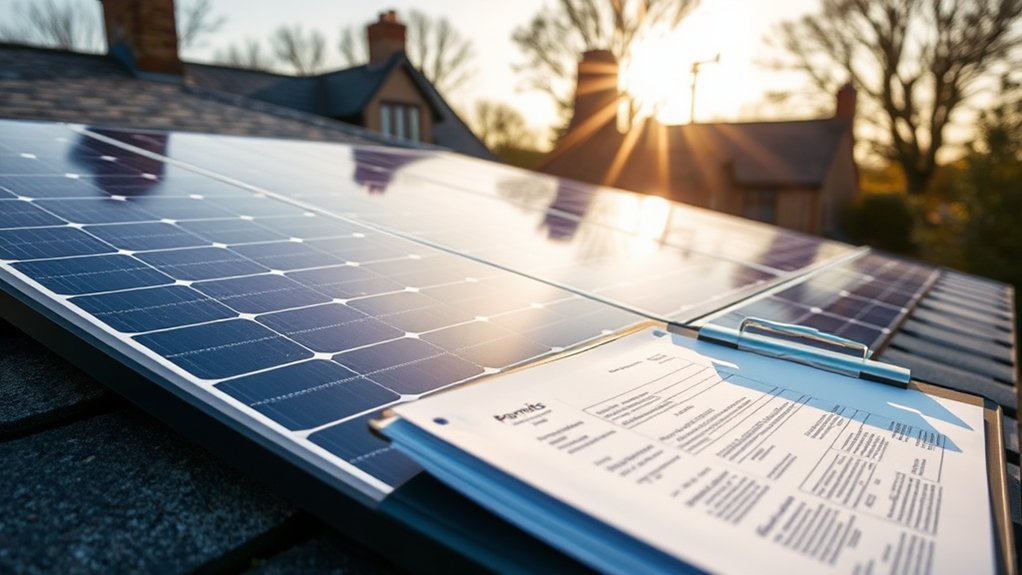
When considering solar panels for your roofing project, it’s vital to be aware of the specialised permits you may need.
If your property is a listed building or situated in a conservation area, expect stricter regulations.
Here are some straightforward points to keep in mind:
- Ensure the appearance of the solar panels meets heritage standards.
- Be prepared to tackle conservation issues that may influence how you install the panels.
- Check if you need planning permission, especially if your installation exceeds size limits.
- Follow building regulations to ensure safety and structural soundness.
Timelines for Obtaining Roofing Permits

When applying for roofing permits in the UK, timelines can vary significantly depending on the type of application and the efficiency of your local council.
For full plans, you might wait up to five weeks for a decision.
In contrast, smaller projects can often be approved in just two days.
Being aware of these timelines can help you plan your roofing project more effectively.
Application Processing Times
Understanding the processing times for roofing permits in the UK is crucial for anyone planning a project. Typically, applications take several weeks, with full plans often approved within five weeks.
However, more complex projects may experience delays due to various factors. To ensure a smooth experience, keep these points in mind:
- Timely approvals reduce stress for you and your team.
- There are expedited options that can significantly shorten your wait.
- Maintaining clear communication with authorities is key for efficiency.
- Having all necessary documentation ready can help avoid unnecessary delays.
Local Authority Variability
Local authorities in the UK significantly influence the timelines for obtaining roofing permits, and these can vary widely between areas.
Different local councils may interpret national regulations in their own ways, which can lead to additional requirements that delay your project.
It’s crucial to familiarise yourself with local building codes, as compliance is essential for your roofing work.
Additionally, restrictions such as conservation policies or historical designations can also affect how long it takes to get a permit.
To navigate these complexities, always consult your local authority for guidance specific to your roofing project.
This proactive approach helps ensure you stay informed and compliant throughout the process.
Permit Expiry Considerations
When obtaining roofing permits, it’s crucial to pay attention to timelines, particularly regarding permit validity and completion requirements.
In the UK, building regulations approval doesn’t expire, but the work must be completed within certain timeframes.
- Delays can lead to increased costs.
- Ensuring your project is compliant and safe is essential.
- Renewing permits can complicate your plans.
- Staying updated on compliance is key for peace of mind.
Remember, you need to obtain completion certificates within eight weeks of finishing the work.
If you face non-compliance issues, the regularisation process can be lengthy.
Staying on top of local regulations will help you manage these timelines effectively and ensure your project proceeds without a hitch.
Frequently Asked Questions
Do I Need a Permit for Minor Roof Repairs?
For minor roof repairs, you generally won’t need a permit due to exemptions. For instance, if you’re patching a leak or replacing a few tiles, this usually falls under routine maintenance and avoids regulatory requirements. However, it’s always wise to check your local council’s guidelines.
Can I Apply for a Permit Online?
“Don’t delay what you can do now.” You can apply for your permit online, making the process quicker and easier. Many local councils offer user-friendly portals, so submitting your application is efficient and hassle-free.
What Happens if I Work Without a Permit?
If you work without a permit, you could face significant consequences, including legal issues. Local authorities may require you to correct the situation, impose fines, or even jeopardise your insurance. This could affect your property’s value and future transactions. For instance, if you’re carrying out renovations without the necessary permits, you might have to undo the work and pay hefty fines, which can be both costly and time-consuming. It’s always best to ensure you have the proper permits before starting any work.
How Long Is a Roofing Permit Valid?
The duration of a roofing permit depends on local regulations in the UK. Generally, planning permissions last for three years, while building permits are valid for one to two years. It’s essential to check your local roofing regulations to ensure compliance and to complete your project on time.
Can I Appeal a Denied Roofing Permit Application?
If your roofing permit application has been denied, don’t worry—you can appeal the decision. Start by collecting your evidence and identifying any mistakes in the original assessment. Make sure to submit your appeal within 28 days to give yourself the best chance of success. Remember, persistence can help you achieve your roofing goals.
Conclusion
In conclusion, navigating roofing permits in the UK may seem complicated, but it’s crucial for a successful project. Understanding permitted development rights and building regulations will help you stay compliant and prevent costly errors. Remember to consider timelines and costs, especially if you’re looking into solar options. Before you start hammering away, ensure you have everything in order to keep your roofing project on track!


