

Roof Insulation Compliance: Meeting Part L Requirements
To ensure your roof insulation meets Part L requirements, aim for the specified U-values. For new builds, a U-value of 0.13 W/m²K or lower is necessary, which typically requires around 270 mm of insulation thickness. Consider using high-performance materials such as rigid foam boards or mineral wool. It’s also essential to ensure proper ventilation to control moisture. Keep thorough documentation, including signed BREL reports, to verify compliance. For more tips on implementing these standards and boosting energy efficiency, keep reading.
Key Takeaways
- Ensure roof U-values are 0.13 W/m²K or lower to comply with energy efficiency standards.
- Opt for high-performance insulation materials, like rigid foam boards or mineral wool, to achieve the required thermal performance.
- For new builds, install at least 270 mm of mineral wool insulation to meet Part L guidelines.
- In cold lofts, ensure proper ventilation with a minimum free area of 25,000 mm² per square metre to control moisture levels.
- Keep clear photographic records and signed as-built BREL reports to confirm compliance with regulations.
Understanding Part L and Its Objectives

Understanding Part L and its objectives is crucial for anyone involved in building design and construction in the UK. It sets important standards for energy efficiency and carbon emissions, focusing on fuel and power conservation for new homes and renovations.
Part L aims for a minimum 31% carbon reduction in new dwellings and 27% for non-domestic buildings. To meet these targets, designers must improve insulation and airtightness. For instance, using high-quality insulation materials can significantly cut energy loss. Furthermore, compliance with Part L became mandatory on June 15, 2022, emphasizing the urgency for adherence in current projects. Additionally, effective roof insulation can reduce heating and cooling costs by up to 15%, contributing to the overall energy efficiency goals outlined in Part L.
Additionally, Part L promotes the use of renewable energy, requiring that at least 10% of energy consumption comes from renewable sources where possible.
Complying with these standards not only helps reduce carbon emissions but also aligns your projects with the UK government’s goal of achieving net zero by 2050. This makes Part L a vital consideration in today’s building industry.
Importance of U-Values in Roof Insulation

Roof insulation is essential for meeting the energy efficiency targets set out in Part L of the Building Regulations, particularly through U-values.
U-values measure how quickly heat escapes, affecting both energy use and comfort levels in buildings. A calculation of U-values can help assess how effective your insulation materials are—lower U-values mean better insulation performance. U-values are crucial for energy efficiency in buildings, ensuring that designs meet modern standards. Achieving compliance with the latest regulations not only cuts carbon emissions but also helps lower energy bills, which supports wider sustainability efforts.
It’s important to consider thermal bridging in your design, as this can significantly reduce the effectiveness of your insulation. Achieving U-value targets not only cuts carbon emissions but also helps lower energy bills, which supports wider sustainability efforts.
Specific U-Value Requirements for New Builds

How do specific U-value requirements for new builds influence energy-efficient architecture? These targets drive better thermal performance and significant carbon reductions.
To comply with Part L 2025, focus on:
- U-value Standards: Strive for roof U-values of 0.13 W/m²K or lower to meet strict regulations.
- Insulation Materials: Use high-performance options like rigid foam boards or mineral wool to achieve the required U-values. Compliance with U-values is essential for new and existing dwellings. Additionally, incorporating high R-value insulation can further enhance energy savings and comfort.
- Airtightness Measures: Install vapour control layers and continuous insulation to eliminate thermal bridging and boost energy efficiency.
Roof Insulation Thickness Guidelines

To ensure your roof meets energy efficiency regulations, proper insulation thickness is essential.
For new builds, a minimum of 270 mm of mineral wool insulation is required to achieve the 0.16 W/m²K U-value target. Retrofit roofs should also aim for similar thickness to comply with Part L standards.
If you’re converting a loft into a living space, aim for at least 300 mm of insulation.
For warm pitched roofs, you can use PIR insulation, which only needs 125 to 150 mm. Flat roofs typically require around 150 mm of PIR boards for effective thermal performance.
Don’t forget to consider thermal bridging when choosing insulation materials, as this can affect overall efficiency. Adjustments may be necessary based on structural limitations and the current conditions of your roof.
Ventilation Needs for Cold Loft Roofs

To ensure optimal performance in cold lofts, proper airflow is crucial for managing moisture.
Implementing effective ventilation strategies helps prevent condensation and moisture accumulation, which can lead to structural problems.
For instance, fitting vents at the eaves and ridge can promote good air circulation.
Importance of Airflow
Effective airflow is crucial for preserving the integrity of cold loft roofs and avoiding moisture problems. Understanding how airflow works and implementing proper ventilation is essential.
Here are some key points to ensure adequate airflow:
- Ventilation Area: Ensure a minimum free area of 25,000 mm² for every square metre of roof to allow sufficient airflow.
- Crossflow Design: Use eaves and ridge ventilation to encourage continuous air circulation, which helps prevent stagnant air.
- Air Gap Maintenance: Keep a 50mm air gap between insulation and the roof covering to meet ventilation requirements.
Moisture Control Strategies
Ensuring proper insulation in cold loft roofs is crucial, but effective moisture control is just as important to prevent structural damage and mould growth.
Following BS 5250 guidelines, adequate ventilation should be provided based on the roof pitch and span. For pitches of 10–15°, a continuous 25mm vent at the eaves is recommended, while steeper roofs need 10mm ventilation.
It’s vital to achieve a minimum of 25,000 mm² of ventilation per square metre to manage moisture and prevent condensation.
Use dry-fix systems and maintain a 50mm air gap between insulation and the roof covering for proper airflow.
Crossflow ventilation at both eaves and ridge is essential to remove moisture buildup, protecting the integrity and longevity of your roof.
Triggers for Renovation and Thermal Upgrades
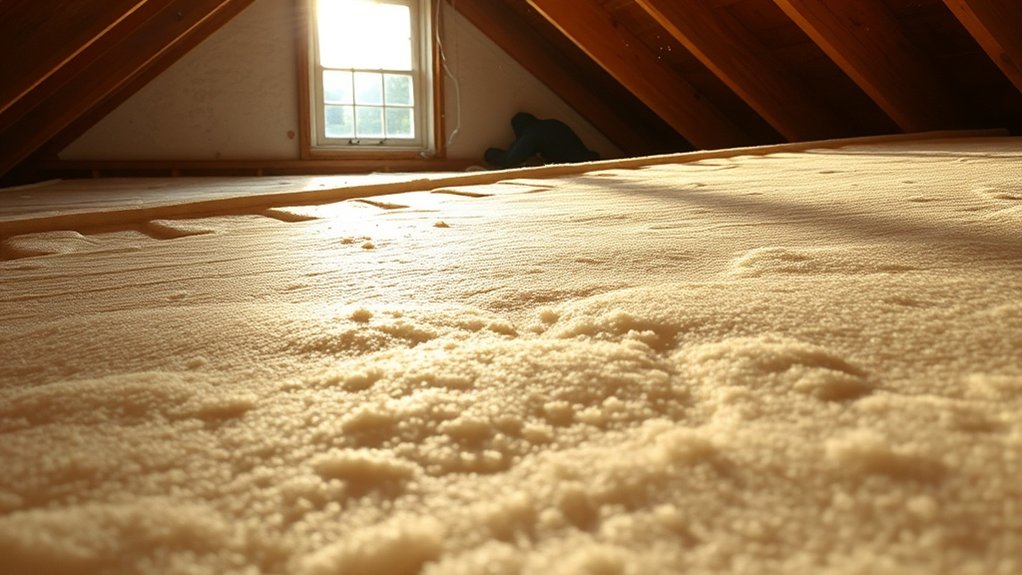
When planning renovation projects, it’s crucial to be aware of regulatory triggers that require compliance with thermal upgrade standards, particularly under Part L1B.
Here are the main triggers to keep in mind:
- Replacing or significantly modifying thermal elements such as roofs, walls, or floors means you must follow Part L1B standards.
- Extensions or improvements that change energy performance or increase the building’s exposure to the elements need to be compliant as well.
- Refurbishments that affect heat loss must meet specific energy performance criteria to ensure a reduction in carbon emissions.
These triggers necessitate thermal upgrades, helping you meet regulatory demands while boosting energy efficiency.
Staying updated on these standards is vital to avoid legal issues and enhance your building’s performance.
Selecting Materials for Optimal Thermal Resistance

Meeting thermal upgrade standards is just the first step towards energy efficiency in renovation projects. Choosing the right materials is crucial for effective insulation and overall performance.
Polyisocyanurate (PIR) insulation is highly regarded for its impressive R-values, offering excellent thermal resistance for various roofing applications. On the other hand, closed-cell spray foam insulation is excellent for air sealing and moisture resistance, making it a great choice for challenging conditions.
Rigid foam insulation, such as XPS and EPS, provides durability and continuous coverage against thermal bridging. If you’re in a warmer climate, consider using reflective foil insulation, which effectively blocks radiant heat.
Loose fill insulation can adapt to awkward spaces, but be aware that it may need extra moisture control.
The Role of R-Value in Insulation Performance

Understanding R-value is crucial for assessing insulation performance as it measures a material’s ability to resist heat flow.
When choosing insulation materials, you’ll find that different types have varying R-values, which can impact energy efficiency and comfort in your home.
For instance, a higher R-value means better thermal resistance, leading to lower energy bills and a more comfortable living environment.
Selecting the right insulation with an appropriate R-value can significantly improve your roof’s energy efficiency and overall savings.
Importance of R-Value
R-Value is a crucial measure of insulation performance, indicating how well a material resists heat flow. Understanding R-value is vital for achieving energy efficiency and comfort in buildings.
Here’s why R-value is important:
- Thermal Resistance: A higher R-value means better insulation against heat transfer, helping to maintain stable indoor temperatures.
- Energy Savings: Insulation with a high R-value reduces the need for heating and cooling, which can lead to lower energy bills.
- Climate Suitability: Comparing R-values allows you to choose the right insulation for your local climate, ensuring you meet regulatory standards like Part L.
Material Selection Impact
Choosing the right insulation material is crucial for improving R-value and energy efficiency in your building. Different insulation types perform differently, affecting both thermal resistance and longevity.
For example, while fiberglass may lose R-value in colder temperatures, spray foam can actually enhance its effectiveness. Moisture retention in materials like cellulose can lead to mould and decreased performance, emphasising the need for proper installation to prevent air leaks and compression.
It’s important to strike a balance between density and thickness; higher density often results in better R-value, but heavier materials can complicate installation.
Ultimately, selecting insulation carefully—taking into account local climate and potential ageing effects—ensures optimal R-value and supports sustainable energy efficiency in your home or building.
Compliance Verification Processes

When navigating the compliance verification processes for roof insulation, it’s essential to ensure adherence to Part L building regulations.
Here are some key verification methods to consider:
- Photographic Evidence: Take clear, high-quality photos of insulation and building elements before they’re covered. Each image should include geo-location data and timestamps for verification purposes.
- Documentation Submission: Submit a Buildings Regulations England Part L (BREL) report, signed as-built, to confirm that the design meets compliance requirements before construction begins.
- Collaboration: Work closely with all stakeholders, including contractors and architects, to ensure effective evidence collection and compliance with regulatory standards.
Staying Updated With Part L Regulations

To ensure compliance with the latest Part L regulations, it’s crucial to stay informed about recent updates and documentation requirements.
The upcoming 2025 changes will require notable improvements in energy performance, which means you’ll need to maintain thorough compliance records and verification processes.
Regularly reviewing these updates will help ensure your projects meet the latest standards for insulation and energy efficiency.
For instance, if you’re working on new builds, consider how the materials you choose can enhance energy performance.
Staying proactive now will save you time and hassle down the line.
Recent Regulatory Changes
Navigating the complexities of building regulations is crucial for anyone in construction and development, particularly with the recent changes to Part L.
These updates significantly impact compliance and require careful attention. Here are the key changes:
- Alignment with Future Homes Standard (FHS) 2025: This aims for a 75-80% reduction in carbon emissions for new homes, which is a substantial shift towards sustainability.
- Increased Energy Efficiency: Stricter requirements for thermal insulation and airtightness are in place, enhancing overall building performance.
- Regulatory Framework Updates: There’s a stronger emphasis on verified performance outcomes and proper documentation to ensure compliance.
Compliance Documentation Updates
Understanding the recent regulatory changes to Part L highlights the need for updates to compliance documentation. To effectively address compliance challenges, it’s essential to have strong documentation strategies in place. High-quality digital photographic evidence is crucial; each image must be clear, geo-located, and timestamped.
Here’s a summary of the key documentation requirements:
| Requirement | Description | Importance |
|---|---|---|
| Photographic Evidence | Clear, close-up, geo-located, timestamped photos | Confirms compliance stages |
| Compliance Reports | SAP and BREL submissions | Validates energy efficiency |
| Material Usage Records | Detailed installation logs | Supports energy performance claims |
| Certification Evidence | Proof of carbon emissions reduction | Essential for building approval |
| Real-time Documentation | Ongoing updates during construction | Ensures audit readiness |
Stay alert to these updates to ensure smooth project execution.
Frequently Asked Questions
How Do Insulation Upgrades Affect Property Value?
Insulation upgrades can boost your property’s value by enhancing energy efficiency, which is a key factor in property appraisals. Buyers often look for homes with effective insulation, making these properties more attractive. This can lead to quicker sales and potentially higher offers, ultimately increasing your home’s market value. For instance, a well-insulated loft or walls can significantly lower energy bills, appealing to cost-conscious buyers.
Can I Use Alternative Materials for Roof Insulation?
Yes, you can use alternative insulation materials such as sheep’s wool or hemp. These eco-friendly options meet thermal efficiency standards and help reduce your building’s carbon footprint, contributing to a healthier environment. For instance, sheep’s wool not only insulates well but also absorbs moisture, making it a practical choice for British homes.
What Fines Exist for Non-Compliance With Part L?
Non-compliance with Part L can result in considerable fines, legal penalties, and even prosecution. It’s crucial to grasp these consequences to avoid expensive outcomes, such as financial penalties, project delays, and damage to your reputation in the construction industry. For example, failing to meet energy efficiency standards could lead to fines that significantly impact your budget and schedule.
Are There Exceptions for Listed Buildings Regarding Insulation?
Yes, there are exceptions for listed buildings when it comes to insulation standards. If adding insulation would significantly change the building’s character, you might not need to comply with standard regulations. For example, if installing modern insulation could damage original features or alter the façade, you could be exempt. However, it’s crucial to obtain the necessary permissions before carrying out any insulation work. Always check with your local planning authority to ensure you’re following the correct procedures.
How Often Are Part L Regulations Updated?
Part L regulations are typically updated every ten years, but there are interim updates to tackle pressing issues. Expect annual reviews to keep you informed about changes in energy efficiency and carbon reduction standards. For instance, if you’re planning a new build or renovation, staying on top of these changes is crucial for compliance and sustainability.
Conclusion
In summary, ensuring your roof insulation complies with Part L requirements is essential for energy efficiency. Just as a well-tuned instrument performs better, using the correct U-values, thickness, and materials will enhance comfort in your building. Stay informed about compliance to not only meet regulations but also support a sustainable future. Proper insulation has a significant and lasting impact.


