
Metal Roof Insulation: Combating Heat Loss in British Winters
Insulating your metal roof is crucial for reducing heat loss during the cold British winters. Good insulation boosts energy efficiency and comfort, lowers heating bills, and helps prevent moisture problems. Options like spray foam, rigid foam boards, and fibreglass batts each have their own benefits. Proper insulation maintains steady indoor temperatures, which can enhance the overall value and lifespan of your home. Choosing the right type of insulation for your needs can lead to significant advantages.
Key Takeaways
- Proper insulation dramatically cuts down heat loss, boosting energy efficiency and comfort during chilly British winters.
- High-performance materials, such as spray foam and rigid foam boards, create effective thermal barriers.
- Insulated roofs can reduce heating bills by 15-25%, making homes more cost-effective.
- Regular inspections and maintenance help prevent moisture problems, extending the lifespan of metal roofs.
- Optimising roof design and slope is essential for managing snow effectively, easing structural strain.
Importance of Metal Roof Insulation in British Winters
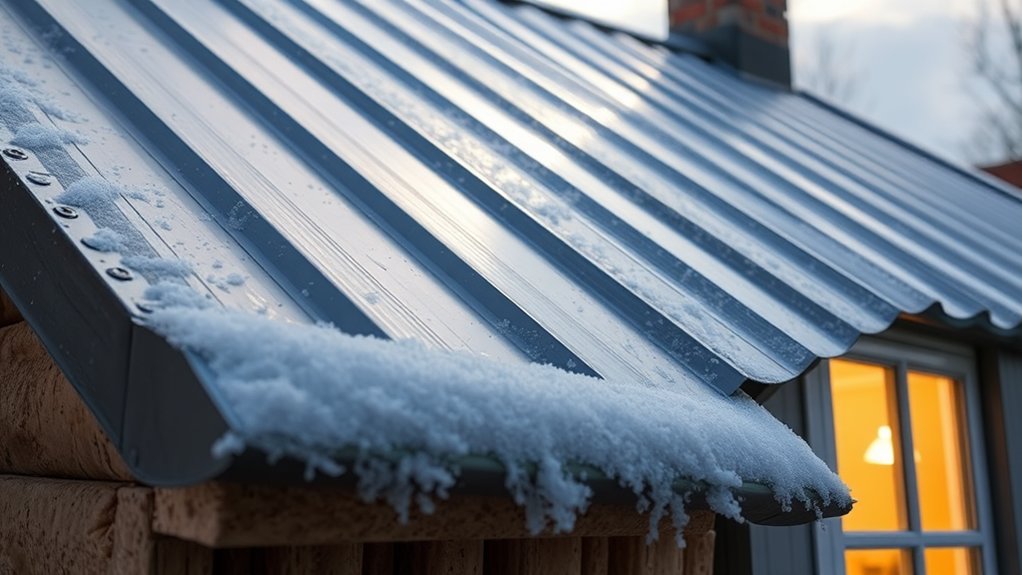
As winter sets in across Britain, having proper insulation for metal roofs becomes crucial for homeowners looking to enhance energy efficiency and comfort. Insulated metal roofs significantly cut down heat loss, helping to keep your home warmer and more comfortable during the cold months. By providing a thermal barrier, good insulation reduces our dependence on heating systems, which can lead to considerable energy savings and lower heating bills. Moreover, metal roofs are excellent at retaining heat compared to traditional roofing materials. Their reflective properties help melt snow quickly, minimising ice build-up. This combination of insulation and durability not only creates a stable indoor environment but also helps prevent moisture-related problems(4. Reduced Winter Maintenance). Additionally, proper ventilation(3. Popular Energy-Efficient Roofing Options) is essential to enhance air quality and prolong the lifespan of your roof. Ultimately, investing in metal roof insulation is a smart move for protecting your home and managing costs, especially with energy prices on the rise.
Types of Insulation for Metal Roofs
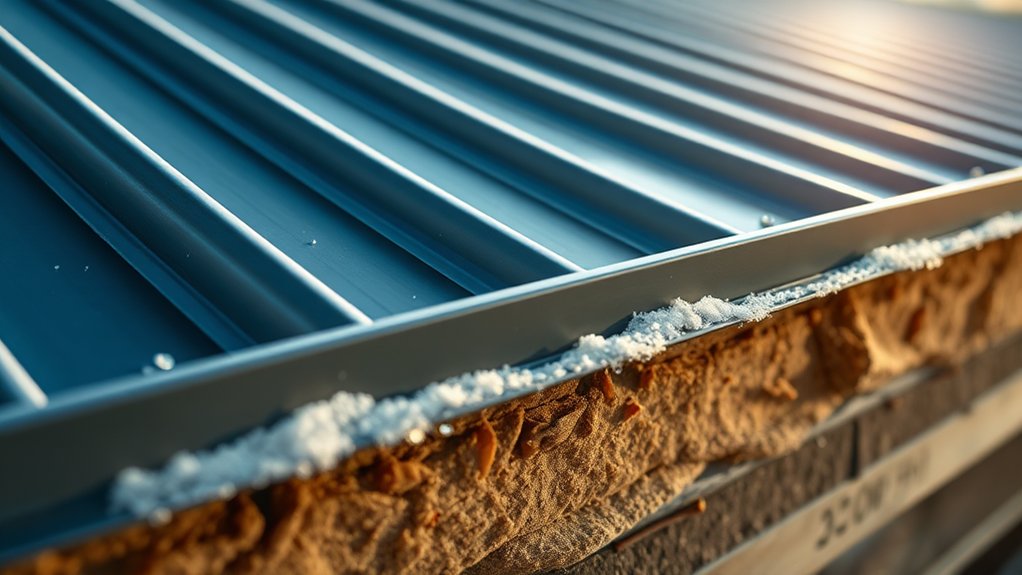
When choosing insulation for metal roofs, it’s crucial to know the different types available to enhance energy efficiency and comfort.
Spray foam insulation expands to fill gaps, creating a strong air and vapour barrier with impressive R-values. This type of insulation is particularly effective in colder climates where higher R-values are necessary for optimal performance, as adequate thermal resistance ensures minimal heat loss during harsh winters.
Rigid foam board insulation, made from materials like polyisocyanurate, is highly durable and moisture-resistant, making it perfect for maintaining indoor temperatures.
Fibreglass batts are a budget-friendly and straightforward option to install, but they don’t hold up as well against moisture compared to other materials.
Reflective barriers are effective at reflecting radiant heat, which helps keep your space cool in summer while retaining warmth in winter.
Lastly, mineral wool insulation offers excellent thermal and acoustic performance and meets safety standards.
Selecting the right insulation depends on your specific requirements and the conditions of your building.
Metal Roofing Myths and Realities in Winter
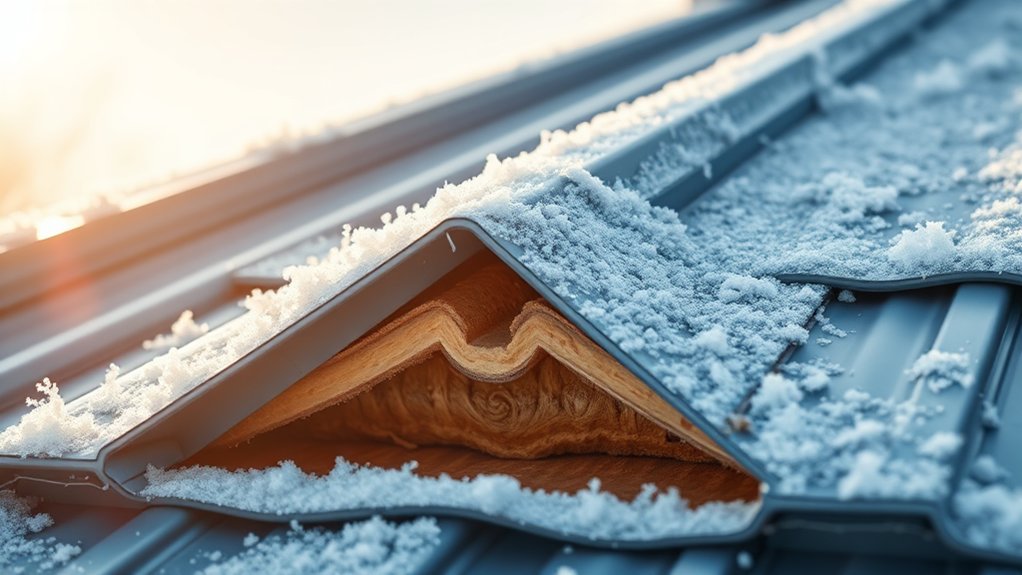
Understanding the myths surrounding metal roofing in winter is crucial for homeowners and builders. Contrary to popular belief, metal roofs can perform well thermally when properly insulated. While bare metal does transmit cold, modern installations often involve insulation layers that significantly improve energy efficiency, helping to lower heating bills. Furthermore, metal roofs provide increased protection against unexpected weather in the UK, ensuring homeowners are better prepared for harsh winter conditions. Snow accumulation isn’t a major issue, as the smooth surface of metal allows for quick runoff, reducing the risk of structural loads. Additionally, ice dams, often caused by temperature fluctuations, are less likely with insulated designs that maintain consistent roof temperatures. Concerns about noise are also addressed with quality insulation, ensuring a comfortable indoor environment. The use of energy-efficient materials in metal roofing can further enhance thermal performance during cold months.
Design Considerations for Metal Roofs in Winter
When designing metal roofs for winter conditions, optimising the slope is essential for effective snow and ice management.
It’s important to assess the structural integrity to ensure the roof can handle the additional weight from snow accumulation.
Both slope and strength are vital in determining how well the roof performs during harsh winter weather.
For instance, a roof with a steeper slope allows snow to slide off more easily, reducing the risk of excessive build-up and potential damage.
Slope Optimization Techniques
To manage snow accumulation on metal roofs during winter effectively, optimising slope design is crucial.
Use slope assessment techniques to determine the best pitch for your local climate. In areas that experience heavy snowfall, steeper slopes are essential as they encourage the natural sliding of snow, which helps reduce structural strain.
Choosing the right roof shape, such as gable or hip designs, can also minimise snow accumulation. Additionally, consider retrofit options that can enhance slope without disrupting operations.
Structural Integrity Assessments
Assessing the structural integrity of metal roofs during winter requires careful consideration of several design factors that influence performance under snow loads.
Here are the key points to keep in mind:
- Material Selection: Opt for corrosion-resistant metals such as aluminium and coated steel to ensure long-lasting durability.
- Load Testing: Follow ASTM E1592 standards to ensure roofs can handle snow and wind pressures effectively.
- Thermal Management: Tackle thermal bridging to improve insulation and reduce heat loss, which can lead to ice build-up.
- Moisture Control: Implement robust moisture management techniques to prevent corrosion and maintain the integrity of fasteners.
Benefits of Insulating Metal Roofs in British Winters
Insulating metal roofs during British winters boosts energy efficiency and enhances comfort. It significantly reduces heat loss, helping to keep warm air inside and lowering heating bills.
By maintaining consistent indoor temperatures, insulation eliminates cold spots and drafts, creating a more comfortable environment and reducing the need for portable heaters.
Moreover, insulation protects your home’s structure by preventing condensation, which can lead to costly maintenance issues in harsh weather. Improved thermal regulation also lessens the strain on your heating system, potentially extending its lifespan.
In short, proper insulation not only enhances your living space but also helps to protect your investment over time.
Challenges and Solutions for Insulating Metal Roofs
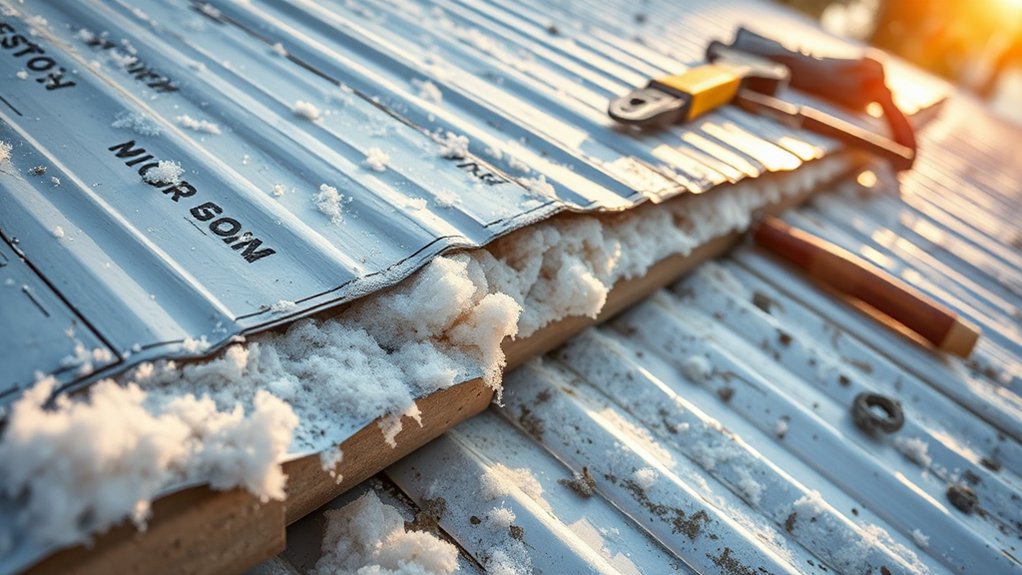
When insulating metal roofs, you encounter key challenges such as the risk of leaks and budget limitations.
It’s crucial to employ effective strategies to prevent leaks, ensuring your investment is protected and energy efficiency is maintained.
Additionally, conducting a thorough cost-effectiveness analysis will help you choose the most suitable materials and methods while adhering to your budget.
Leakage Prevention Strategies
To effectively prevent leaks in metal roofs, it’s crucial to implement strong insulation and ventilation strategies.
Here are some essential methods to ensure your roof stays watertight and energy-efficient:
- Rigid Foam Insulation: Install foam boards beneath metal roofs to reduce moisture and heat loss.
- Proper Ventilation: Ensure adequate airflow to minimise moisture accumulation, which can lead to leaks.
- Sealant Tapes: Apply high-quality tapes to seal any gaps, ensuring an airtight fit.
- Regular Inspections: Arrange for professional assessments to detect leaks and upgrade insulation as needed.
By proactively addressing these areas, you can tackle common issues like seam separation and moisture build-up, ultimately enhancing the lifespan and effectiveness of your metal roof.
Prioritising these strategies will benefit both your property and its occupants.
Cost-Effectiveness Analysis
Effective insulation is key to the cost-effectiveness of metal roofs. A detailed cost analysis shows that while initial material costs can vary—ranging from £10 per m² for fibreglass to £70 for spray foam—the long-term advantages often justify these expenses.
High-performance insulation materials, such as PIR boards, significantly improve insulation, leading to lower energy bills over time. Choosing suitable materials and hiring skilled professionals can also help reduce installation complexities and costs.
Although initial outlays may seem high, the durability and energy efficiency of well-insulated metal roofs can lead to considerable savings, making them a smart choice for sustainable home improvement.
Cost Savings From Effective Insulation
Investing in proper insulation for metal roofs can lead to significant savings on energy bills by improving heat retention and reflection.
Here are some key benefits:
- Reduced energy bills: You could save 15-25% on heating costs thanks to better energy efficiency.
- Lower strain on heating systems: With less demand for heating, your systems will last longer, reducing maintenance expenses.
- Increased property value: Insulated metal roofs are appealing to buyers, which could enhance your property’s resale value.
- Insurance discounts: Many insurers offer lower premiums for durable metal roofing, adding to your overall savings.
Selecting the right insulation materials maximises these benefits, ensuring long-term financial gains and meeting your home’s energy needs effectively.
Selecting the Right Insulation Material for Your Metal Roof
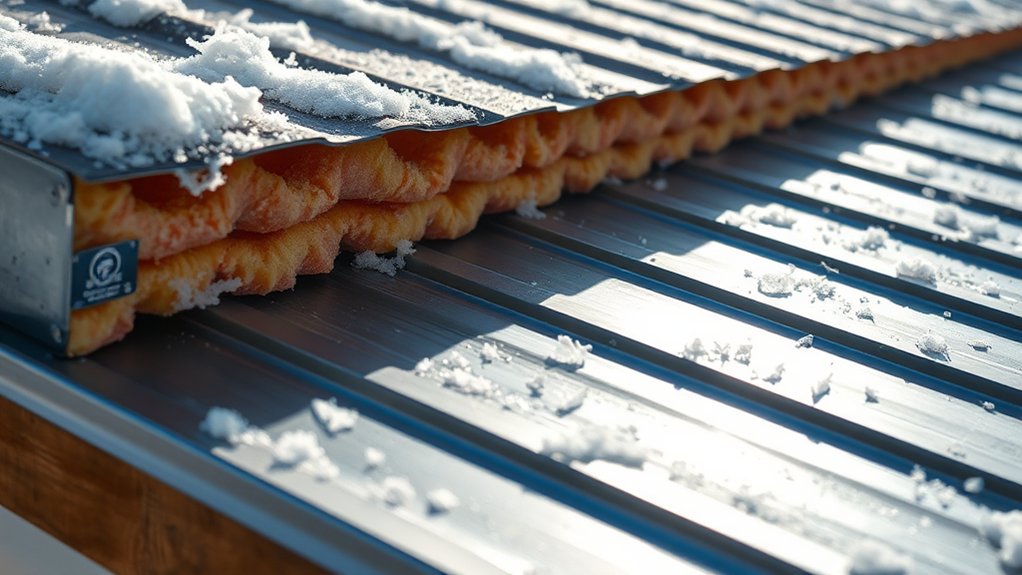
When choosing insulation for your metal roof, it’s crucial to consider your building’s specific requirements and the properties of different materials.
You’ll come across several types of insulation: fibreglass, spray foam, rigid foam boards, reflective barriers, and loose-fill.
Fibreglass insulation is budget-friendly but not as resistant to moisture.
On the other hand, spray foam provides excellent thermal resistance and air sealing, though it tends to be pricier and requires professional installation.
Rigid foam boards, especially polyisocyanurate, deliver high R-values and good moisture resistance.
Reflective barriers are effective in sunny climates but may not retain heat well during winter.
For awkward spaces, loose-fill insulation can work well, provided it’s installed properly.
Take your local climate and the specifics of your installation into account to select the insulation that will optimise your roof’s performance.
Frequently Asked Questions
How Does Insulation Affect Metal Roof Lifespan?
Insulation plays a vital role in extending the lifespan of metal roofs by maintaining consistent temperatures, controlling moisture, and improving energy efficiency. For instance, proper insulation can prevent condensation, which may lead to rust and deterioration. By investing in quality insulation, you can enhance the durability of your metal roof and reduce the need for costly maintenance over the years.
Can I Install Insulation Myself or Should I Hire a Professional?
If you’re handy and confident in your abilities, you can attempt DIY insulation. However, hiring a professional ensures accuracy, efficiency, and lasting results. Consider the costs alongside potential risks and benefits before deciding what’s right for you. For instance, if you’re unsure about handling insulation materials safely, it might be wiser to call in an expert.
What Is the Best Time to Insulate My Metal Roof?
The ideal time to insulate your metal roof is during the milder months, such as spring or autumn. This enables you to select suitable insulation materials while steering clear of extreme weather conditions. For instance, installing insulation in the summer can lead to discomfort due to heat, while winter could pose challenges with cold and wet conditions. By choosing the right season, you enhance the effectiveness of the installation and ensure better energy efficiency and comfort in your home.
How Do I Know if My Roof Needs Insulation?
If you’re unsure whether your roof needs insulation, watch out for indicators such as increasing energy bills and constant draughts. A detailed roof inspection can highlight the advantages of insulation, helping your home stay warm and energy-efficient during the colder months.
Are There Government Grants for Improving Roof Insulation?
Yes, there are government grants available for improving roof insulation in the UK, such as the Great British Insulation Scheme and ECO4. These grants help eligible households enhance their roof insulation, which can lead to better energy efficiency and lower heating bills. For instance, if you live in an older home, upgrading your insulation can make a noticeable difference in comfort and savings.
Conclusion
Insulating your metal roof is like giving your home a warm blanket for the cold British winters. Choosing the right insulation can significantly reduce heat loss, making your home a cosy retreat from the chill. Good insulation not only boosts comfort but also safeguards your property from potential damage due to temperature fluctuations. With the right insulation, you can turn your metal roof into a sturdy barrier, ensuring warmth and energy efficiency throughout the season.


