

Flat Roofing Systems for Commercial Properties
Flat roofing systems for commercial properties provide excellent durability and energy efficiency. Common options include asphalt, single-ply membranes, and metal roofs, each offering distinct advantages. Proper installation and maintenance are crucial for longevity, with materials like EPDM and TPO performing well in various climates.
To enhance energy performance, consider reflective membranes or green roofs, which can lower cooling costs and promote sustainability. These roofing solutions can significantly improve your commercial property’s overall performance.
Key Takeaways
- Variety of Materials: Commercial flat roofing options include asphalt, metal, and single-ply membranes such as TPO, PVC, and EPDM, each offering distinct advantages.
- Durability and Lifespan: EPDM roofs can last up to 50 years, whereas asphalt systems generally last 10 to 20 years, depending on installation quality and maintenance.
- Energy Efficiency: Reflective membranes and coatings can significantly lower cooling costs and enhance energy efficiency for commercial properties.
- Regular Maintenance: Inspect roofs at least twice a year and after severe weather to ensure durability and avoid expensive repairs.
- Sustainability Solutions: Innovations like green roofs and energy-efficient coatings help promote sustainability and mitigate urban heat in commercial settings.
Common Flat Roofing Materials

When choosing a flat roofing system for your commercial property, it’s important to know the common materials available.
Asphalt options, like Built-Up Roofing (BUR) and Modified Bitumen (Mod-Bit), are popular due to their cost-effectiveness and durability. BUR provides a strong waterproof barrier, while Mod-Bit offers greater flexibility and puncture resistance. However, both can require considerable maintenance and labour. Additionally, proper insulation is vital for enhancing roof lifespan and maintaining consistent temperatures.
Alternatively, metal roofing materials such as steel and aluminium are known for their longevity and weather resistance. These materials are well-suited for commercial buildings due to their structural integrity and efficiency. They do have some downsides, including higher upfront costs and the need for specialised installation.
Weighing the advantages of asphalt against the drawbacks of metal can help you choose the best roofing solution that fits your property’s needs and budget.
Types and Characteristics of Single-Ply Membranes
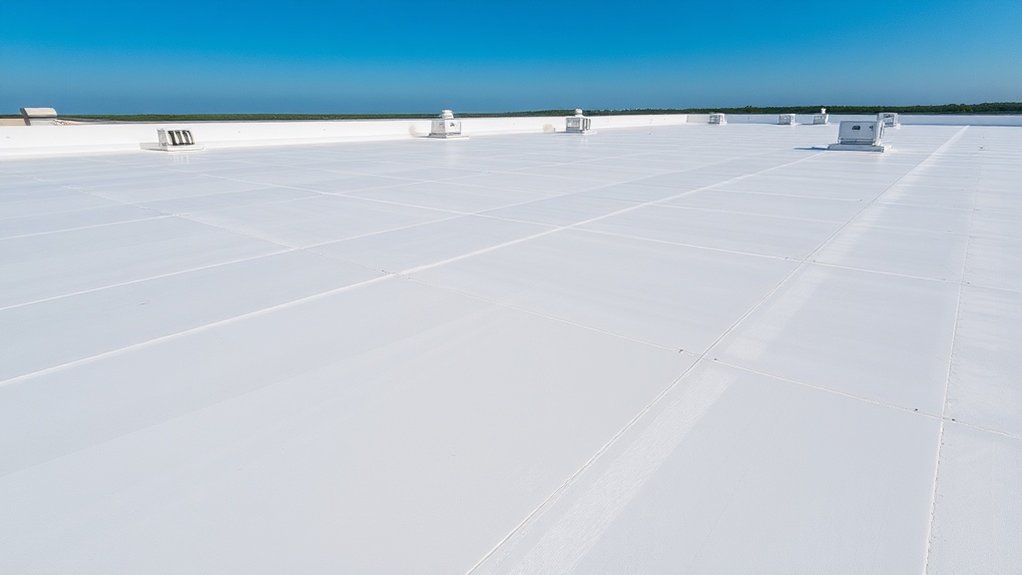
Understanding the types and characteristics of single-ply membranes is crucial for choosing the right roofing system for your commercial property. The main options are TPO, PVC, and EPDM, each with distinct features. Additionally, reflective surfaces in roofing systems can contribute to energy efficiency by reducing heat absorption.
| Membrane Type | Key Characteristics |
|---|---|
| TPO | Cost-effective and reflective, making it suitable for warmer climates; however, it may degrade with excessive heat. |
| PVC | Offers excellent chemical resistance, ideal for industrial settings; it tends to be pricier but is highly durable. |
| EPDM | Known for its longevity and flexibility in colder climates, though it may shrink in high temperatures. |
If you’re looking for a budget-friendly solution, TPO is worth considering. For environments with chemical exposure, opt for PVC. Keep in mind the limitations of EPDM when assessing your roofing needs. Single-ply roofing systems typically feature heat-welded seams that create a watertight surface, enhancing their overall reliability. Comparing these membranes will help you make a well-informed choice for your property.
Durability and Lifespan Considerations
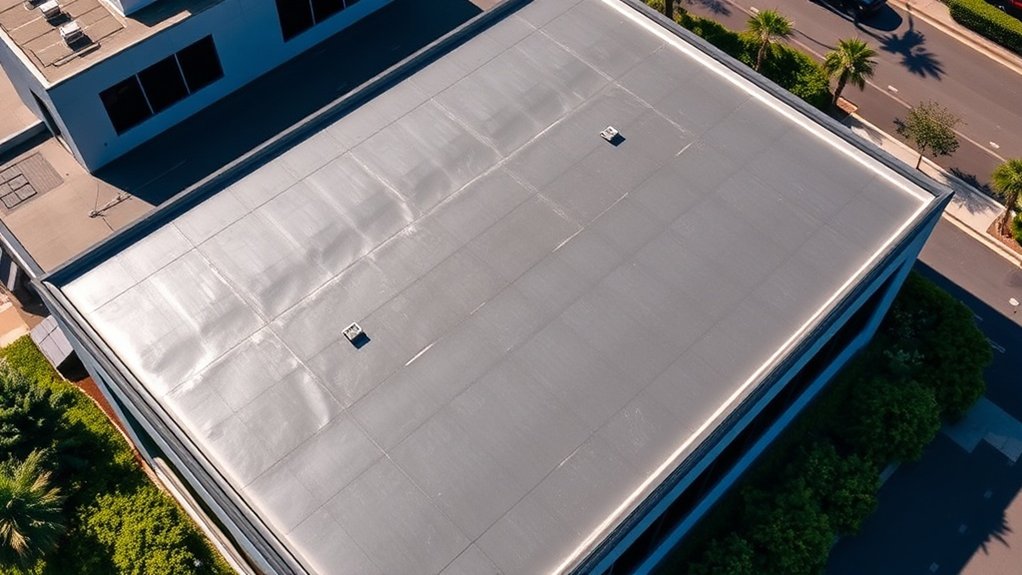
Durability and lifespan are crucial factors to consider when selecting a flat roofing system for your commercial property, as they affect long-term performance and cost efficiency. Lifespan can vary significantly among materials; for example, EPDM can last up to 50 years with proper maintenance, while asphalt systems generally last between 10 and 20 years. Choosing high-quality materials is essential for better durability against environmental challenges. Additionally, factors like climate, installation quality, and maintenance frequency play a vital role in a roof’s longevity. Regular maintenance can significantly impact a roof’s lifespan, as poor drainage or lack of upkeep can lead to early failure, ultimately costing you more in repairs. Proper quality of installation is crucial for longevity and performance, ensuring adherence to manufacturer guidelines and improving waterproofing.
Installation Methods and Maintenance
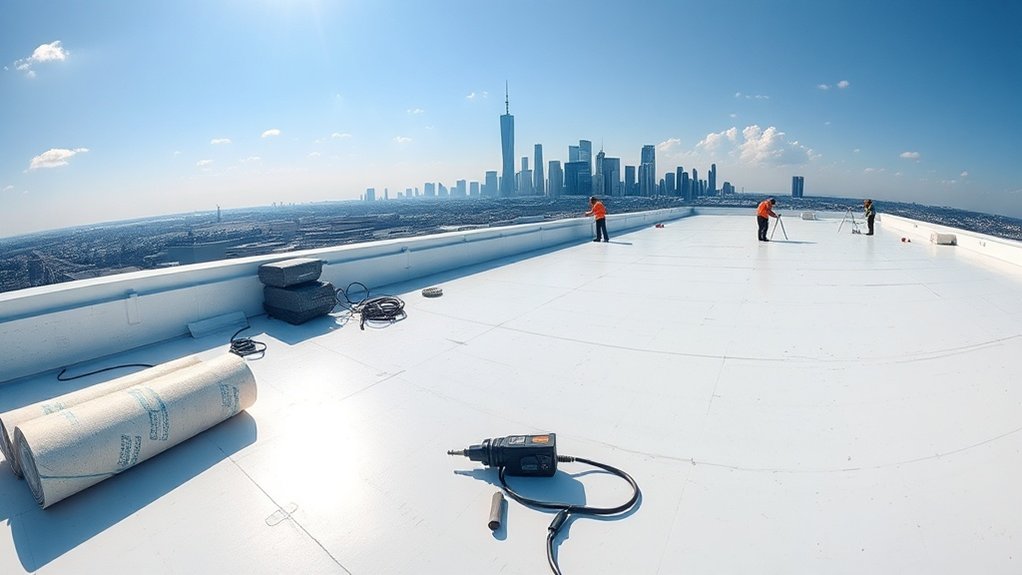
When installing flat roofing systems, you can choose from several methods, including built-up roofing, thermoplastics, or modified bitumen, each offering its own benefits.
Regular maintenance, such as routine inspections and clearing away debris, is crucial for extending the roof’s lifespan and avoiding expensive repairs.
Installation Techniques Overview
To ensure a successful installation of flat roofing systems for commercial properties, follow a systematic approach that covers both application and maintenance.
Begin with a comprehensive roof inspection to pinpoint any potential issues. Make sure your design complies with local regulations and clean the substrate for a solid base.
Select materials that offer durability and energy efficiency. Use methods such as fully adhered or mechanically attached systems, and always prioritise safety, particularly when employing heat applications.
Regular Maintenance Practices
Regular maintenance practices are crucial for the longevity and performance of flat roofing systems on commercial properties. To ensure your roof remains in good condition, concentrate on the following areas:
- Conduct routine inspections at least twice a year and following severe weather events.
- Keep drainage systems clear by cleaning gutters and outlets monthly.
- Address minor repairs promptly to avoid larger problems down the line.
Using maintenance checklists can help you streamline your efforts, allowing you to document findings and track repairs effectively.
Regularly checking membrane integrity, flashing, and drainage can help identify potential issues early on. Keeping your roof clean and functional not only protects your investment but also ensures a safe, leak-free environment for your tenants.
Energy Efficiency and Environmental Factors
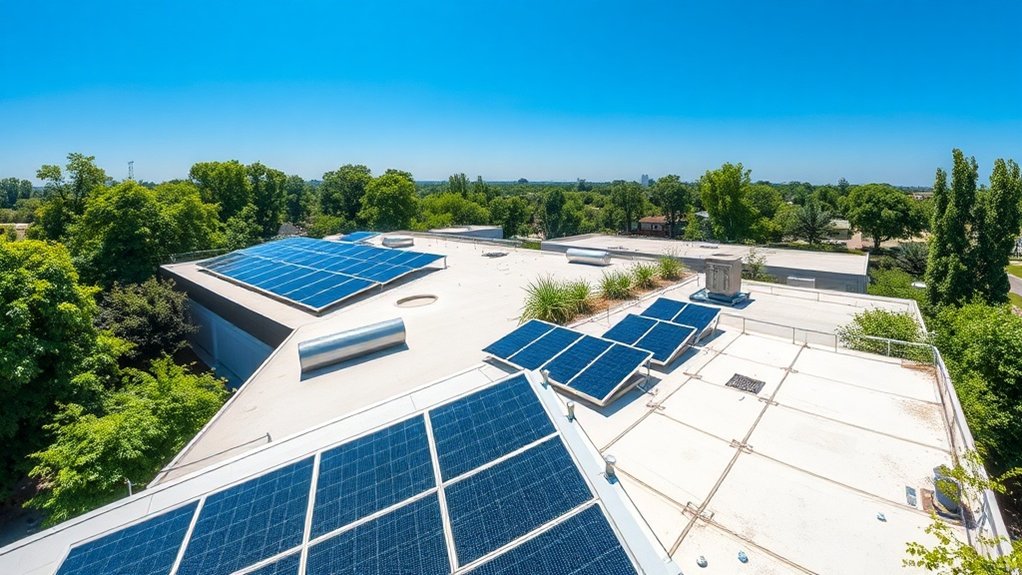
Reflective membranes are crucial for energy efficiency, as they significantly lower rooftop temperatures and cut cooling costs.
Green roofs not only improve insulation but also support biodiversity and help manage urban heat.
Moreover, energy-efficient coatings can further reduce energy usage, aligning with sustainability objectives for commercial properties.
Reflective Membrane Benefits
Reflective membranes provide notable energy efficiency benefits for commercial properties, particularly in warmer climates. By opting for these membranes, you can expect:
- Significant energy savings, potentially cutting cooling costs by up to £1.50/m² annually.
- Cooler rooftop temperatures, which can reduce peak cooling energy use by 14%—lowering temperatures from 76°C to 52°C with white membranes.
- Mitigation of urban heat island effects, improving local air quality and overall community well-being.
These reflective membranes help keep buildings cooler, resulting in reduced cooling loads and minimising heating penalties during colder months.
Investing in reflective membranes not only improves your building’s energy efficiency but also supports a healthier environment by decreasing pollution and greenhouse gas emissions for future generations.
Green Roofing Advantages
While traditional roofing systems primarily provide shelter, green roofs offer significant energy efficiency and environmental advantages that can greatly benefit commercial properties.
They can reduce HVAC energy consumption by up to 65.5%, leading to lower cooling costs, especially in low-rise buildings. Furthermore, these roofs enhance air quality by filtering around 40 pounds of pollutants each year for every 1,000 sq. ft., which is comparable to the emissions from 15 cars.
Green roofs also boost urban biodiversity by creating habitats for native plants and wildlife, contributing to healthier ecosystems. They can lower urban heat island effects by up to 20°F, alleviating heat stress in cities, extending roof lifespan, and minimising waste.
Energy-Efficient Coatings
Green roofing systems offer notable energy efficiency benefits, but energy-efficient coatings are also an excellent option for commercial properties looking to boost sustainability.
These sustainable coatings, especially reflective types, significantly reduce heat absorption, resulting in lower cooling demands and improved energy efficiency. Here are some key advantages:
- Cool roof technologies can reflect sunlight, lowering roof surface temperatures by 20–30%.
- Durable coatings such as silicone resist mould and perform well in extreme weather conditions.
- Reduced energy costs come from less reliance on air conditioning, which is good for both your wallet and the environment.
Emerging Trends and Roofing Innovations
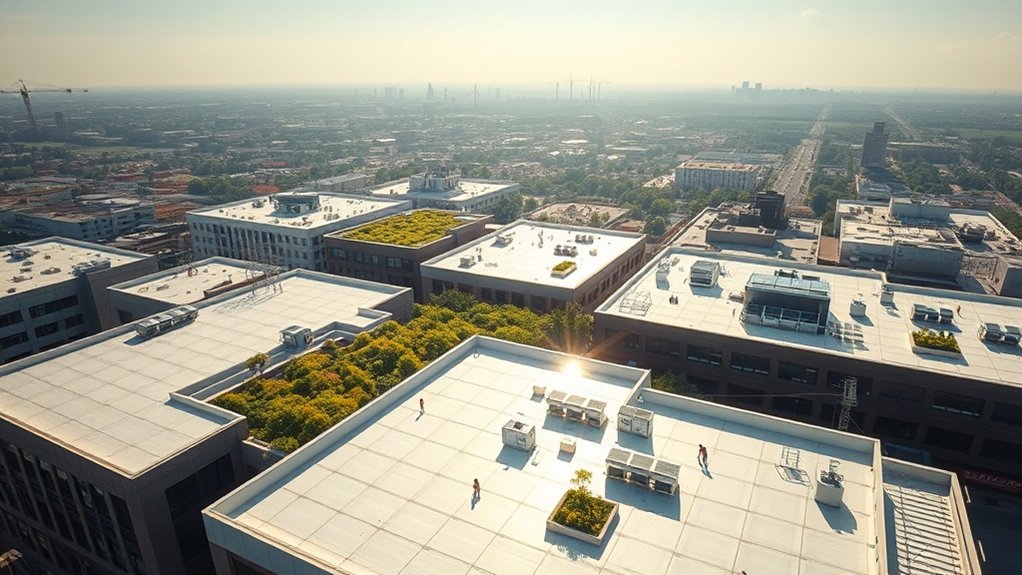
As the commercial roofing sector progresses, innovative technologies and materials are transforming flat roofing systems, boosting durability and efficiency.
For instance, thermoplastic hybrids combine different materials for outstanding performance and longevity.
Smart roofing systems now employ IoT technology and sensors to monitor conditions in real-time, significantly cutting down on repair costs and maintenance.
Self-healing coatings can automatically fix minor damages, extending the lifespan of your roof.
Reflective surfaces and energy-efficient coatings also contribute to sustainability by reducing energy consumption.
Moreover, green roofs not only improve aesthetics but also effectively manage stormwater.
Frequently Asked Questions
How Do I Choose the Right Roofing Material for My Building?
Choosing the right roofing material is akin to selecting a reliable partner for your building. Assess various roofing types and materials by looking at their durability, suitability for the UK climate, and maintenance requirements. For instance, slate is a popular choice for its longevity and classic appearance, while thatch offers a traditional look but requires more upkeep. By carefully considering these factors, you can ensure your roofing choice meets your needs and those of your community effectively.
What Factors Affect the Cost of Flat Roofing Installation?
The cost of installing flat roofing depends on factors such as the type of materials used, the size of the roof, its complexity, labour requirements, and any structural considerations. For instance, opting for high-quality materials can provide better long-term value, while being aware of these factors can help you budget more effectively.
Are There Warranties Available for Commercial Flat Roofing Systems?
Yes, there are warranties available for commercial flat roofing systems, including material and workmanship warranties. These warranties usually last between 5 to 30 years, providing coverage for defects and installation quality, provided the roof is properly maintained. For example, if you choose a high-quality membrane, you might receive a longer warranty compared to a standard option.
How Can I Extend the Life of My Flat Roof?
Consider your flat roof as a dependable barrier. Routine maintenance, such as regular inspections and clearing away debris, improves insulation and helps prolong its lifespan. By staying proactive, you can ensure it remains resilient against the weather and continues to protect your property effectively.
What Signs Indicate My Flat Roof Needs Repair or Replacement?
You’ll know your flat roof needs repair or replacement when you notice leaks, visible damage to the membrane, or inadequate surface drainage. Regularly checking for leaks and monitoring for water pooling can help you avoid costly problems and maintain the roof’s integrity.
Conclusion
When selecting a flat roofing system for your commercial property, it’s important to consider both durability and energy efficiency. While the initial costs may seem high, think of it as an investment in a roof that will save you money on energy bills and reduce maintenance issues in the long run. By choosing the right materials and installation techniques, you’re ensuring a strong solution that safeguards your property and boosts its value. Don’t compromise—choose innovative options that align with your budget and sustainability objectives.


