

Building Energy-Efficient Roofs for New Constructions
Building energy-efficient roofs for new constructions is crucial for reducing energy costs and increasing property value. Choosing materials such as metal or tiles can significantly improve insulation and reflectivity, which helps lower heat transfer and cooling expenses. Implementing effective ventilation and insulation methods ensures comfort throughout the year. Sustainability is also important, with many eco-friendly options available. Understanding these elements can make your construction projects more efficient and attractive. Explore more tips on enhancing energy efficiency.
Key Takeaways
- Choose energy-efficient materials such as metal or tile roofs that reflect heat and offer insulation appropriate for your local climate.
- Apply effective insulation methods like cavity wall and loft insulation to considerably lower energy bills.
- Design proper ventilation with intake and exhaust vents to ensure good airflow and manage moisture effectively.
- Opt for sustainable practices by selecting recycled or locally sourced materials to reduce your environmental footprint.
- Use smart roofing technologies for real-time monitoring and maintenance, helping to improve energy efficiency over time.
Importance of Energy Efficiency in Roofing
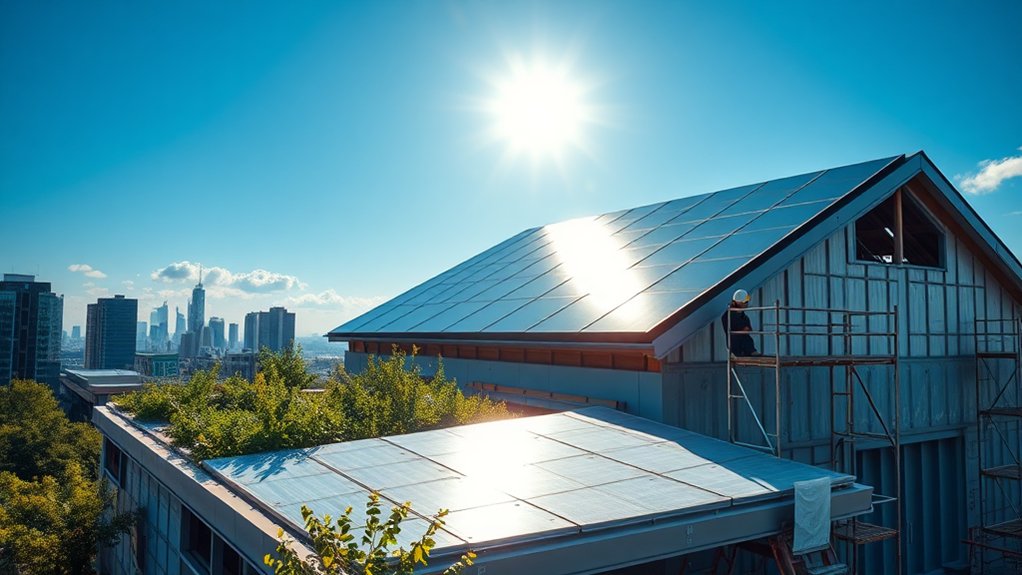
When planning a new construction project, it’s essential to prioritise energy efficiency in roofing. Modern roofing solutions can significantly reduce energy consumption, which translates to lower heating and cooling costs. For example, metal roofs can help homeowners save up to 40% on energy bills each year thanks to their excellent reflectivity and thermal insulation. Additionally, an energy-efficient roof helps to minimize heat transfer, which contributes to maintaining comfortable indoor temperatures year-round. Implementing proper insulation can further enhance energy savings by lowering heat transfer and maximizing comfort throughout the seasons. In addition to financial savings, energy-efficient roofs can increase your property’s market appeal, making it more attractive to environmentally-conscious buyers. They also tend to have longer lifespans by reducing damage caused by fluctuating temperatures, which leads to lower maintenance costs over time. Choosing energy-efficient roofing not only meets your immediate needs but also supports a sustainable future, demonstrating your commitment to the community and the environment.
Overview of Energy-Efficient Roofing Materials
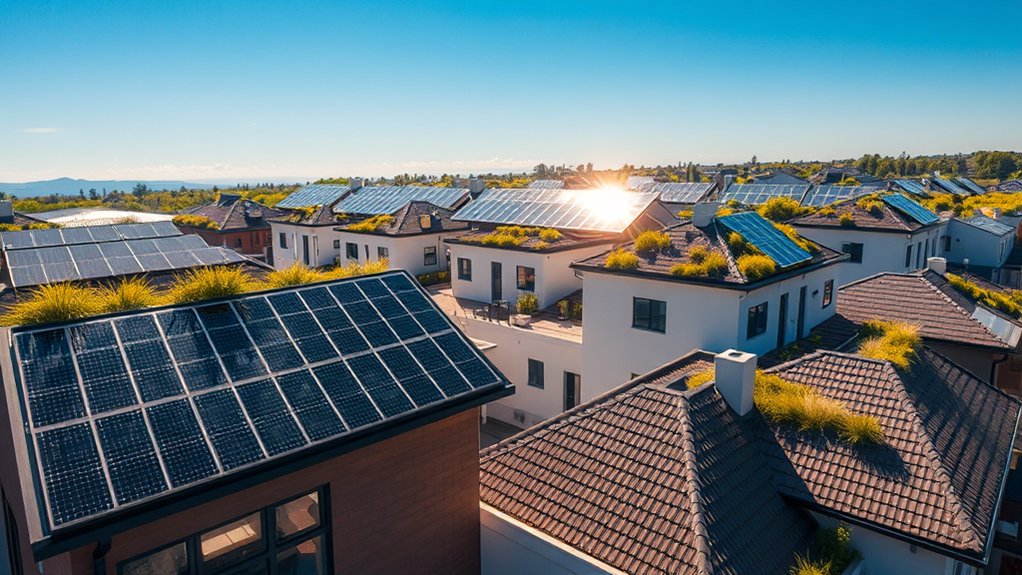
When selecting roofing materials, you’ll come across a range of energy-efficient options suitable for various climates and budgets.
Each type—metal, tile, asphalt shingles, or synthetic materials—offers distinct advantages that can significantly influence your energy usage and environmental impact. For instance, metal roofs reflect heat, making them ideal for warmer regions, while tiles provide excellent insulation in cooler areas. Understanding the benefits of energy-efficient roofs will empower you to make a well-informed choice that balances efficiency, durability, and visual appeal. Additionally, selecting materials with proper ventilation is crucial to prevent moisture buildup and enhance air quality in your home.
Types of Roofing Materials
Choosing the right roofing material is crucial for improving energy efficiency in new builds.
Metal roofing reflects sunlight, offering durability and low maintenance, which enhances both aesthetics and sustainability. Additionally, metal roofing is resistant to extreme weather conditions, ensuring longevity and reliability in various climates, and can last 50+ years with proper installation and maintenance.
Tile roofing acts as a natural thermal barrier, allowing for airflow and keeping indoor temperatures comfortable.
Asphalt shingles with reflective coatings are a budget-friendly choice, boosting reflectivity while maintaining a traditional appearance.
Synthetic materials can imitate natural designs and include reflective features to minimise heat absorption.
Lastly, cool roofs, achieved through specific coatings or membranes, significantly enhance energy efficiency.
Benefits of Energy Efficiency
Understanding the benefits of energy-efficient roofing materials can significantly enhance your home’s performance and value. By opting for these roofs, you’re not just improving the look of your property but also making a wise financial and environmental choice.
Here are some key advantages:
- Reduced utility bills: Save between £250 to £400 a year by cutting down on energy consumption with reflective materials.
- Longer lifespan: Durable materials like metal and tile withstand wear and tear, meaning fewer repairs are needed.
- Higher property value: Energy-efficient roofs make homes more appealing to buyers, increasing resale value, especially with sustainability certifications.
A detailed cost analysis indicates that these roofs, paired with smart technology, offer long-term savings and comfort, making them a sound investment for you and future generations.
Climate Impact on Choices
As climate conditions differ significantly across the UK, choosing the right energy-efficient roofing materials is crucial for your home’s performance.
It’s important to consider how well materials adapt to local conditions. In warmer areas, cool roofs that reflect sunlight can help keep your home comfortable. In regions with high humidity, opt for waterproof materials to prevent damage from moisture.
For stormy areas, durable metal or tile roofs can withstand strong winds. If you live in colder regions, focus on materials with good insulation to effectively manage snow loads.
Selecting sustainable options like recycled metal or tile not only helps the environment but also reduces your carbon footprint.
Characteristics Defining Energy Efficiency in Roofs

When assessing energy efficiency in roofs, several key characteristics significantly impact overall performance.
Understanding these factors will enable you to make smarter choices for your home and the environment.
- Thermal Emissivity: Materials with high emissivity help keep roof surfaces cooler, reducing heat transfer into the home.
- Reflectivity: Reflective coatings can drastically lower surface temperatures, which can lead to reduced cooling costs.
- Roof Durability: Using long-lasting materials, such as metal, decreases the need for replacements and the associated energy expenses.
Benefits of Metal Roofing for Energy Savings

Metal roofing is an excellent choice for achieving notable energy savings in new builds. It can reflect up to 70% of solar energy, significantly reducing heat absorption compared to conventional roofing materials. This reflectivity can lower cooling energy costs by as much as 20%, which means considerable savings on your energy bills.
Furthermore, metal roofs have high thermal emittance, allowing them to quickly release heat, helping to maintain comfortable indoor temperatures. Techniques like batten systems can improve energy efficiency by aiding natural ventilation.
In summary, metal roofing not only cuts energy costs but also extends the lifespan of your heating and cooling systems while enhancing overall comfort.
It’s a sensible option for environmentally conscious builders and homeowners committed to sustainable living.
Exploring Cool Roof Technologies and Coatings
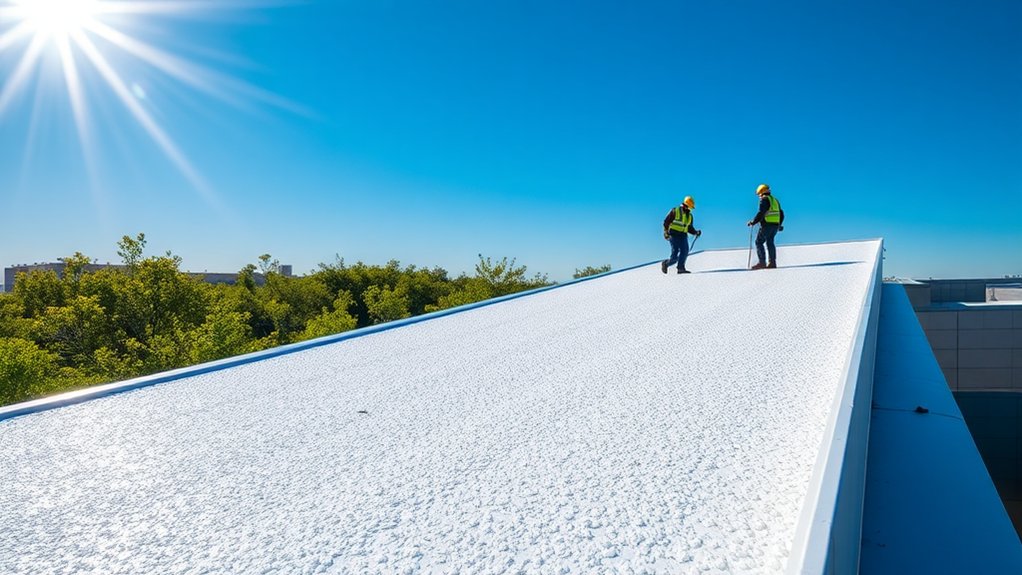
Cool roofs provide considerable advantages, such as lower energy consumption and reduced utility bills, making them a sensible choice for new builds.
Various reflective coatings are available, specifically designed to enhance solar reflectance and boost energy efficiency.
Benefits of Cool Roofs
As urban areas face rising temperatures and increased energy demands, cool roof technologies and coatings present an effective solution. By reflecting sunlight, cool roofs can significantly reduce indoor temperatures and energy use.
Here are some key benefits:
- Energy Savings: You could see reductions in cooling costs of 10%-40%, resulting in considerable annual savings.
- Environmental Impact: Cool roofs help lower CO2 emissions and can reduce outdoor temperatures by around 1.2°C, contributing to better public health.
- Enhanced Comfort: Enjoy cooler indoor environments, which reduces heat-related health risks without relying heavily on air conditioning.
Adopting cool roof technologies not only helps tackle urban heat but also promotes a healthier and more sustainable environment for all.
Reflective Coating Options
Reflective coatings are crucial for improving the energy efficiency of roofs, especially in new builds. By using reflective pigments such as titanium dioxide, these coatings reflect sunlight, reducing heat absorption. This is particularly important in warmer climates, where cooling paints and evaporative coatings can significantly lower roof temperatures.
Advanced formulations, including phase-change materials, enhance thermal regulation and increase the longevity of the coatings.
Additionally, cool roof membranes made from materials like PVC and TPO not only improve solar reflectance but also safeguard against UV damage.
With proper care, these reflective coatings can maintain their effectiveness over time, offering energy savings and sustainability for your building.
Consider these options for a cooler, more environmentally friendly future.
Insulation Techniques for Enhanced Energy Performance

Effective insulation techniques are crucial for enhancing energy performance in new buildings, offering substantial long-term savings and environmental benefits.
By prioritising effective insulation, you can significantly reduce energy costs and promote sustainability.
- Cavity Wall Insulation: This method minimises heat loss and could save you around £280 each year.
- Loft Insulation: A budget-friendly solution that can yield savings of approximately £270 annually.
- Combination Strategies: Employing multiple insulation types can further boost energy efficiency.
Investing in these techniques can lower heating and cooling requirements by up to 50% and significantly reduce greenhouse gas emissions.
Prioritising insulation in your construction project ensures a comfortable living space while benefiting the environment.
Ventilation Strategies to Optimize Roof Efficiency

Optimising roof efficiency involves more than just insulation; effective ventilation strategies are equally important.
To achieve the best airflow, implement a balanced ventilation design that includes both intake and exhaust vents. Place soffit vents at the eaves for cool air intake, and ridge vents at the peak to release hot air, creating a natural convection cycle.
Gable vents can further improve cross-ventilation. Regular inspections and cleaning of these vents are crucial to maintain performance and prevent blockages.
Ensuring unobstructed airflow will reduce attic temperatures, decrease reliance on air conditioning, and ultimately lower energy bills. Good ventilation not only enhances comfort but also protects your home’s structure and fosters a healthier living environment for you and future occupants.
Impact of Roof Color on Energy Consumption
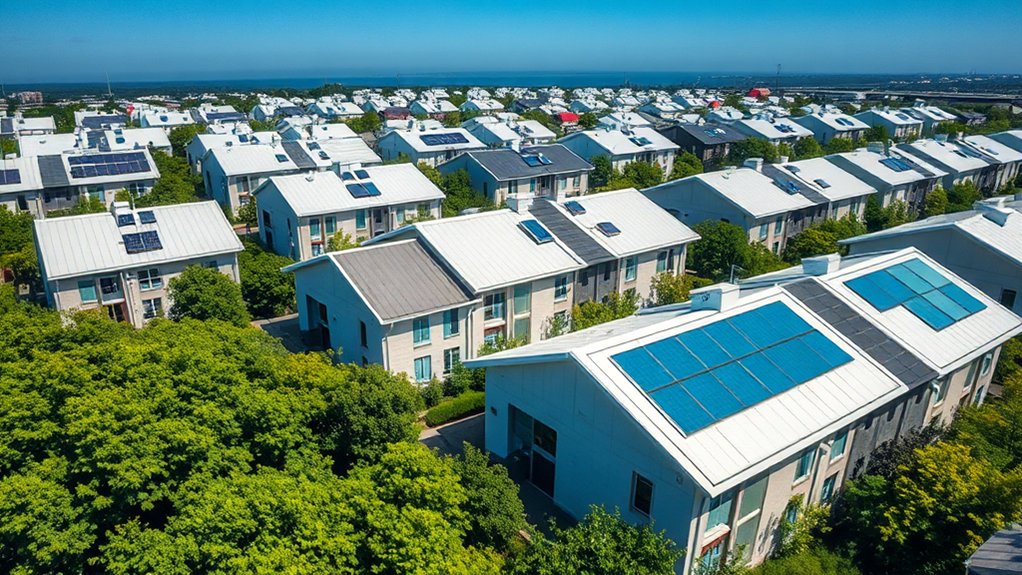
When considering energy consumption in new buildings, the colour of your roof is crucial in determining how much heat your property absorbs.
Roof colour significantly affects energy dynamics, influencing cooling loads and overall energy use. Here are some key points to consider:
- Light-coloured roofs reflect sunlight, which reduces heat absorption and cooling requirements.
- Dark roofs absorb more heat, leading to higher energy consumption for air conditioning, particularly in warmer climates.
- Opting for the right roof colour can result in energy savings of 4% to 5.5% compared to traditional dark options.
Regional Considerations for Roof Material Selection

Selecting the right roofing material is crucial and goes beyond just looks. It’s important to consider the local climate and environment, as these factors significantly affect your building’s energy efficiency and longevity.
In hot, dry areas, clay or concrete tiles perform well, while metal roofs are effective in sunny regions because they reflect heat. Asphalt shingles are suitable for temperate climates, but if you’re in colder areas, opt for materials with good insulation properties.
Local building regulations and the availability of materials also play a vital role in your decision-making process, ensuring you comply with standards and manage costs effectively.
Additionally, regional preferences may lean towards traditional styles, like slate in the North or terracotta tiles in the South. By considering these aspects, you can choose a roof that not only boosts energy performance but also complements the local architectural character.
Sustainable Practices in Roofing Design

When designing roofs, prioritising eco-friendly materials is essential to reduce environmental impact and enhance energy efficiency.
For example, using recycled or sustainably sourced materials can make a significant difference.
Innovative insulation techniques, such as using sheep’s wool or recycled denim, can further improve thermal performance, making your roofing system more responsive to climate conditions.
Eco-Friendly Material Selection
Choosing eco-friendly materials for roofing not only boosts a building’s sustainability but also significantly reduces its environmental footprint.
By focusing on sustainable sourcing and durable materials, you’re supporting a healthier planet. Here are some great options to consider:
- Wood shakes and shingles: Biodegradable and renewable when sourced responsibly.
- Slate tiles: Highly durable, fully recyclable, and reduces the need for frequent replacements.
- Recycled shingles: Made from waste materials, they provide lasting performance and design versatility.
Innovative Insulation Techniques
Innovative insulation techniques are crucial for improving the energy efficiency of new roofing systems. They not only enhance thermal performance but also support sustainability goals. For instance, spray foam insulation offers excellent air sealing and fire resistance. On the other hand, natural options like hemp and cellulose are great for managing moisture and providing acoustic benefits. Radiant barriers are also effective, as they help reduce heat absorption and optimise energy use.
| Insulation Type | Key Benefits |
|---|---|
| Spray Foam | Excellent air sealing, fire resistance |
| Natural Insulation | Moisture control, eco-friendly materials |
| Radiant Barriers | Lower cooling loads, improved energy efficiency |
Climate-Responsive Design Choices
Energy-efficient roofs go beyond just insulation; they rely on climate-responsive design choices that boost sustainability.
By using climate-friendly materials and smart roof shapes, you can create an effective roofing system that complements your surroundings. Here are some practical strategies:
- Choose locally sourced materials to reduce transportation emissions and opt for those with low embodied energy.
- Design sloped roofs with ridge vents to encourage airflow, which helps prevent heat accumulation and enhances comfort.
- Use reflective roofing technologies to decrease heat absorption and lower cooling requirements.
Future Trends in Energy-Efficient Roofing Solutions
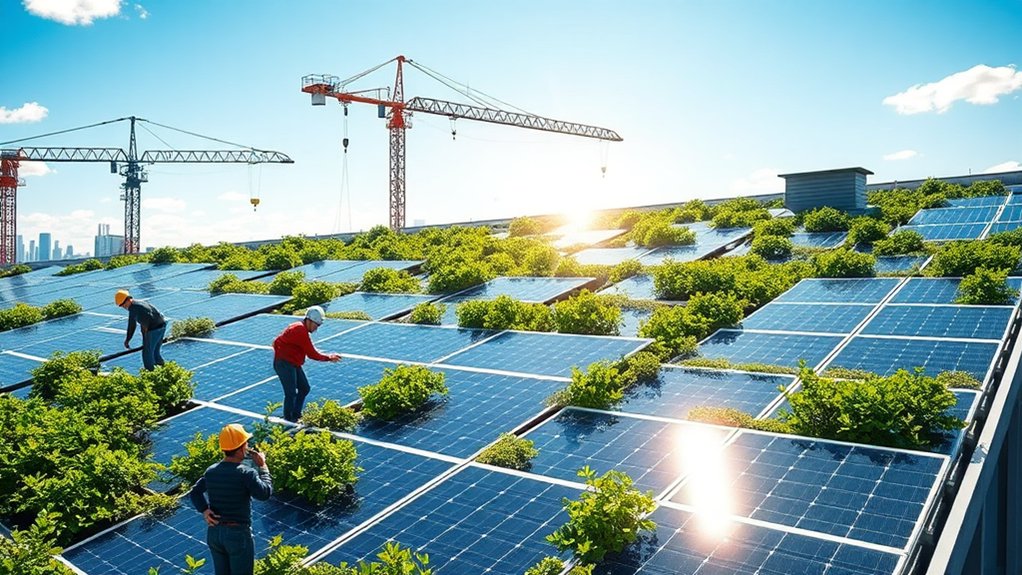
As the demand for sustainable building solutions grows, the future of energy-efficient roofing is set for significant change.
We can expect a rise in innovative roofs made from recycled materials, promoting a circular economy. Integrating solar technology into roofing will become standard, allowing homeowners to generate energy while improving their property’s appearance.
Advanced insulation systems will enhance thermal management, leading to lower energy bills. Climate resilience will be crucial, with materials designed to endure extreme weather conditions.
Additionally, smart roofing technologies will allow for real-time performance monitoring, ensuring durability and efficiency. Embracing these trends now can benefit both your home and the environment.
Frequently Asked Questions
What Is the Average Lifespan of Energy-Efficient Roofing Materials?
When looking at energy-efficient roofing materials, their average lifespan can differ significantly. Conducting a lifecycle analysis is essential to gauge material durability, helping you select options that offer both longevity and sustainability for your home and community. For instance, metal roofs can last up to 50 years, while slate tiles may last even longer, making them worthwhile investments.
How Do Energy-Efficient Roofs Affect Home Resale Value?
Energy-efficient roofs significantly increase a home’s value by offering strong resale advantages. Buyers are attracted to the prospect of lower utility bills and long-term savings, making these roofs a desirable feature. Investing in energy-efficient options can lead to higher offers and faster sales, making it a smart choice for homeowners looking to sell.
Are There Government Incentives for Installing Energy-Efficient Roofs?
Yes, you can benefit from government incentives for installing energy-efficient roofs in the UK. There are grants and schemes available that can help offset the initial costs. For example, the Energy Company Obligation (ECO) scheme may provide funding for eligible households to improve their insulation and energy efficiency. These incentives not only make your home more sustainable but also help reduce your energy bills in the long run.
Can I Retrofit My Existing Roof With Energy-Efficient Materials?
You can certainly retrofit your existing roof with energy-efficient materials. Look into options that fit your budget, considering long-term savings against the initial costs. For example, adding insulation or reflective roofing can reduce energy bills and improve comfort. It’s a practical way to boost sustainability while meeting your needs and benefiting the environment.
What Maintenance Is Required for Energy-Efficient Roofing Systems?
Regular roof inspections and maintenance schedules are essential for ensuring your energy-efficient roofing system performs at its best. By promptly addressing minor issues and keeping the roof clean, you can enhance its efficiency and extend its lifespan. For instance, clearing debris from gutters can prevent water damage, while checking for loose tiles can avert larger repairs down the line. This proactive approach benefits everyone involved.
Conclusion
Incorporating energy-efficient roofs is not just a wise decision; it’s a step towards a more sustainable future. By choosing the right materials and designs, you can significantly lower energy bills while improving your home’s comfort. Think of your roof as the crowning feature of your house—when it excels in efficiency, the whole home benefits. As roofing technology advances, adopting innovative solutions will not only save you money but also help protect the environment.


