

Flat Roof Coverings: Comparative Costs for UK Installation
When selecting flat roof coverings in the UK, your main options include PVC, EPDM, and fibreglass, with prices varying from £30 to £120 per m². Installation typically costs between £2,500 and £3,500. One advantage of flat roofs is their quicker installation compared to pitched roofs, which can help save on costs. However, be mindful of maintenance expenses that may accumulate over time. Understanding the total lifecycle costs and the durability of materials will aid you in making a well-informed choice. For more details on the specific advantages of each material, continue researching.
Key Takeaways
Flat roof installation costs typically range from £2,500 to £3,500, making them a more budget-friendly option compared to pitched roofs. Material costs vary between £30 and £120 per m², with built-up roofs being the most economical choice. While EPDM and PVC membranes are pricier, they boast a lifespan of 20 to 30 years, making them a worthwhile investment.
Annual maintenance costs, which include inspections and repairs, can be between £100 and £600. It’s also worth noting that regional variations can affect the availability and price of materials, ultimately influencing overall installation costs.
Overview of Flat Roof Covering Options
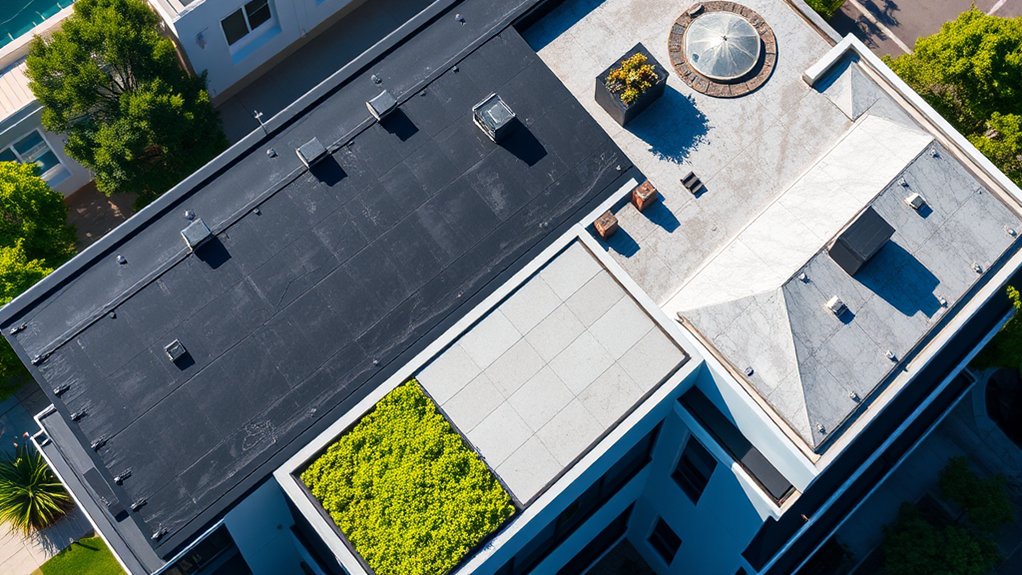
When choosing flat roof covering options, it’s important to know the different materials available, as each has its own benefits.
PVC single-ply membranes are popular for their durability and easy installation, making them suitable for various settings. Their 20-year warranties reflect the long life expectancy that these membranes offer. Additionally, energy-efficient materials can significantly lower cooling costs, enhancing the overall value of your investment.
Modified bitumen offers a good balance of cost and strength, making it a solid choice for traditional roofs.
GRP fibreglass is known for its durability and appealing finish, while EPDM rubber roofing is valued for being low-maintenance and resistant to UV rays.
Built-up roofing (BUR) is excellent for waterproofing thanks to its layered design, which also improves insulation and lifespan. This system typically provides enhanced UV protection and contributes to the roof’s longevity.
Each option meets different needs, ensuring you can find the right fit for your roofing project.
Cost Breakdown of Common Flat Roof Materials
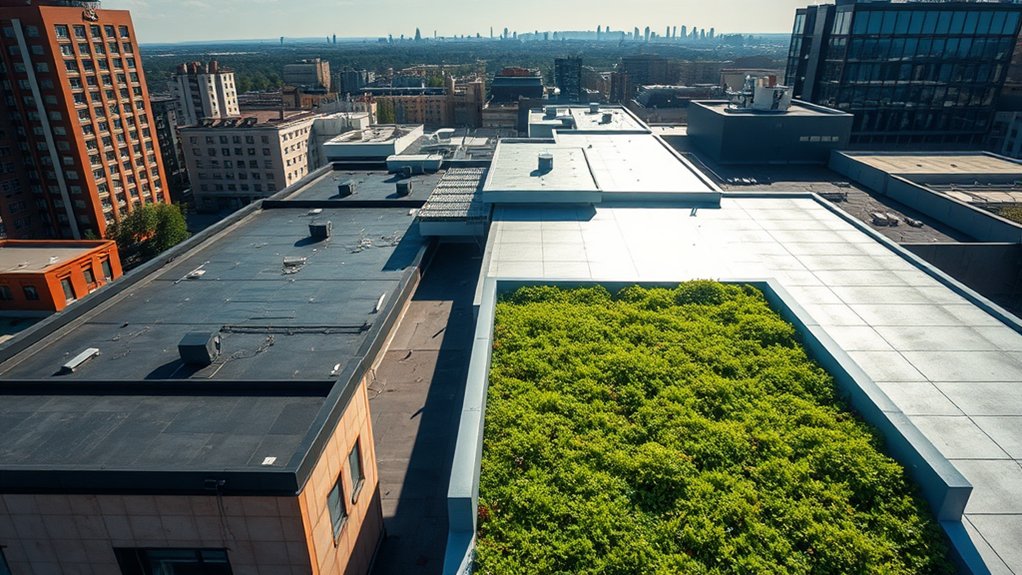
The cost breakdown of common flat roof materials shows considerable variations depending on several factors. When comparing costs, consider the type of material, as prices can range from £30 to £120 per m². For example, built-up roofs tend to be the cheapest option, while EPDM and PVC are more expensive but offer durability, lasting between 20 to 30 years. The size and condition of your roof also affect pricing; larger or damaged areas will require more materials and labour. Additionally, complex designs, such as those with skylights, can increase installation costs. Regional differences can also impact prices, so it’s wise to factor in your location when selecting materials. Furthermore, the type of flat roof material significantly impacts installation costs. Understanding installation methods can also help you choose the most cost-effective option for your needs.
Installation Costs: Flat Roofs vs. Pitched Roofs
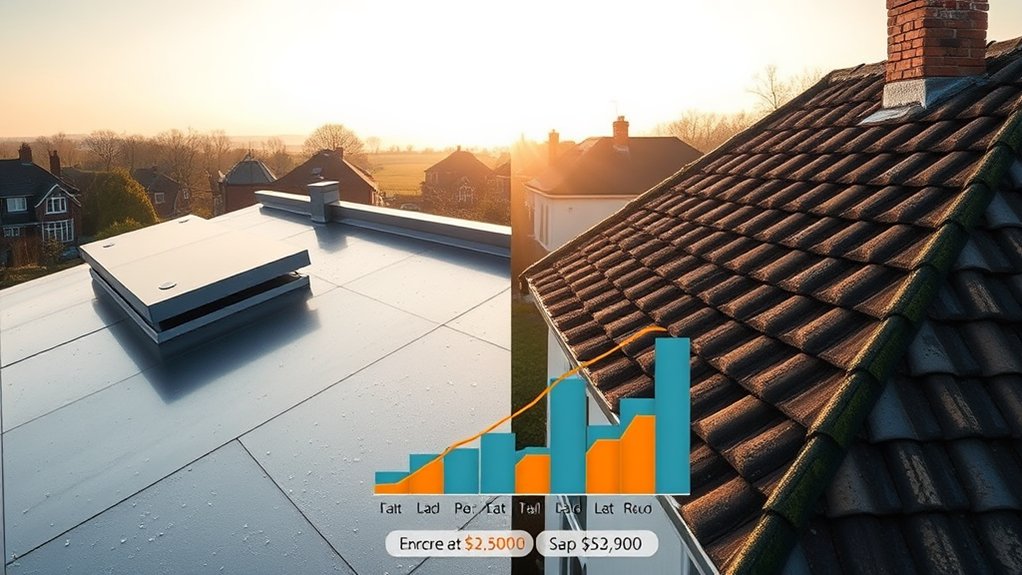
When considering a new roof, understanding the costs between flat and pitched roofs is crucial for homeowners.
Flat roofs typically cost between £2,500 and £3,500 to install, while pitched roofs can range from £8,000 to £10,000. This difference is largely due to the complexity of pitched roofs, which require more materials and labour. Flat roofs often have quicker installation times, which can help lower contractor fees. Additionally, flat roofs may have lower initial costs compared to pitched roofs, making them an attractive option for budget-conscious homeowners. While pitched roofs may be more visually appealing, flat roofs can offer functional space, such as balconies or rooftop gardens. Furthermore, the average cost of roof replacement in the UK suggests that homeowners should carefully evaluate their choices to avoid larger future expenses.
Ultimately, your choice should weigh both the initial costs and the long-term advantages that best suit your lifestyle.
Labour and Material Costs Explained
Understanding labour and material costs is crucial for making smart choices about flat roof installation.
Labour rates can vary depending on your location and the job’s complexity; for example, costs tend to be higher in London and the South East. Employing skilled workers with flat roofing experience can also influence your expenses.
When it comes to materials, EPDM rubber roofing typically costs between £9 and £12 per square metre, while fibreglass is around £2 to £3 per square metre.
Traditional felt roofing ranges from £2 to £10 per square metre. Don’t forget to factor in insulation and preparation costs, as these can significantly affect your overall investment in a long-lasting and efficient flat roof.
Factors Influencing Flat Roof Installation Costs
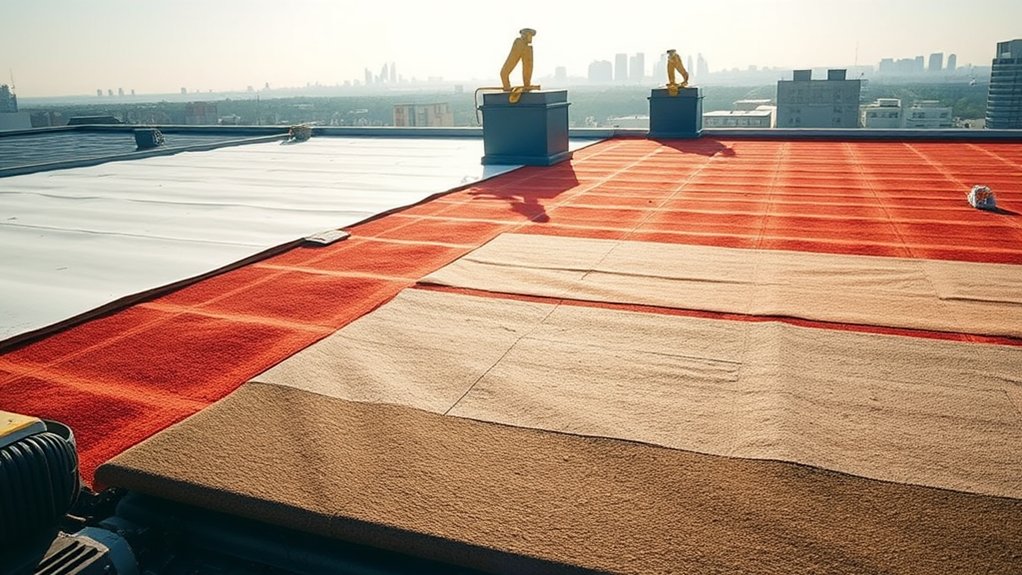
Several factors influence the costs of installing a flat roof, and understanding these can aid in effective budgeting. Here are three key elements to consider:
1. Roof Size and Complexity: Larger or more intricate roofs will require more materials and labour, resulting in increased costs.
For example, a simple rectangular flat roof is generally cheaper than a roof with multiple sections or features.
2. Access and Logistics: If the site is hard to reach or in a busy urban area, costs may rise due to the need for special equipment and the complexities of transporting materials.
For instance, a roof situated on a high-rise building will likely incur higher logistical expenses.
3. Roof Design and Specification: Features such as insulation, advanced drainage systems, or multiple layers can complicate the installation process, leading to higher prices.
For example, a roof designed for better thermal performance may require more expensive materials and skilled labour.
Maintenance Expenses for Flat Roofs
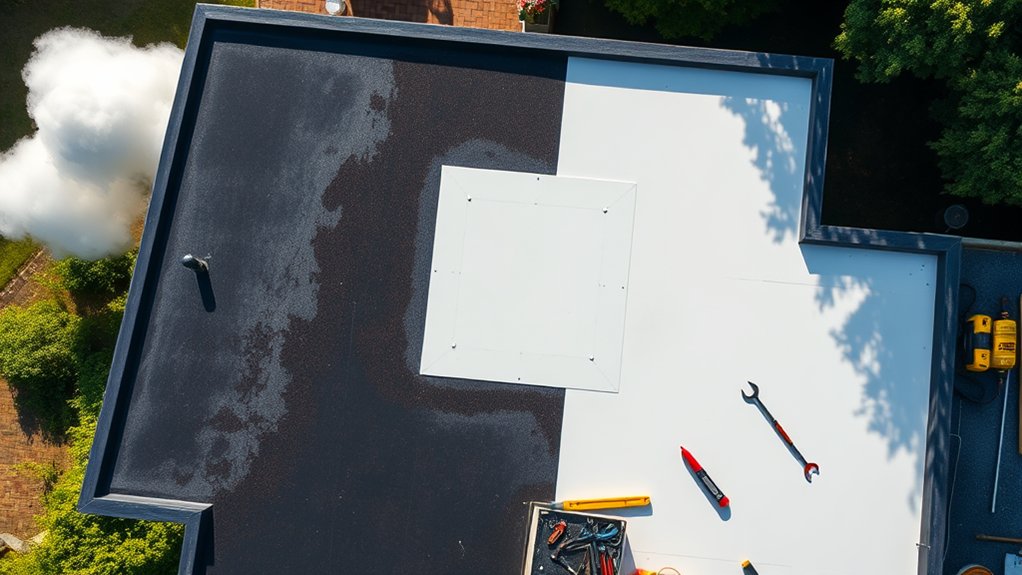
Owning a flat roof requires regular maintenance to ensure it lasts and performs well. By scheduling regular inspections and taking preventive steps, you can avoid expensive repairs later on. Here’s a summary of typical maintenance costs:
| Task | Estimated Cost (£) |
|---|---|
| Roof Inspection | 100 – 300 |
| Roof Cleaning | 100 – 300 |
| Gutter Maintenance | 100 – 450 |
| Leak Repairs | 30 – 200 |
| Roof Treatment | 400 – 600 |
Regular upkeep not only protects your investment but also enhances the overall comfort of your home.
Regional Variations in Flat Roof Costs

When looking at flat roof costs, you’ll notice considerable differences between urban and rural areas in the UK.
Urban locations often have higher prices due to greater demand and easier access to materials. For example, a flat roof replacement in London could be significantly more expensive than in a rural town like Hereford.
Conversely, rural areas might face higher base rates because of limited supplier options and longer transport times.
Being aware of these factors can help you better estimate costs in your area.
Urban vs. Rural Pricing
Flat roof replacement costs typically range from £1,000 to £5,000, but prices can vary significantly depending on whether you’re in an urban or rural area.
In cities, high demand often leads to increased costs due to elevated labour rates and stricter regulations. Conversely, rural areas usually benefit from lower labour costs and fewer logistical hurdles.
Here are three main factors that affect pricing:
- Labour Rates: In urban centres like London, skilled labour tends to be more expensive compared to rural areas.
- Material Accessibility: Urban locations may have quicker access to materials, but this can also drive up costs.
- Building Regulations: Cities often have stringent building codes that can add to the overall expense, unlike rural settings where regulations may be more relaxed.
Being aware of these pricing dynamics can help you make better decisions for your flat roof project.
Material Accessibility Factors
To understand the costs associated with flat roofs, it’s essential to consider material accessibility, which can vary significantly by region. Your project’s budget can change dramatically based on how easily materials can be sourced locally and the efficiency of the supply chain.
In urban areas, you typically find lower transportation costs and better access to specialised roofing materials, leading to competitive pricing. For instance, if you’re in London, you might pay less for materials than someone in a rural village.
Suburban areas offer moderate accessibility with decent availability, while rural regions often face limited options and higher prices. In remote locations, expect very low accessibility and high shipping costs, which can substantially impact your project’s overall expenses.
| Region | Material Accessibility |
|---|---|
| Urban Centres | High, competitive pricing |
| Suburban Areas | Moderate, decent availability |
| Rural Regions | Low, limited options |
| Remote Areas | Very low, high shipping costs |
Long-term Financial Considerations for Flat Roofs
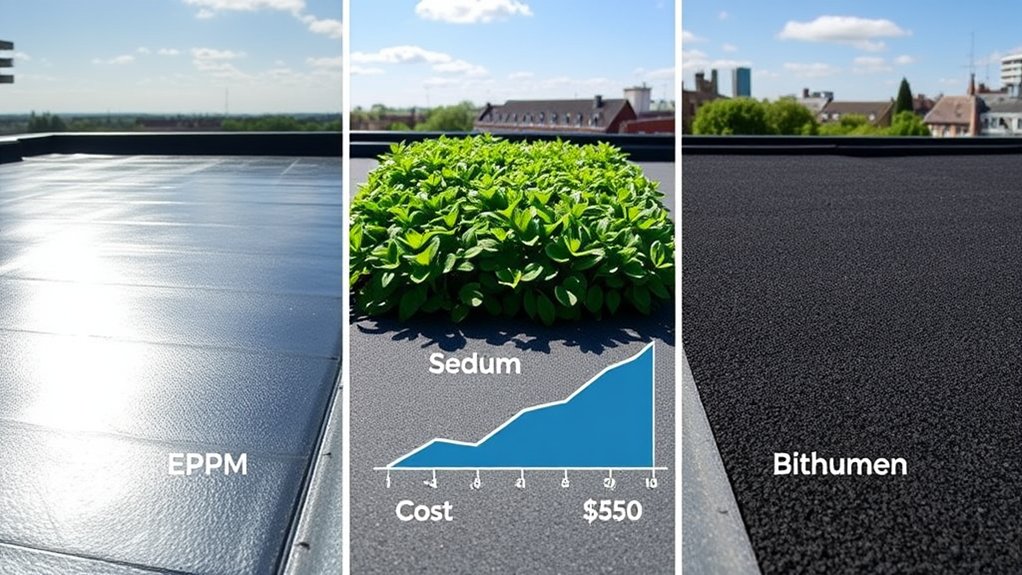
When considering flat roofs, it’s crucial to assess the long-term financial implications, such as maintenance and repair costs. The lifespan of roofing materials directly influences how often you’ll need to replace them, affecting your budget.
For example, a high-quality flat roof may last up to 30 years, while cheaper options might need replacing after just 10 or 15 years.
Moreover, factors like insurance premiums and warranties can significantly affect your overall financial outlook. A robust warranty can save you money in the long run by covering repairs, while higher insurance premiums for older roofs can add to your expenses.
It’s important to factor all these elements into your planning for a more accurate financial picture.
Maintenance and Repair Costs
To ensure the longevity and performance of flat roofs, regular maintenance and prompt repairs are crucial for controlling long-term costs.
Adopting preventive measures can significantly cut expenses. Here are three essential maintenance tasks to focus on:
- Regular Inspections: Carry out routine checks to catch potential issues early, which can help avoid costly repairs later on.
- Clear Drains and Gutters: Keeping drains free from debris can prevent expensive blockages, with cleaning costs typically between £60 and £200.
- Timely Repairs: Tackling minor damage quickly can save you between £200 and £500, preventing more serious problems down the line.
Lifespan of Materials
Regular maintenance and prompt repairs not only boost the lifespan of flat roofs but also significantly impact the longevity of roofing materials.
In terms of durability, EPDM is a strong choice, lasting between 25-30 years, while TPO and PVC typically last around 20-25 years. Modified bitumen, however, falls short at 15-20 years, making it a less appealing option.
On the other hand, fibreglass (GRP) shines with a lifespan of over 50 years, making it a smart investment.
While cheaper materials like modified bitumen may save you money upfront, they often require more frequent replacements, leading to higher long-term costs.
Choosing longer-lasting materials like EPDM or fibreglass not only ensures cost-effectiveness but also reduces the need for regular repairs, ultimately being kinder to your budget.
Insurance and Warranty Impacts
While flat roofs have distinct aesthetic and functional benefits, they also bring specific insurance and warranty considerations that can influence your long-term finances.
It’s essential to grasp these elements to preserve your property’s value.
- Higher Insurance Premiums: Flat roofs typically attract increased premiums due to associated risks, such as water pooling.
- Warranty Protection: Opting for extended warranties on high-quality materials can provide reassurance and help mitigate future expenses.
- Maintenance Obligations: Insurers often require regular inspections to ensure the roof remains in good condition, which can impact your budgeting.
Frequently Asked Questions
What Is the Lifespan of Different Flat Roof Materials?
In terms of lifespan, EPDM roofs typically last between 25 to 30 years. In contrast, TPO and PVC roofs have a lifespan of around 20 to 25 years. Modified bitumen and GRP generally last 15 to 20 years. These differences in durability can significantly influence your choice of roofing material.
Can I Install a Flat Roof Myself?
You can install a flat roof yourself, but it’s important to think about your skills and safety. There are challenges like handling materials and ensuring you meet building regulations, which can make the process trickier. For instance, if you’re not comfortable working at heights or using certain tools, it might be worth considering a professional. Plan carefully before you start.
How Do I Choose the Right Flat Roof Material?
To select the right flat roof material, consider both durability and appearance. Assess the specific requirements of your project, the local climate, and the expected lifespan. For instance, if you live in an area with heavy rainfall, materials like EPDM or GRP might be ideal due to their waterproof properties. Ensure your choice meets both functional needs and aesthetic preferences effectively.
What Weather Conditions Affect Flat Roof Installation?
Consider your installation timing as a well-rehearsed dance; weather factors like rain, wind, and temperature changes can throw off your routine, resulting in delays and higher costs if not handled correctly. For instance, installing a flat roof in heavy rain can lead to poor adhesion and potential leaks, while strong winds can make working at height dangerous. Always check the forecast and plan your work accordingly to ensure a smooth installation process.
Are There Any Warranties for Flat Roof Materials?
Yes, there are different types of warranties for flat roof materials in the UK. These warranties typically cover issues like material defects and installation problems, ensuring the longevity of your roof. It’s important to check the credibility of the warranty provider to protect yourself from unexpected roofing issues and to give you peace of mind.
Conclusion
If you think a flat roof is just a simple and cost-effective option, think again. With a wide range of materials available and installation costs that can be surprisingly high, choosing the right one can feel like choosing a favourite child—very tricky! Don’t forget to consider maintenance and local factors, which can add to your overall costs. While flat roofs can offer benefits, be sure to budget for the unexpected expenses that could arise.


