

Understanding the Costs of Roof Replacement in the UK
Understanding the costs of roof replacement in the UK involves several key factors. The size of your roof and the materials you choose significantly impact the price, with typical costs ranging from £4,000 to £19,000. Labour can make up 40-60% of the total expense, especially in urban areas where tradespeople may charge more. Don't forget to budget for additional costs such as scaffolding, roof removal, and insulation. By considering these elements, you can better estimate your overall expenses and make informed choices.
Key Takeaways
The average cost of replacing a roof in the UK is about £7,000, with prices ranging from £4,000 to £19,000 depending on the complexity and materials used. Labour generally makes up 40-60% of the total cost, which can vary based on your location and the specifics of the project.
For flat roofs, you can expect to pay between £2,500 and £3,500, while pitched roofs typically range from £6,000 to £12,000. Additional expenses may include scaffolding (£750 to £1,000), removal of the old roof (£900 to £2,500), and potential structural repairs costing up to £1,800.
Hiring qualified professionals is essential for quality workmanship. Additionally, scheduling your roof replacement during off-peak seasons can help you save money.
General Costs of Roof Replacement
When planning a roof replacement in the UK, it's important to know the typical costs involved. On average, you can expect to pay around £7,000, with prices ranging from £4,000 to £19,000 based on the roof's complexity and type.
For instance, asphalt shingles are the budget-friendly option but have a shorter lifespan. In contrast, slate tiles and metal roofing are more durable but come at a higher cost. Additionally, costs for larger, complex roof types can be higher, impacting your overall budget. Labour accounts for approximately 60% of total costs, significantly affecting the final price.
Gable roofs generally fall between £7,000 and £16,250, while hip roofs can reach up to £18,000. Flat roofs are the most economical, costing between £2,800 and £7,500.
Being aware of these costs will help you make informed decisions that suit your needs.
Factors Influencing Roof Replacement Costs
Understanding the factors that influence roof replacement costs is crucial for making informed choices. The size of your roof significantly affects both material and labour expenses. For example, a larger roof requires more tiles or slates, which will increase overall costs.
The type of roofing material you choose—whether it's slate, tile, or asphalt—also varies greatly in price. Additionally, the complexity of the roof design matters; roofs with multiple angles, slopes, or features like dormers and chimneys demand more skilled labour and time, which raises costs. Roof complexity can lead to increased costs due to the need for more skilled labour. This increased expertise often results in higher labour rates, especially for intricate designs.
Regional differences can further impact labour rates, with urban areas generally being more expensive than rural locations. If you need to remove an existing roof, this incurs disposal fees and additional labour time, adding to your expenses.
As you consider your roof replacement, keep these factors in mind to better understand the overall investment and ensure you select the right materials and design that suit your needs.
Types of Roofs and Their Costs
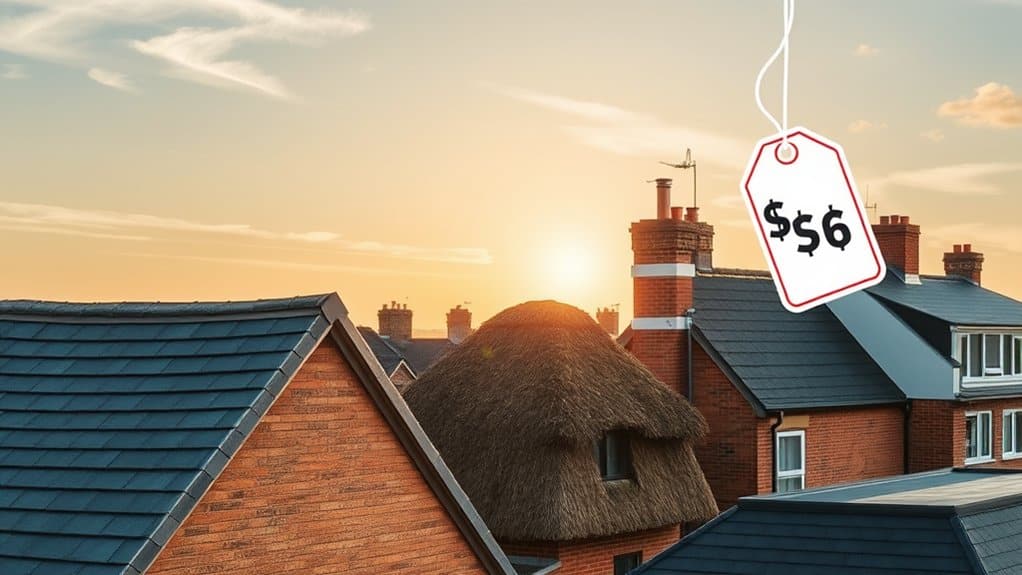
Selecting the right roof type is crucial as it affects both appearance and costs.
Flat roofs are generally more economical, with installation costs between £2,500 and £3,500. Materials such as EPDM or GRP are durable and range from £40 to £100 per m². In contrast, pitched roofs typically cost between £6,000 and £12,000, making them a more significant investment upfront. Tile roofs generally have an average installation cost of around $28,000, showcasing the potential for higher expenses in certain roof types.
On the other hand, pitched roofs provide better drainage and are more visually appealing, costing between £8,000 and £10,000 for installation. Common materials like asphalt shingles or slate can cost from £25 to £200 per m².
While flat roofs have lower initial costs, pitched roofs may increase your property's value due to their longevity and aesthetic advantages.
Weigh these factors carefully to find the best option for your home.
Additional Costs and Services

When planning your roof replacement, it's crucial to consider extra costs that can significantly affect your budget. For instance, scaffolding can cost between £750 and £1,000 or more, depending on the complexity of your property. Removing the old roof may set you back an additional £900 to £2,500. Don't overlook insulation, which typically starts at around £350, and be prepared for possible structural repairs that could reach up to £1,800. Regular maintenance costs for upkeep should also be factored into your overall budget.
| Cost Item | Estimated Cost |
|---|---|
| Scaffold Hire | £750 – £1,000+ |
| Old Roof Removal | £900 – £2,500 |
| Roof Insulation | £350+ |
These additional services are essential for a successful roof replacement and ensuring your home remains energy efficient.
Labour Costs and Engaging Professionals
When planning a roof replacement, it's crucial to consider labour costs, as they can significantly affect your budget.
In the UK, labour rates typically range from £150 to £300 per day per worker. For more complex projects, labour can account for 40-60% of the total cost.
Hiring qualified professionals ensures high standards, which can impact warranties and quality. Accredited roofers can assess any additional work needed and provide customised quotes. Additionally, effective communication with your contractor is vital to ensure clarity and address any concerns throughout the project.
Keep in mind that location and the complexity of your roof will influence labour rates. Scheduling your project during off-peak seasons may also lead to savings.
Ultimately, investing in skilled professionals enhances the durability and efficiency of your roofing project.
Frequently Asked Questions
How Long Does a Roof Replacement Typically Take?
A roof replacement usually takes around 3 to 5 days. The duration can vary based on factors such as the complexity of the roof, the materials used, and the weather. For instance, a simple pitched roof may be quicker to replace than a complex multi-level design. Good planning can help ensure the work is completed efficiently.
Can I Stay in My Home During the Replacement?
You can remain in your home during the replacement, but be aware of the noise and safety issues that may arise. If you decide to stay, ensure you prepare properly to reduce disruptions and safeguard your living space throughout the process. For instance, consider moving fragile items away from the work area and wearing earplugs if the noise becomes too much.
What Warranties Are Available for New Roofs?
When looking at roof warranties, you'll encounter two main types: manufacturer and workmanship warranties. Manufacturer warranties cover defects in the materials, while workmanship warranties safeguard against installation mistakes. Each type has different coverage terms, durations, and limitations. It's important to keep up with regular maintenance to ensure the warranty remains valid. For example, if a roof tile fails due to a manufacturing defect, the manufacturer warranty would apply, but if the roof leaks due to poor installation, the workmanship warranty would be relevant.
How Do I Choose the Right Roofing Material?
To choose the right roofing material, consider options like metal roofing for its durability and eco-friendly choices such as rubber slates. Think about the appearance, maintenance requirements, and the local climate to ensure your decision is both practical and suitable for your area. For instance, if you live in a region with heavy rainfall, slate might be a better fit due to its water-resistance.
Are There Financial Assistance Programs for Roof Replacement?
Yes, there are financial assistance options available for roof replacement in the UK. Programs such as the Home Repair Assistance Grant and the Energy Company Obligation Scheme can help eligible homeowners cover the cost of essential roof repairs or replacements. These schemes are designed to make it easier for those in need to maintain their homes.
Conclusion
When planning a roof replacement, it's important to know the costs involved. In the UK, the average price for a new roof typically ranges from £5,000 to £10,000, varying based on materials and labour. Understanding the factors that affect these costs allows you to make informed choices. Investing in a new roof now can help you avoid larger expenses down the line, keeping your home safe and secure for years to come.