

Flat Roof Drainage Systems: Preventing Ponding Water in British Weather
To prevent ponding water on flat roofs in the UK, ensure a minimum slope of 1:80 for proper drainage. Use tapered insulation or firrings to guide water towards internal drains, located at the lowest points of the roof. Regularly check and clear gutters and drains to avoid blockages. Invest in quality waterproofing membranes for long-lasting protection. It’s also crucial to comply with building regulations for safety and durability. Explore additional strategies to enhance your drainage system for optimal performance.
Key Takeaways
- Ensure a minimum slope of 1:80 on flat roofs to promote effective drainage and avoid water pooling.
- Position internal drains at the lowest points and steer clear of areas prone to debris accumulation for optimal water flow.
- Regular maintenance is key: clear gutters, downpipes, and drains to prevent blockages and ensure efficient drainage.
- Consider using tapered insulation or firrings to achieve the necessary slope for better drainage.
- Design drainage systems with British weather in mind; for larger roofs, incorporate multiple drains to manage heavy rain effectively.
Understanding the Importance of Positive Slope in Flat Roofs

Maintaining a positive slope on flat roofs is crucial for proper drainage and the overall integrity of the structure. Ideally, a slope of at least 1:80, or better yet, 1:40, is necessary to prevent water from pooling. This is especially important given the UK’s frequent rainfall, which demands reliable drainage systems. To avoid issues like silt build-up and membrane stress during freezing, incorporating a minimum fall of 1:80 is essential when designing flat roofs. Compliance with UK roofing regulations ensures that drainage systems are effectively designed to manage water flow.
Different roofing materials, such as aluminium and copper, require specific slopes for optimal performance. To achieve this slope, tapered beams or firrings can be used to direct water towards designated drainage points. Complying with UK Building Regulations not only enhances the roof’s durability but also ensures safety. A well-constructed slope protects the roof and extends its lifespan, ultimately safeguarding the entire building.
Key Components of Effective Drainage Systems

To create effective drainage systems on flat roofs, it’s important to grasp the different types of drains and where to position them. Ensuring a proper slope is crucial for directing water flow and preventing pooling. Regular maintenance will help keep your drainage system in top shape, protecting against potential water damage. Additionally, proper drainage design is essential to prevent water ingress and ensure the longevity of the roof structure. Implementing regular inspections can help identify issues before they escalate into serious problems.
Drain Types Overview
Effective drainage systems for flat roofs depend on various types of drains, each tailored to tackle specific issues with water accumulation and removal. Internal drains are adept at collecting water from low points and come equipped with dome strainers to filter out debris, ensuring the system remains efficient. Proper drainage is essential to maintain roof functionality and prevent potential leaks, as it helps in avoiding structural damage over time.
Scuppers, located on parapet walls, enable quick drainage through gravity, acting as a reliable overflow solution. Gutters and downspouts capture runoff at the edges of the roof, directing water away from the building to protect the foundations. Siphonic drains use negative pressure to speed up water removal, allowing for the use of smaller pipes and potentially lowering installation costs. Each type of drain is vital in preventing water pooling and enhancing long-term durability, making careful selection crucial for optimal drainage performance, especially in areas prone to heavy rainfall.
Slope Importance
Understanding the importance of slope in flat roof drainage systems is vital for preventing water build-up and ensuring the roof’s longevity. A well-designed slope improves drainage efficiency, minimises the risk of ponding, and extends the life of roofing materials. Here’s a quick reference to minimum slope standards:
| Slope Requirement | Specification |
|---|---|
| General Recommendation | 1:80 (BS 6229) |
| Design Fall | 1:40 |
| Green Roofs | 1:60 |
| Aluminium/Copper/Zinc | 1:60 |
| Zero Slope Systems | Only certified systems permitted |
Implementing the correct slope can enhance your roof by ensuring swift drainage, reducing maintenance costs, and preventing structural damage due to water retention. Always check local regulations when planning your drainage system.
Maintenance Practices
A well-maintained drainage system is crucial for ensuring effective water management in flat roof designs.
To keep your system in top shape, follow these maintenance tips:
- Carry out drainage inspections twice a year, particularly during autumn leaf fall and after heavy rainfall.
- Regularly clear gutters, downpipes, and rainwater outlets to avoid blockages.
- Check the surface protection around drainage points and replace any damaged parts.
- Remove debris such as leaves and dirt to keep water flowing freely and prevent ponding.
Identifying Causes and Consequences of Ponding Water
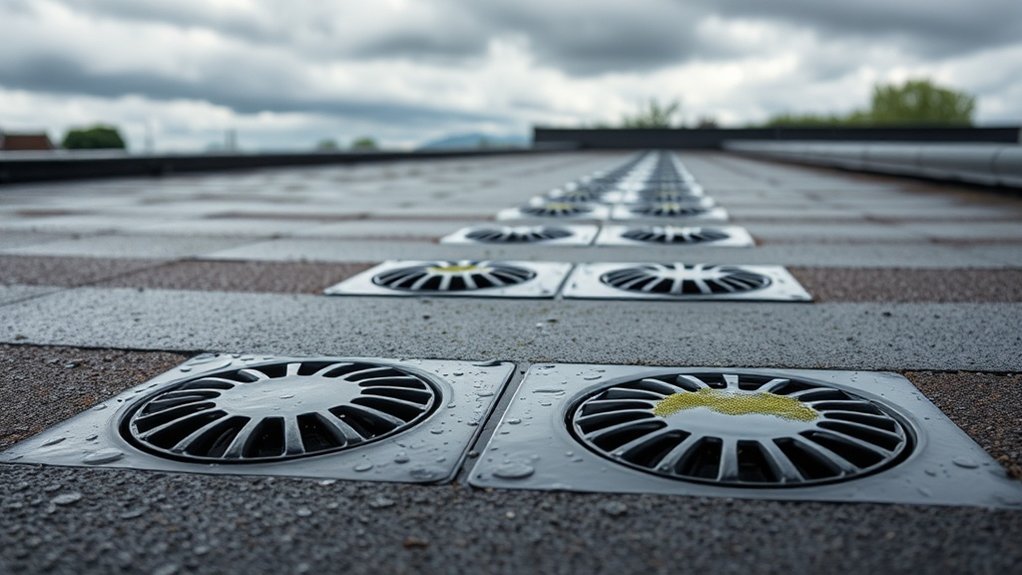
Flat roofs can be practical, but they can also lead to serious problems like ponding water if not designed and maintained correctly. Identifying ponding is crucial to prevent issues that may threaten the structure and safety of the building.
Common causes include insufficient roof slope, poor drainage design, and structural issues, with blocked outlets making the situation worse by trapping water in low-lying areas.
The consequences of ponding are significant: it increases the load on the roof, accelerates the deterioration of the waterproof membrane, and raises the risk of leaks and mould growth.
Moreover, standing water creates slip hazards and makes maintenance more difficult. By understanding these factors, you can implement effective solutions to ensure the roof’s longevity and the safety of everyone using the space.
Strategies for Prevention and Mitigation

To effectively prevent and mitigate ponding water on flat roofs, it’s essential to adopt strategic design, maintenance, and drainage solutions.
Here are some key strategies to ensure your flat roof functions optimally:
- Ensure a minimum slope of 1:80 and use tapered insulation to guide water towards drainage points.
- Carry out regular inspections and keep gutters and drains clear to avoid blockages.
- Install internal drains at low spots and upgrade existing systems to handle heavy rainfall.
- Invest in high-quality waterproofing methods to shield the roof membrane from extended water exposure.
Weather and Environmental Considerations in Drainage Design

Understanding the weather and environmental factors affecting drainage design is crucial for maintaining flat roofs. Recent UK climate trends indicate increased rainfall, making effective debris management and accurate drainage calculations vital.
| Factor | Impact | Solution |
|---|---|---|
| Increased Rainfall | Overloaded drainage systems | Use dual outlets |
| Debris Accumulation | Blocked drains causing ponding | Schedule regular maintenance |
| Freeze-Thaw Cycles | Risk of structural damage and leaks | Insulate drainage outlets |
To avoid ponding and structural issues, ensure compliance with BS EN 12056-3 standards while considering environmental challenges. Addressing these factors proactively helps protect your flat roof from the unpredictable British weather.
Best Practices for Ensuring Long-Term Performance

To ensure the long-term performance of flat roof drainage systems, it’s vital to adopt best practices during both the design and maintenance stages.
Here are key strategies:
- Ensure a proper slope of at least 1/4 inch per foot to direct water efficiently towards the drains. This helps prevent pooling.
- Choose high-quality drainage materials, such as robust waterproofing membranes like EPDM or TPO, which offer excellent moisture resistance.
- Regularly inspect and clean all drainage components to avoid blockages and maintain optimal flow.
- Position internal drains at the lowest points of the roof and incorporate external gutters to manage stormwater effectively.
Frequently Asked Questions
How Often Should I Inspect My Flat Roof Drainage System?
You should inspect your flat roof drainage system twice a year, ideally in spring and autumn. Use an inspection checklist to look for blockages, standing water, and any signs of damage. This will help you carry out necessary maintenance and avoid bigger problems down the line.
What Materials Are Best for Flat Roof Drainage Components?
Picture rain flowing off a robust flat roof. For effective drainage, consider materials like EPDM, PVC, or GRP. These options are durable and enhance waterproofing, ensuring secure connections that prevent leaks and can handle the challenges of British weather.
Can I Install Additional Drains Myself?
Yes, you can install additional drains yourself, but ensure you have the right skills for the job. Assess your DIY capabilities, select suitable materials, and follow safety precautions to prevent leaks. For example, if you’re comfortable with basic plumbing tasks, adding a drain in your garden could be manageable. Just remember to check local regulations before you start.
What Signs Indicate My Roof Drains Are Blocked?
When it rains, it can lead to problems if your roof drains are blocked. Watch for signs such as water pooling on the roof, sagging structures, visible debris, or leaks inside your building. These symptoms indicate that your roof drains require urgent attention to avoid further damage.
How Do I Choose a Qualified Contractor for Drainage Installation?
To select a qualified contractor for drainage installation, focus on their experience specifically with drainage projects and their professional qualifications. Check that they have the necessary licensing and insurance, and look into customer reviews to gauge their reputation. Ensure they are familiar with local regulations and can provide support after the installation for ongoing reliability and service. For instance, a contractor who has worked in your area may have insights into specific drainage challenges relevant to your property.
Conclusion
In British weather, proper flat roof drainage is crucial to prevent ponding water, which can cause significant structural damage. Research indicates that roofs with poor drainage can lose up to 50% of their lifespan due to water build-up. To enhance the longevity of your roof, ensure there is a positive slope and incorporate essential drainage components. Following best practices not only safeguards your investment but also improves safety and efficiency in your building’s overall performance.


