

Flat Roof Bubble and Blister Repairs: UK Solutions Guide
Flat roof blisters can weaken your roof, leading to leaks and potential structural issues. They typically form due to trapped air or moisture, often as a result of poor installation, high humidity, or excessive heat. To repair a blister, carefully puncture it to drain any moisture, apply roofing adhesive, and cover it with a patch.
To prevent blisters, ensure your roof has proper ventilation and schedule regular inspections. Being proactive about these factors is crucial for maintaining your roof’s durability. For more effective repair strategies and materials, keep exploring your options.
Key Takeaways
- Regularly inspect blisters to evaluate their condition and decide on suitable repair methods, such as puncturing and patching.
- Use compatible materials like EPDM or modified bitumen for repairs to ensure effective waterproofing.
- Ensure proper ventilation and drainage to prevent moisture build-up and new blister formation.
- Keep a record of blister sizes and any changes over time to track deterioration and schedule repairs promptly.
- Carry out routine maintenance checks to prolong the roof’s lifespan and minimise long-term repair costs.
Understanding Flat Roof Blisters: Causes and Formation

When installing a flat roof, it’s crucial to understand the causes of blisters to maintain its integrity.
Blisters often form due to trapped air or moisture between roofing layers, especially if the substrate hasn’t fully dried before applying the membranes.
Poor workmanship, like uneven bonding or gaps in bitumen application, can create voids that trap moisture.
Furthermore, high humidity or rain during installation raises the risk of moisture entrapment, leading to blistering.
Extreme heat can worsen these issues, causing trapped air and moisture to expand. Recognising these causes is key to ensuring effective installation and long-term roof performance, ultimately helping you avoid costly repairs and ensuring a durable, leak-free flat roof for your clients. Addressing any damage promptly can prevent compromised roof membranes that lead to leaks.
Identifying Signs of Blisters on Flat Roofs

Recognising the signs of blisters on flat roofs is essential for maintaining the roof’s integrity and preventing further damage. Look for raised, bubble-like formations on the membrane, which can vary in size. A shiny surface often indicates trapped moisture, while cracks or curling edges may suggest adhesive failure. Regularly check for soft or spongy areas, as these can indicate decay. It’s important to conduct routine inspections, especially around seams where blisters often appear. Keep an eye out for moss or staining, as these can indicate prolonged moisture retention. Early detection can help you avoid costly repairs and extend the life of your flat roof. Additionally, addressing poor ventilation can prevent blisters from forming due to trapped air or moisture. Conducting regular inspections ensures that any emerging issues are identified and dealt with promptly.
Risks Associated With Flat Roof Blisters

Blisters on flat roofs can lead to serious risks that affect both the structure and longevity of the roof. Here are some key concerns to keep in mind when considering blister prevention:
- Structural Integrity: Blisters can weaken the roof’s load-bearing capacity, potentially resulting in roof failure and leaks. Moisture accumulation is a common cause of blistering that can exacerbate these structural issues. Additionally, commercial roofs are designed to support heavy equipment which can further complicate structural integrity if blisters form.
- Moisture Damage: Trapped moisture can cause rot and decay, leading to higher repair costs and reduced insulation performance.
- Safety Issues: Blisters can create trip hazards and may hide other defects, increasing safety risks during inspections. Regular roof inspections are essential for spotting blisters early and enabling timely repairs.
Step-by-Step Repair Process for Flat Roof Blisters

Addressing flat roof blisters requires a clear repair process to restore your roof’s integrity.
Start by inspecting the roof to locate the blisters and assess the overall condition of the membrane. Carefully puncture the blister to drain any moisture, then remove any loose materials around the area. Clean the site thoroughly before cutting out the damaged sections of the membrane.
Next, apply roofing adhesive evenly to bond the layers, aiming for a thickness of about 2 millimetres. Cut a patch from suitable roofing materials, place it over the sealed area, and press firmly to remove any air pockets. It’s important to use a patch material that is compatible with the existing flat roof types to ensure a proper seal and longevity of the repair.
Finally, reinforce the edges with additional adhesive and allow adequate time for curing before subjecting the repair to foot traffic or weather.
Temporary Measures for Immediate Leak Issues

When dealing with a leak, your first priority is to seal it quickly.
Clear away any debris from the area to ensure a clean surface for sealing. Use roofing sealants or tapes as a quick fix until you can organise a permanent repair.
For instance, if it’s a flat roof, a bit of tape can hold off the rain until a professional can take a look.
Emergency Leak Sealing
In the event of a leak on a flat roof, swift and efficient temporary measures are crucial to minimise water damage.
Here are three emergency sealing methods you can use:
- Waterproof Tape: Clean and dry the area first, then apply high-quality waterproof tape over any small cracks or holes for a strong hold.
- Sealants: Opt for clear epoxy or silicone sealants to patch minor leaks. Ensure these patches are smooth for complete coverage and allow adequate curing time.
- Roofing Tar: Apply roofing tar around the leak to block water. Press it down firmly to secure it, but remember this is a temporary fix and may not look great.
These methods offer immediate relief, but be sure to arrange for a professional repair to ensure long-term protection.
Debris Removal Strategies
Effective debris removal is crucial for preventing leaks on flat roofs, as accumulated materials can block drainage and cause water retention.
Start by using a soft-bristle broom to sweep leaves and dirt downwards. Clear debris from gutters by hand or with a scoop to ensure proper drainage. A low-powered leaf blower can help reach tricky spots without damaging surfaces.
Avoid pressure washing, but if it’s necessary, use low pressure. Always wear non-slip shoes, gloves, and a safety harness when working on roofs.
Regular maintenance with the right tools not only addresses immediate leak concerns but also helps maintain the roof’s integrity, ensuring efficient water flow in the long run.
Preventive Strategies to Avoid Blister Formation

Preventing blister formation on flat roofs requires a comprehensive approach centred on proper ventilation, quality installation, regular maintenance, effective drainage, and protective coatings.
Here are three key strategies:
- Ventilation Techniques: Ensure proper airflow beneath the roofing membrane by using vented insulation and installing either mechanical or passive vents to enhance air circulation.
- Drainage Solutions: Design roof slopes to encourage water runoff, and regularly clear gutters and drains to avoid standing water, which can cause blisters.
- Regular Maintenance: Carry out routine inspections to identify early signs of damage and address minor issues quickly, while keeping a record of roof conditions for ongoing monitoring.
Additional Repair Techniques for Blistering Problems

When addressing blistering issues on flat roofs, it’s essential to use effective repair methods that target both the symptoms and the root causes.
Begin by carefully draining small blisters with a precise incision and then reseal the membrane with a compatible adhesive or roofing sealant. For larger blisters, cut out the damaged area and replace it with a new membrane patch, ensuring that overlaps are properly sealed to maintain waterproof integrity.
Consider alternative materials such as EPDM or modified bitumen for added durability. Applying high-quality protective coatings can also help reduce the likelihood of further blister formation.
Regularly inspect patched areas and explore innovative reinforcement techniques to ensure ongoing performance and extend the lifespan of the roof, ultimately avoiding costly repairs in the future.
Importance of Regular Roof Maintenance

Regular roof maintenance is crucial for spotting damage early on, such as cracks or blisters, before they worsen.
By tackling minor repairs quickly, you can save on expensive fixes and significantly prolong the life of your roof.
Keeping up with regular checks ensures your roof stays in good condition, protecting your investment and improving the overall safety of your building.
Early Damage Detection
Detecting early damage in flat roofs is crucial for maintaining your property’s integrity and keeping repair costs down.
Regular inspections allow you to implement effective preventative maintenance. Here are three key reasons why early damage detection is important:
- Prevents Costly Repairs: Spotting minor issues like bubbles and blisters early on stops them from developing into major leaks, which can lead to significant water damage.
- Increases Roof Lifespan: Tackling small weaknesses promptly can extend your roof’s life, reducing the likelihood of needing a premature replacement.
- Enhances Safety: Regular checks help identify deterioration that could pose safety risks, ensuring your roof remains secure.
Cost-Effective Solutions
Cost-effective solutions are vital for maintaining flat roofs, and regular maintenance can significantly reduce long-term costs. Using affordable materials and efficient repair methods helps keep your roof in top shape. Routine inspections and prompt repairs can identify minor problems before they turn into expensive fixes.
| Repair Type | Cost Estimate |
|---|---|
| Torch-on Felt Repairs | £90 – £140/m² |
| EPDM Rubber Membranes | Moderate cost |
| GRP Fibreglass Repairs | £90 – £140/m² |
Implementing these strategies not only protects your flat roof but also extends its lifespan, resulting in considerable savings and better resource management.
Extended Roof Lifespan
Maintaining a flat roof goes beyond just making quick repairs; it’s crucial for prolonging its lifespan. Regular maintenance helps identify problems before they worsen, ultimately saving you time and money.
Here are some essential practices to ensure your roof lasts longer:
- Biannual Inspections: Regularly check for cracks, blisters, and leaks to catch issues early.
- Debris Clearance: Remove leaves and dirt from drains to prevent water pooling, which can damage roofing materials.
- Tailored Care: Use reflective coatings and repair any punctures to maintain the roof’s integrity and protect it from environmental damage.
Selecting the Right Materials for Repairs

When choosing materials for flat roof repairs, it’s crucial to ensure they’re compatible with your existing roofing system for a successful, long-lasting fix.
Consider options like EPDM, modified bitumen, or built-up roofing; each provides unique durability and weather resistance.
Use application techniques such as the cut-out and replace method or patch application, ensuring you work with similar materials to maintain the roof’s integrity.
Always prioritise waterproofing to prevent leaks, and look into DIY-friendly repair kits for straightforward jobs.
Using reflective roof coatings can also improve thermal performance and reduce blistering.
Monitoring Blistered Areas for Changes

You should regularly monitor the size of blisters on your flat roof, as any changes may indicate a deterioration in condition.
Conducting frequent visual inspections is crucial for spotting new bubbles or surface irregularities that could suggest moisture issues.
Blister Size Tracking
How can effective blister size tracking improve the lifespan of flat roof systems? By employing precise blister measurement methods and advanced monitoring technology, you can spot potential problems before they worsen.
Here are three essential practices to adopt:
- Regularly record blister sizes using high-resolution photographs and reference markers for accurate documentation.
- Use infrared thermography to identify moisture beneath the membrane, allowing you to predict blister growth.
- Create detailed maps indicating blister locations and sizes to monitor changes over time.
Keeping track of blister development is crucial for your maintenance strategy, enabling timely action on any signs of damage.
This proactive method not only prolongs your roof’s life but also safeguards the underlying structure from expensive repairs.
Regular Visual Inspections
Regular visual inspections are crucial for monitoring blistered areas on flat roofs, as they help spot changes that might signal underlying problems.
Schedule inspections at least twice a year, preferably in spring and autumn, and increase the frequency after severe weather events. Focus on blistered patches, checking their texture, colour changes, and the integrity of the membrane.
Document your findings carefully, noting the locations of blisters and any irregularities, and consider using annotated roof plans or photographs for clarity. Incorporate spot checks during routine maintenance to catch issues early.
Keeping detailed records will help you track progress and ensure timely repairs. By following these practices, you can effectively manage the risks associated with blistering.
Environmental Factors Affecting Flat Roof Integrity

While flat roofs provide practical advantages, their integrity can be significantly affected by various environmental factors.
To effectively manage moisture and reduce climate impact, consider these three key issues:
1. Heavy Rainfall and Ponding: Frequent rain can lead to water pooling, which undermines waterproof membranes and fosters mould growth, ultimately causing leaks and structural damage.
2. Freeze-Thaw Cycles: Water trapped in cracks can freeze, expand, and worsen material deterioration.
Moreover, ice and snow can add considerable weight, jeopardising the roof’s stability.
3. Wind and Storm Damage: Strong winds can lift membranes, exposing underlying materials, while debris can puncture surfaces.
Regular inspections are essential to identify and address these vulnerabilities.
Long-Term Solutions for Flat Roof Longevity
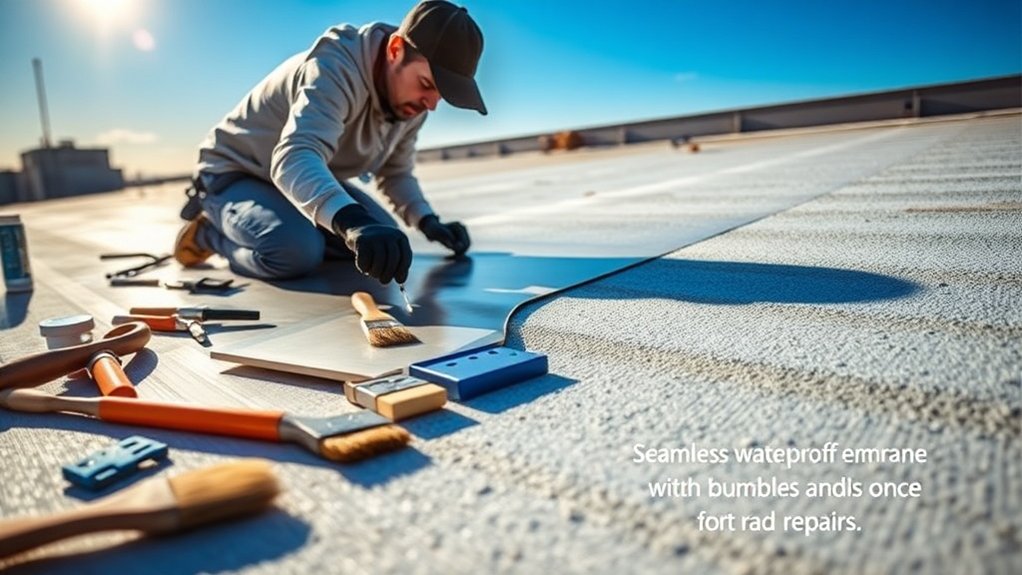
To ensure your flat roof lasts, it’s crucial to address environmental factors that could compromise its integrity.
Choosing durable materials like EPDM, PVC, or TPO can significantly extend its lifespan, as these options are resistant to UV rays, chemicals, and thermal stresses. Innovations like built-up roofing (BUR) systems not only improve durability but also offer extra insulation.
Proper installation by qualified contractors is key to preventing leaks and ensuring effective drainage, which helps avoid standing water.
Regular maintenance—such as inspections twice a year and quick repairs—will also help prolong your roof’s life. Adding protective coatings can reduce UV exposure, while precise seam detailing can prevent bubbling.
Frequently Asked Questions
How Much Does It Cost to Repair Flat Roof Blisters?
Repair costs for flat roof blisters typically range from £150 to £1,200. This variation depends on factors such as the type of roofing material and the severity of the damage. For instance, minor blisters on a felt roof may cost less to fix than larger blisters on a more complex membrane. It’s important to evaluate your specific circumstances to get an accurate estimate for the required repairs.
Can I Repair Flat Roof Blisters Myself?
Yes, you can repair flat roof blisters yourself, but be sure you’re ready for the task! Proper maintenance includes regularly checking for issues, ensuring proper drainage, and carefully applying adhesive to prevent future leaks. Just be cautious with larger blisters, as these may require professional help.
How Long Do Flat Roof Repairs Typically Last?
Flat roof repairs usually last between 10 and 30 years. To maximise the lifespan of your repairs, it’s important to conduct regular inspections and address any issues promptly. For instance, if you notice any cracks or blisters, getting them fixed quickly can help prevent more extensive damage later on. This proactive approach ensures your roof stays in good condition for many years.
What Type of Adhesive Is Best for Flat Roof Repairs?
For flat roof repairs, bitumen-based adhesives are perfect for felt and asphalt surfaces, while rubber-based adhesives work best with EPDM membranes. Proper surface preparation is crucial for effective bonding and durability. Choose the right adhesive for long-lasting results.
Are There Warranties Available for Flat Roof Repair Work?
Yes, warranties are available for flat roof repair work in the UK. These often cover both materials and workmanship, including guarantees on repairs. It’s important to read the terms carefully and understand any maintenance requirements to ensure your warranty remains valid.
Conclusion
In the world of flat roofs, blisters are a clear sign of trouble, much like bubbles in boiling water. By understanding how they form and addressing them quickly, you can stop a minor issue from becoming a major problem. Just as a gardener looks after their plants, you should keep an eye on your roof and make necessary repairs. With the right materials and techniques, you can ensure your flat roof remains durable and ready to withstand the elements.


