

How to Extend the Life of Your Commercial Roof
To extend the life of your commercial roof, it's essential to prioritise regular inspections and maintenance. Schedule assessments twice a year, especially after severe weather events, to identify any issues early on. Keep detailed records of repairs and inspections, which will aid in budgeting for future work. Regularly clear away debris to prevent water drainage problems and mould growth. Ensure proper ventilation to improve energy efficiency and prolong the roof's lifespan. Address minor leaks promptly to avoid them becoming larger issues. Finally, consider using quality materials and protective coatings that reflect heat and seal minor cracks. These practical strategies will help you maintain a strong roofing system and protect your investment. For more insights, keep exploring!
Key Takeaways
- Arrange regular inspections twice a year to identify early signs of damage and maintain the roof's integrity.
- Create a detailed maintenance plan that includes record-keeping and procedures for emergency repairs.
- Ensure drainage systems are properly installed and regularly cleared to prevent water damage.
- Choose high-quality roofing materials and protective coatings that improve durability and energy efficiency.
- Address repairs promptly and improve roof ventilation to reduce condensation and extend the lifespan of materials.
Importance of Regular Inspections
Regular inspections are crucial for the longevity and integrity of your commercial roof. Conducting inspections twice a year allows for early detection of potential issues like leaks, mould, and damage from the weather. This proactive approach not only helps prevent premature deterioration of your roof but also saves you money in the long run. Tackling minor problems during routine checks is far cheaper than dealing with major repairs later. Additionally, regular inspections ensure compliance with building regulations and safety standards, which is vital for the overall stability of your building. This helps minimise risks such as roof collapses and water damage, creating a safer environment for everyone. Inspections also identify factors that could lead to energy inefficiency, further boosting your cost savings. Moreover, addressing issues during inspections significantly extends roof lifespan, ensuring your investment remains protected over time. Regular evaluations can also boost property value, making your commercial space more appealing to potential tenants or buyers.
Scheduling Professional Assessments
After highlighting the importance of regular inspections, let's focus on scheduling professional assessments to ensure your commercial roof stays in top condition.
Timely assessments can help spot potential issues early, utilising advanced inspection technology. Regular inspections are essential for maintaining the integrity of your commercial roof, as they often include detailed reports with photos and recommendations.
Here are some key scheduling practices:
- Biannual inspections: Arrange for inspections every six months, ideally in spring and autumn.
- Post-storm assessments: Schedule inspections immediately after severe weather, such as storms or heavy snowfall.
- Seasonal considerations: Take into account your local climate and weather patterns to select the best times for inspections.
- Insurance claim purposes: Conduct thorough inspections before and after significant weather events to facilitate insurance claims.
When choosing a contractor, look for professionals with the right qualifications and experience.
Ensure they're familiar with local conditions and hold the necessary certifications.
Providing them with relevant documents, such as previous inspection reports, can improve their assessment process.
Conducting Visual Inspections
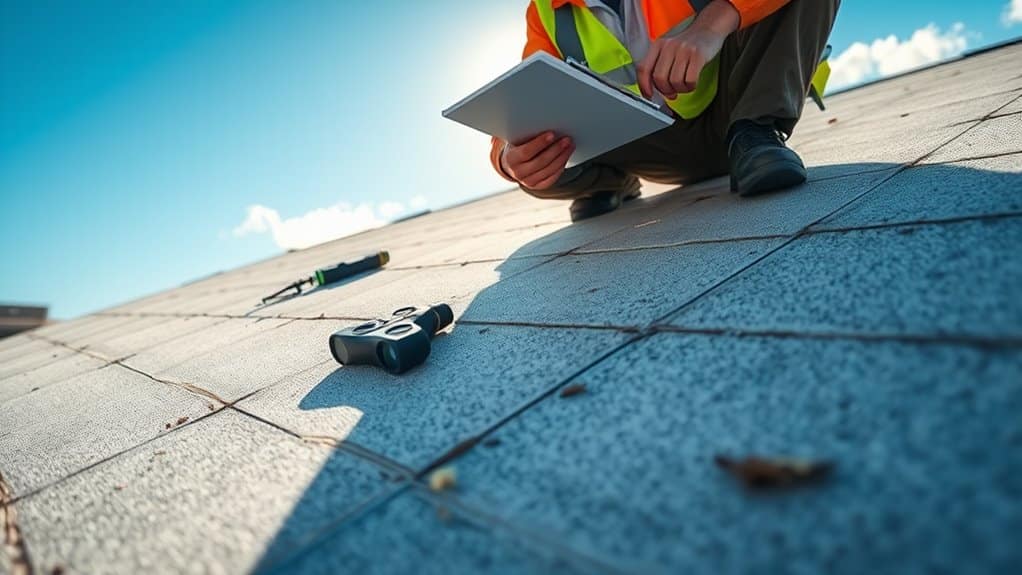
Conducting visual inspections of your commercial roof is essential for spotting potential problems that could lead to expensive repairs. By using effective inspection techniques, you can identify hidden issues that might otherwise be overlooked. Regular visual inspections are a crucial part of the SR PreVision assessment process. Regular inspections can help identify these signs early to prevent costly repairs.
Pay attention to these areas during your inspections:
| Inspection Area | Key Aspects to Examine | Techniques to Use |
|---|---|---|
| Roof Interior | Water damage, mould, structural integrity | Visual survey, thermal imaging |
| Roof Surface | Ponding water, cracks, blisters | Detailed visual inspection |
| Roof Perimeter | Seams, flashing, coping | Thorough visual examination |
| Gutter Systems | Functionality and blockages | Visual checks for obstructions |
| Rooftop Components | Wear on vents and flashing | Photographic documentation |
Regular inspections, ideally twice a year, can significantly prolong your roof's lifespan. Look for signs of damage like tears or structural issues and record your observations carefully. Early identification of minor problems allows for prompt repairs, preventing more severe damage and costly fixes later on. Make these inspections a priority to ensure your roof stays in excellent condition.
Implementing a Maintenance Plan
To extend the lifespan of your commercial roof, it's essential to implement a structured maintenance plan that includes regular inspections and documented maintenance procedures. Inspect your roof at least twice a year to identify potential issues early on. Keeping thorough records of repairs and maintenance provides a clear history and helps with future budgeting and planning. This proactive approach not only improves the roof's performance but also ensures you're prepared for any future needs, ultimately reducing liability risks from accidents related to roof issues. Additionally, conducting inspections after severe weather can help identify any new damage that may have occurred.
Scheduled Inspections Frequency
Regular inspections are crucial for preserving the integrity of your commercial roof and should be part of a structured maintenance plan.
By employing advanced inspection techniques and taking seasonal factors into account, you can effectively arrange inspections tailored to your roof's needs.
Here's a suggested inspection schedule:
- Bi-Annual Inspections: Most commercial roofs should be inspected twice a year, in spring and autumn.
- Post-Weather Event Inspections: Always conduct an inspection after severe weather, such as storms or high winds.
- Type of Roof Considerations: Flat roofs require inspections twice a year, while sloped roofs usually need one inspection annually. Regular inspections are particularly important for flat roofs' vulnerability to water damage and wear.
- Age and Location Factors: Older roofs in areas prone to extreme weather may require up to four inspections each year.
Documented Maintenance Procedures
Once you've set a schedule for regular inspections, implementing documented maintenance procedures is crucial to keep your commercial roof in excellent condition.
Start by creating a tailored maintenance programme that considers your roof's type, age, and local environmental factors. Assemble roof information files that include design and installation records, specifications, and product data from suppliers.
Make record keeping a priority by keeping detailed logs of inspections and repairs. Note any issues discovered, actions taken, and include photographs of any damage. This documentation helps track your roof's condition and aids in budgeting for future repairs. Additionally, regular inspections should be conducted twice a year to catch early signs of wear and tear.
Carry out regular maintenance tasks, such as clearing debris and promptly replacing any damaged components to prevent further deterioration. Ensure that specific maintenance is suited to your roofing material, and routinely check rooftop equipment to minimise risks.
Additionally, keep records of any construction changes or warranties related to your roof. By maintaining thorough documentation, you'll enable informed decisions about repairs and upgrades, ultimately extending the lifespan of your commercial roof.
Regularly review and update your maintenance plan to account for any changes in the roof's condition or environmental factors.
Debris Removal Techniques

To effectively manage debris on your commercial roof, set up a regular cleaning schedule that suits your specific environment.
Use appropriate removal tools, such as roof rakes and scoops, to clear debris without harming the roof surface.
Regular maintenance not only keeps your roof tidy but also enhances its lifespan and functionality.
Regular Cleaning Schedule
Establishing a regular cleaning schedule is crucial for preserving your commercial roof's condition.
By making seasonal adjustments, you can tackle the unique challenges each season brings. Here are some effective cleaning tips to follow throughout the year:
- Autumn and Spring Preparation: Clean the roof between seasons to ready it for temperature changes and remove any debris that could clog gutters and drains.
- Post-Storm Care: After storms, promptly remove tree branches and leaves to prevent moisture accumulation, and check for any damage.
- Summer Upkeep: Regularly clean cool roofs to maintain their reflective properties, using gentle methods to avoid surface damage while looking for any issues.
- Annual Inspection: Schedule at least one comprehensive clean each year to check for mould, moss, and algae growth, ensuring that you use safe methods that won't harm the roof.
Effective Removal Tools
Using effective tools for debris removal is essential for maintaining the integrity of your commercial roof. Proper roof cleaning not only improves appearance but also ensures safety by preventing potential damage. Here are some tools you can use for efficient debris removal:
| Tool Type | Key Features |
|---|---|
| Leaf Blowers | Quickly removes light debris; best used on calm days for safety. |
| Telescoping Rakes | Allows you to reach high areas without climbing; ideal for steep roofs. |
| Soft-Bristled Brooms | Gentle sweeping that prevents damage to shingles; perfect for detailed work. |
| Specialised Equipment | Cranes or portable skips for heavy debris; professional assistance is advisable. |
| Safety Gear | Always wear gloves and non-slip footwear to ensure personal safety. |
When using these tools, consider the type of debris and the condition of the roof. Leaf blowers are suitable for light materials, while telescoping rakes help minimise the risk of falls. Soft-bristled brooms are best for delicate surfaces. For larger clean-ups, specialised equipment is necessary. Remember, effective debris removal extends your roof's lifespan and reduces repair costs. Prioritise safety to keep your roof in excellent condition.
Ensuring Proper Drainage
A well-designed drainage system is crucial for preserving the integrity of your commercial roof. Proper drainage ensures effective water flow, preventing problems like ponding that can cause significant damage.
Here are four essential components to consider:
- Slope Requirements: Aim for a minimum slope of 6mm per metre to facilitate efficient drainage and eliminate standing water.
- Drainage Components: Ensure your system includes gutters, downspouts, internal drains, and scuppers, all working in unison to direct water off the roof.
- Regular Maintenance: Clean gutters, downspouts, and drains regularly to avoid blockages. Conduct inspections to check for clogs, corrosion, and proper alignment.
- Tapered Insulation: Consider using tapered insulation or crickets to guide water flow and reduce ponding on flat roofs.
Maintaining Roof Accessories
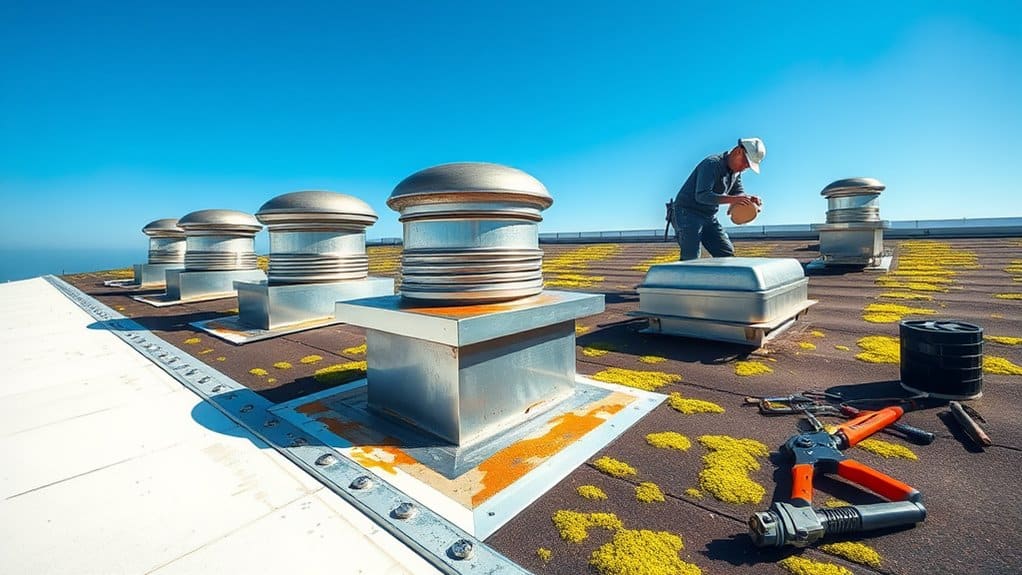
Maintaining roof accessories is vital for ensuring your commercial roof functions well and lasts longer. Regular inspections of HVAC units, flashings, seals, skylights, and vents are crucial for spotting potential problems early. It's wise to have professional inspections carried out every six months and after any severe weather to ensure everything is working at its best.
Pay particular attention to gaskets and seals for any signs of wear. To keep things running smoothly, clean condenser coils and clear debris around HVAC units. This helps maintain efficiency. Ensure proper ventilation by regularly checking air intake vents.
For flashings and sealants, look for cracks and signs of deterioration, reapplying sealants as necessary to stop water from getting in. When it comes to skylights and vents, inspect frames and seals twice a year, replacing any worn components without delay.
Keep an eye on all roof accessories to ensure they operate efficiently and help save on energy costs. Lastly, keep a record of all maintenance work to help you make informed decisions about repairs or replacements in the future.
Selecting Quality Roofing Materials
When choosing quality roofing materials for your commercial building, it's crucial to consider your specific needs. The right materials won't only improve roof performance but also prolong its lifespan.
Here are four key options to consider based on durability:
- TPO (Thermoplastic Polyolefin): Perfect for flat roofs, TPO can last between 10 and 30 years with regular upkeep. It offers excellent UV protection and reflects infrared heat, making it a smart choice for energy efficiency.
- EPDM (Ethylene Propylene Diene Monomer): Renowned for its durability, EPDM roofs can last 20 to 35 years. This synthetic rubber is robust and performs well in various weather conditions, making it ideal for large, flat buildings.
- Metal Roofs: Known for their outstanding longevity, metal roofs can last 30 to 45 years or even longer. They're energy-efficient and, with appropriate maintenance, can serve you well for a lifetime.
- Asphalt Roofs: These roofs offer a lifespan of 15 to 40 years, depending on the type and quality of installation. They're a popular choice due to their affordability and ease of fitting.
Selecting the right roofing material is a vital investment in your building's future.
Benefits of Roof Coatings
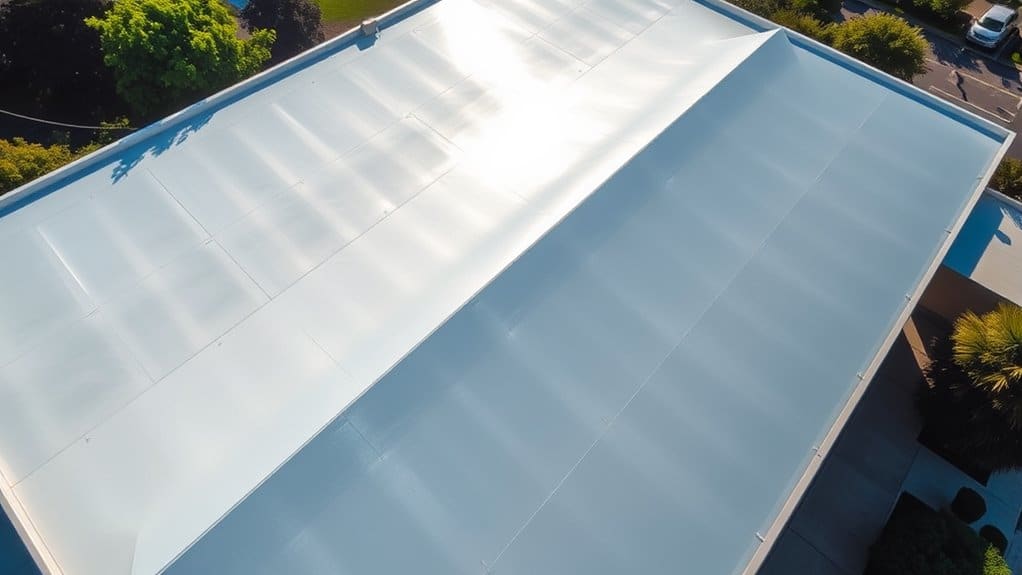
The benefits of roof coatings go beyond just looks; they significantly enhance the durability and efficiency of your commercial roof. By reflecting up to 85% of the sun's heat, these coatings reduce energy consumption and cooling costs, leading to noticeable savings on your utility bills. Keeping roof temperatures lower means less reliance on air conditioning, which ultimately cuts costs.
Roof coatings also play a vital role in environmental conservation. Reflective surfaces help lower your carbon footprint by reducing electricity usage and greenhouse gas emissions. Many coatings are designed with ultra-low or zero VOCs (Volatile Organic Compounds), minimising harmful emissions and protecting the environment.
On top of energy and environmental advantages, roof coatings act as a strong barrier against UV rays, harsh weather, and pollutants, helping to maintain your roof's structural integrity. They can seal small cracks and gaps, preventing leaks and further damage.
Utilizing Professional Services
Using professional services for comprehensive maintenance programmes can significantly extend the lifespan of your roof.
These programmes often include protective coatings that guard against environmental damage, which can reduce the need for ongoing maintenance.
Comprehensive Maintenance Programs
A comprehensive maintenance programme is vital for the durability and efficiency of your commercial roof. By implementing effective maintenance strategies, you can significantly prolong your roof's lifespan and avert expensive repairs.
Here are four key elements to consider:
- Regular Inspections: Undertake thorough inspections at least biannually, ideally before and after winter, to identify minor issues early on.
- Professional Expertise: Hire qualified roofing professionals who employ advanced inspection methods and provide detailed assessments of your roof's condition.
- Preventive Repairs: Tackle any minor issues promptly to prevent them from escalating into major, costly repairs.
- Debris Removal: Make it a routine to clear gutters, downpipes, drains, and scuppers to prevent water build-up, which can lead to significant damage.
By adopting these strategies, you not only ensure your roof remains in top condition but also comply with warranty requirements and reduce safety hazards.
Investing in a robust maintenance programme will save you money in the long run and provide a safe, functional environment for your occupants.
Protective Coatings Benefits
Regular inspections and preventive repairs are essential for maintaining your commercial roof and setting the foundation for further enhancements like protective coatings.
These coatings offer superior protection against UV rays, moisture, and mould, significantly extending the lifespan of your roof. They create a seamless, waterproof barrier that stops water from penetrating cracks, which can help avoid expensive major repairs.
There are different types of coatings available, such as silicone, acrylic, and polyurethane, each designed for specific environments. For instance, silicone coatings perform well in areas with high UV exposure, while acrylic options provide a range of colour choices for aesthetic appeal.
It's crucial to employ proper application techniques; professional services ensure thorough surface preparation and the right product selection based on your roofing material and local climate.
Professional application not only enhances durability but also improves energy efficiency by reflecting sunlight and moderating internal temperatures, leading to lower energy costs.
Many coatings come with warranties lasting from 5 to 25 years, making them a worthwhile long-term investment. By opting for professional services for protective coatings, you protect your roof's integrity and boost its performance and longevity.
Enhancing Roof Ventilation

Proper roof ventilation is crucial for the longevity and efficiency of your commercial building. An effective ventilation system ensures optimal airflow, reducing moisture buildup and improving indoor comfort.
Here are the main benefits of enhancing roof ventilation:
- Reduces condensation: Adequate airflow helps prevent water damage on the interior of the roof.
- Improves energy efficiency: It maintains a stable indoor temperature, minimising excessive heat gain or loss.
- Extends roofing material lifespan: By preventing premature ageing and damage, you can prolong the life of your roof.
- Prevents mould growth: Good ventilation helps disperse damp air, reducing the risk of mould and mildew.
Conversely, inadequate ventilation can lead to structural decay, warped materials, and expensive repairs.
To optimise your ventilation systems, consider these design elements:
- Properly install ridge, soffit, and gable vents.
- Ensure a minimum roof slope of 1/4 inch per foot for effective drainage.
- Regularly inspect and maintain vents and fans to ensure effective airflow.
Adopting these strategies will significantly enhance your commercial roof's performance and lifespan.
Budgeting for Maintenance
Effective budgeting for roof maintenance can significantly enhance the longevity and performance of your commercial building. By implementing solid budgeting strategies, you ensure that sufficient funds are allocated for regular inspections. Annual assessments by reputable firms can spot potential issues before they develop into costly repairs.
Keeping a record of your roof's history, including installation dates and past repairs, aids in planning and decision-making. A comprehensive maintenance plan is vital. This should account for ongoing upkeep as well as future replacement costs.
Consider using management software to track maintenance activities effectively. Regular tasks, such as clearing debris and cleaning gutters, should be part of your budget to prevent leaks and extend the roof's lifespan.
Also, remember to factor in replacement costs. The common rule of thumb is to spend around 8% of a new roof's cost on maintenance each year. This proactive approach helps reduce unexpected expenses.
Set aside a contingency fund for emergencies, especially in the face of severe weather conditions. By preparing for unforeseen challenges, you can ensure your roof remains in top condition, ultimately protecting your investment and effectively serving the needs of your community.
Prioritizing Timely Repairs

When you spot minor issues with your roof, tackling them swiftly can help prevent more significant, expensive problems later on.
Regular inspections ensure that potential issues are caught early, enabling prompt repairs.
Prioritising these actions not only safeguards your investment but also prolongs the life of your commercial roof.
For instance, a small leak can lead to extensive water damage if left unchecked, so it's wise to address it immediately.
Addressing Small Issues Promptly
A commercial roof is a vital asset that protects your business and its operations.
It's crucial to address small issues quickly to maintain its integrity and longevity. By identifying minor problems early and implementing proactive repair strategies, you can prevent them from becoming major headaches.
Here are four key benefits of timely repairs:
- Prevents Major Damage: Fixing small issues can stop them from turning into serious problems, such as leaks or structural damage.
- Cost Savings: Prompt repairs help you avoid costly fixes later on, which can save your budget in the long run.
- Enhanced Safety: Addressing roof issues promptly protects the safety of your occupants and reduces liability risks.
- Extended Roof Lifespan: Regular maintenance and timely repairs can significantly prolong the life of your roof, delaying expensive replacements.
Scheduling Regular Inspections
Regular inspections are crucial for maintaining your commercial roof and avoiding expensive repairs. It's advisable to schedule inspections at least twice a year—once in spring and once in autumn—to identify any damage caused by seasonal weather extremes.
Following severe weather events, such as hailstorms or strong winds, it's wise to carry out additional inspections to prevent further issues.
Make use of advanced inspection technologies to ensure a comprehensive evaluation, leaving no detail unchecked. Create a checklist for inspections that includes checks for leaks, stains, mould, and rot on both the roof surface and the interior.
For older roofs, consider increasing the frequency to every six months to manage potential problems proactively.
Engaging professional inspectors can provide a thorough assessment and detailed reports on your roof's condition, helping to identify concerns before they worsen.
Keep meticulous records of each inspection, including repairs and maintenance history, to guide future decisions.
Take into account geographic factors; areas that frequently experience storms may necessitate more regular inspections or cleaning.
By adopting a proactive approach and developing a robust roof maintenance plan, you can effectively extend your roof's lifespan, protect your investment, and better serve your organisation's needs.
Timely repairs will ensure your roof remains in excellent condition.
Long-Term Cost Considerations
How can you ensure your commercial roof remains cost-effective in the long run? By considering long-term costs, you can ensure your investment is worthwhile. Here are some key tips:
- Select the Right Materials: Opt for roofing materials that are both durable and energy-efficient. For instance, while metal roofing may have a higher upfront cost, its longevity and efficiency can lead to significant savings over time.
- Prioritise Maintenance: Regular maintenance and inspections can significantly extend the lifespan of your roof. Addressing minor issues early can prevent them from developing into expensive repairs.
- Use Protective Coatings: Applying roof coatings can extend the life of your roof and lower cooling costs by reflecting harmful UV rays.
- Account for Installation Costs: Ensure your roof is installed correctly by a reputable contractor to avoid future expenses. Be mindful of potential extra costs for features like skylights or intricate designs.
Frequently Asked Questions
How Does Weather Affect Roof Material Choices?
Weather significantly influences your choice of roofing materials. For instance, in areas prone to heavy rain or snow, metal roofing is a robust option due to its durability and resistance to rot. In milder climates, single-ply membranes can be effective, offering flexibility and ease of installation. It's essential to consider your local climate to ensure your roof can withstand environmental challenges effectively.
What Common Signs Indicate Roof Wear and Tear?
Just like a car's warning light, common signs of roof wear and tear include cracks, missing tiles, and surface deterioration. For effective leak detection, look out for water stains, damp smells, and any sagging areas that require immediate attention.
Can I Perform My Own Roof Inspections?
You can try a DIY roof inspection, but remember to prioritise safety and be mindful of your limited experience. Misdiagnosing problems could lead to expensive repairs. For an accurate assessment, it's often best to hire professionals who have the right skills and equipment.
How Often Should I Trim Surrounding Trees?
You should trim surrounding trees every 2-3 years to maintain their health and prevent overgrowth. Regular tree trimming is crucial for looking after your roof, as it helps reduce risks like roof damage, debris build-up, and potential fire hazards. For instance, if branches are hanging too low, they could damage your roof during storms. Keeping on top of tree maintenance is a smart move for any homeowner.
What Is the Average Lifespan of Different Roofing Materials?
Picture your roof providing protection for many years. Metal roofs can last between 30 to 70 years, whereas asphalt shingles usually last around 15 to 40 years. Making an informed choice ensures long-lasting durability and safeguards your investment, catering to both your needs and those of others.
Conclusion
In summary, proactive maintenance of your commercial roof can significantly prolong its lifespan. As the saying goes, "prevention is better than cure." Regular inspections, prompt repairs, and a robust maintenance plan can save you money over time. By investing in your roof's upkeep now, you're protecting your property from expensive repairs down the line. Stay alert, budget effectively, and ensure your roof remains in top condition for many years ahead.


