

Roof Eave Protection Against Ice Damming in Northern Regions
To protect your roof eaves from ice damming in northern regions, ensure your loft insulation has an R-value of R-60 or higher and that air sealing is effective to minimise heat loss. Use ventilation methods like soffit and ridge vents to promote balanced airflow, and check insulation regularly for effectiveness. Clear snow from eaves consistently and keep gutters clear to avoid blockages. Additionally, consider fitting self-adhered underlayment for extra leak protection. Look into further strategies to bolster your home against ice dams.
Key Takeaways
- Ensure your attic is well insulated with a recommended R-value of R-60 to reduce heat loss and ice dam formation.
- Use effective air sealing methods to prevent warm air from leaking around fixtures, creating a continuous air barrier.
- Keep soffit and ridge vents balanced for optimal airflow, allowing warm air to escape and reducing the risk of ice build-up.
- Regularly clear snow from eaves and maintain gutters to avoid blockages that can lead to ice dams at the roof edge.
- Consider fitting gutter guards to stop debris accumulating and ensure proper drainage in colder weather.
Understanding Ice Dams and Their Formation
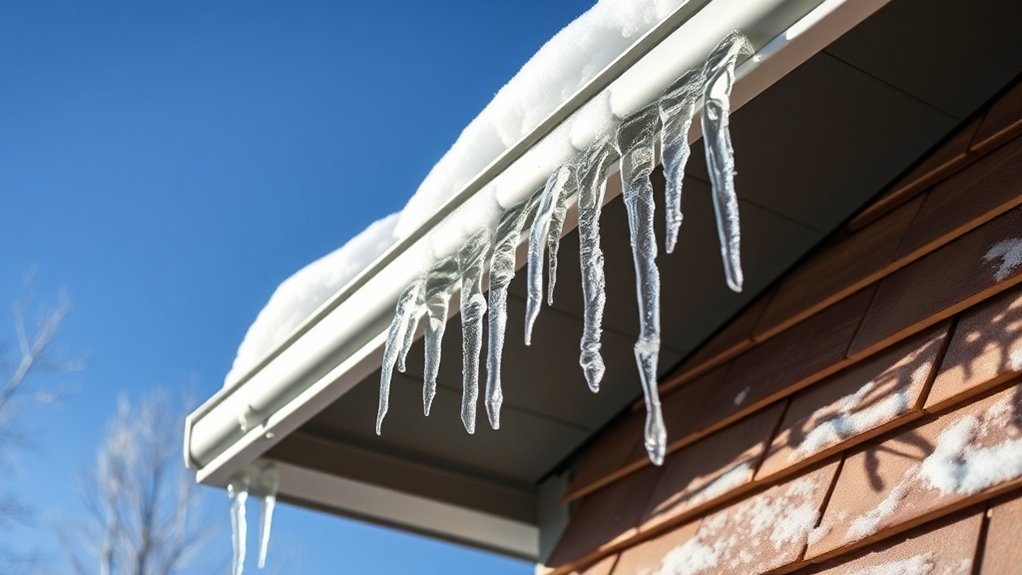
Understanding ice dams and their formation is crucial for protecting your roof during the winter months.
Ice dams form when snow melts on the warmer upper sections of the roof, causing meltwater to flow down to the colder eaves, where it refreezes. This temperature difference leads to ice build-up, blocking normal drainage and potentially causing leaks under the shingles. Heat escaping from your home contributes to these temperature variations, often worsened by poor insulation or air leaks that allow warm air into the attic. Inadequate insulation is a primary cause of ice dams, as it fails to minimize heat escaping into the attic, further exacerbating temperature differentials that lead to ice dam formation. Regular maintenance and inspections are essential for roof structural integrity, which can help in preventing ice dam formation by ensuring proper insulation and ventilation.
In colder climates, where temperatures can drop to around -6°C, the risk of ice dams increases, particularly in shaded areas.
Being aware of these factors can help you safeguard your roof from serious damage.
Importance of Attic Insulation and Air Sealing
To effectively prevent ice dams, ensure your attic insulation meets the recommended R-value, aiming for around 60. It’s also crucial to implement proper air sealing techniques to reduce heat loss from your living spaces into the attic, which can worsen ice dam formation. Proper insulation plays a vital role in preventing heat transfer to the roof decking, further mitigating the risk of ice dams. Additionally, investing in effective roof insulation can significantly enhance your home’s energy efficiency, leading to lower heating costs during the winter months.
Optimal Insulation R-Value
Achieving the right insulation R-values in your loft is crucial for preventing ice dam formation, especially in colder regions where snow builds up. Experts recommend R-values of up to R-60 to effectively manage heat in the loft. Quality insulation materials, such as closed-cell spray foam, offer R-7 per inch, enabling thinner layers while effectively blocking heat transfer. Fibreglass batts and loose-fill cellulose can also reach significant R-values, but correct installation is vital. Coverage must be uniform to avoid hotspots. Insufficient insulation can lead to costly home repairs and increase the risk of ice dam formation. Higher R-values help reduce heat loss into the loft, lowering the risk of ice dams. Additionally, local climate conditions influence the specific R-value requirements necessary for optimal insulation performance. By focusing on suitable insulation, you improve energy efficiency and protect your home against winter issues.
Air Sealing Techniques
Effective insulation alone won’t prevent ice dam formation; air sealing techniques are crucial for an energy-efficient attic. Air leaks around fixtures like recessed lights or plumbing stacks can let warm, moist air escape, increasing roof temperatures.
To tackle this, use sealants like expanding foam or rigid foam board to seal gaps effectively. Ensure a continuous air barrier by addressing penetrations at wall top plates and around extractor fans.
In regions with heavy snowfall, consider specialised methods such as spray foaming the underside of the roof deck to create strong air barriers. Regularly test for leaks using blower doors to pinpoint areas needing attention, as even small leaks can lead to significant ice dam problems.
Reducing Heat Loss
While many homeowners concentrate on heating systems to fend off winter chill, it’s just as crucial to minimise heat loss through effective attic insulation and air sealing for energy efficiency.
Investing in high-quality insulation, such as R-30 or cellulose blown-in materials, can reduce heating costs by up to 25%. Regular energy audits can pinpoint inefficiencies, ensuring your attic acts as a barrier against heat loss in winter and heat gain in summer.
Poor insulation can lead to issues like ice dam formation and structural damage, so timely upgrades are essential, typically every 15-20 years.
Proper ventilation is vital for managing moisture; it improves insulation performance and reduces energy usage, creating a more comfortable and sustainable living space.
Effective Ventilation Strategies for Roof Eaves

To ensure optimal airflow in your roof eaves, it’s crucial to use a combination of soffit and ridge vents that work together effectively.
This balanced setup improves ventilation ratios, which is essential for preventing ice dams in colder climates.
Here are some straightforward strategies:
- Install soffit vents at the roof overhang for proper fresh air intake.
- Use ridge vents along the roof peak to allow warm air to escape, promoting thermal convection.
- Maintain proper ventilation ratios—aim for one square foot of ventilation for every 300 square feet of attic space.
- Implement pest prevention by using screens on vents to minimise debris while ensuring airflow.
These strategies will help reduce heat build-up, enhance air movement, and protect against ice dam issues effectively.
Utilizing Self-Adhered Underlayment for Protection

To protect your roof from the damaging effects of ice dams, using self-adhesive underlayment is essential. This moisture control layer provides several advantages, such as sealing around nails and preventing water penetration, especially at eaves and valleys.
| Feature | Benefits | Installation Techniques |
|---|---|---|
| Moisture Control Layer | Prevents water intrusion | Install at eaves, extending 600mm in |
| Vapour Permeability | Allows roof to dry if saturated | Overlap membranes by 50mm |
| Durability | Made from polymer-modified bitumen | Ensure compatibility with roofing materials |
| Wind-Driven Rain Protection | Reduces leak risk | Adhere to local building regulations |
Following proper installation techniques ensures your roof stays protected against ice dams.
Snow Removal Techniques and Ice Dam Mitigation

Proper roof protection goes beyond self-adhesive underlay; effective snow removal is crucial in preventing ice dams.
Here are some straightforward strategies to boost your roof’s durability:
- Use a snow rake to clear at least the first 1.8 metres (6 feet) of snow from the eaves after each snowfall to reduce meltwater accumulation.
- Check for loose tiles before using the rake to avoid causing damage.
- Be cautious of hazards such as icicles, falling snow, and overhead power lines during the removal process.
- Consider hiring professional snow removal services for safer and more efficient management.
Maintaining Gutters and Downspouts to Prevent Blockages
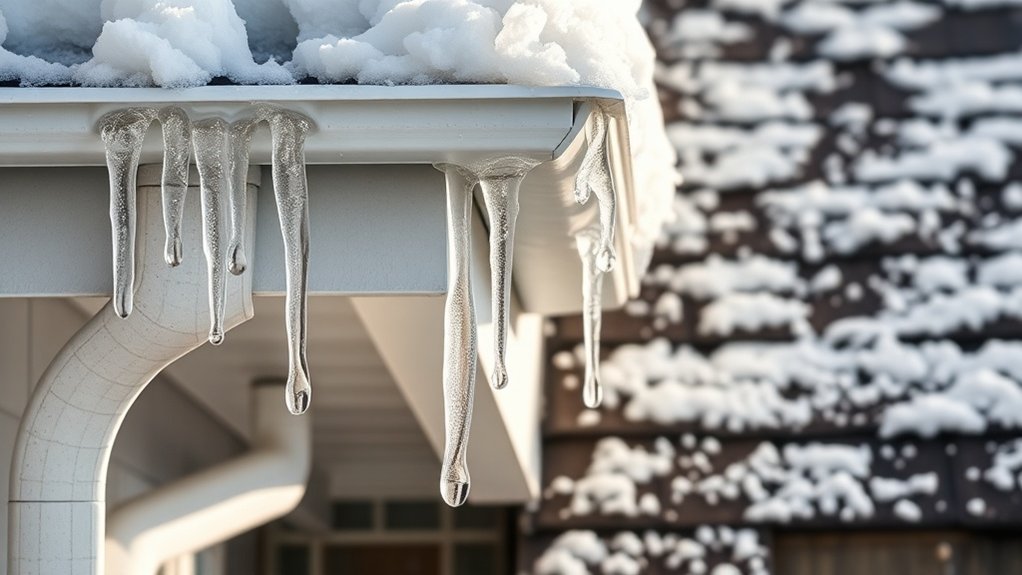
To prevent ice dams, it’s essential to maintain a regular cleaning routine for your gutters and downspouts, particularly before winter sets in.
While installing gutter guards can reduce debris buildup, they don’t eliminate the need for regular upkeep.
Keeping your drainage system clear significantly lowers the risk of blockages that can lead to ice forming at the roof’s edge.
Regular Cleaning Schedule
Establishing a regular cleaning schedule for your gutters and downpipes is crucial for preventing blockages that can lead to ice dams and water damage.
Here are some key tips for effective gutter maintenance:
- Clean your gutters twice a year, ideally in autumn and spring, to remove leaves and debris.
- Increase the cleaning frequency during leaf-fall seasons and after heavy rain to avoid clogs.
- Carry out regular inspections throughout winter to clear any ice or snow build-up.
- Use the right tools, such as gutter scoops and gloves, to safely remove debris.
Keeping your gutters clear will help protect your home from costly repairs.
Gutter Guard Installation
Installing gutter guards is a crucial step in keeping your gutters and downpipes clear, preventing blockages that can cause ice build-up and water damage.
You can choose from various types of gutter guards, such as micro-mesh or metal options, which are particularly suited for colder climates.
Ensure you install them at a steep angle to aid drainage, and use reinforced mounting to handle snow loads. Avoid drilling into the roof to prevent damaging the shingles.
While there are DIY options available, more complex systems like reverse-curve guards often need a professional touch for optimal performance.
Before you start, check local regulations and warranty details to ensure your gutter guard system is compliant and durable.
Additional Measures for Long-Term Ice Dam Prevention
Addressing ice dam issues often emphasises immediate solutions, but implementing long-term measures is crucial for sustainable prevention.
Here are some straightforward strategies to improve your ice dam monitoring and ensure effective insulation upgrades:
- Upgrade Insulation: Choose blown-in or spray foam insulation with an R-value of R-49 or higher to maintain consistent roof temperatures.
- Enhance Ventilation: Fit balanced soffit and ridge vents to encourage steady airflow and minimise localized melting.
- Seal Air Leaks: Fix gaps around fixtures and penetrations to stop warm air from reaching the roof deck.
- Maintain Roof Design: Ensure your roof has a minimum pitch of 4 in 12 and keep gutters clear for proper drainage and snow runoff.
These measures will help mitigate the risk of ice dams effectively.
Frequently Asked Questions
How Do Ice Dams Affect Home Insurance Claims?
Ice dams can significantly impact your home insurance claims due to the potential for expensive water damage. It’s crucial to be familiar with your policy and navigate the claims process effectively to ensure you’re covered for any damage caused by ice dams. For example, if melting snow refreezes at the roof’s edge and causes leaks, having the right coverage can save you from hefty repair bills. Always check your policy details and consider taking preventative measures to minimise risks.
Can Ice Dams Cause Mold Growth in Attics?
Yes, ice dams can indeed cause mould growth in attics. Research indicates that mould can start to develop within 24 to 48 hours. To reduce these risks, it’s crucial to ensure proper attic ventilation and implement mould prevention measures.
What Are the Signs of an Ice Dam Forming?
Signs of an ice dam forming include icicles hanging from the eaves, thick ice ridges at the edge of the roof, and sagging gutters. These indicators point to potential water drainage problems, which need prompt attention to avoid damage.
Are There Specific Roofing Materials That Prevent Ice Dams?
Curious about roofing materials that help prevent ice dams? Metal roofing and insulated sheathing are excellent choices. They promote snow shedding and improve thermal performance, significantly reducing the risk of ice dam formation.
How Can I Safely Remove Snow From a Steep Roof?
To safely remove snow from a steep roof, use a roof rake to clear the snow from the edge, and a snow shovel for any accumulation on the ground. Always ensure you have a stable footing and prioritise safety to avoid slips and falls. If the roof is particularly high or steep, consider hiring a professional.
Conclusion
In summary, protecting your roof eaves from ice damming is essential in northern regions. Homes with poor insulation can lose as much as 25% of their heated air, significantly raising the risk of ice dams. To combat this, ensure your insulation is up to standard, maintain good ventilation, and keep your gutters clear. These measures not only extend the life of your roof but also improve energy efficiency, helping you save on heating bills while keeping your home safe.


