

Roof Coating Options for Commercial Use
When exploring roof coating options for commercial properties, there are several effective choices available. Acrylic coatings reflect sunlight, which can help reduce cooling costs and prolong the life of your roof. Polyurethane coatings are known for their durability and impact resistance, making them suitable for high-traffic areas. Silicone coatings create a waterproof membrane that efficiently reflects UV rays. PMMA coatings cure quickly, forming a seamless barrier that minimises leaks. Each type offers specific advantages tailored to different climates and roofing materials. Regular maintenance can further enhance their lifespan and performance. To understand how these options can meet your needs, consider looking into the specific features and application methods.
Key Takeaways
- Silicone Coatings: Perfect for extreme weather conditions, these coatings are waterproof and reflective, ensuring longevity with minimal risk of leaks.
- Polyurethane Coatings: Known for their durability and impact resistance, these are ideal for roofs with high foot traffic, helping to extend the roof's lifespan while preventing water pooling.
- PMMA Coatings: These quick-curing coatings offer excellent UV resistance, creating seamless membranes suitable for both flat and pitched roofs.
- Acrylic Coatings: Cost-effective and reflective, these coatings are compatible with various roofing materials, effectively reducing cooling costs and prolonging roof life.
- Asphalt Rubber Membrane: This option provides robust waterproofing and UV resistance, making it suitable for built-up roofing systems in commercial properties.
Types of Commercial Roof Coatings
When choosing a roof coating for commercial use, it's essential to understand the different types available. You'll come across silicone, polyurethane, PMMA, and asphalt rubber membrane coatings, each with distinct advantages suited to particular requirements.
Silicone roof coatings form a robust, waterproof membrane, making them ideal for challenging weather conditions. They're easy to apply in liquid form and cure into a flexible layer, providing excellent UV protection and energy efficiency. Additionally, silicone coatings reflect up to 90% of UV rays, significantly enhancing energy efficiency.
On the other hand, polyurethane is known for its impact resistance and durability, making it a suitable choice for roofs with heavy foot traffic.
PMMA coatings are a newer option that offers outstanding UV protection and water resistance, though they're often used during roof installation rather than as standalone solutions.
For built-up roof systems, asphalt rubber membrane coatings provide good waterproofing and UV resistance, making them a dependable choice.
Understanding how to apply each type ensures you select the right coating for your commercial roofing needs. By considering the benefits of each material, you can ensure lasting protection and performance for your roof.
Acrylic Roof Coatings
Acrylic roof coatings provide excellent benefits, such as waterproofing and UV protection, making them suitable for various commercial settings. With proper installation and maintenance, you can improve energy efficiency and enhance the appearance of your roof. Additionally, these coatings can significantly extend roof lifespan by minimizing temperature swings. Understanding these advantages will empower you to make informed choices about your roofing requirements.
Benefits of Acrylic Coatings
For commercial buildings aiming to improve their roofing systems, acrylic coatings provide notable advantages. A primary benefit is energy efficiency; these coatings reflect sunlight, reducing heat absorption and significantly lowering cooling costs during the warmer months. This leads to sustained lower energy expenses and less reliance on cooling systems. Additionally, acrylic coatings can contribute to LEED certification for green building practices, further enhancing their appeal. Furthermore, these coatings enhance heat dissipation, ensuring that the building remains comfortable even in the peak of summer.
Acrylic coatings also offer durability and protection. They form a flexible, weather-resistant barrier that shields your roof from damaging UV rays and harsh weather. This can prolong the lifespan of the underlying roofing material and enhance fire resistance, ultimately reducing maintenance requirements.
Additionally, these coatings are versatile and compatible with a variety of roofing materials, such as asphalt and metal. Whether applied to new builds or existing roofs, they work well on flat, low-slope, or pitched roofs.
In terms of cost-effectiveness, acrylic coatings are generally more affordable than many alternatives while providing long-lasting performance. They can potentially extend your roof's life by up to 20 years, making them a wise investment that benefits both your finances and the environment.
Ideal Application Scenarios
Choosing the right scenario for applying acrylic roof coatings is crucial for optimal performance and durability.
These coatings are most effective on sloped roofs, built-up roofs (BUR), single-ply membranes, and textured surfaces such as modified bitumen and EPDM. For metal roofs, ensure proper drainage to avoid issues related to water retention. Additionally, thorough cleaning of the roof surface is essential to ensure optimal adhesion before the application.
Avoid using acrylic coatings on flat or low-slope roofs with a pitch less than 1:24, as this can lead to water pooling and diminish the coating's lifespan.
Additionally, high-humidity conditions and extreme weather—like freezing temperatures or rain—can impede curing and affect adhesion.
Before application, it's essential to thoroughly clean and dry the roof surface. Aim for warm, dry weather for the best results, and note that the coating is self-leveling, which makes the application easier.
Installation and Maintenance Tips
Proper installation and maintenance of acrylic roof coatings are essential for ensuring long-lasting performance and protection for your commercial roofing system. Following safety protocols during application creates a secure working environment and helps achieve optimal results. Acrylic roof coatings are a cost-effective option for many commercial buildings, allowing for substantial savings over time.
Key Installation and Maintenance Considerations
| Aspect | Tips | Importance |
|---|---|---|
| Temperature Requirements | Apply when temperatures are above 10°C | Ensures proper adhesion of the coating |
| Surface Preparation | Thoroughly clean and prime the roof surface | Improves adhesion and extends coating lifespan |
| Regular Inspections | Monitor for wear and thickness | Enables timely reapplication and maintenance |
Use appropriate application techniques, such as a tank spreader and a metal profile roller, to achieve a smooth finish. Avoid applying coatings in freezing conditions or before rain to maintain integrity. Ensure proper drainage to prevent ponding water, which can degrade the coating.
Regular inspections and cleaning are crucial; they help prolong the coating's life by preventing dirt accumulation. For complex repairs, consider professional assessments to maintain the roof's protective qualities effectively. By adhering to these guidelines, you can ensure that your acrylic roof coating performs exceptionally for years to come.
Polyurethane Roof Coatings

When considering polyurethane roof coatings, there are several advantages that make them a solid choice for commercial properties.
Their durability and energy efficiency can significantly extend your roof's lifespan and help reduce cooling costs.
Suitable for a range of surfaces, these coatings work especially well in high-traffic areas and can be reapplied as necessary to ensure continued performance.
Advantages of Polyurethane Coatings
Choosing polyurethane roof coatings offers several benefits for commercial properties. One significant advantage is their exceptional durability, creating a flexible membrane that can handle thermal expansion and contraction. This is particularly important in high-traffic areas where impact resistance is vital.
Polyurethane coatings also provide excellent adhesion to various roofing materials, making application straightforward and potentially lowering labour costs. Their reflective properties enhance energy efficiency by stabilising interior temperatures, which can lead to reduced cooling expenses.
Additionally, with UV stability, these coatings can extend the lifespan of a roof by up to ten years. The flexibility of polyurethane allows it to accommodate normal thermal movements, forming a waterproof barrier that protects against standing water. Proper roof ventilation is essential for maintaining optimal attic temperatures, which complements the benefits of a polyurethane coating.
While regular maintenance is needed, it's minimal due to their resistance to wear and tear. Overall, these advantages contribute to a strong return on investment, helping to minimise energy costs and repair needs.
Ideal Application Scenarios
In commercial roofing applications, polyurethane coatings are highly effective due to their versatility and strong performance.
They're particularly suited for roofs that experience high foot traffic, as their impact resistance and durability ensure a long lifespan.
These coatings also provide excellent weather resistance and flexibility, enabling them to cope with temperature changes and building movements without the risk of cracking.
Here are some ideal application scenarios for polyurethane coatings:
| Application Scenario | Performance Metrics | |
|---|---|---|
| Type of Coating | Key Benefits | Ideal Conditions |
| Silicone Coatings | Excellent waterproofing | Areas with heavy rainfall |
| Acrylic Coatings | Reflective properties | Locations with high UV exposure |
| Elastomeric Coatings | Flexibility for cracked roofs | Roofs with seams and cracks |
| Aluminium Coatings | Reflective and insulating | Varied climates |
| Polyurethane Coatings | High durability and chemical resistance | Industrial or harsh environments |
Choosing the right coating can make a substantial difference in your roof's lifespan and performance.
Application Areas
When considering roof coating application areas, it's essential to identify the environmental and structural factors that may affect performance. Understanding these aspects can help you tackle application challenges and ensure the coating is compatible with your roof's material and local conditions.
Here are four key considerations:
- Weather Conditions: Examine the local climate, including heavy rainfall, UV exposure, and temperature changes.
- Roof Materials: Ensure that the chosen coating is suitable for your roof type, whether it be metal, built-up roofs (BURs), or spray foam (SPF) systems.
- Foot Traffic: For roofs with significant foot traffic, select coatings that offer high abrasion resistance and tensile strength.
- Chemical Exposure: In industrial environments, consider potential chemical interactions that could affect the durability of the coating.
Choosing the right coating for specific areas requires careful evaluation of these factors.
For example, silicone coatings perform well in areas with high UV exposure and standing water, while polyurethane coatings are better suited for high foot traffic zones.
Key Features

Key features of roof coatings are vital for improving the performance and durability of commercial roofing systems. These coatings use advanced technologies to create a protective barrier against environmental challenges such as UV rays and harsh weather, effectively preventing moisture ingress and reducing the risk of leaks.
By minimising thermal shock, they help to reduce cracks and maintenance issues, ultimately prolonging the roof's lifespan.
Additionally, roof coatings offer reflective properties that significantly boost energy efficiency. They reflect sunlight, reducing heat absorption and the demand for cooling, which can lead to considerable savings on energy bills.
This not only eases the burden on HVAC systems but also helps maintain a comfortable indoor environment while supporting sustainability.
Cost-effectiveness is another advantage. Roof coatings can be applied directly over existing roofing materials using various methods, which means there's no need for expensive tear-offs.
This approach not only cuts down on maintenance and repair frequency but also preserves the roofing system's integrity, ensuring long-term performance.
Investing in roof coatings is a smart choice that reduces the need for replacements and delivers lasting financial benefits.
Choosing the Right Coating
When selecting the right roof coating, begin by checking the compatibility with your roof material.
For instance, if you have a flat roof, a liquid rubber coating might be suitable, while tiled roofs may require a different approach.
Next, consider your local weather conditions; a coating that withstands heavy rain may be necessary in wetter areas of the UK.
Lastly, factor in your budget—while some coatings may have a higher upfront cost, they could save you money in maintenance and energy bills in the long run.
Evaluate Roof Material
Choosing the right coating for your roof depends on understanding the compatibility with existing materials.
It's essential to consider the current roof type and its needs when selecting a coating. Here are some key points to help you make an informed decision:
- Compatibility: Ensure the coating is suitable for your roof material, whether it's flat, sloped, or metal.
- Manufacturer's Guidelines: Always adhere to the manufacturer's instructions for application to prevent early failure.
- Coating Benefits: Different coatings have unique advantages. For example, silicone is elastic and weather-resistant, while acrylic is highly reflective.
- Application Methods: Be aware that installation techniques differ by coating type and roof surface; proper preparation is crucial for optimal performance.
Choosing the right roof material involves more than just initial costs; high-quality coatings can significantly reduce energy bills and extend your roof's lifespan by around 20 years.
Consulting a professional can improve your installation methods, ensuring your roof coating lasts.
Keep these factors in mind to enhance durability and safeguard your investment.
Assess Local Climate
Assessing local climate conditions is vital when choosing the right roof coating for your commercial building. Your selection should align with the specific weather patterns in your area, including extreme events like storms or heavy rain. Such conditions require coatings that are resilient and adaptable.
For example, if your region sees increased rainfall, opt for coatings with superior water resistance to prevent leaks and damage.
Temperature variations are also important. High temperatures can lead to quicker material degradation, while low temperatures may cause contraction. To counter these effects, thermal insulation coatings can significantly extend your roof's lifespan.
In dry, hot areas, choose coatings with high solar reflectance to reduce heat absorption, whereas cooler regions need coatings that can withstand freezing conditions.
Consider the environmental impact of your choice too. Energy-efficient coatings not only lessen the need for air conditioning but also help reduce the urban heat island effect.
Determine Budget Constraints
Determining budget constraints is crucial when selecting the right roof coating for your commercial property. A detailed cost analysis will help you create a budget that covers all essential aspects.
Here are four key considerations to keep in mind:
- Roof Size and Dimensions: Larger roofs will require more coating material, which will increase your overall costs. For instance, a flat roof of 500 square metres will need significantly more product than a smaller 200 square metre roof.
- Repair Needs: Evaluate any repairs that need to be undertaken prior to coating. If the roof has leaks or damage, addressing these issues will add to your budget.
- Coating Thickness: Thicker coatings provide better protection but can be more expensive. It's important to find a balance between the level of protection you need and what you can afford.
- Labour Costs: Remember to factor in the cost of labour for applying the coating and performing any necessary repairs. Hiring a skilled team may cost more initially but could save you money in the long run by ensuring quality work.
Installation Recommendations
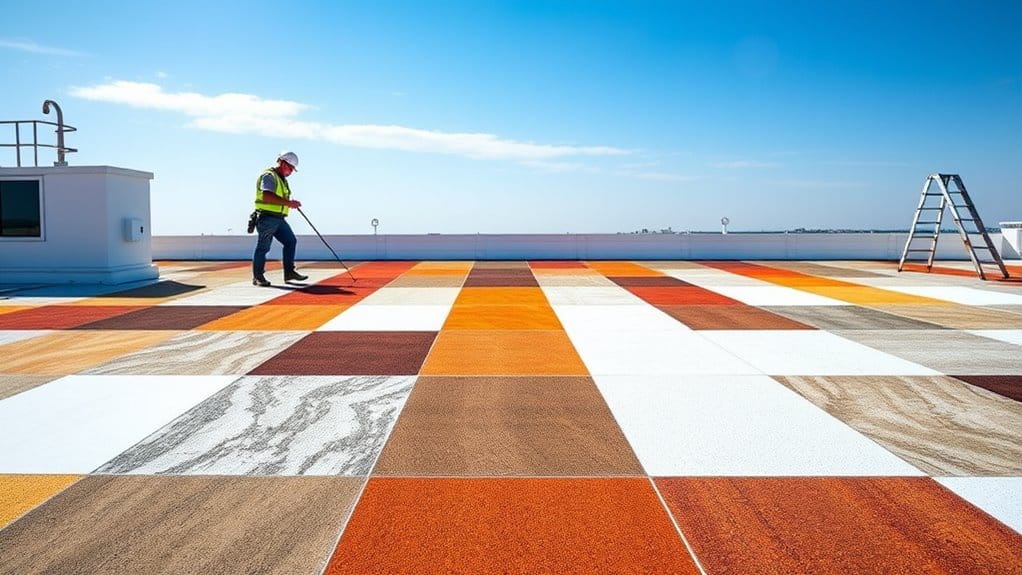
When planning to install roof coatings, it's essential to start with a thorough assessment of the roof's type and condition. This helps you choose a compatible coating that can tackle specific installation challenges.
Weather conditions, such as temperature extremes and humidity, should also be considered, as they can significantly affect the application process.
Before applying the coating, ensure the roof is cleaned thoroughly and any damaged areas are repaired. Check that the chosen coating is compatible, using primers if needed to improve adhesion.
When applying the coating, use the right tools and consider applying multiple coats for added durability. Follow the manufacturer's instructions carefully, especially regarding application methods.
Using coatings alongside membranes can offer additional protection. Keep an eye on the weather during application to achieve the best results.
Once the installation is complete, inspect the coating for uniformity and adherence to specifications. Look for any leaks or weak spots and document the process for future reference.
Maintenance and Care
Proper maintenance and care are crucial for extending the lifespan of commercial roof coatings. To ensure your roof stays in prime condition, follow these essential maintenance practices:
- Conduct Regular Roof Inspections: Arrange inspections throughout the year, particularly after severe weather. This helps catch issues like cracks or blistering early.
- Clear Debris: Regularly remove debris from the roof to prevent moisture build-up and blockages in drainage systems.
- Maintain Flashings and Sealants: Check and repair or replace flashings, sealants, and caulking around penetrations, edges, and seams to avoid leaks.
- Keep Detailed Records: Document all inspections, repairs, and maintenance activities. This will help you monitor the roof's condition and inform future maintenance schedules.
Frequently Asked Questions
How Long Does It Take to Apply a Roof Coating?
Applying a roof coating usually takes a few days, factoring in preparation, drying, and curing times. For instance, if you're coating a flat roof, you might need to allow a day for cleaning and priming before applying the coating, which itself could take a day or two to dry properly. Using the right techniques ensures good adhesion and long-lasting results, making your roof more effective.
Can Roof Coatings Be Applied in Cold Weather?
Yes, you can apply roof coatings in cold weather, but it's essential to check that temperatures meet the minimum requirements. Proper surface preparation and choosing the right product are crucial, as they significantly affect the performance of the roof coating, improving adhesion and curing even in lower temperatures.
What Preparation Is Needed Before Applying Roof Coatings?
Before applying roof coatings, ensure the surface is thoroughly cleaned and assess for moisture. Remove any contaminants and allow the area to dry completely. It's also important to check for hidden issues, such as cracks or underlying damage, to ensure proper adhesion and the long-term effectiveness of the coating.
Are There Any Eco-Friendly Roof Coating Options Available?
Did you know that eco-friendly roof coatings can cut energy consumption by as much as 30%? By opting for sustainable materials in green roofing, you not only save money but also help protect the environment. For instance, reflective coatings can keep your home cooler in summer, reducing the need for air conditioning. It's a win-win for your wallet and the planet.
How Can I Tell if My Roof Needs a Coating?
To determine if your roof needs a coating, conduct a proper inspection. Check for leaks, signs of age, and any visible damage. For example, if you notice cracked tiles or rust on metal roofs, it's time to consider a coating. Addressing these issues early can enhance the benefits of the coating, prolonging your roof's lifespan and safeguarding your investment.
Conclusion
In summary, choosing the right roof coating can significantly improve the longevity and efficiency of your commercial property. For example, a warehouse located in a wet area that opts for silicone coatings will benefit from excellent waterproofing and energy savings. By familiarising yourself with the key features of each type and adhering to proper installation and maintenance practices, you can ensure your investment remains worthwhile. Make a knowledgeable choice today to protect your building for years to come.


