
How Roof Cleaning Prevents Leaks and Water Damage
Regular roof cleaning is essential for preventing leaks and water damage. It removes harmful growths like algae and moss, which can trap moisture against your roof. Clean gutters are equally important, as they help direct rainwater away from your home, minimising the risk of leaks. By taking care of your roof, you also reduce the chances of pest infestations and improve energy efficiency, which can extend the lifespan of your roofing system. Keeping your roof clean not only safeguards your home but also maintains its structural integrity. Explore additional strategies to enhance the longevity of your roof.
Key Takeaways
- Regular roof cleaning removes biological growth, which helps prevent moisture retention that can lead to leaks and water damage.
- Keeping gutters clean ensures proper water drainage, protecting roofing materials from overflow that can cause leaks.
- Inspections carried out during cleaning can identify and fix cracks or damaged tiles before they lead to water intrusion.
- Clearing away organic debris reduces nesting sites for pests, which can compromise roof integrity and result in leaks.
- A clean roof enhances its reflective surface, helping to reduce heat absorption and prevent materials from degrading due to thermal stress.
The Impact of Biological Growth on Roof Integrity

Biological growth on your roof may not be immediately obvious, but it can seriously undermine its integrity. Algae, lichens, and moss trap moisture, leading to prolonged dampness and the degradation of roofing materials. For example, algae like *Gloeocapsa magma* can eat away at limestone filler in tiles, while lichens create conditions that hasten shingle deterioration. Moss holds water against the roof, which can cause decay and increase the risk of freeze-thaw damage. Furthermore, fungal growth can weaken roofing membranes, leading to blisters and splits. These organisms not only compromise structural strength but also create an environment ripe for leaks. Regular maintenance, including cleaning and inspections, is crucial to reduce moisture retention and safeguard your roof from these harmful effects. Additionally, algae growth can lead to granule loss from shingles, further increasing the risk of water damage. Furthermore, untreated moss can lead to costly repairs and premature roof replacement, underscoring the importance of proactive maintenance.
Importance of Clean Gutters for Proper Water Drainage

Clean gutters ensure proper water drainage and safeguard your home from potential damage. Here’s why regular gutter maintenance is important:
- Directs rainwater away from walls, roof, and foundation, preventing moisture build-up.
- Stops water pooling, which can erode soil and harm structural elements.
- Lowers the risk of basement flooding by efficiently managing runoff.
- Protects roofing materials and cladding from accelerated wear and tear. Additionally, maintaining clean gutters helps prevent clogged gutters, which are a significant concern for many homeowners and can lead to water damage. Proper gutter installation is essential to ensure optimal water flow, as it reduces the risk of ice dams and further damage.
Preventing Pest Infestations Through Roof Maintenance

Preventing pest infestations through regular roof maintenance is crucial for protecting your home. Start by checking your roof for holes, cracks, and damaged tiles that pests could enter through. Seal any gaps around vents, chimneys, and roof edges to block their access.
Clear away organic debris like leaves and moss, as these can provide nesting sites for insects and rodents. Ensure your gutters are clean to avoid stagnant water, which attracts pests. Regular gutter cleaning helps prevent debris buildup that can lead to pest issues. Promptly repair or replace broken tiles and make sure attic vents are properly fitted to keep unwanted critters out. Additionally, early detection of pest issues can prevent extensive damage and costly repairs.
Consider using pest-resistant materials and applying pest-repellent treatments as an added precaution. Regular maintenance, including professional inspections, helps identify issues early, ensuring a pest-free environment and protecting your home’s integrity and value.
Enhancing Energy Efficiency With a Clean Roof
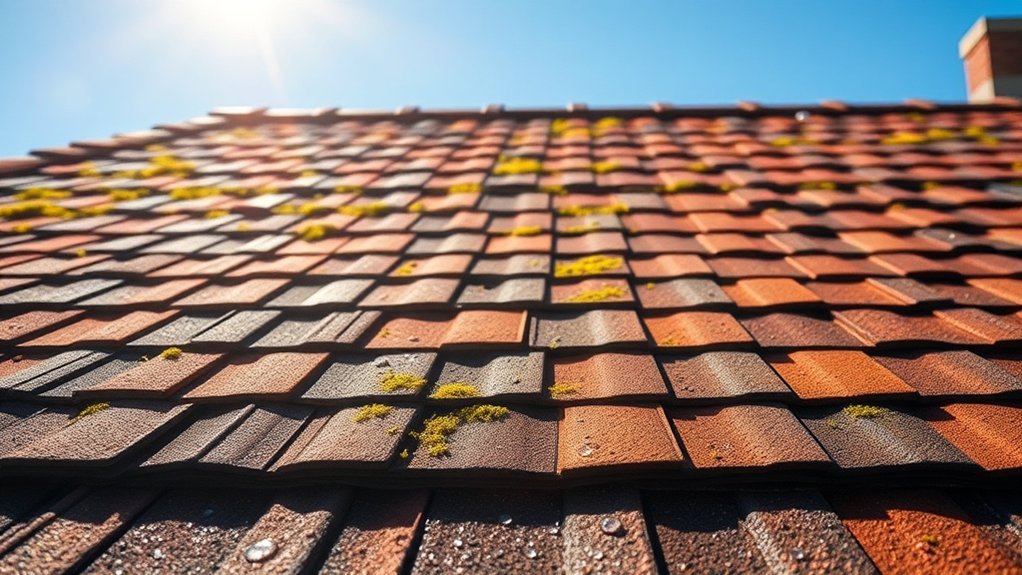
Regular roof maintenance not only protects against pest infestations but also significantly enhances your home’s energy efficiency.
A clean roof improves its reflective surfaces, which helps minimise heat absorption, resulting in energy savings and a more comfortable indoor environment.
Here are some benefits of maintaining a clean roof:
- Increased reflectivity lowers cooling energy needs.
- Reduced indoor temperatures lessen reliance on air conditioning.
- Improved insulation prevents moisture build-up and heat loss.
- Longer lifespan of roofing materials ensures continued energy efficiency over time.
Avoiding Costly Repairs Through Regular Roof Cleaning

Prioritising roof cleaning not only improves its appearance but also protects your investment from costly repairs.
Regular cleanings allow for early detection of issues such as cracked tiles or blocked gutters, preventing minor problems from becoming major headaches. This proactive approach can result in significant savings by stopping moisture retention caused by algae and debris that compromise your roof’s integrity.
Moreover, timely inspections during cleanings help identify leaks before they lead to extensive damage. Investing in routine roof maintenance not only extends your roof’s lifespan but also avoids expensive emergency repairs later on.
In the end, a clean roof safeguards your property value and supports long-term structural health.
Frequently Asked Questions
How Often Should I Clean My Roof to Prevent Leaks?
To prevent leaks, it’s essential to maintain your roof and clean it regularly, depending on the type of material. For asphalt shingles, a clean every 1–2 years is recommended. In contrast, tile and metal roofs typically require less frequent maintenance. Keeping your roof clear of debris and moss can significantly extend its lifespan and reduce the risk of leaks.
Can I Clean My Roof Myself?
You can clean your roof yourself, but it’s essential to be aware of the correct techniques. Prioritise safety by using suitable gear and methods to prevent damage to your roof and avoid personal injury. For example, use a sturdy ladder and wear non-slip footwear. Remember, it’s better to ask for help if you’re unsure about doing it alone.
What Are the Signs My Roof Needs Cleaning?
Your roof shouldn’t resemble a jungle! If you notice moss, algae, or dark stains, it’s time for a clean. Ignoring these issues can result in serious damage, so make roof maintenance a priority for lasting protection.
How Long Does Roof Cleaning Typically Last?
Roof cleaning usually lasts between 1 to 3 years, influenced by factors such as the local climate and the cleaning methods used. For instance, areas with heavy rainfall may require more frequent cleaning. To extend the life of your roof, it’s advisable to carry out regular maintenance and consider techniques like soft washing for effective, long-lasting results.
Are There Specific Cleaning Products I Should Avoid?
When cleaning your roof, steer clear of harsh chemicals like high-concentration bleach and zinc sulphate. Instead, choose eco-friendly alternatives that protect both your roof and the environment. This way, you can achieve effective cleaning without the risk of harmful side effects.
Conclusion
Neglecting roof cleaning can lead to leaks and water damage, resulting in expensive repairs and increased energy bills. Regular maintenance not only prevents biological growth and pests but also boosts your home’s durability and efficiency. A dirty roof may seem inconsequential, but the long-term effects can be significant. Invest in roof cleaning now to protect your home’s integrity and ensure a comfortable living space for the future.


