

The Impact of UK Weather on Residential Roofs
The weather in the UK has a significant impact on residential roofs, presenting various challenges throughout the year. Spring rains can lead to leaks, while summer heat can cause materials to expand, potentially resulting in damage. In autumn, wind and wet conditions put roofs to the test, and the weight of winter snow can compromise structural integrity.
Regular maintenance, including inspections and cleaning gutters, is vital for spotting issues early. Opting for durable materials and being aware of how temperature changes affect roofing can improve its lifespan. By prioritising roof care, you can reduce the risks posed by our climate. For more tips on maximising your roof's performance, further resources are available.
Key Takeaways
The UK weather presents several challenges for residential roofs. Heavy rainfall and fluctuating temperatures can cause leaks and structural damage. When wind speeds exceed 30 mph, shingles and tiles can become dislodged, which significantly weakens the roof and raises the risk of leaks.
In winter, snow accumulation can add considerable weight to roofs, potentially threatening their stability and leading to collapse. Regular maintenance and inspections are essential for spotting any vulnerabilities early on, helping to avoid expensive repairs caused by weather-related damage.
Opting for high-quality, weather-resistant roofing materials can significantly enhance a roof's durability and lifespan, helping to combat the impacts of the unpredictable UK climate.
Overview of UK Weather Effects
In the UK, the weather has a significant impact on residential roofs, presenting various seasonal challenges. Each season introduces distinct conditions that require specific insulation and adjustments. For instance, spring brings showers and fluctuating temperatures, leading to unpredictable wet and dry cycles that can cause leaks and compromise structural integrity. Additionally, the general climate conditions in the UK mean that homeowners must be prepared for sudden weather changes that can affect roof performance. Regular inspections can help identify vulnerabilities before they lead to serious damage.
During the summer months, rising temperatures can put roofs under stress due to thermal expansion, which may damage materials. Autumn presents its own challenges, with mild, windy, and wet conditions testing the durability of roofs.
In winter, the accumulation of ice and snow can put additional weight on roofs, leading to potential structural issues if not managed properly. These extremes can result in thermal shock, gradually weakening the roof over time.
Geographic differences across the UK also play a role. The northern areas tend to be cooler and wetter, while southern regions benefit from a milder climate, experiencing fewer weather-related problems.
Understanding these dynamics is crucial for effective roof maintenance and insulation. By being aware of how seasonal changes affect roof performance, you can take proactive steps to ensure the longevity and resilience of your roof against the UK's unpredictable weather.
Importance of Roof Maintenance
Maintaining your roof is vital for its longevity and ability to withstand the UK's unpredictable weather. Regular inspections are essential for spotting vulnerabilities that could lead to storm damage or issues from high winds. Check the flashing for any dislodgement caused by severe weather, and ensure gutters are clear to prevent blockages and water retention. A solid maintenance schedule allows you to tackle potential problems before they escalate.
Rain and moisture can cause significant damage to roofing systems, resulting in leaks and encouraging the growth of moss and algae. Timely inspections and cleaning can help you avoid these issues. It's crucial to make immediate repairs; addressing problems quickly prevents further damage and maintains the structural integrity of your roof. Regularly sealing joints and reinforcing flashing should be part of your maintenance routine. Additionally, prolonged exposure to heavy rainfall can worsen existing issues if left untreated. Regular inspections can help identify potential roof issues before they become severe.
Seasonal upkeep is also important. In spring, ensure drainage pathways are clear; during summer, check for heat damage; in autumn, clear away debris; and in winter, remove any snow and ice build-up.
Sun and UV Ray Damage
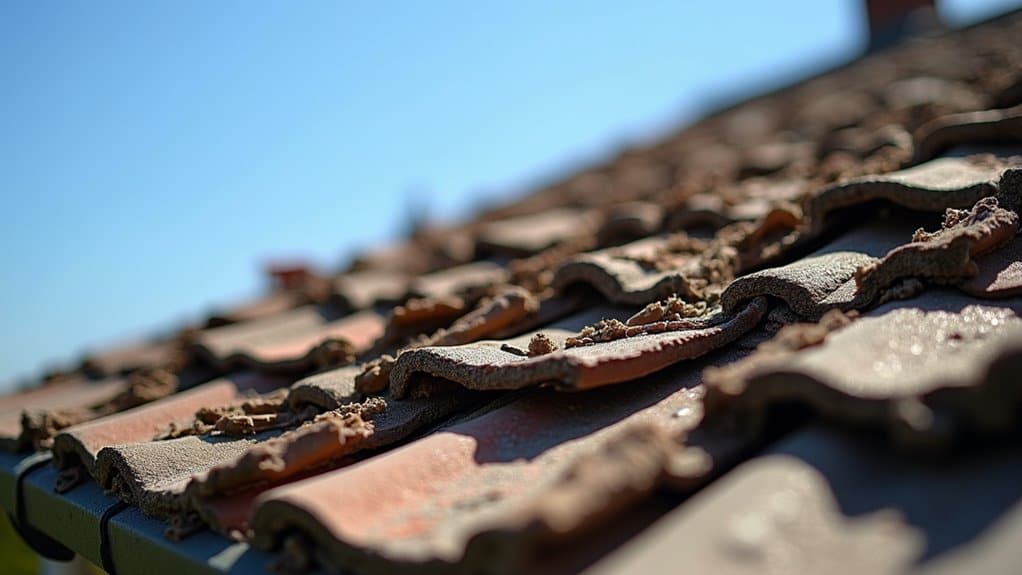
When considering the effects of UV rays on your roof, it's important to understand how they contribute to material deterioration. Prolonged exposure can weaken the molecular structure of roofing materials, leading to brittleness and reduced flexibility, especially in asphalt shingles. UV radiation can penetrate clouds, meaning that even on overcast days, your roof is still at risk of damage. Regular inspections are crucial to spot early signs of damage and prevent further risks to your roof's integrity. Additionally, using materials like NEX® rubberized asphalt shingles can enhance energy efficiency and reduce emissions, offering better protection against UV damage.
UV Ray Effects
The relentless impact of UV rays on residential roofs leads to various damaging effects that can harm both appearance and structural integrity. Early signs of UV exposure include colour fading and granule loss, which should be monitored closely.
Over time, UV rays can break down the chemical bonds in roofing materials, resulting in brittleness and cracking. This process accelerates ageing, causing asphalt shingles to dry out, curl, and ultimately fail. In regions with a high UV index, these effects can be even more pronounced, leading to a shorter lifespan for roofing materials.
To mitigate these issues, it's essential to adopt UV prevention strategies. Using UV-resistant materials, such as high-quality asphalt shingles or metal roofing, can significantly improve durability.
Additionally, applying reflective UV coatings can help reduce heat absorption and minimise thermal stress from UV exposure.
Regular inspections will help you spot signs of UV damage early, allowing for timely repairs. Proper attic ventilation is also crucial, as it helps regulate temperatures and reduces the risk of UV damage.
Material Degradation Risks
Exposure to sunlight and UV rays significantly increases the risk of material degradation for residential roofs, particularly asphalt shingles and wooden components. Over time, UV radiation weakens these materials, leading to cracking and warping. Additionally, prolonged rainfall can exacerbate the effects of UV damage by promoting water infiltration under shingles, which further accelerates deterioration. Routine inspections are essential as they can identify early signs of damage due to roofing materials that may have been compromised by UV exposure.
Daily temperature changes worsen this problem, causing materials to expand and contract, which can loosen fasteners and compromise weather resistance.
In the UK, while the climate is milder than in some regions, prolonged sun exposure can still cause noticeable UV damage. Asphalt shingles and wooden elements are especially at risk, often showing signs of accelerated aging in areas exposed to direct sunlight.
To enhance the lifespan of your roof, it's crucial to choose materials that resist UV rays and thermal fluctuations. Opting for UV-resistant options can significantly slow down the degradation process.
Regular maintenance is also key in reducing material degradation risks. Routine inspections and cleaning can prevent small issues from turning into costly repairs.
Importance of Inspections
Regular roof inspections are crucial for protecting your home from the harmful effects of sun and UV ray damage. These assessments help you spot early signs of issues like cracks, fading, and brittleness in your roofing materials. By identifying these problems early on, you can prevent further damage and avoid costly repairs.
It's important to have professionals conduct your roof inspections. Their expertise ensures an accurate assessment of any damage, highlighting vulnerabilities that you might overlook. Seasonal inspections are especially beneficial, as they can reveal problems caused by changing weather conditions, including extended sun exposure.
During inspections, pay attention to signs such as discolouration and loose shingles; these can indicate UV damage. If not addressed, this damage can weaken your roof's waterproofing, leading to leaks and structural issues. Regular inspections can also identify issues early, allowing for timely repairs and enhanced safety.
Regular maintenance, along with the use of UV-resistant materials, can help mitigate these risks and maintain your roof's integrity.
Understanding Thermal Shock
Understanding thermal shock is crucial for keeping residential roofs in good condition, especially in the UK's unpredictable weather.
Thermal shock happens when roofing materials rapidly expand and contract due to drastic temperature changes, UV exposure, and freeze-thaw cycles. This can lead to issues such as cracking, warping, and leaks, which weaken the roof's structure.
Be mindful that high winds and heavy rainfall can worsen these problems, and poor ventilation can trap heat, increasing the likelihood of thermal shock. Regular roof inspections are vital for spotting early signs of damage.
Using quality materials that can withstand temperature extremes and ensuring proper ventilation can help safeguard your roof.
Additionally, installing insulation and heat-resistant barriers can provide extra protection against thermal shock. Addressing any damage quickly can prevent more serious structural issues later on.
With climate change causing more extreme weather in the UK, understanding and managing thermal shock is essential for maintaining the longevity and durability of residential roofs.
Impact of Moss Growth
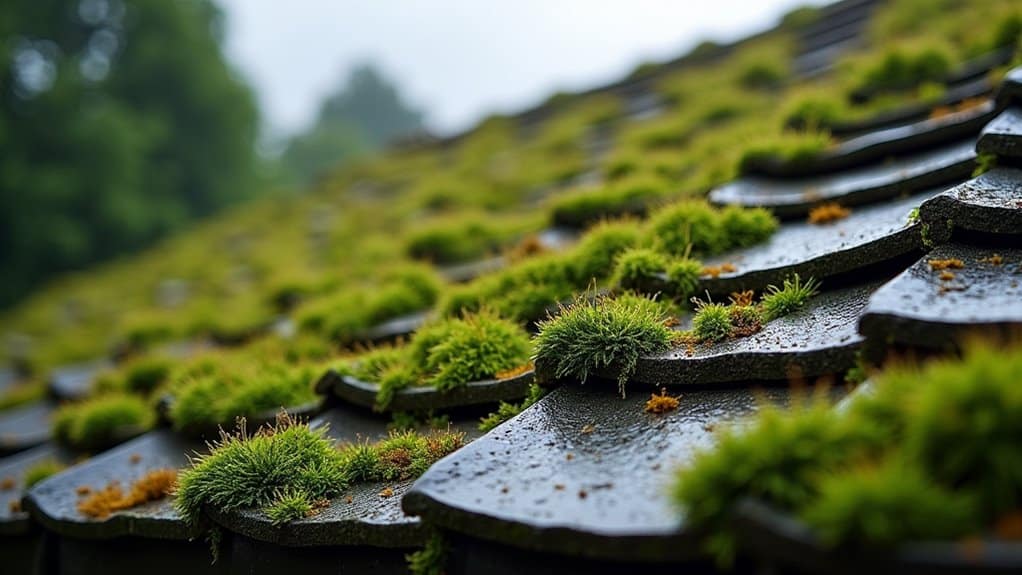
Moss flourishes in the UK's damp and shaded environments, which can pose serious risks to your roof.
It retains moisture, leading to the deterioration of roofing materials and hindering proper drainage, which can result in water damage.
To protect your roof, regular inspections and preventative measures, such as installing copper strips, are crucial.
These steps help maintain your roof's integrity and prevent costly repairs down the line.
Moss Growth Conditions
Conditions that encourage moss growth on residential roofs are primarily influenced by environmental factors. Shaded areas, particularly north-facing roofs, provide ideal habitats for various types of moss.
When combined with damp conditions from poor drainage and standing water, these spots become perfect breeding grounds. High humidity and low temperatures, which are common in autumn and winter, further promote moss growth. Addressing these issues is crucial for maintaining your roof's integrity.
Moss can damage roofing materials by increasing tile porosity, leading to water seepage and potential structural problems over time. Additionally, prolonged moss presence can cause wood beneath the roofing to rot.
To minimise these risks, regularly inspect your roof and take preventive measures such as trimming overhanging trees to reduce shade, clearing debris to encourage drying, and ensuring proper ventilation.
If moss does appear, safe removal is important. Consider hiring professionals who use specialised products that won't damage your roof.
Furthermore, installing zinc or copper strips can effectively deter moss growth, helping to maintain both the appearance and structural integrity of your home.
Structural Risks
When residential roofs become covered in moss, serious structural risks can arise that threaten the integrity of your home.
Moss retains moisture, which can weaken roof tiles or shingles, leading to leaks and reducing the lifespan of your roof. Its sponge-like nature soaks up water, saturating the underlying structure and potentially causing rot.
Overgrown moss can also shift roof tiles, creating gaps that allow water to seep in. Continuous moisture can lead to the shrinkage and loosening of roofing materials.
Additionally, moss can clog gutters and downpipes, causing water to overflow and damage both your roof and the foundation. This can result in sagging roofs and leaks, particularly on flat surfaces.
Furthermore, the presence of moss encourages mildew and algae growth, which can pose health risks for those living in the home.
It's crucial to tackle these problems head-on with effective moss removal and moisture management.
Prevention Strategies**
To tackle the risk of moss growth on your roof, it's essential to adopt effective prevention strategies.
Start by trimming back overhanging branches to reduce shade, which can encourage moss to thrive. Regularly clean your gutters and ensure downspouts are draining properly; this prevents moisture build-up that moss loves.
Consider fitting zinc or copper strips along the ridgeline of your roof. These materials are proven to deter both moss and algae. If you're planning to replace your roof, choose moss-resistant materials like copper or zinc for long-lasting protection.
Regular inspections are also crucial. Spotting early signs of moss allows you to act quickly and prevent it from spreading.
If you do find moss, gently spray it with water using a low-pressure hose to help loosen it, and apply a chlorine bleach solution for effective removal.
Lastly, keep your roof clear of debris and organic matter. This not only reduces the chances of moss spores settling but also helps maintain your roof's overall integrity.
Consequences of Heavy Rain
Heavy rain can cause significant problems for residential roofs, affecting their durability and lifespan. When drainage systems become overwhelmed, water can accumulate, leading to leaks and structural damage. This pooling can expose weaknesses in older roofing materials, especially asphalt, making them more prone to erosion and cracking.
For instance, you might find that issues like nail pops become more noticeable during heavy downpours, increasing the chances of leaks.
Moreover, heavy rain can dislodge roof tiles, leaving bare patches that allow water to seep into your home. The combination of rain and wind can lift tiles and damage flashing, worsening the situation.
If these problems aren't dealt with quickly, they can result in long-term structural damage, with standing water causing rot in the roof supports and plywood.
Regular inspections are vital for maintaining a robust roof. By spotting weak areas early and ensuring proper drainage, you can significantly lower the risk of serious damage.
Keeping gutters and downpipes well-maintained is also crucial for effective rainwater management, safeguarding your roof and home from the impacts of heavy rain.
Risks From High Winds
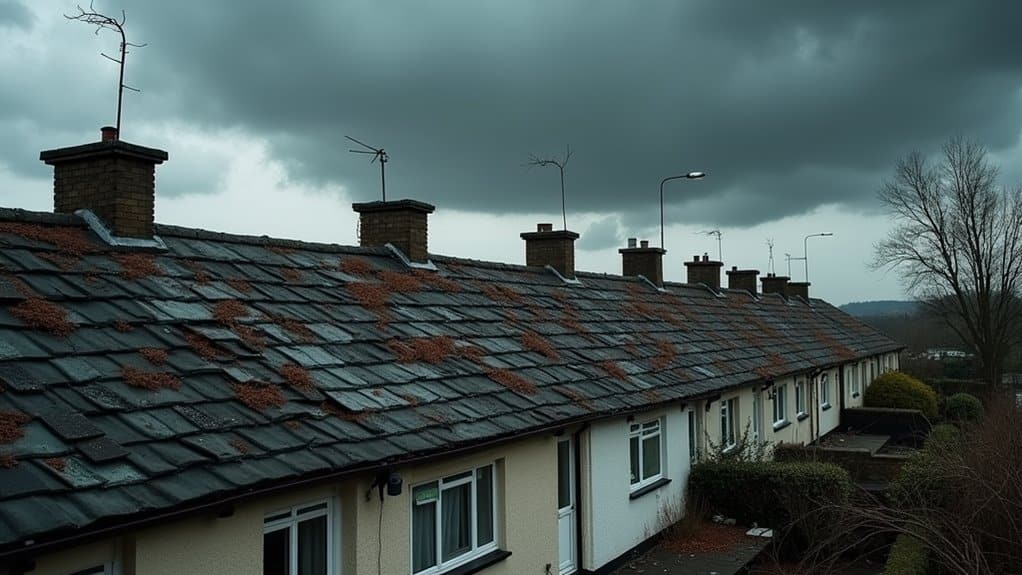
High winds can seriously threaten your roof by displacing tiles and causing structural damage.
As wind speeds rise, the suction can lift roofing materials, making your home susceptible to water leaks.
Over time, consistent exposure to strong winds can weaken your roof's integrity, requiring prompt attention and reinforcement.
It's crucial to regularly check your roof for any signs of damage, especially after a storm, to avoid costly repairs down the line.
Roof Tile Displacement
When strong winds hit, the risk of roof tile displacement increases significantly, threatening the structural integrity of residential roofs. High winds can lift roof tiles, causing them to become dislodged. This is particularly common with larger, lightweight tiles, which are more vulnerable to wind uplift.
Poor fastening during installation, combined with bad weather, can make matters worse, leading to loose tiles.
To reduce these risks, it's essential to use suitable mechanical fasteners during installation and consider adhesive solutions in areas prone to high winds. Regular inspections for loose or missing tiles can help prevent serious damage.
A well-designed roof with smaller, heavier tiles can improve wind resistance and lower the risk of displacement. Additionally, setting up a maintenance schedule allows for the early detection and repair of potential issues.
Wind-Related Structural Damage
Strong winds can cause significant structural damage, not just to roof tiles. When wind speeds exceed 30 mph, the pressure can create dangerous uplift forces on your roof.
During a Yellow Warning, you may see minor damage, but as the warnings escalate to Amber and Red, the risks increase sharply. Winds over 50 mph can rip off shingles and threaten the structural integrity of your roof, especially if it has a flat or low pitch.
Wind direction and local building codes are crucial in assessing potential damage. For example, roofs with steep pitches generally handle wind better than flatter ones. Following building regulations and using wind-resistant materials can help reduce risks.
Regular inspections and maintenance are vital for spotting vulnerabilities. Strengthening weak areas with hurricane straps can help counteract uplift forces.
Before severe weather hits, secure loose items to prevent them from becoming damaging projectiles. In urban areas, be aware that closely packed buildings can increase wind speeds, heightening these risks.
The Role of Roof Drainage
Effective roof drainage is crucial for the longevity of residential roofs in the UK's unpredictable weather. Good water management starts with efficient gutters and clear downspouts, which act as the first line of defence.
Opting for seamless gutters can significantly reduce leakage risks, ensuring water flows smoothly to the downspouts. Regular checks help spot blockages early, preventing issues like water pooling and potential structural damage.
Consider the slope of your roof too. A proper slope allows water to drain away efficiently, minimising the chances of leaks and degradation of materials. Ice dams, often caused by freeze-thaw cycles, can be avoided with effective drainage that keeps water moving away from key areas.
It's wise to schedule professional maintenance before and after the rainy season. These inspections can uncover vulnerabilities that might worsen during bad weather.
Identifying Structural Weaknesses
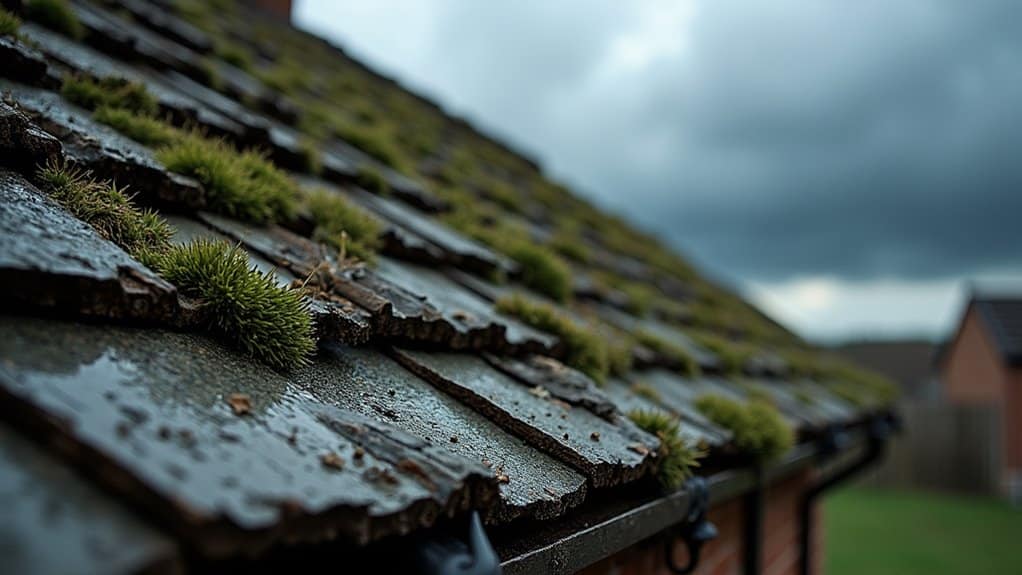
Identifying structural weaknesses in your roof is crucial for maintaining its integrity, especially given the UK's unpredictable weather. Heavy rain can lead to leaks and mould growth if your drainage systems aren't properly designed. To prevent this, ensure your gutters and downspouts are regularly cleared of debris to avoid blockages that can cause standing water, sagging, or dampness in your attic.
In winter, the weight of snow can put significant strain on your roof. Accumulated snow and ice can warp roofing structures, leading to cracks or even collapse. Keep an eye on snow build-up and clear it safely, while ensuring your attic is well-insulated to minimise heat loss and avoid ice dam formation.
Strong winds can also worsen these problems by lifting shingles, damaging flashing, and creating weak points at ridges and eaves. Regularly inspect and secure any loose materials.
Additionally, be mindful of thermal stress and UV exposure, which can degrade roofing materials over time. By tackling these structural weaknesses early, you can help prolong the life and safety of your roof against the ever-changing UK weather.
Climate Change and Roofing
The effects of climate change on roofing are increasingly clear, as homeowners contend with more frequent and severe weather events that challenge traditional roofing materials and designs.
To address these issues, it's essential to focus on climate resilience and sustainable materials in your roofing choices.
Here are some key factors to consider:
- Extreme Weather Damage: More frequent storms and heatwaves can cause significant wear and tear on your roof, leading to cracks and structural issues.
- Material Degradation: Extended exposure to harsh conditions can accelerate the ageing process, making regular maintenance crucial to extending your roof's lifespan.
- Cool Roofing Solutions: Choosing light-coloured materials that reflect sunlight can help lower energy costs while improving your roof's durability.
As the roofing industry advances, there's a growing focus on eco-friendly materials that not only withstand extreme weather but also promote environmental sustainability.
Staying informed about new roofing technologies and building regulations will help ensure your home remains resilient.
Adapting to Weather Changes

As climate change alters weather patterns, it's crucial to adapt your roofing system to protect your home from potential damage. Here are some straightforward strategies to consider.
Firstly, upgrade your drainage with robust gutters and larger downspouts to effectively handle heavy rainfall. Ensure you clean your gutters regularly to prevent blockages.
Installing high-quality waterproof membranes and reinforcing flashing in vulnerable areas can also help prevent leaks.
To withstand high winds, use secure fastenings and choose durable roofing materials that can resist uplift and shield against debris.
With temperature fluctuations in mind, select materials that can accommodate thermal expansion. Proper insulation and ventilation will ease stress on your roof, while UV-resistant materials can help prevent sun damage.
In snowy conditions, consider fitting gutter guards and regularly clearing snow to avoid structural issues from ice dams.
Recommended Roofing Materials
When choosing roofing materials for your home, it's crucial to consider how each option stands up to the UK's weather. Here are three materials worth considering:
1. Slate: Renowned for its longevity, Slate can last over a century and is naturally resistant to harsh weather. Its lightweight quality means less structural support is needed, which can be more sustainable.
However, be prepared for potential noise during heavy rain if insulation isn't adequate.
2. Clay Tiles: More affordable than slate, Clay Tiles are durable and offer excellent water resistance. While they can crack in colder conditions and aren't the best choice for frost-prone areas, with proper maintenance, they can last for many decades.
3. Metal Roofing: A contemporary option, Metal Roofing is resilient against varied weather, providing strong protection against heavy rain and wind.
It's also visually appealing and comes in various styles. Just keep in mind that it can be noisy during rainfall.
As you weigh your options, consider both sustainability and cost to ensure you select a roofing solution that meets your needs and benefits the environment.
Professional Maintenance Services

For homeowners in the UK, using professional maintenance services is essential to protect your roof from the unpredictable weather. Regular inspections should be a key part of your maintenance plan. By scheduling seasonal checks, you can catch potential issues early—like missing tiles or blocked gutters—that could lead to expensive repairs if left unattended.
Professional assessments help identify weak spots, ensuring your roof can handle heavy snow or scorching sun.
In addition to inspections, weatherproofing solutions can boost your roof's strength. This might involve applying protective coatings or ensuring proper insulation suited to your local climate. It's crucial to address any issues quickly through emergency repairs, prioritising urgent problems to prevent further damage.
Routine maintenance—such as cleaning gutters and removing moss—is also vital for preventing water build-up and structural damage.
By investing in quality materials and professional installation, you're not just maintaining your roof; you're reinforcing its ability to withstand the elements.
Ultimately, regular professional maintenance services ensure your roof remains a robust barrier for your home, even against the UK's challenging weather.
Frequently Asked Questions
How Often Should I Inspect My Roof for Weather Damage?
You should inspect your roof at least once a year, ideally before the wet or cold seasons. Regular inspections ensure you can spot and deal with any potential weather damage before it worsens. For example, checking for loose tiles or missing flashing can save you from costly repairs down the line.
Can I Repair Roof Damage Myself After a Storm?
After a storm, the idea of doing DIY roof repairs might be appealing, but it comes with significant risks. Proper storm preparation is crucial. Hiring professionals ensures safety, thorough assessments, and the use of quality materials. This not only prevents further damage but also provides peace of mind for homeowners. For instance, a small leak can quickly turn into a major issue if not addressed correctly, so it's often best to leave it to the experts.
What Signs Indicate My Roof Needs Immediate Attention?
If you see curled shingles, water stains, or leaks, it's crucial to arrange for leak detection straight away. Acting promptly can prevent further damage and help maintain the structural integrity and longevity of your roof and home.
How Do I Choose a Reliable Roof Maintenance Service?
Choosing a reliable roof maintenance service is akin to selecting a trustworthy mechanic for your car. Start by checking the contractor's qualifications and accreditations. Look for reviews and recommendations from previous customers to gauge their reliability. Assess the roofing warranties they offer—this can indicate the quality of their work. Ensure they have substantial experience in the field to help maintain a strong and durable roof over your home.
Are There Any Roofing Materials That Resist Moss Growth Better?
When selecting roofing materials to prevent moss growth, consider metal, tile, or algae-resistant asphalt shingles. Each type offers durability and moisture resistance, making them effective in minimising moss and ensuring long-lasting performance, even in the UK's varied climate. For instance, metal roofs are particularly good at shedding water, while tiles provide excellent ventilation.
Conclusion
In the unpredictable UK weather, your roof is your first line of defence against the elements. Just as a well-tuned instrument performs smoothly, a properly maintained roof can save you from expensive repairs and prolong its life. With climate change leading to more severe weather patterns, it's crucial to choose the right roofing materials and keep up with regular maintenance. Think of your roof as a protective barrier; if you neglect it, you could end up with leaks and damage.


