

Asbestos in Roofing Materials: Regulations for Safe Removal
If you’re handling asbestos in roofing materials, it’s crucial to follow strict regulations for safe removal. The Health and Safety Executive (HSE) requires that licensed contractors carry out this work and you must notify them at least 14 days before starting any project. It’s essential to conduct thorough inspections to identify any asbestos-containing materials. During removal, proper safety measures, such as containment and personal protective equipment, must be adhered to. Understanding these requirements is key to ensuring safety. For more information on compliance and best practices, consult relevant guidelines.
Key Takeaways
- Asbestos removal must adhere to the Control of Asbestos Regulations 2012, which mandate the use of licensed contractors for safe handling and removal.
- Before any roofing work begins, a thorough inspection is essential to identify any asbestos-containing materials, and this must be documented for regulatory purposes.
- Contractors are required to submit an Asbestos & Demolition Notification Form at least 14 days prior to commencing work to inform the relevant authorities.
- Safe removal practices involve creating a sealed containment area, wearing personal protective equipment (PPE), and keeping materials damp to reduce the risk of fibre release.
- Proper disposal of asbestos waste at designated facilities is crucial, with comprehensive documentation needed to ensure compliance and prevent contamination.
Regulatory Framework for Asbestos Removal
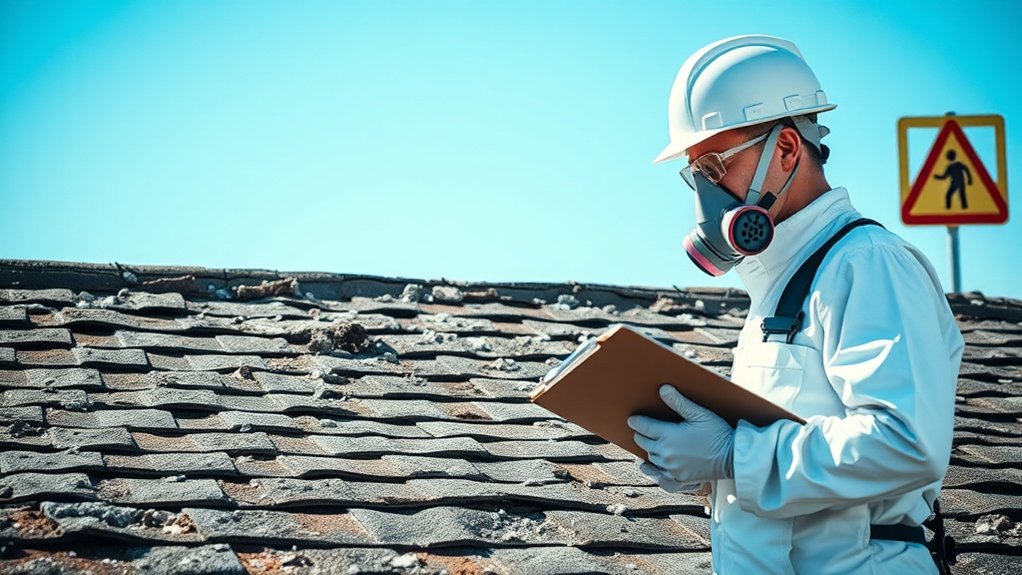
When it comes to removing asbestos roofing, it’s crucial to understand the regulations that govern this process in the UK. Asbestos removal is primarily regulated by the Health and Safety Executive (HSE) under the Control of Asbestos Regulations 2012. Only licensed contractors who are trained in asbestos removal should carry out the work to ensure compliance with safety standards. Before any removal begins, a thorough inspection is required to identify any asbestos-containing materials. It’s also important to notify the relevant authorities at least 14 days before the work starts. Following these guidelines not only safeguards the health of workers and the public but also ensures you meet legal obligations. Taking these steps helps to manage the risks associated with asbestos exposure to harmful fibers safely and responsibly. Additionally, professional removal is necessary to prevent exposure, underscoring the importance of hiring experts for the task.
Applicability of Asbestos NESHAP in Roofing

Understanding the National Emission Standards for Hazardous Air Pollutants (NESHAP) is crucial for anyone involved in roofing projects that might involve asbestos-containing materials (ACM).
NESHAP regulates asbestos emissions during the removal of roofing materials, particularly those containing over 1% asbestos, such as certain felts, shingles, and coatings. If you’re handling regulated ACM above specified thresholds, you must comply with these regulations. This means taking necessary precautions during removal and disposal to reduce exposure risks. It’s essential to distinguish between intact and disturbed materials, as this affects compliance methods. Additionally, utilizing enhanced content features can provide further insights into regulatory information that may assist in ensuring compliance.
Always remember that all demolition projects require notification, and a thorough asbestos survey must be conducted to ensure safety and compliance with regulations.
Notification and Inspection Requirements

Before starting any asbestos removal project, it’s crucial to carry out a thorough inspection to identify any materials that contain asbestos. Additionally, you must adhere to specific notification procedures by submitting the necessary documentation to the relevant regulatory authorities. For instance, if you’re working on an older building, it’s likely to have asbestos in areas like insulation or floor tiles. Understanding these compliance responsibilities is vital to avoid penalties and ensure your project runs smoothly. Furthermore, ensure that you submit the Asbestos & Demolition Notification Form at least 14 days before beginning any demolition work.
Asbestos Inspection Necessity
Asbestos inspection is a legal requirement for any renovation or demolition work in the UK. Before starting your project, it’s crucial to have a thorough inspection conducted by certified professionals who can identify any asbestos-containing materials (ACMs).
This applies regardless of the project’s size, ensuring that all materials, including roofing, are assessed.
It’s important to document the location, quantity, and condition of any ACMs found. Make sure to follow the inspection frequency set by local regulations, as non-compliance can result in fines or work stoppages.
Always keep inspection records handy for any regulatory checks to demonstrate that you’re adhering to guidelines and safeguarding everyone involved.
Notification Procedures Overview
Notification procedures for asbestos-related projects are crucial for compliance and public safety.
To ensure a smooth process, follow these guidelines:
- Submit notifications 10 to 14 days in advance of the work, ensuring all documentation is complete.
- Include a comprehensive asbestos survey report along with a clear description of the planned work.
- Use the correct notification forms and specify the dates for removal or demolition.
- For emergency removals, notify immediately and fill out the relevant sections to explain the need for urgent action.
Compliance Responsibilities Explained
Understanding your compliance responsibilities regarding asbestos is vital for ensuring safety and meeting regulations. Compliance challenges often arise, particularly with inspection and notification requirements. It is essential to have pre-renovation inspections carried out by accredited inspectors before any work begins. Remember, materials need to be classified correctly, as this affects removal procedures.
| Step | Requirement | Impact |
|---|---|---|
| Pre-renovation Inspection | Must identify asbestos presence | Prevents health risks |
| Certified Inspectors | Must be accredited | Ensures accuracy |
| Proper Material Sampling | Necessary for confirmation | Validates safety measures |
| Detailed Record Keeping | Required for compliance | Supports regulatory updates |
Stay updated on regulatory changes to ensure compliance and safeguard those around you.
Safe Removal Methods and Practices

Effective asbestos removal demands careful planning and strict safety measures to protect workers and the environment.
To ensure proper containment of fibres, adhere to these key practices:
- Create a comprehensive abatement plan that details the scope and safety protocols.
- Set up a sealed containment area with negative air pressure using heavy-duty plastic sheeting.
- Equip workers with appropriate personal protective equipment (PPE), such as respirators and gloves.
- Keep materials damp during removal to reduce fibre release.
Ongoing training and monitoring of workers on safe techniques are essential.
Always emphasise decontamination and maintain cleanliness within the work zone.
Legal and Health Considerations

When managing asbestos in roofing materials, it’s crucial to consider both the legal and health aspects. Asbestos exposure carries serious health risks, such as lung cancer and mesothelioma, so prioritising safety is essential.
Regulatory bodies like the Health and Safety Executive (HSE) enforce strict guidelines for handling and removing asbestos to minimise legal liabilities. Non-compliance can result in hefty fines and damage to your reputation.
Moreover, asbestos-related diseases often take years to manifest, complicating accountability if issues arise. By following established regulations and adopting preventive measures, you can safeguard public health and mitigate legal risks associated with asbestos exposure.
Always prioritise safety and informed practices in your projects.
State-Specific Regulations and Enforcement

Regulations regarding asbestos in roofing materials can vary significantly across the UK, making it crucial to understand these rules for compliance and safety.
Here are some key points to consider:
- Always use licensed asbestos removal contractors, as this is a legal requirement in many cases.
- Inform the relevant local authority at least 14 days before beginning any removal work.
- Follow air quality monitoring guidelines throughout the removal process to ensure safety.
- Dispose of asbestos waste properly at designated facilities to prevent contamination.
Staying informed about these regulations will help ensure safe handling of asbestos materials in your roofing projects.
Documentation and Compliance Monitoring

Understanding regulations specific to the UK is just the first step; effective documentation and compliance monitoring are crucial for managing asbestos in roofing materials. Implement strong documentation strategies to keep track of notifications, survey reports, and project methodologies. Regular compliance audits will ensure adherence to safety standards and regulatory requirements.
| Documentation Type | Required Details | Retention Period |
|---|---|---|
| Project Notifications | Scope, method, schedule | 3 years or more |
| Asbestos Survey Reports | Findings and scope | 3 years or more |
| Inspection Reports | Compliance with removal methods | 3 years or more |
| Disposal Records | Transporter and landfill information | 3 years or more |
| Incident Reports | Accidental releases or exposures | 3 years or more |
Training Requirements for Asbestos Removal Professionals

To effectively manage the risks of asbestos removal, professionals must complete rigorous training specific to their roles.
It’s crucial to select accredited training providers to ensure you acquire the necessary skills.
- Training lasts between 2 to 5 days, depending on your specific role.
- Courses consist of lectures, practical workshops, and exams aligned with the EPA Model Accreditation Plan.
- A passing score of 70% or above is typically required.
- Ongoing refresher training is essential to maintain your certification.
Frequently Asked Questions
What Are the Signs of Asbestos in Roofing Materials?
Look for grey, rigid roofing materials that have a chalky texture. If you suspect asbestos, arrange for testing and carry out thorough inspections, particularly in buildings constructed before 1980, to ensure safety and compliance.
How Can I Safely Dispose of Asbestos Roofing Materials?
Disposing of asbestos roofing materials is not a weekend DIY job. It’s crucial to handle it safely and in line with regulations. Use an approved disposal facility, double-bag the waste securely, and make sure to get the necessary documentation to avoid any legal issues. Always prioritise safety and consider hiring professionals if you’re unsure.
What Should I Do if I Suspect Asbestos in My Roof?
If you suspect there’s asbestos in your roof, arrange for asbestos testing and a professional assessment as soon as possible. Don’t disturb the material; it’s crucial to let trained experts handle it to ensure safety and compliance with UK regulations. For instance, if you’re considering renovations, it’s best to have the roof inspected first to avoid any health risks.
Are There Alternatives to Asbestos Roofing Materials?
Yes, there are effective alternatives to asbestos in roofing, such as concrete fibre sheets and synthetic materials. These options provide durability, fire resistance, and require less maintenance, making them safer and more modern choices for your roofing needs.
How Can I Find a Licensed Asbestos Removal Contractor?
To find a licensed asbestos removal contractor, start by checking their qualifications and certifications. Look for local professionals who adhere to UK regulations. It’s important to verify their reputation and experience in the field. Ensure they have the necessary licences for safe asbestos handling, which is crucial for compliance and safety. For example, you might check online reviews or ask for recommendations from friends or family who have had similar work done.
Conclusion
In summary, navigating the regulations for asbestos in roofing materials is crucial for your safety and legal compliance. Understanding the NESHAP guidelines and adhering to UK-specific regulations can help you manage the risks involved in asbestos removal effectively. For instance, ensure that anyone involved in the removal is properly trained and that all work is thoroughly documented. These aren’t just legal requirements; they’re essential for protecting your health and that of others. Following these protocols can also improve your project’s efficiency, safeguarding both people and property.


