
Dealing With Roof Moss and Structural Issues
Dealing with roof moss is crucial for maintaining your home's integrity. Moss thrives in damp, shaded areas, leading to moisture retention that can damage roof tiles and the underlying timber. To tackle this, trim back overhanging branches, clear debris regularly, and ensure proper ventilation. Effective removal methods include using a sodium hypochlorite solution followed by gentle scrubbing. For long-term prevention, consider installing zinc strips and carrying out regular inspections. By taking these steps, you can protect your roof and avoid costly repairs.
Key Takeaways
- Excessive moss can hold moisture, which may lead to the deterioration of roofing materials and increase the risk of leaks and wood rot.
- Regularly remove organic debris and trim back overhanging branches to reduce moisture retention and enhance sunlight exposure on your roof.
- Installing zinc or copper strips can help prevent moss growth, cutting down on the frequency of maintenance needed.
- Carry out periodic inspections to catch moss early, and aim for treatments every four to six years to keep your roof in good condition.
- Use gentle cleaning methods, such as a sodium hypochlorite solution and soft brushes, to remove moss without harming your shingles.
Understanding the Causes of Roof Moss

Understanding the causes of roof moss is crucial for effective prevention and maintenance. Excess moisture from rainfall and high humidity creates perfect conditions for moss to thrive, particularly on shaded roofs that don't receive enough sunlight. Moss growth is driven by moisture in combination with organic debris, which can accumulate on the roof surface. Additionally, poor ventilation under the roof deck can exacerbate moisture retention, further promoting moss growth.
Cooler temperatures and damp environments can worsen the situation, especially in areas like the Pacific Northwest and Northeast, where tree cover increases moisture retention and blocks sunlight. Roof materials that retain water, along with poor drainage due to the slope of the roof, can further contribute to moss growth.
To combat this, ensure proper ventilation under the roof deck and keep gutters clean to prevent moisture buildup. By addressing these issues, you can significantly reduce the chances of moss establishing itself on your roof.
Impact of Roof Moss on Structural Integrity

Though it may appear harmless, roof moss can severely compromise the structural integrity of your home. Neglecting moss can result in serious problems, such as:
- Moisture Build-Up: Moss retains moisture, leading to the deterioration of roofing shingles and potential wood rot. This is particularly problematic in moist, shaded areas where moss thrives. Regular inspections for water damage can help prevent long-term issues.
- Shingle Lifting: Moss can lift shingles, increasing the risk of leaks.
- Excess Weight: The accumulation of moss adds unnecessary weight, putting strain on the roof structure.
If left untreated, moss can lead to costly repairs, leaks, and even premature roof replacement.
Additionally, the moisture it retains can damage underlying materials, shortening your roof's lifespan.
Taking proactive measures to manage moss growth is crucial for safeguarding your home's structural integrity and protecting your investment.
Effective Prevention Strategies for Roof Moss

To effectively prevent moss from growing on your roof, homeowners should adopt a comprehensive approach that considers environmental factors, roofing materials, and maintenance.
Begin by trimming any overhanging branches to allow more sunlight in, as moss prefers shaded spots. Regularly clear debris from your roof to avoid moisture accumulation, which encourages moss growth. This is crucial because moss thrives in damp environments. Proper roof ventilation also plays a significant role in reducing moisture levels in the attic, further deterring moss growth.
Installing zinc or copper strips along the ridge can also help; these metals release ions during rain that deter moss.
If you're replacing your roof, choose metal or algae-resistant shingles, as these are less likely to harbour moss.
Lastly, carry out regular inspections and seasonal treatments to identify problems early, ensuring your roof remains dry and well-ventilated to prevent moss establishment.
Methods for Removing Roof Moss
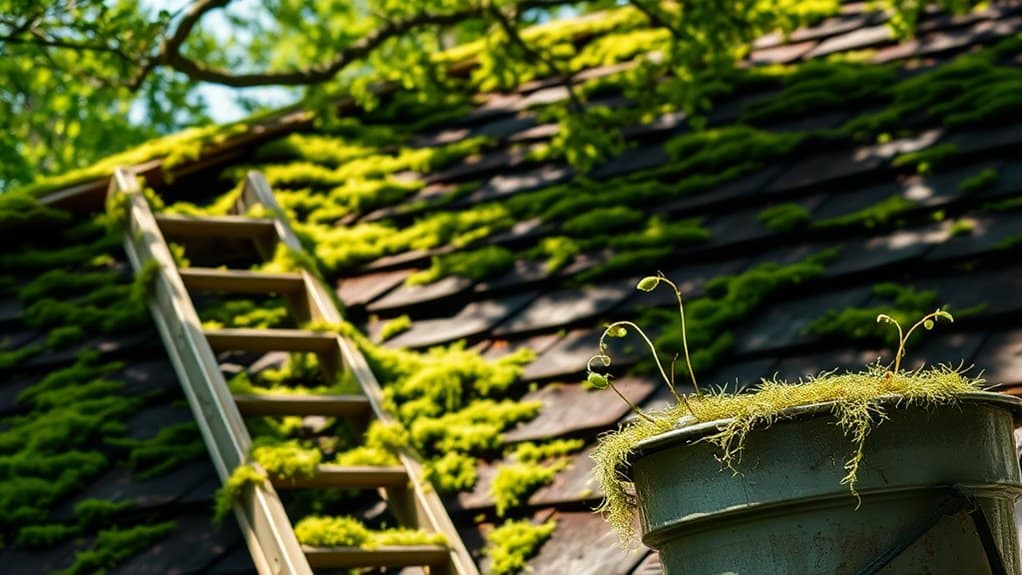
When dealing with moss on your roof, it's important to first assess how bad the growth is, as this will determine your method of removal.
You can opt for either chemical treatments or physical techniques. Here are three effective methods:
- Chemical Pre-Treatment: Apply a 5-6% sodium hypochlorite solution to the moss, which will help loosen it for easier removal.
- Physical Removal: After the solution has been applied, gently scrub the moss with a soft wire brush or broom. For stubborn patches, a stiff brush may be required.
- Low-Pressure Rinse: Finally, rinse the roof with a garden hose set to low pressure to wash away any remaining debris. Avoid high-pressure washers, as these can cause damage to your roof.
These methods will help you effectively remove moss from your roof!
Long-Term Maintenance for Moss Prevention
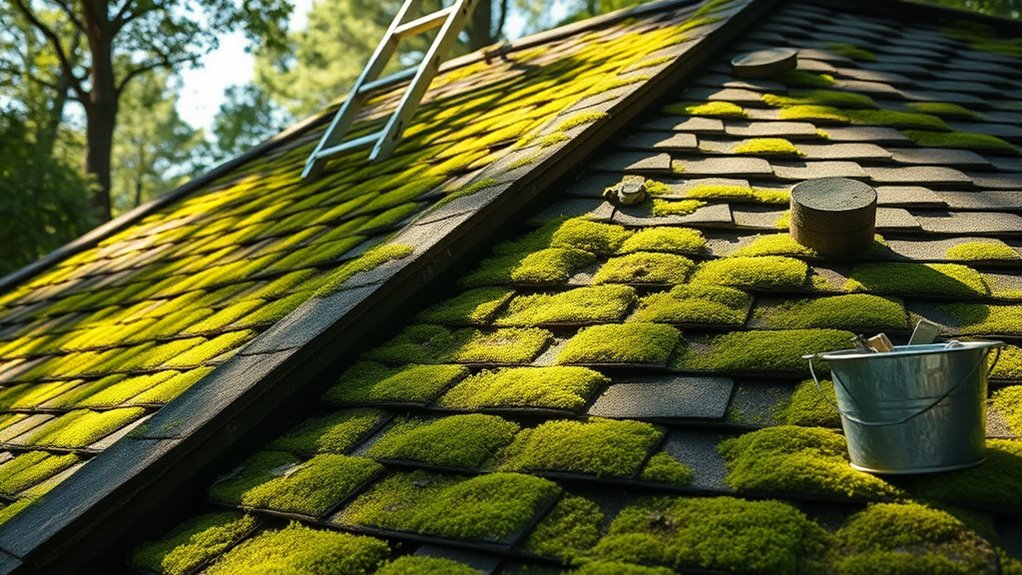
Maintaining your roof to prevent moss growth is essential for its longevity and structural integrity. Eco-friendly solutions like vinegar or diluted washing-up liquid can be used for occasional cleaning.
Installing zinc or copper strips can also help deter moss, though they may pose a risk of leaks on existing roofs. Pruning overhanging trees increases sunlight exposure, which reduces moisture retention— a key factor in moss growth.
Regular inspections and gutter maintenance are crucial for spotting early signs of moss and preventing water buildup. Additionally, choosing the right roofing materials matters; metal roofs are generally less prone to moss than traditional tiles. Regular inspections ensure optimal roof performance and help identify potential issues before they escalate.
Lastly, carry out periodic treatments every four to six years to ensure long-term prevention, protecting your roof from costly repairs and structural issues.
Frequently Asked Questions
How Quickly Can Moss Grow on Roofs?
Moss can begin to grow on roofs in as little as two weeks if conditions are right. To prevent this, it's essential to carry out regular roof maintenance. Ensure proper drainage and ventilation, and clear away debris to slow down moss growth and protect your home.
Does Moss Affect Roof Warranties?
Moss can certainly impact your roof's warranty. If left untreated, it may be deemed a maintenance issue, which could lead to your warranty being voided. For instance, if you need roof repairs or a replacement and moss is present, the warranty provider might refuse to cover the costs. It's essential to remove moss promptly to avoid these complications.
Are There Any Natural Remedies for Moss?
Did you know that more than 80% of homeowners deal with moss problems? To effectively prevent moss, consider using natural remedies like baking soda, vinegar, or citrus oil. These options help protect your roof without resorting to harsh chemicals.
How Often Should I Inspect My Roof for Moss?
You should inspect your roof twice a year, particularly in shaded or damp areas. Using moss prevention methods and basic maintenance tips during these checks ensures you catch any issues early, helping to preserve your roof's integrity and lifespan.
Can Moss Return After Removal?
Yes, moss can reappear after removal if you don't keep up with roof maintenance. To prevent moss from coming back, regularly clean your roof and trim back any overhanging trees. This will help keep your roof clear and in good condition over time.
Conclusion
In summary, dealing with roof moss is crucial for maintaining the structural integrity of your home. Understanding what causes moss to grow and adopting effective prevention methods can help protect your property. Regular maintenance and prompt removal not only improve your home's appearance, but also ensure it functions well. Stay proactive and invest in your roof's durability to keep your home safe and attractive for years to come. Don't let moss spoil your beautiful home!


