

What to Do About a Leaking Roof in South Woodham Ferrers
If you discover a leaking roof in South Woodham Ferrers, it’s important to act swiftly to minimise damage. Look for typical indicators such as water stains or sagging sections of the ceiling. Use buckets to catch any drips and cover the affected area with a tarp. Ensure nearby electricity is turned off and relocate any valuables to prevent water damage. Evaluate the extent of the issue to determine if it’s a minor repair or if you should call in a professional. Understanding the potential causes and solutions can help maintain a safe and dry home. There’s a lot to know about effective repair strategies and maintenance tips.
Key Takeaways
- Check your roof for obvious signs of leaks, like water stains, missing tiles, or sagging areas.
- Place buckets under any leaks to catch water and protect your belongings straight away.
- Turn off electrical circuits near the leak to prevent electric shock and hazards.
- Get in touch with a roofing professional for a thorough inspection and repairs to avoid further damage.
- Arrange regular roof maintenance to prevent potential leaks and ensure proper drainage.
Common Causes of Roof Leaks

When it comes to roof leaks, knowing the common causes can save you from expensive repairs. One major cause is damaged roofing tiles, which can occur due to storms, hail, or simply age. Missing or cracked tiles allow water to seep in. Issues with flashing around chimneys, vents, and skylights can also lead to serious leaks if not maintained properly. Poor installation or the use of incorrect materials can create weak spots, making your roof more susceptible to damage. As roofing materials age, their effectiveness diminishes, increasing the risk of leaks as seals wear out. Blocked gutters and downpipes can worsen the problem by preventing proper drainage, causing water to back up under the tiles. Additionally, proper precautions should be taken when accessing roofs to avoid human error that can lead to further damage. Regular inspections can help identify damaged tiles and other potential problems early, ensuring your roof remains effective and protective.
Identifying Signs of a Leak

When checking for signs of a leak, start by looking for water stains on your ceilings or walls, which often show up as dark rings. Also, watch for any bulging or sagging areas, as these can signal water build-up above. Tackling these issues quickly can help prevent more damage and costly repairs. Additionally, missing shingles can also indicate that your roof may be compromised, allowing water to enter and cause further issues. Regular visual inspections can help identify early signs of damage before they escalate into serious problems.
Water Stains Detection
Identifying water stains on ceilings is essential for spotting roof leaks early and preventing further damage. During your inspection, look for:
- Brown, yellow, or grey stains that may indicate water intrusion.
- Peeling paint or recurring water marks suggesting ongoing leaks.
- Rust-coloured or dark stains that point to a more serious issue.
These stains often begin small but can grow if not addressed. It’s crucial to deal with them swiftly, as they can lead to mould growth and structural damage. Regular inspections can help identify early signs of damage and prioritize repairs.
Pay special attention to areas around vents and skylights, as these are common leak points. By being vigilant, you can protect your home and ensure a safe environment for everyone.
Ceiling Bulges Indicators
Ceiling bulges are key indicators of potential roof leaks, often pointing to underlying moisture problems that need urgent attention. During a ceiling inspection, check for bulging areas, which may suggest significant water accumulation above. These bulges can appear alongside cracks, bubbles, or discolouration, all of which signal ongoing issues.
| Indicator | Description |
|---|---|
| Bulging | Soft, warped areas indicating moisture presence |
| Cracks | Straight lines or spiderweb patterns from damage |
| Bubbles | Trapped moisture causing paint to separate |
| Staining | Dark spots that suggest water infiltration |
Regularly check for moisture in your ceilings, particularly after rainfall, to avoid further structural damage. Taking prompt action is crucial for safety and to maintain your home.
Immediate Actions to Take
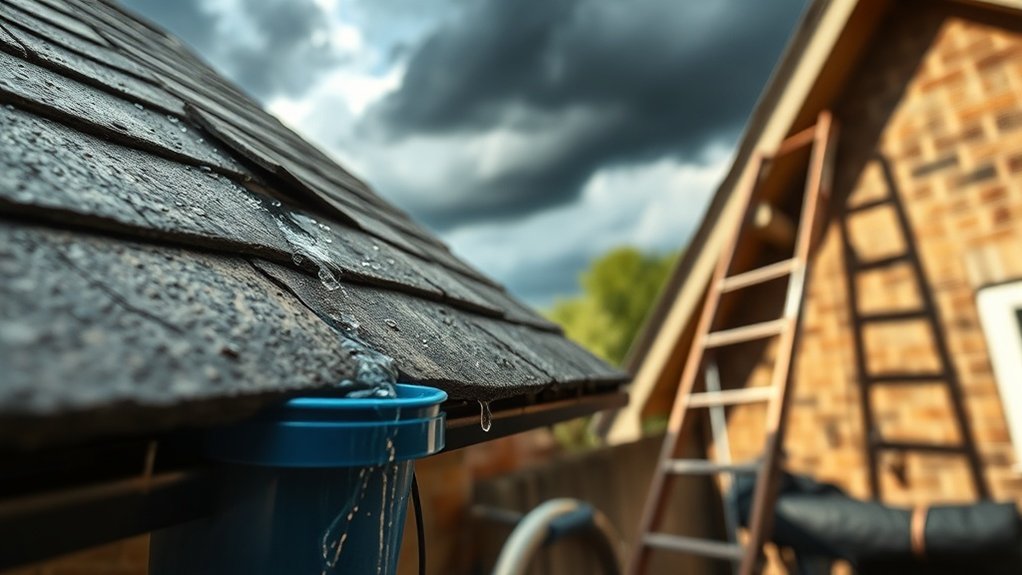
Taking immediate action is essential when you have a leaking roof. Here are some key steps to follow to minimise damage and ensure safety:
- Place buckets or containers under the leaks to catch the dripping water.
- Switch off electrical circuits near the leak to avoid electric shock.
- Use waterproof tarps to cover the damaged area temporarily.
First, protect your belongings by moving furniture and valuables away from the leak. Use old towels or bedding to soak up moisture around the containers.
If there are bulging areas in the ceiling, carefully puncture them to let the water drain safely. Avoid climbing onto the roof until a professional can assess the situation.
These steps will help reduce damage while you organise permanent repairs.
Diagnosing the Leak Source

To effectively diagnose the leak source in your roof, begin with a detailed interior inspection.
Look for water stains or mould in ceilings and attics.
After that, check the exterior for signs of damage, like cracked or missing tiles and gaps around fixtures.
Interior Inspection Techniques
When inspecting for leaks, it’s essential to use effective interior inspection techniques to accurately identify the source of water intrusion.
- Use moisture meters to check moisture levels in ceilings and walls.
- Employ thermal imaging to detect temperature variations that suggest moisture.
- Take note of marked leak locations for future reference and to correlate with exterior evaluations.
Begin by looking for water stains, bubbling paint, or signs of mould.
Check the attic for damp rafters and insulation, using a torch to trace any water trails.
Record damp areas and measure their distance from fixed points for precise tracking.
Exterior Damage Assessment
Identifying leaks requires a thorough assessment of exterior damage, as many leaks start from the roof’s outer components.
Begin with a detailed inspection of the roof, checking for missing, cracked, or curled shingles. Pay particular attention to the flashing around chimneys and vents for any signs of rust or separations that might compromise waterproofing.
Don’t overlook the gutters; ensure they’re clear of blockages that could cause overflow. You can use water testing techniques to simulate rain, helping to pinpoint leak sources more effectively.
Infrared thermography is also a useful tool to detect hidden moisture issues without damaging the roof.
Finally, examine junctions and penetrations, as improper installation or aged materials in these areas often lead to leaks. This structured approach ensures you identify and address vulnerabilities efficiently.
Repair Methods and Materials
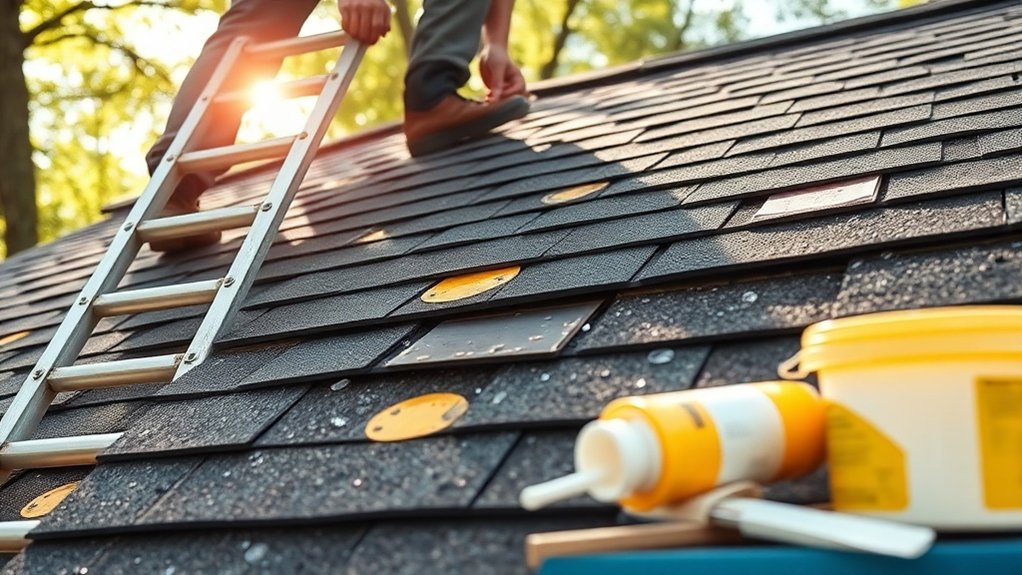
When faced with a leaking roof, it’s crucial to use effective repair methods and materials for a lasting fix. Start by locating the source of the leak through visible signs, then remove any damaged materials for a thorough inspection.
Here are the key steps to consider:
- Clean the area well to ensure proper adhesion.
- Choose materials suited to your roof type; for instance, use asphalt shingles on pitched roofs or EPDM patches for flat roofs.
- Check surrounding areas to avert future leaks.
Costs Associated With Repairs

Understanding the costs associated with roof repairs is crucial for homeowners dealing with leaks or damage, as these expenses can vary significantly.
Minor repairs generally range from £120 to £350, whereas major repairs can exceed £1,000. Factors such as the type of roofing material, the extent of the damage, and local labour rates all play a role in determining costs. Emergency repairs may also come with a premium of 20-50%.
It’s wise to consider repair financing options if your insurance doesn’t cover the full amount.
Always obtain quotes from several contractors to ensure competitive pricing, and don’t forget to check with your insurance provider, as their support can greatly reduce your out-of-pocket expenses.
Timeframes for Repair Work
Timely repairs are crucial for maintaining your roof’s integrity and reducing long-term damage. Knowing the timeframes for repairs can help you take prompt action:
- Emergency repairs should start within 24 hours to prevent further damage.
- Minor repairs usually take between 1 to 4 hours, whereas major work can last from 1 to 3 days.
- Scheduling may be affected by weather conditions, material availability, and the contractor’s workload.
For serious leaks or structural issues, seek immediate assessment. A quick emergency response, such as using a tarp, can prevent additional problems.
After the initial inspection, professionals will provide detailed timelines, keeping you informed throughout the process. By staying proactive, you can safeguard your home and reduce costs associated with delayed repairs.
Preventive Maintenance Tips
To ensure your roof lasts and performs well, it’s essential to carry out regular preventive maintenance. Inspect your roof at least twice a year, preferably in spring and autumn, to spot any missing or damaged tiles and to check for leaks.
Regularly clean your gutters and downpipes to prevent blockages and ensure proper drainage.
Keep any overhanging branches trimmed back to minimise debris on your roof and prevent potential damage.
It’s also a good idea to clean the roof surface occasionally, removing moss and algae with gentle cleaning products.
Lastly, check your loft for dampness and ensure there’s adequate ventilation to avoid mould growth.
When to Call a Professional
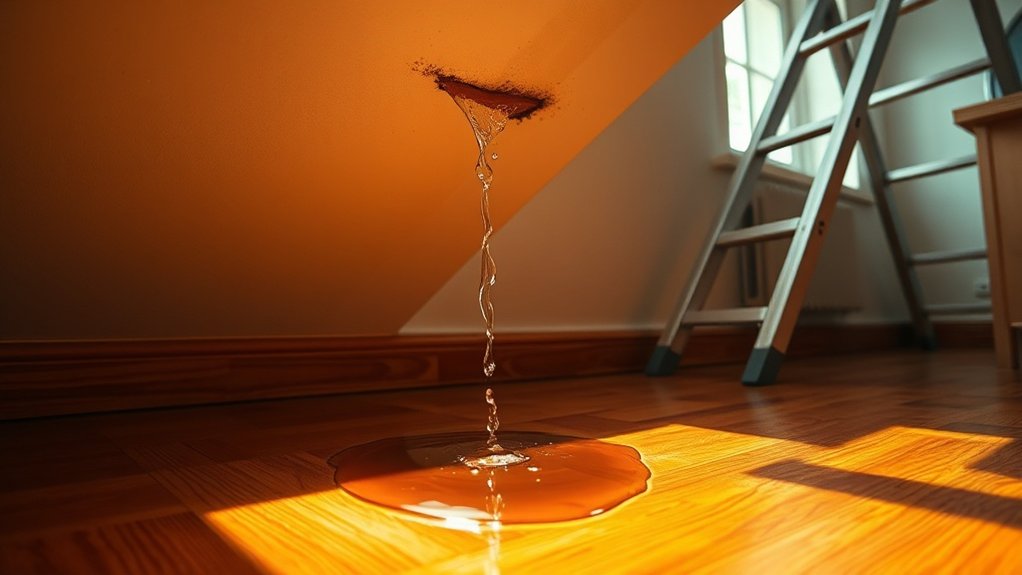
When should you consider calling a professional for roof issues? It’s crucial to act swiftly if you spot any significant signs of a leak.
Here are some indicators that require immediate attention:
- Visible water stains on ceilings or walls.
- Sagging or warped sections of the roof, which may signal structural problems.
- Ongoing leaks despite previous repairs.
A professional’s expertise can be invaluable in diagnosing and resolving these issues effectively.
If you encounter an emergency, such as electrical hazards or rapid mould growth, don’t hesitate to get in touch with a roofing expert.
Addressing these problems early can prevent further damage and costly repairs later on.
Ensure your home remains safe by prioritising professional help when needed.
Frequently Asked Questions
How Can I Temporarily Stop a Leak Until Repairs Are Made?
To temporarily stop a leak, place buckets underneath to catch any dripping water. For small gaps, use roofing tape, and for larger openings, cover them with a waterproof tarp. These quick fixes will hold until you can arrange for permanent repairs.
Can I Repair a Roof Leak Myself, or Should I Hire a Professional?
Yes, you can attempt to fix a roof leak yourself with some DIY methods, but for long-lasting results, it may be better to hire a professional. After all, tackling repairs yourself can sometimes lead to even bigger issues down the line!
What Weather Conditions Can Exacerbate Roof Leaks?
Rainstorms and strong winds can significantly worsen roof leaks, as they may drive water into gaps and dislodge roofing materials. Regular maintenance and timely repairs are crucial to address these weather-related issues and safeguard your roof’s integrity. For instance, even a small crack can become a major problem during heavy rainfall, so it’s wise to inspect your roof regularly, especially after severe weather.
How Often Should I Inspect My Roof for Potential Leaks?
It’s important to regularly maintain your roof by inspecting it every 6 to 12 months, particularly for older properties. For newer roofs, aim for checks twice a year. This routine helps catch potential leaks early and keeps your home safe and dry.
Are There Specific Signs Indicating a Roof Needs Replacement Rather Than Repair?
If your roof is over 20 years old or shows clear signs of damage, such as curling shingles or frequent leaks, it’s usually better to opt for a replacement rather than a repair. Consider your safety and the long-term value of your property when making this decision.
Conclusion
In summary, dealing with a leaking roof in South Woodham Ferrers is crucial to avoid further damage. Just as a small crack in a dam can lead to a much larger problem, even minor leaks can worsen quickly. By pinpointing the source and acting promptly, you can protect your home. Regular upkeep and timely repairs can save you both time and money. If you’re unsure, don’t hesitate to seek professional help to ensure a comprehensive solution.


