
Solar Panel Impact on Roof Warranties: What to Check
When fitting solar panels, it’s crucial to review your roof warranty terms. Incorrect installation or using non-approved mounting equipment could invalidate your warranty. Ensure your contractor is certified and adheres to the manufacturer’s guidelines. Before installation, assess your roof’s condition and its load-bearing capacity. Regular maintenance after installation is vital for keeping your warranty intact. By monitoring both your roof and solar panel performance, you can spot potential issues early. For more insights, refer to the best practices outlined further.
Key Takeaways
- Ensure proper installation methods are used to maintain the roof’s integrity and prevent voiding the warranty.
- Confirm that the contractor holds manufacturer-specific certifications to meet warranty requirements.
- Be aware of potential issues, such as inadequate flashing, which could cause leaks and jeopardise the warranty.
- Document the roof’s condition and age prior to installation to ensure it’s suitable for solar panels.
- Arrange regular inspections and maintenance to keep the warranty valid and maximise the performance of both the roof and the solar system.
Understanding Roof Warranty Terms
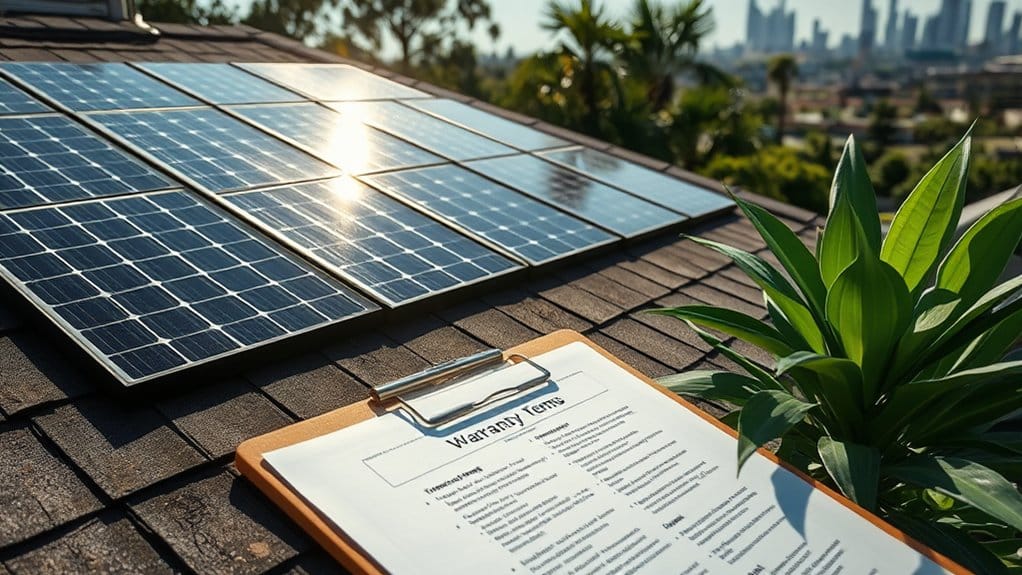
When managing roof warranties, it’s crucial to grasp the various types and their specific terms. Familiarise yourself with roof terminology, as this knowledge is key to making informed choices. A manufacturer’s warranty typically covers defects in materials, while a workmanship warranty addresses installation mistakes. Extended and full system warranties offer broader protection, often including labour costs. Lifetime warranties, generally lasting around 50 years, provide long-term reassurance. Be aware of warranty definitions, such as prorated versus non-prorated coverage, as this impacts compensation over time. Understanding the details of your warranty ensures you can effectively protect your investment and provide accurate advice on coverage and the maintenance required to keep those warranties valid. Additionally, it’s important to consider the entire roofing system when evaluating warranty coverage, as some warranties may only protect specific components. Furthermore, insurance-backed guarantees can provide added security, ensuring coverage remains intact even if the contractor goes out of business.
Risks of Voiding Roof Warranties
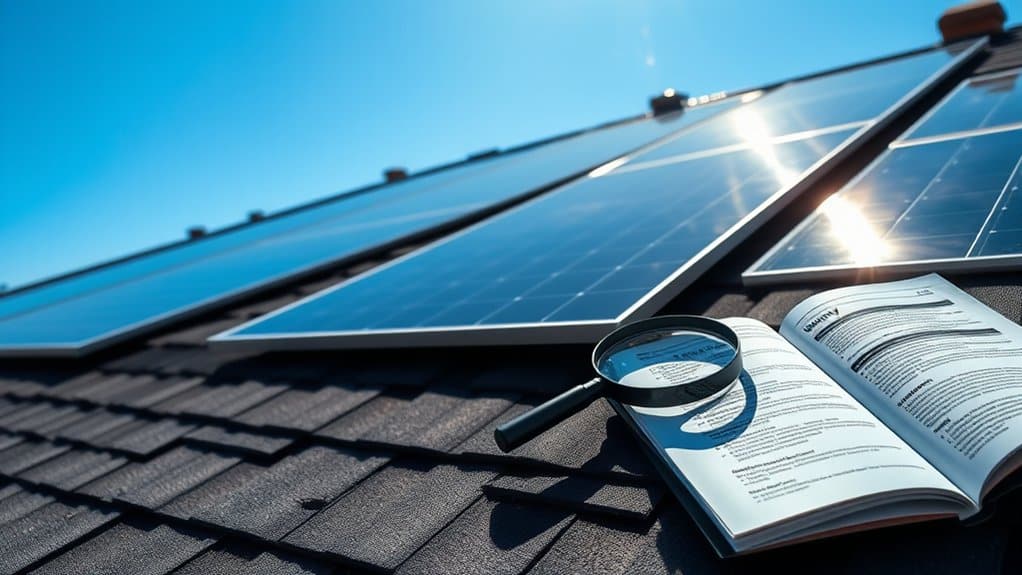
Understanding roof warranty terms is just the start; it’s crucial to know how solar panel installations can affect those warranties.
Installation errors can lead to significant warranty issues. For example, improper flashing or unapproved mounting equipment may result in leaks and void your coverage.
If installers fail to adhere to manufacturer specifications or use non-compliant tools, you risk invalidating your warranty. Drilling without the correct sealant or using substandard materials can weaken your roof’s integrity. Improper installation can also result in damage that voids the warranty, so ensure your installer follows all guidelines. Regular maintenance requirements are also essential to uphold warranty validity, especially after making modifications like solar panel installations.
Many warranties have clauses that void coverage for unauthorized alterations, so if your installer isn’t certified, you could face hefty repair bills.
Protect yourself by ensuring that all aspects of the installation comply with both roofing and solar warranty requirements.
Importance of Pre-Installation Checks
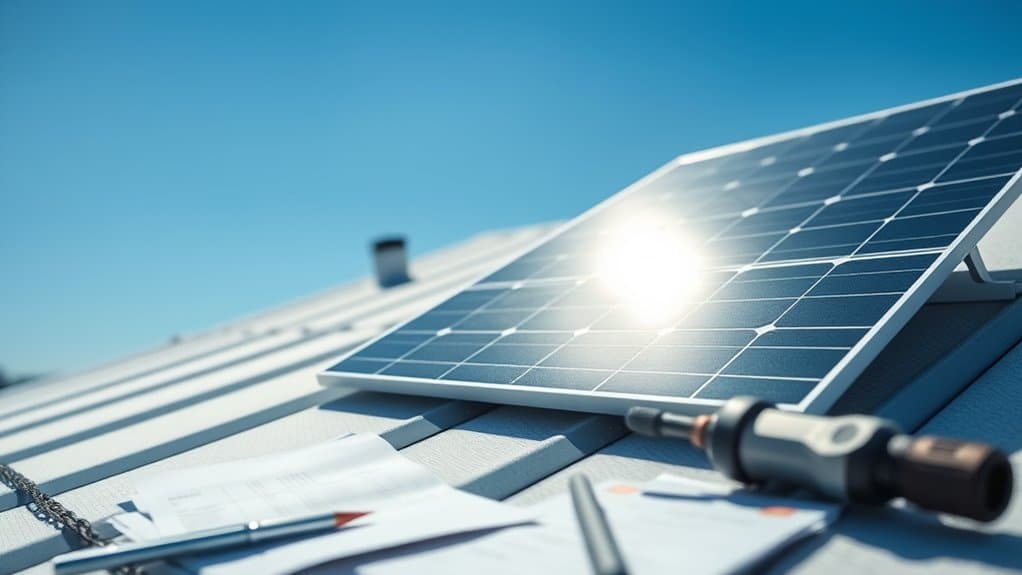
Before installing solar panels, it’s crucial to carry out pre-installation checks to ensure your roof can handle the extra weight and to keep your warranty intact.
A mandatory structural assessment will determine the roof’s load-bearing capacity and highlight any weak spots. It’s also important to document the roof’s condition, noting any existing damage to meet warranty requirements. Understanding the impact of installation methods on warranty validity can also guide your choices. Regular maintenance is crucial for keeping warranties valid, as compliance with local regulations ensures that your installation adheres to necessary standards.
Checking the roof’s age and material compatibility is essential for finding the right solar mounting system.
Additionally, reviewing the manufacturer’s warranty guidelines will help you avoid any installation methods that could void your warranty.
Contractor Compliance and Selection
When choosing a contractor for your solar installation, it’s crucial to check that they’ve the necessary manufacturer-specific certifications to protect your roof warranty.
Ensure the contractor meets state licensing requirements and possesses adequate insurance to fulfil warranty stipulations.
Certified Installer Importance
Choosing a certified installer is crucial for ensuring the long-term performance and reliability of your solar panel system. Certified installers provide a range of benefits, including adherence to industry standards and a commitment to ethical practices. Their qualifications, such as NABCEP certification, ensure they have the necessary skills and experience.
| Benefit | Description | Importance |
|---|---|---|
| NABCEP Certification | Recognised credential in the solar industry | Ensures skill and knowledge standards |
| Continuing Education | Mandatory courses every three years | Keeps installer qualifications up to date |
| Health and Safety Training | Required for safety protocols | Protects against workplace hazards |
| Reputation and Reviews | Feedback from previous clients | Validates quality of work |
Opting for a certified installer not only protects your property but also maximises your investment in solar energy.
Warranty Compliance Verification
Ensuring warranty compliance during the installation of solar panels is crucial for safeguarding your roof and investment.
To do this effectively, pay attention to contractor compliance and selection. Here are four vital aspects to check:
- Material Compatibility: Ensure that the mounting systems and sealants are suitable for your roofing material and comply with warranty requirements.
- Warranty Documentation Review: Look for any proration clauses and exclusions that could impact your coverage.
- Legal Protection Measures: Request notarised compliance affidavits and verify insurance coverage for potential damages.
- Installation Protocol Validation: Check that all safety procedures and waterproofing methods meet local building regulations.
Best Practices for Solar Installation
To ensure a successful solar installation, proper pre-planning and adherence to best practices are essential.
Start with a thorough assessment of your roof’s condition to confirm it can support solar panels. If necessary, consider re-roofing before installation.
Next, determine the optimal placement of solar panels by analysing sunlight exposure and any shading on your property.
Make sure your installation complies with local regulations and choose high-quality components with reliable warranties.
During the installation, securely mount the panels and adjust their tilt angles for maximum energy production.
Remember to follow safety protocols and keep clear documentation throughout the process.
This attention to detail won’t only enhance the efficiency of your solar system but also protect your roof warranty.
Coordinating Between Roofing and Solar Contractors

Coordinating between roofing and solar contractors may appear simple, but effective collaboration is crucial to protect your roof warranty.
Here are some practical communication strategies:
- Set Up Clear Communication Channels: Ensure that both teams have direct lines of communication to adhere to manufacturer guidelines.
- Hold Joint Planning Meetings: Work together to identify any potential risks to your roof warranty and develop strategies to mitigate them.
- Select Compatible Contractors: Choose installers who are familiar with each other’s processes to minimise mistakes.
- Adapt Installation Methods: Adjust techniques based on your roof type and warranty stipulations to lower risks.
Solar Warranty Protections Overview

When installing solar panels, it’s crucial to understand the warranties that come with your system to protect your investment.
Solar warranties generally include product and performance warranties. The product warranty covers any defects in the solar panels and associated components, typically lasting between 10 to 12 years.
Meanwhile, the performance warranty ensures that your panels will produce at least 90% of their expected energy output for around a decade, which helps safeguard against efficiency loss.
Additionally, a workmanship guarantee covers the quality of the installation, which is important as poor installation can void your roof warranty.
Keep in mind that solar-specific warranties don’t cover roofing materials directly and require proper installation to maintain your roof’s integrity.
Understanding these warranties is key to making the most of your solar investment.
Post-Installation Maintenance Essentials

Maintaining your solar panels after installation is vital for ensuring their durability and efficiency.
Establish regular post-installation inspections and follow a maintenance schedule to keep your system operating at its best.
Here are four key maintenance essentials:
- Visual Inspections: Regularly check for debris, loose connections, and any signs of moisture ingress.
- Cleaning: Clean your panels at least twice a year, or more often in stormy or dry conditions, using soft brushes and mild soap.
- Seal Checks: Ensure all roof penetrations are properly sealed to prevent leaks and inspect these seals for wear and tear.
- Professional Inspections: Arrange for annual assessments by professionals to identify and resolve any potential issues early.
Monitoring Roof and Solar Performance
To ensure optimal roof and solar performance, it’s important to carry out regular annual inspections.
You can use various performance monitoring tools to keep track of efficiency and spot any potential issues early on.
Annual Inspection Importance
Annual inspections may seem routine, but they’re crucial for monitoring the performance of your roof and solar panels.
Regular inspections provide significant benefits that enhance the longevity of your roof. Here are some key points to consider:
- Identify Issues Early: Detect potential problems before they turn into expensive repairs.
- Monitor Efficiency: Evaluate solar panel performance to ensure maximum energy output.
- Document Findings: Maintain records that support warranty compliance and your maintenance history.
- Evaluate Structural Integrity: Ensure your roof can safely support solar installations without incurring damage.
Regular inspections truly pay off in the long run.
Performance Monitoring Tools
As you invest in solar panels for your roof, effective performance monitoring tools are vital to ensure optimal energy production and protect your roofing system. Monitoring software allows you to track performance metrics in real time, offering insights into energy output and any potential issues.
| Feature | Benefit | Purpose |
|---|---|---|
| Cloud-based Platforms | Remote access | Monitor energy patterns anytime |
| Smart Meters | Track energy flow | Understand your consumption habits |
| Environmental Sensors | Identify efficiency losses | Improve overall performance |
| Automated Alerts | Instant notifications | Quickly address any underperformance |
With these tools, you can ensure your solar system runs efficiently while keeping your roof warranty intact. Always prioritise monitoring for the best results.
Handling Warranty Disputes
When dealing with warranty disputes over solar panel installations, it’s crucial to adopt a clear and organised approach.
Here’s a straightforward guide to follow:
- Gather Evidence: Start by collecting all relevant documents, such as contracts, warranty details, and records of any communications.
- Understand Warranty Terms: Carefully review the warranty’s fine print to identify any limitations or exclusions that may apply.
- Engage in Dispute Resolution: Consider mediation or arbitration as a faster way to resolve the issue without going to court.
- Legal Action Considerations: If the dispute remains unresolved, seek advice from a solicitor who specialises in this area.
Ensuring Coverage During Home Sales
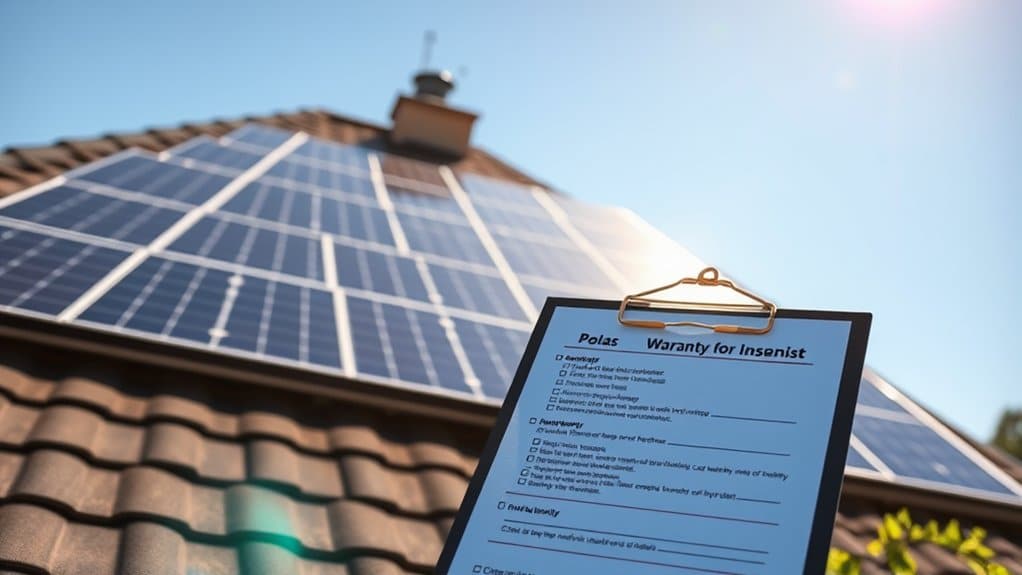
To ensure roof warranties remain valid during home sales, proactive preparation is key.
Firstly, check if the warranty can be transferred to potential buyers; this can significantly boost your home sale prospects. If you have a new roof, consider installing solar panels to avoid warranty issues.
Keep all documentation—such as installation details and warranty terms—well organised. Make sure both your roofing and solar installers are aware of the warranty requirements to prevent any voiding.
When negotiating warranties, clearly explain their status and benefits to prospective buyers to build trust.
Providing comprehensive documentation, including condition reports and maintenance advice, can further reassure buyers about their investment, making your home more attractive in a competitive market.
Frequently Asked Questions
Can I Install Solar Panels on a Newly Constructed Roof?
Yes, you can install solar panels on a newly constructed roof, as long as you adhere to installation guidelines and ensure compatibility with the roofing materials. Proper installation protects both your investment and the roof’s integrity. For instance, using appropriate mounting systems that suit your roof type will help avoid any potential damage.
What Happens if My Solar Installer Goes Out of Business?
If your solar installer goes out of business, you could encounter significant warranty issues. It’s important to check whether warranties can be transferred and to understand the installer’s liability. If not, you might end up paying for unexpected repairs yourself. For instance, if your inverter fails and the original company is no longer around, you’d need to cover the replacement costs.
Are There Specific Solar Panel Brands That Don’T Void Roof Warranties?
Certain solar panel brands follow warranty guidelines that help protect your roof’s warranty. By researching these options, you can ensure compatibility with your roofing material, keeping your warranty intact. This not only safeguards your investment but also boosts your home’s energy efficiency.
How Does Roof Color Affect Solar Panel Efficiency?
The colour of your roof significantly influences solar panel efficiency. Dark roofs tend to absorb more heat, which can hinder the performance of solar panels. On the other hand, lighter roofs reflect sunlight, helping to keep the panels cooler. This not only boosts energy output but also extends the lifespan of the panels. For example, a white or light grey roof may enhance the effectiveness of solar installations compared to a dark slate roof.
Can Roof Repairs Be Done After Solar Panel Installation?
You can definitely carry out roof repairs after installing solar panels, but it’s important to coordinate the two carefully. This ensures you don’t void any warranties or affect your system’s performance. For instance, if you need to replace tiles or fix leaks, make sure your solar panel provider is involved to avoid any issues.
Conclusion
When considering solar panels, it’s crucial to understand your roof warranty. Check the terms, ensure compliance, and choose a reputable contractor to avoid expensive issues. Picture harnessing the sun’s energy while keeping your roof secure. With proper installation and maintenance, your home’s value can increase, giving you confidence whether you’re enjoying your energy savings or preparing to sell. Stay informed, and you’ll enjoy the benefits.


