

How Solar Roofing Systems Work in the UK
Solar roofing systems in the UK capture sunlight using advanced photovoltaic technology to produce electricity. These systems can include traditional solar panels, building-integrated tiles, or thin-film options. When sunlight hits the panels, it excites electrons, generating direct current (DC). An inverter then converts this into alternating current (AC) for use in your home.
Factors like roof orientation, shading from trees or buildings, and the quality of materials can significantly affect efficiency. Additionally, government regulations are promoting solar energy adoption, and there’s a growing public interest in renewable energy solutions.
If you’re considering installation, it’s worth exploring costs and the latest developments in solar technology to make an informed decision.
Key Takeaways
Solar roofing systems harness sunlight to produce electricity through photovoltaic cells. These cells generate direct current (DC), which is then converted into alternating current (AC) for household use.
The efficiency of energy production depends on factors like roof orientation, shading, and location—ideally, homes with south-facing roofs in sunny areas will see the best results.
Building-Integrated Photovoltaic (BIPV) solar tiles are a great option as they serve a dual purpose: they function as both roofing material and energy generators, offering a sleek look while contributing to energy needs.
Before installation, it’s essential to evaluate the roof’s condition and orientation, as well as comply with local regulations to meet building standards and ensure safety.
Government incentives and evolving market trends are encouraging more homeowners in the UK to adopt solar roofing, aligning with sustainability goals and helping to cut carbon emissions.
Types of Solar Roofing Systems

When considering solar roofing systems, it’s important to know the different types available, each with its own benefits and drawbacks.
The most common options include traditional on-roof panels, which are installed on top of existing roofing materials like tiles or slates, achieving efficiencies between 13% and 24%.
Building-integrated photovoltaic (BIPV) solar tiles serve a dual purpose, looking like standard roofing while generating power, though they tend to be slightly less efficient, ranging from 10% to 20%. Solar roof tiles use semiconducting photovoltaic solar cells for electricity generation.
Thin-film systems offer a lightweight, flexible alternative but are the least efficient, with rates between 7% and 13%.
Lastly, solar thermal systems convert sunlight into heat for hot water and can be easily integrated with existing roofs.
Each option has its own advantages based on your roofing type and energy requirements, helping you choose the right solar solution for your home.
Working Principle of Solar Roofing Systems

Solar roofing systems utilise photovoltaic (PV) technology to convert sunlight into electricity, incorporating PV cells within roofing materials. When sunlight hits these cells, it excites electrons, producing direct current (DC). An inverter then transforms this into alternating current (AC) for household use. This integration not only boosts energy efficiency but also improves your home’s appearance while offering a sustainable energy solution. Additionally, the efficiency of the system depends on roof orientation, geographic location, shading, and the quality of solar technology utilized.
Photovoltaic Technology Overview
Photovoltaic technology utilises the properties of silicon to convert sunlight into electricity, forming the backbone of modern solar roofing systems.
Solar cells are mainly made from silicon and consist of two layers: p-type and n-type. This setup creates an electric field crucial for electricity generation. When sunlight hits the solar cell, it excites electrons, producing direct current (DC). The efficiency of these cells can be significantly affected by optimal angle and positioning, which maximizes sunlight capture and electricity generation.
There are different types of solar cells, such as monocrystalline and polycrystalline, which vary in efficiency and overall performance. Each solar panel comprises multiple cells connected to boost voltage and current.
Encased in robust materials, these panels are built for durability, allowing communities to harness clean energy in an effective and sustainable manner.
Energy Conversion Process
When sunlight hits silicon cells in a solar panel, it triggers the photovoltaic effect. This process allows photons to transfer energy to electrons, creating an electrical current as the electrons move through the solar panel circuit. This results in direct current (DC) electricity.
An inverter then transforms this DC into alternating current (AC), which is suitable for household appliances and can be fed back into the grid. You can use the generated AC electricity right away or store any surplus in battery systems for later.
This ensures a reliable power supply during cloudy days or at night. Understanding this energy conversion process helps you see how solar roof systems harness solar energy effectively, support sustainability, and contribute to a cleaner future.
Roof Integration Benefits
Utilising solar energy through integrated roofing systems presents several advantages that boost both functionality and appearance.
These systems blend seamlessly with your roof’s design, offering an attractive look while ensuring resilience against the UK’s unpredictable weather.
- Creates a sleek, modern finish that can increase property value
- Minimises leak risks and enhances roof integrity with watertight seals
- Reduces maintenance by limiting debris build-up
Integration removes the bulky appearance of traditional solar panels, improving your home’s curb appeal.
With fewer exposed components, your roof is better equipped to withstand wind, rain, and snow.
This combination of style and durability makes integrated solar roofing a smart choice for any homeowner seeking to improve their property’s efficiency and attractiveness. Additionally, proper ventilation ratios can enhance the overall performance of solar roofing systems by regulating temperature and moisture levels in the roof space.
Energy Efficiency and Performance

When assessing energy efficiency and performance in solar roofing systems, consider key factors such as panel efficiency rates and optimal roof conditions.
The energy output can vary significantly based on the roof’s orientation, tilt angle, and the latest advancements in solar technology.
For instance, a south-facing roof generally captures more sunlight, leading to higher energy generation.
Efficiency Comparison Factors
To understand the efficiency of solar roofing systems, it’s important to look at key performance factors that affect energy output:
- Module efficiency metrics: In the UK, high-efficiency panels typically range from 21% to 24.8%.
- Panel comparisons: Monocrystalline panels generally outperform polycrystalline and thin-film options.
- Temperature coefficient: Panels with lower negative coefficients perform better in warmer temperatures.
When assessing solar solutions, consider these efficiency metrics alongside panel comparisons.
For instance, higher wattage panels may not always be more efficient if their size is disproportionately large.
Choosing the right panels based on these factors ensures you maximise energy production while effectively meeting your energy needs.
Output Influencing Conditions
The efficiency and performance of solar roofing systems are significantly affected by various output conditions. Key factors include roof orientation and shading, both of which can considerably influence energy generation.
| Condition | Impact | Recommendation |
|---|---|---|
| Roof Orientation | South-facing maximises sunlight exposure | Aim for south-facing installations |
| Shading Effects | Nearby objects can reduce output | Conduct a shading analysis |
| Roof Pitch | Best performance at 30°-45° tilt | Ensure proper tilt for seasonal changes |
Environmental factors such as cloud cover and temperature are also crucial. For optimal performance, ensure your installation is free from shading and allows for adequate airflow to maintain efficiency.
Technological Advancements Impact
As solar roofing technologies advance, their impact on energy efficiency and performance becomes more pronounced. Innovations in solar materials, such as tandem solar cells, are now achieving over 30% efficiency, enhancing both appearance and functionality.
Additionally, integrating energy storage systems allows homeowners to store excess energy for use when sunlight isn’t available.
Key benefits include:
- Enhanced durability to withstand the UK’s harsh weather
- Seamless compatibility with smart home systems
- Long-term cost savings, despite initial investment
These advancements not only aid in reaching net-zero emissions but also bolster local economies through domestic manufacturing.
Installation and Structural Considerations
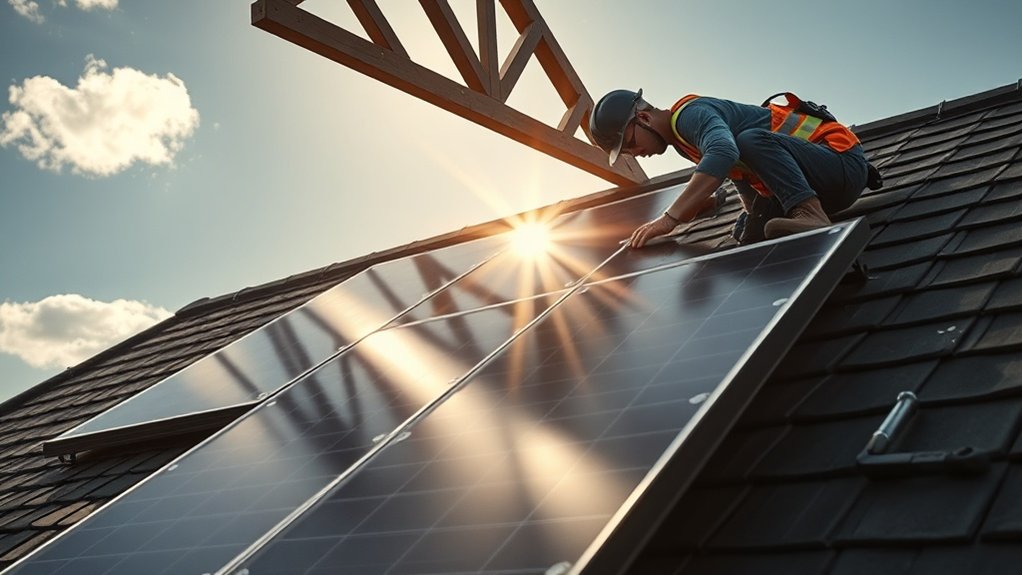
When planning a solar roofing installation, it’s crucial to assess whether your roof is suitable for optimal performance and longevity. Key factors include the roof’s orientation and pitch; south-facing roofs with a 30–40° angle typically deliver the best results.
Be mindful of any shading from nearby buildings, as this can significantly reduce efficiency.
Ensure your roof is structurally sound; loose tiles or ageing materials may need repairs or reinforcement. A professional site survey can help verify these elements. Additionally, be aware of local building regulations and warranties to avoid compliance issues in the future. Understanding installation considerations for different roof types is essential for maximizing your solar investment.
Cost, Savings, and Payback in the UK
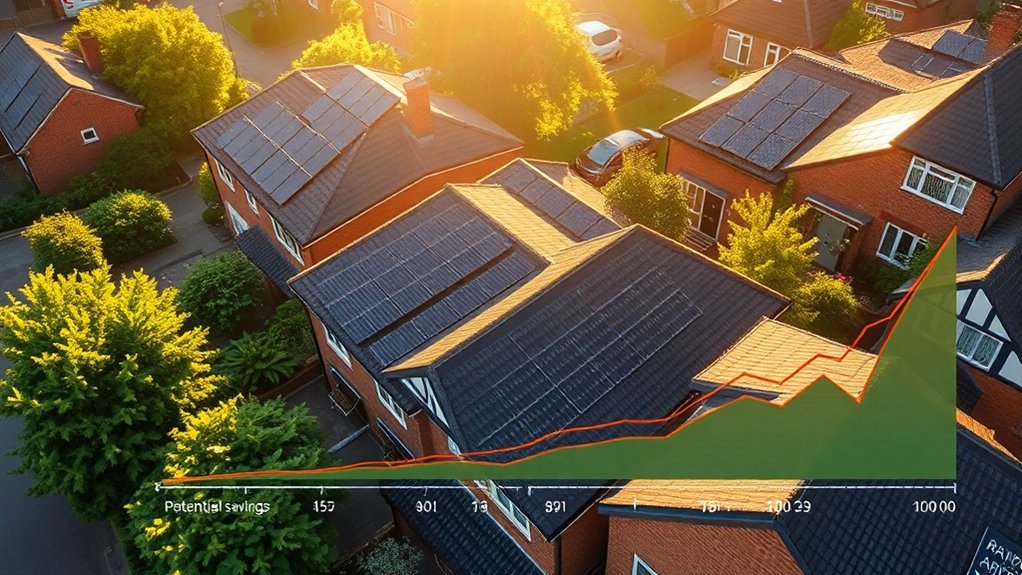
Investing in solar roofing systems in the UK is a considerable financial decision, but it can offer significant long-term advantages.
- The cost of solar roof tiles generally ranges from £8,000 to £18,000, often double that of traditional solar panels.
- With a 4 kW system, you could save about £833 each year, depending on your energy usage.
- The payback period for these tiles can vary from 16 to 31 years, influenced by energy prices and the size of the system.
While the upfront cost is higher, the potential savings over time can help recoup that investment.
As energy prices continue to rise, the financial benefits of solar roofing become even clearer, improving your overall return on investment.
UK Regulatory and Market Context

Navigating the regulatory landscape for solar roofing systems in the UK is essential for homeowners and developers. Recent updates have simplified planning permissions, especially for flat roofs, making it easier to adopt solar technology.
Complying with UK building regulations ensures safety and efficiency, as certified installers registered with the Microgeneration Certification Scheme (MCS) meet strict standards.
Market trends show a significant rise in solar installations, particularly with the Future Homes Standard, which requires solar panels on new builds by 2027.
This shift underscores the government’s commitment to reducing carbon emissions and lowering energy costs.
Frequently Asked Questions
Can Solar Roofing Systems Work in Cloudy Weather?
Yes, solar roofing systems can work well in cloudy weather. They capture diffused sunlight, producing around 10-25% of their usual output, which means they can still generate energy even when it’s overcast. For instance, on a typical cloudy day, you might still power essential appliances in your home.
How Long Do Solar Roof Tiles Last?
Imagine your roof lasting for decades! Solar roof tiles generally last between 20 to 40 years, depending on factors like material quality, upkeep, and local weather. With proper maintenance, you can even prolong their lifespan.
Are Solar Roof Systems Suitable for All Roof Types?
Solar roof systems aren’t suitable for every type of roof. When considering installation, it’s important to think about the roof material. For instance, slate roofs need special care during installation, whereas concrete tiles can easily accommodate solar panels.
Can I Install Solar Roofing Myself?
You can try to install solar roofing yourself, but be cautious—safety is a major concern. Having the right skills is crucial to prevent issues like leaks or dangerous situations. Often, hiring professionals ensures better compliance with regulations, enhanced safety, and optimal performance for your solar roofing system.
What Maintenance Do Solar Roofing Systems Require?
Solar roofing systems need regular upkeep, which includes cleaning every 6 to 12 months and monitoring their performance. Regular inspections can help spot problems early, ensuring optimal energy production, extending the system’s lifespan, and protecting warranties from neglect or mishandling. For instance, keeping your solar panels free of dust and debris can significantly enhance their efficiency.
Conclusion
In summary, adopting solar roofing systems in the UK can significantly impact your energy bills and benefit the environment. By familiarising yourself with the different types, how they work, and the installation process, you’ll be better prepared to make informed choices. Though the initial investment may appear daunting, the long-term savings and potential earnings can offset these costs. Remember, every little bit counts, and investing in solar technology may be the smart choice for a sustainable future.


