

How to Dispose of Your Old Roof Materials
To dispose of your old roof materials responsibly, start by exploring recycling options such as repurposing asphalt shingles or recycling metal. You might also consider donating usable materials to local charities or community projects. If recycling isn't practical, hire a skip or a disposal service that adheres to eco-friendly practices. Always check local regulations to ensure compliance. There are plenty of innovative recycling and reuse ideas out there waiting for you to explore.
Key Takeaways
- Check local recycling options for asphalt shingles, metal roofing, and other materials to reduce landfill waste.
- Consider hiring a skip or a waste removal service for larger roofing materials to ensure efficient disposal.
- Donate any surplus roofing materials in good condition to local charities or community projects to support sustainability efforts.
- Look into creative ways to repurpose old roofing materials, like making garden planters or decorative wall art.
- Adhere to local waste management rules and keep disposal records to ensure compliance and protect the environment.
Understanding Different Roofing Materials

When considering roof replacement or repairs, it's crucial to understand the different roofing materials available to make an informed choice. Each type has distinct characteristics that affect longevity, cost, and installation.
Asphalt shingles are a popular option, as they're affordable and straightforward to install, typically lasting around 30 years. 3-tab asphalt shingles are the most cost-effective choice among them, but they have the shortest lifespan.
Metal roofing is known for its durability but may lack the aesthetic appeal some homeowners desire, yet it offers energy efficiency benefits by reflecting solar radiation that can lower cooling costs.
Clay tiles are ideal for hot climates, while concrete tiles offer a more budget-friendly alternative, although they require more upkeep.
Slate roofs, although heavy and costly, can last up to 100 years, making them a long-term investment.
Carefully weigh these options to find the best fit for your home and budget, ensuring you meet your needs while considering environmental impact.
Environmental Impact of Roofing Waste

When replacing your roof, it's important to consider the significant waste that asphalt shingles contribute to landfills, with around 11-12 million tonnes disposed of annually in the UK. These materials can take hundreds of years to decompose and may release harmful chemicals into the environment, posing pollution and health risks. Additionally, the average lifespan of asphalt roofing materials is only 10-20 years, making their short lifespan a critical factor in the waste generated. Being aware of these effects can guide you in making better choices regarding disposal and recycling options. Sustainable roofing practices, including the use of recyclable materials, can help mitigate the environmental impact associated with traditional roofing waste.
Waste Contribution Concerns
While many homeowners focus on the aesthetics and durability of roofing materials, the environmental impact of roofing waste is often ignored. In the UK, millions of tonnes of asphalt roofing waste end up in landfills each year, which not only takes up valuable space but can take up to 400 years to decompose. Moreover, construction and demolition waste constitutes approximately 24% of total landfill waste, highlighting the scale of the issue. Sustainable materials, which have lower embodied carbon, can significantly mitigate these impacts.
| Challenge | Explanation |
|---|---|
| Composition Complexity | It's challenging to separate materials for recycling. |
| Contamination Issues | Contaminants make recycling more complicated. |
| Infrastructure Limitations | There are few facilities capable of processing roofing materials. |
| Economic Barriers | Recycling can be more expensive than producing new materials. |
| Transportation Costs | The weight of materials leads to high transport expenses. |
Understanding these issues is crucial for making more environmentally conscious choices in roofing.
Pollution and Health Risks
Many homeowners may overlook the hidden dangers of roofing waste, but the pollution and health risks from improper disposal are considerable.
Here are some key issues to consider:
- Air Pollution: The production of asphalt emits volatile organic compounds (VOCs), which can degrade air quality.
- Water Pollution: Rainwater runoff can transport harmful chemicals into local waterways, affecting aquatic life.
- Asbestos Risks: Older roofing materials might contain asbestos, which can pose serious health threats if disturbed.
- Chemical Leaching: Materials sent to landfill can leach toxic substances into the soil and groundwater.
It's essential to dispose of roofing waste responsibly to protect both our health and the environment. Additionally, understanding your insurance policy details can help in managing the costs associated with safe disposal methods.
Recycling Options for Roofing Materials

Recycling roofing materials is beneficial for the environment and offers practical disposal solutions. Asphalt shingles, the most common recyclable roofing material, can be repurposed into new shingles or used in road construction.
Metal roofing, such as aluminium and copper, is fully recyclable and can be transformed into a variety of metal products. EPDM rubber needs specific recycling technologies, while clay or concrete tiles can be crushed for reuse in construction projects. Additionally, recycling roofing materials contributes to energy efficiency by reducing the need for new raw materials and lowering overall environmental impact.
It's important to ensure proper sorting and separation during recycling to meet quality standards. Recycling options may vary locally, so it's wise to consult with local contractors to identify available facilities.
Donation and Reuse Opportunities
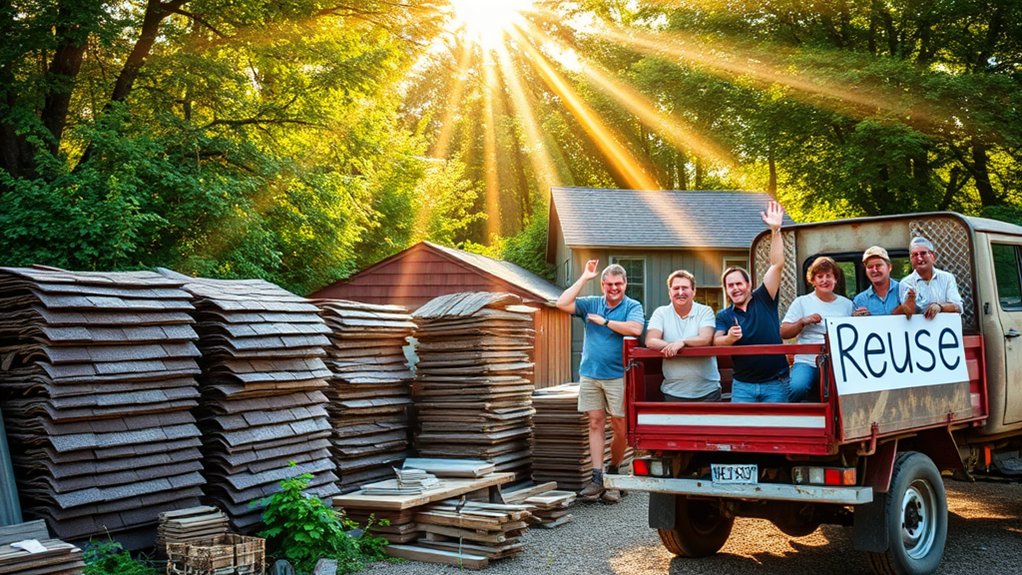
When it's time to dispose of your old roofing materials, think about local charity shops and online platforms that can help you give them a new lease of life.
Donating your surplus materials can support community projects and help those in need, while also strengthening local connections.
Local Donation Centers
Local donation centres are invaluable for those wanting to repurpose old roofing materials and support community projects. Donating not only aids local initiatives but also fosters environmental sustainability.
Here are some essential points to consider:
- Material Requirements: Ensure your roofing materials are in good condition and free from contaminants.
- Donation Benefits: Your donations help minimise landfill waste and support local housing projects.
- Collection Services: Many centres provide free collection for larger items, making it easy to donate.
- Community Impact: Donated materials often go towards low-cost housing projects for families in need.
Online Donation Platforms
Exploring online donation platforms offers great opportunities for repurposing your old roofing materials and reaching a broader audience.
Using social media like Facebook and classified ad sites such as Gumtree, you can effectively advertise your materials for donation. Freecycle networks and apps like Olio make it easy to give away items quickly.
The benefits of donating are significant: you save on disposal costs while reducing waste and supporting recycling efforts. Your contributions can help local families and improve community resources.
Just be sure to check local regulations and ensure your materials are safe for reuse. By using these online platforms, you promote sustainability and connect with those who genuinely need your help.
Community Projects Support
When looking to dispose of old roofing materials, consider the benefits of donating or reusing them through community projects. This approach not only supports sustainability but also positively impacts local lives.
Here are four practical ways to contribute:
- Donate to Habitat for Humanity ReStores: Your roofing materials can help fund vital community projects.
- Support Local Building Initiatives: Donate materials to organisations focused on building affordable housing.
- Participate in School Workshops: Provide materials that can inspire creativity and hands-on learning for students.
- Join Community Recycling Days: Take part in local events to ensure proper recycling and reuse of your materials.
Engaging in these activities can make a real difference in your community.
Effective Disposal Methods

When it comes to disposing of old roofing materials, there are several effective methods available. First, look into recycling programmes that accept asphalt, metal, wood, and plastic shingles, turning them into new products.
Renting a skip is another practical option for collecting various materials efficiently. For larger loads, consider haul-away services that can handle everything for you.
It's wise to choose professional disposal services that focus on eco-friendly practices, ensuring materials are recycled or donated where possible. Remember, using a landfill should be your last option due to the environmental impact.
Legal and Community Considerations

Understanding the legal and community factors surrounding the disposal of old roofing materials is crucial for responsible waste management. Following regulations not only helps you avoid legal issues but also contributes positively to your community.
Here are some key points to consider:
- Compliance Regulations: Adhere to local and national waste management laws to steer clear of fines.
- Local Ordinances: Familiarise yourself with council rules regarding where and how to dispose of materials.
- Community Engagement: Get involved in local initiatives that encourage environmentally friendly disposal methods.
- Documentation: Keep records of your disposal activities to ensure compliance and accountability.
Innovative Repurposing Ideas

Finding responsible ways to dispose of old roofing materials opens up a range of creative options.
You can repurpose clay or slate tiles into eye-catching wall art simply by painting or drawing on them. For practical uses in the garden, old shingles can serve as effective weed barriers or absorbent mats for spills in the garage.
If you're keen on enhancing your garden, stack old tiles to make decorative flower pots or raised beds that improve drainage. Additionally, old gutters can be converted into stylish bookshelves or garden planters.
These innovative ideas not only help reduce waste but also add a unique touch to your home and garden, reflecting your commitment to sustainability.
How to Find Local Recycling Facilities

How can you find local recycling facilities for your old roofing materials? Start by familiarising yourself with local regulations regarding roofing material recycling. Then, follow these steps:
- Use Online Resources: Websites like Recycle Now or Google Maps can help you locate nearby recycling centres.
- Contact Local Authorities: Get in touch with your local council or environmental agencies for information on accepted materials and guidelines.
- Compare Costs: Look into disposal fees and any available recycling incentives in your area.
- Tap into Community Networks: Join local social media groups or visit community centres for tips and recommendations from others.
These steps will make recycling your roofing materials straightforward and effective.
Frequently Asked Questions
How Can I Identify Asbestos in My Old Roofing Materials?
To identify asbestos in your old roofing materials, carry out a detailed inspection of your roof, paying attention to its age and texture. If you're unsure, it's best to arrange for asbestos testing through a certified lab to ensure safe handling and compliance with UK regulations.
What Should I Do if I Can't Recycle My Roofing Materials?
If you can't recycle your roofing materials, think about alternatives to landfill, such as donating usable tiles or hiring a skip for proper disposal. Ensure hazardous waste, like asbestos, is dealt with correctly to safeguard public health and the environment.
Are There Any Costs Associated With Recycling Roofing Materials?
Picture a sustainable future where your roofing materials are repurposed into new roads. Recycling fees can often be lower than disposal costs, depending on the type of material, allowing you to save money while also caring for the environment. For instance, recycling old tiles or slates could be more cost-effective than sending them to landfill.
Can I Mix Different Roofing Materials in One Disposal Bin?
You shouldn't mix different roofing materials in one disposal bin without checking the disposal guidelines. Separating roofing waste ensures efficient recycling and compliance with local regulations. This helps prevent contamination and maximises environmental benefits. For example, if you're disposing of slate tiles and asphalt shingles, it's best to keep them in separate containers. Always check with your local recycling centre first.
How Long Does the Recycling Process for Roofing Materials Typically Take?
The recycling timeline for roofing materials is like a carefully planned routine. Processing times usually range from a few days to several weeks, depending on the type of material and the local facilities available. This ensures that your old roofing materials are efficiently repurposed.
Conclusion
Disposing of your old roof materials doesn't have to be a hassle. Instead of simply throwing them away, consider recycling, donating, or repurposing them. For instance, you could turn worn shingles into a birdhouse or use old tiles in a community garden. Not only does this help reduce waste, but it also contributes to a more sustainable future. Taking these steps can transform your roof's remnants into something beneficial for both you and the environment.


