
Best Practices for Maintaining a Commercial Roof in the UK
To keep a commercial roof in the UK in good shape, carry out inspections at least twice a year and document your findings to monitor its condition. Always prioritise safety by using proper access equipment and protocols. Address any leaks promptly and ensure drainage systems are maintained to avoid water pooling. Regularly clean the roof to prevent debris buildup and manage vegetation to protect against damage. It's essential to hire qualified roofing contractors for professional maintenance and maintain clear communication throughout the process. By following these best practices, you'll improve your roof's lifespan and efficiency. There's much more to discover that can enhance your roof maintenance strategies.
Key Takeaways
- Carry out regular inspections at least twice a year to spot potential problems and ensure the roof remains in good condition.
- Follow proper access protocols and use safety equipment to comply with Work at Height Regulations.
- Keep drainage systems in check by regularly clearing gutters and downspouts to avoid water build-up and leaks.
- Use effective cleaning methods and control vegetation growth to enhance the roof's lifespan and prevent moisture-related issues.
- Choose qualified contractors who have insurance and the right certifications, and make sure to keep records of all maintenance activities and inspections for future reference.
Importance of Regular Inspections
Regular inspections are essential for maintaining the integrity of your commercial roof. They provide numerous benefits, such as early detection and prevention of issues like leaks, cracks, and loose materials. By scheduling regular inspections, you can spot potential problems before they escalate, protecting your business from costly disruptions. For example, addressing minor issues promptly can significantly reduce repair costs and extend the lifespan of your roof. Additionally, professional roof inspections ensure that any minor concerns are identified and resolved before they develop into significant issues.
Compliance with health and safety regulations is another critical reason for regular inspections. A well-maintained roof ensures a safe environment for your staff and visitors, minimising the risk of accidents. Ignoring hazards such as leaks can lead to severe consequences, including electrical failures or even roof collapse. Furthermore, regular inspections can help identify indicators of issues that may otherwise go unnoticed, safeguarding your investment.
To get the most out of your inspections, consider how often they should be conducted based on the roof type. Flat roofs typically need inspecting twice a year, while slate and tile roofs usually require an annual check.
Safe Access Protocols
When accessing a commercial roof, it's crucial to prioritise the right equipment and safety gear to ensure your safety. Get acquainted with MEWP (Mobile Elevating Work Platform) usage guidelines to navigate high or hard-to-reach areas effectively. Additionally, ensure compliance with Work at Height Regulations to safeguard against potential risks. Also, think about installing roof walkways to improve access and reduce damage to roofing materials. Implementing proper safety measures can significantly reduce fall-related accidents in roof work, emphasizing the importance of thorough training and oversight.
Equipment and Safety Gear
Maintaining a commercial roof demands a careful approach to ensure safe access for workers. Prioritise the selection of appropriate equipment by assessing the building's layout, height, and nearby structures to identify the best access methods. Using technology like drones can help you obtain accurate measurements, making planning more efficient and reducing downtime. Regular inspections of the roof can also help identify early signs of wear and tear, which can be linked to common issues that may require immediate attention. Proper roof ventilation is also essential to maintain the integrity of the structure and prevent moisture build-up.
Safety gear is crucial for protecting your team. Ensure fall protection systems, such as guardrails and safety nets, are installed where needed. Provide personal protective equipment (PPE), including hard hats and high-visibility clothing, to protect workers from hazards. Regularly inspect and maintain all equipment to ensure it meets safety standards. Training is essential; ensure all staff understand safety protocols and how to use equipment correctly.
Hold regular safety meetings to discuss risks and updates, emphasising compliance with Health and Safety Executive regulations. Additionally, having a clear emergency response plan will prepare your team for unexpected incidents, creating a safer working environment during roof maintenance.
MEWP Usage Guidelines
Choosing the right method for accessing a commercial roof requires an understanding of the benefits of using Mobile Elevating Work Platforms (MEWPs). MEWPs improve both safety and efficiency, making them ideal for working at heights.
To ensure MEWP safety, follow these guidelines:
- Vehicle Inspection: Conduct regular inspections and maintenance of MEWPs to ensure safe operation.
- Operator Training: Ensure all operators are PASMA trained for safe and effective use of MEWPs.
- Safety Protocols: Implement fall protection systems and ensure the use of appropriate personal protective equipment (PPE). Regular inspections can also help identify issues early before they become significant problems.
Before using a MEWP, assess your project's specific needs, such as height and accessibility. These platforms can reach heights of up to 100 metres, making them suitable for most commercial roofs. Regular inspections help identify potential hazards early, enhancing overall safety during roof access.
Adhering to Health and Safety Executive (HSE) regulations is essential; understanding and implementing these regulations safeguards both workers and equipment.
Additionally, maintain clear communication with contractors regarding access requirements and confirm that emergency procedures are established.
Regular inspections of both the MEWP and roof conditions will help identify potential hazards early, thereby enhancing overall efficiency.
Roof Walkway Installation
To ensure safe access to commercial roofs, installing a roof walkway system is crucial. Adhering to BS EN 516:2006 ensures that your walkway materials are load-bearing and slip-resistant. Additionally, utilizing fully guarded aluminum walkways enhances the overall safety and durability of the system.
When choosing installation methods, go for non-penetrative fixing systems to protect your roof's waterproof membrane. Make sure your walkway features a grille or mesh design to allow for proper drainage and prevent water pooling. Installing guardrails or handrails on one or both sides improves safety, helping workers navigate more easily.
It's important to remember that the Workplace (Health, Safety and Welfare) Regulations 1992 state that walkways must be level and free from hazards.
Before installation, evaluate roof accessibility, taking into account the layout and height. Use tools like drones or 3D modelling for accurate measurements. Clearly communicate access needs with contractors to streamline routes and reduce disruptions during the project.
Effective Leak Repair Strategies

When it comes to effective leak repair strategies, promptly identifying and diagnosing leaks is essential for maintaining the integrity of your commercial roof.
Start with regular visual inspections to catch early signs of leaks or damage. Techniques such as infrared scanning can help detect hidden issues that might otherwise go unnoticed. Make sure to document your findings to monitor the roof's condition over time and ensure effective repairs.
Once you've identified the leaks, use the right repair materials for effective solutions.
Consider these methods:
- Patching: Apply sealants or roofing cement to cover damaged areas.
- Sealing: Ensure watertight seals around penetrations, edges, and seams.
- Material Replacement: Replace any severely damaged roofing materials as necessary.
Additionally, engaging experienced inspectors familiar with local building regulations ensures that all repairs comply with relevant standards and best practices.
Preventing Water Accumulation
Preventing water accumulation on roofs is crucial to avoid serious issues. Here are some effective measures you can take:
Firstly, ensure regular maintenance of drainage systems. Clear out any debris such as leaves and twigs from drains to allow for proper water flow. Conduct annual inspections to catch potential problems early, and consider hiring professionals for maintenance, especially in hard-to-reach areas.
If you notice low spots or sagging on flat roofs, it's wise to engage contractors to create the correct slopes. Tapered insulation can assist in directing water away, so keep an eye on any areas that need immediate attention.
Proper roof design is also essential. Make sure your roof has an adequate slope to prevent water pooling. Use high-quality membranes that resist water penetration and install internal drains at low points for efficient drainage.
If necessary, enhance your drainage systems by adding more drains or widening existing ones.
Lastly, follow standards such as BS 6229:2018 when installing drainage solutions, and regularly maintain your gutters and downspouts to avoid blockages. These steps will greatly help in preventing water accumulation and the problems it can cause.
Roof Cleaning Techniques
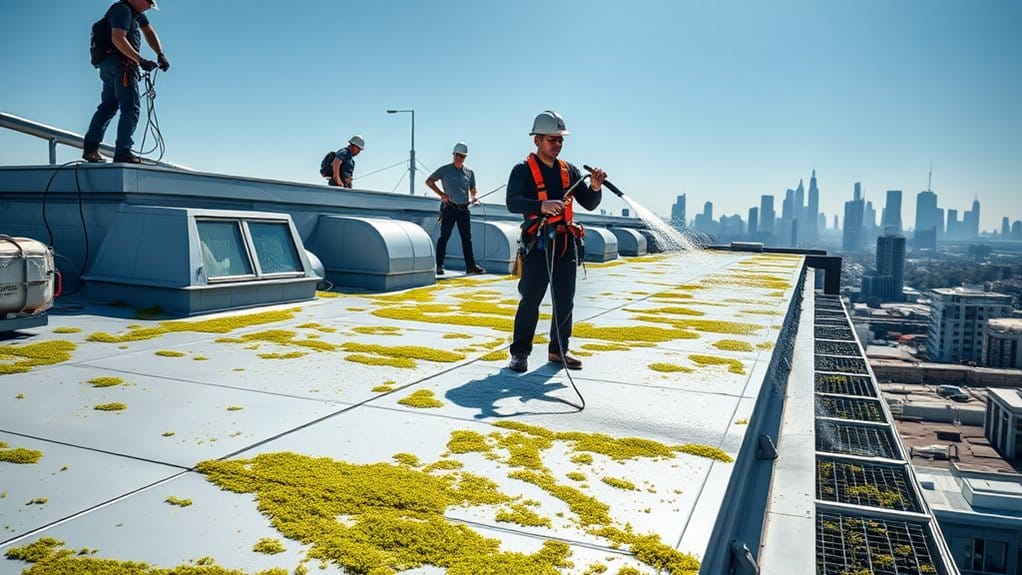
Regular roof cleaning is crucial for maintaining the integrity and longevity of your commercial roof. By using effective maintenance techniques, you can prevent damage and extend the life of your roofing system. Various cleaning solutions are available, tailored to the specific materials and conditions of your roof.
- Steam Cleaning: This method employs high-temperature steam to remove stubborn dirt and pollutants, ensuring a thoroughly sanitised surface.
- Soft Washing: Perfect for delicate materials, this technique uses low-pressure applications of specialised cleaning solutions to gently eliminate contaminants without causing harm.
- Chemical Treatments: Specifically targeting issues like algae and moss growth, these treatments address existing problems and help prevent them from recurring.
Incorporating these techniques into your regular maintenance routine can significantly enhance your roof's durability and appearance.
Regular inspections and cleaning allow you to identify potential issues early on, ultimately saving you from costly repairs.
Whether you opt for professional services or DIY methods, ensure you choose solutions that suit your roof's specific needs.
Making roof cleaning a priority now can lead to long-term benefits for your commercial property.
Debris Management Best Practices
To effectively maintain your commercial roof, set up a regular cleaning schedule to clear away debris.
Employ efficient debris removal methods to prevent blockages and ensure proper drainage.
Regular Cleaning Schedule
Maintaining a regular cleaning schedule is vital for the longevity of your commercial roof. Routine cleaning prevents damage from organic matter and helps you avoid expensive repairs due to neglect.
By establishing a cleaning frequency in your maintenance plan, you can effectively manage debris that could cause water pooling and leaks.
To create an effective cleaning schedule, consider these best practices:
- Carry out annual inspections and cleanings to evaluate the roof's condition.
- Schedule inspections at the start of each season to address any weather-related issues promptly.
- Regularly clear drains, gutters, and downspouts to prevent blockages.
Effective Debris Removal Techniques
Effective debris removal techniques are crucial for maintaining the integrity of your commercial roof. Start with a pre-cleaning inspection to pinpoint areas that need attention, such as moss, algae, or debris like broken glass and nails. Always wear safety gear, including harnesses and non-slip footwear, to ensure your safety.
For collecting debris, use soft-bristle brooms or blowers to clear away loose items like leaves and twigs. Low-pressure washing is best for delicate surfaces, while high-pressure washing can be used cautiously on sturdier materials.
For stubborn issues like algae or moss, opt for specialised cleaning solutions, and ensure that gutters and downspouts are clear to prevent water build-up.
Implement debris management strategies by regularly trimming nearby trees and keeping the area tidy to reduce accumulation. Eco-friendly cleaning solutions not only protect your roof but also benefit the environment.
After cleaning, conduct a final inspection to ensure the roof is clean and check for any new damage. Following these practices will enhance your roof's longevity and performance, keeping it in top condition for your building.
Drainage System Maintenance

How often do you check your drainage system for potential issues? Regular inspections are vital for maintaining a commercial roof. A properly functioning drainage system prevents water accumulation that can lead to serious roof damage. Make it a routine to clear debris from gutters, downspouts, and drains, particularly after heavy rainfall.
Consider these important maintenance practices:
- Regular Cleaning: Schedule consistent cleaning of your drainage system to minimise the risk of blockages.
- Prompt Repairs: Address any damages immediately to avoid further complications.
- System Upgrades: Assess if upgrades or drainage pad installations could improve water management.
Ensure all components, including gutters and scuppers, are working correctly and free from blockages. Look out for leaks and seal them swiftly.
Remember, inspecting your drainage system after severe weather is crucial. By being proactive, you'll maintain the integrity of your roof and extend its lifespan.
Regular maintenance isn't just about preventing issues; it's about ensuring safety and efficiency for everyone using the building.
Vegetation Control on Roofs
Managing vegetation on your roof is crucial for its durability and performance. Regular inspections and clearing away debris can prevent damage and create a healthier environment for plants.
If these practices are overlooked, you risk significant issues, such as compromised waterproofing and a shorter roof lifespan. For instance, even a small accumulation of leaves can trap moisture, leading to rot and leaks.
Keeping your roof well-maintained not only protects your investment but also ensures it remains functional for years to come.
Importance of Vegetation Control
Maintaining vegetation control on commercial roofs is crucial for ensuring their durability and effectiveness. Proper management of plant selection and regular maintenance helps to reduce the risks associated with unchecked plant growth.
When plants are allowed to grow freely, they can cause various problems, such as structural damage and decreased roof efficiency.
To ensure effective vegetation control, consider the following:
- Diverse Plant Selection: Opt for a range of native species that promote biodiversity while ensuring manageable growth.
- Regular Maintenance Schedule: Conduct inspections and maintenance at least twice a year to identify potential issues early and keep plants in good condition.
- Drainage Management: Ensure that drainage systems are functioning properly to prevent water build-up, which can harm both plant health and the roof's structural integrity.
Methods for Effective Management
Effective management of vegetation on commercial roofs requires a strategic approach that includes various preventive measures and techniques. By adopting these practices, you can enhance the benefits of green roofs while minimising the ecological impact of overgrowth.
| Preventive Strategies | Vegetation Management Techniques |
|---|---|
| Regular Inspections | Pruning |
| Clearing Debris | Fertilisation |
| Maintaining Drainage Systems | Removing Dead Matter |
Begin with regular inspections to spot potential issues early. Clear debris to prevent mould and algae growth. Ensure drainage systems are unobstructed to promote healthy plant life. For vegetation management, pruning is essential for maintaining roof integrity. Using organic fertilisers encourages robust growth, while removing dead organic matter lowers fire risks.
It's also crucial to minimise disturbances in biodiverse areas during maintenance, thereby preserving important micro-habitats. By managing vegetation thoughtfully, you protect your roof and contribute positively to the environment. These practices will help your green roof flourish, maximising its benefits while maintaining ecological balance.
Consequences of Neglecting Growth
Neglecting vegetation control on commercial roofs can lead to serious issues that threaten both the building's structure and functionality. Without regular monitoring, you could face clogged drainage systems, resulting in water accumulation and potential leaks. Unchecked plant growth can also add excessive weight, risking structural damage and integrity, which could lead to costly repairs.
Here are some key consequences of neglecting vegetation control:
- Compromised waterproofing layers, increasing the risk of moisture problems, mould, and mildew.
- Deterioration of roofing materials, leading to higher maintenance costs due to premature wear and tear.
- Legal and financial repercussions, such as voided warranties and potential fines for failing to comply with regulations.
If vegetation growth is allowed to run rampant, you risk complete roof failure.
Regular maintenance is crucial to avoid these issues. By proactively monitoring vegetation and scheduling routine structural assessments, you can safeguard your investment and enhance the lifespan of your commercial roof.
Don't overlook these essential practices; your building's safety and efficiency rely on them.
Documentation of Maintenance Activities

Thorough documentation of maintenance activities is crucial for the longevity and performance of a commercial roof. Keeping detailed records of inspections, repairs, and maintenance tasks allows you to track the roof's condition over time.
This documentation is essential for facilitating warranty claims and planning future maintenance. Use digital tools and maintenance software to organise inspection dates and relevant documents, ensuring you stick to maintenance schedules.
Include photographs and videos in your records to highlight areas of concern or damage. Regularly reviewing these records helps identify patterns and predict potential issues, enabling proactive measures.
Conduct inspections monthly, quarterly, and seasonally, focusing on signs of damage such as cracks, punctures, and general deterioration. Pay special attention to drainage systems and equipment locations like rooflights and HVAC units.
Always prioritise safety during inspections and maintenance, ensuring personnel have the proper gear and training. Following standard safety protocols will reduce risk, while completing detailed risk assessments beforehand will further safeguard the process.
Reporting and Record-Keeping
Accurate reporting and record-keeping are crucial for effective management of a commercial roof. By following established reporting standards and maintaining proper records, you can significantly reduce risks and extend the life of your roofing system.
To ensure effective reporting and record-keeping, consider these key practices:
- Record all inspections, including the date, findings, and any repairs needed.
- Use photographs and videos to visually document the roof's condition.
- Keep records of warranty details and compliance with relevant regulations.
Conduct regular inspections at least twice a year, especially after severe weather. During these checks, assess components such as membranes, flashings, and drainage systems.
Your detailed reports should include risk assessments, method statements, and competitive repair quotes. Staying updated on the legal framework and changing regulations regarding roof maintenance is vital for compliance and avoiding penalties.
Professional Roofing Contractor Selection

When choosing a professional roofing contractor in the UK, it's crucial to consider their experience and expertise relevant to your roofing system.
Look for contractors with recognised qualifications, such as a Construction Skills Certification Scheme (CSCS) card, as well as public and employer's liability insurance. Membership in professional organisations like the National Federation of Roofing Contractors (NFRC) or the Institute of Roofing can also reflect a commitment to quality and industry standards.
Check their reputation by seeking client references and reviewing their history of high-quality work. It's also important that they're familiar with local building regulations to ensure your project complies with all necessary requirements.
Effective communication is key throughout the selection process. Opt for a contractor who's open and responsive, providing detailed quotes and clear service terms.
They should keep you updated regularly and explain the work process in a way that's easy to understand. A contractor based locally can improve communication and ensure prompt service, which is vital for the maintenance of your commercial roof.
Seasonal Maintenance Considerations
Regular seasonal maintenance is crucial for ensuring the longevity and performance of your commercial roof. By following a structured seasonal checklist, you can minimise the adverse effects of weather throughout the year.
Each season brings its own challenges, so it's important to tackle them proactively.
Spring Maintenance
- Inspect for any winter damage, paying particular attention to cracks, leaks, and any materials that may have lifted.
- Clear away debris and ensure drainage systems are functioning correctly.
Summer Preparation
- Check roofing materials for potential heat-related expansion issues.
- Prepare for storms by securing all components properly.
Autumn Preparations
- Address any signs of wear and tear, sealing flashings to prevent leaks.
- Ensure roof insulation is sufficient for the colder months ahead.
Winter Readiness
- Perform a pre-winter inspection to identify any potential weaknesses.
- Check gutters to prevent ice build-up and confirm overall structural integrity.
Frequently Asked Questions
How Often Should I Schedule Roof Inspections for Commercial Properties?
You should schedule roof inspections for commercial properties at least twice a year, in line with UK property guidelines. This regularity ensures that any potential issues are identified early, helping to maintain the roof's integrity and prolong its lifespan, which can ultimately save you money. For instance, a small leak caught during an inspection can prevent extensive damage and costly repairs down the line.
What Are the Signs of Roof Damage to Look For?
Look out for signs such as leaks, sagging, and cracks. Regular leak detection can prolong your roof's lifespan and save you from expensive repairs. Don't overlook mould or water stains; these are indicators of deeper issues that require prompt attention.
Can I Perform Roof Maintenance Myself, or Should I Hire Professionals?
You can try DIY roof maintenance, but it can be risky without the right knowledge and tools. Hiring professionals ensures thorough inspections, safety, and adherence to warranty requirements. In the long run, investing in experts often saves you time and helps avoid expensive repairs later on. For instance, if you're unsure about spotting signs of damage, a professional will have the experience to identify issues that you might miss.
What Warranties Are Typically Available for Commercial Roofing Systems?
When considering commercial roofing, warranties act as your safety net. There are three main types: material, workmanship, and system warranties, each with its own coverage limits. Understanding these warranties is crucial for protecting your investment and ensuring compliance. For example, a material warranty covers defects in the roofing materials, while a workmanship warranty ensures the installation was done correctly. By knowing what each warranty covers, you can make informed decisions and safeguard your property effectively.
How Do Weather Conditions Affect Commercial Roof Maintenance Schedules?
Weather conditions play a crucial role in determining your commercial roof maintenance schedule. It's essential to make seasonal adjustments, such as conducting inspections following heavy rainfall or severe storms. For instance, after a storm, check for any debris blocking drainage systems to prevent water pooling. Additionally, prepare for snow loads during winter months to avoid structural damage. Regular monitoring is key to maintaining the integrity of your roof throughout the year.
Conclusion
In summary, maintaining your commercial roof is essential for protecting your investment. Regular inspections, effective leak repair, and keeping detailed records can significantly extend the lifespan of your roof. Always choose a qualified contractor for expert advice. By following these best practices, you can shield your property from the unpredictable UK weather, ensuring your roof remains a reliable barrier for years to come.


