

Benefits of Built-Up Roofing for Commercial Buildings
Built-up roofing (BUR) systems offer numerous advantages for commercial buildings. With a lifespan of 20 to 30 years, they are highly durable and require little maintenance. Their multi-layered structure provides excellent thermal insulation, potentially reducing energy costs by up to 30%. BUR systems are also resistant to severe weather and UV rays, ensuring long-term reliability. Furthermore, reflective coatings on these roofs can help decrease cooling demands, leading to significant savings. Although the initial investment may be higher, the longevity and energy efficiency result in considerable cost benefits over time. For more information on installation and upkeep, further resources are available.
Key Takeaways
- Built-up roofing systems provide impressive durability, lasting between 20 to 30 years and standing up well to harsh weather conditions.
- Energy-efficient reflective coatings can cut cooling costs by as much as 30%, leading to significant long-term savings and promoting sustainability.
- The layered design reduces the frequency of repairs, resulting in lower maintenance costs and better overall value.
- BUR systems effectively handle water pooling and offer excellent leak protection, making them particularly suitable for flat or low-slope roofs.
- By using recyclable materials, built-up roofing supports environmental responsibility and may qualify for energy efficiency incentives.
Durability and Longevity
When choosing roofing options for your commercial or industrial building, built-up roofing (BUR) systems offer notable durability and longevity. BUR systems are made up of multiple layers, usually alternating between waterproof materials like bitumen or tar and reinforcing fabrics such as felt or fibreglass mats. This layered composition not only strengthens the roof but also enhances its weather resistance. Additionally, the use of redundant moisture barriers in BUR systems helps protect the building from leaks and water intrusion.
Each layer adds about five years to the roof's lifespan, with a minimum of three layers recommended for optimal performance. These roofs are particularly effective in enduring harsh weather conditions and accommodating heavy foot traffic, making them suitable for flat or low-sloped structures. The multiple layers provide excellent protection against the elements, including harmful UV rays, which can damage other roofing materials more quickly. When installed properly, without air pockets, BUR systems require minimal maintenance—usually just annual inspections and minor repairs.
Furthermore, the durability of BUR systems is enhanced by their ability to withstand extensive foot traffic, making them ideal for commercial settings. This low upkeep means significant cost savings over the roof's life. With correct installation and maintenance, BUR systems can last between 20 to 30 years or more, making them a sound investment for building owners prioritising long-term durability.
Energy Efficiency
When it comes to energy efficiency in flat roofing, reflective coatings are crucial for reducing heat absorption. These coatings not only lower the surface temperature but also improve the cooling efficiency of your building. For instance, a roof with a reflective coating can stay significantly cooler in summer, leading to lower air conditioning costs. Furthermore, effective UV protection helps extend the lifespan of your roofing system while cutting down on energy use. This is particularly beneficial because a built-up roofing system's multi-layered design enhances insulation, further contributing to energy savings. Additionally, incorporating cool roofing technologies can further enhance energy performance by reflecting sunlight and absorbing less heat.
Reflective Coating Advantages
Reflective coatings provide substantial energy efficiency benefits for buildings, making them a key choice for those aiming to cut cooling costs. By improving reflective performance, these coatings can reduce heat loads and lessen the reliance on air conditioning, particularly in poorly insulated properties. You could see reductions in cooling energy consumption of up to 30%, leading to significant savings. This is primarily due to their ability to reflect 80-90% of incoming sunlight. Furthermore, the use of sustainable materials in roofing systems, such as recycled materials, contributes to energy efficiency and environmental benefits.
Here's a summary of the benefits:
| Benefit | Description | Impact |
|---|---|---|
| Energy Savings | Cuts energy use by 20%-50% | Lower utility bills |
| Cost-Effectiveness | Potentially zero payback time over the roof's lifespan | Enhanced financial returns |
| Extended Roof Life | Reduces thermal stress, prolonging the need for repairs | Long-term durability |
| Improved Indoor Comfort | Better temperature control for occupants | Increased productivity |
Selecting the right type of coating and ensuring professional installation can enhance these benefits. Reflective coatings not only boost energy efficiency but also support sustainability and help reduce the carbon footprint of your commercial building.
Cool Roofing Benefits
Cool roofing systems offer notable energy efficiency advantages that can significantly reduce your building's energy consumption. By minimising heat absorption, these roofs lessen the need for air conditioning, leading to energy savings of up to 15-20% during peak summer months, especially in warmer regions. This aligns with the concept of energy efficiency that is crucial in sustainable building practices.
This reduction in cooling costs not only boosts your finances but also promotes a more sustainable environment by decreasing CO2 emissions. Furthermore, cool roofs help maintain stable indoor temperatures, enhancing comfort and productivity. Employees enjoy improved working conditions, reducing heat-related issues and contributing to a healthier work environment. Additionally, energy-efficient roofing can enhance property value and marketability while strengthening brand image through a commitment to sustainability.
The decreased demand for air conditioning also improves indoor air quality, benefitting overall employee well-being. Additionally, cool roofs can extend the lifespan of your roofing materials by lowering thermal stress, which means fewer maintenance costs and increased property value over time.
UV Protection Mechanisms
Built-up roofing systems utilise various UV protection mechanisms that significantly boost energy efficiency.
These roofs feature a multi-layered design that offers redundancy against UV exposure, incorporating materials like glass-fibre mats for enhanced weather resistance. The reflective top layer deflects harmful UV rays, which not only prolongs the roof's lifespan but also helps maintain cooler interiors, leading to considerable energy savings. This redundancy in layers ensures continued protection even if one layer experiences degradation.
Modern roofing technology includes seamless membranes that ensure excellent waterproofing, reducing the risk of UV-related degradation. High reflectivity in these surfaces further lessens heat absorption, thus lowering cooling costs for commercial buildings.
Proper installation techniques are essential to maximise these advantages, as is the inclusion of rigid insulation layers for better thermal resistance.
To keep these UV protection mechanisms effective, regular maintenance is crucial. This includes inspections to catch potential UV damage early.
Applying UV-resistant coatings can also enhance the roof's longevity and performance. By prioritising these protective measures, you can ensure that your built-up roofing system effectively combats UV damage, promoting energy efficiency and overall durability.
Waterproofing Capabilities
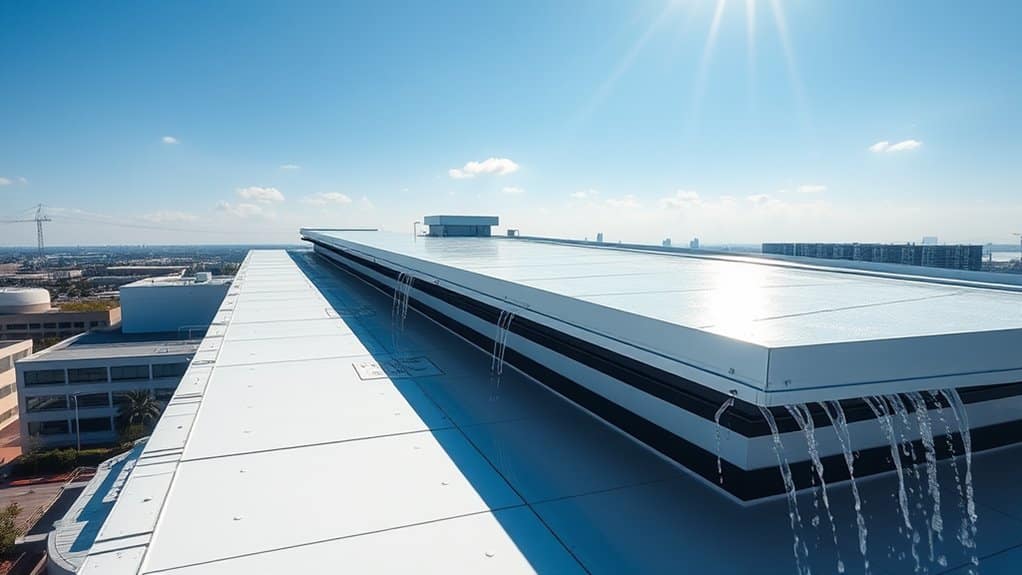
Built-up roofing provides a reliable water barrier thanks to its multiple layers of bitumen and roofing felts.
This structure effectively manages standing water, preventing it from accumulating on the roof and causing damage. Additionally, regular inspections and maintenance are essential for ensuring the longevity of the water barrier, as common roofing issues can compromise its effectiveness over time.
Impermeable Water Barrier
An impermeable water barrier is essential for effective roofing systems, and built-up roofing (BUR) is particularly adept at this task. With multiple layers of bitumen and roofing felts, BUR offers exceptional waterproofing that significantly reduces the risk of leaks. The redundancy of these layers ensures that water can't penetrate the roof's surface, protecting your building from potential water damage.
BUR systems are designed to minimise movement and have high tensile strength, exceeding industry standards. This durability, combined with the natural water resistance of asphalt, makes BUR an excellent choice for areas with heavy rainfall or where water tends to pool. In fact, BUR can provide up to five times the water resistance of standard single-ply systems.
These roofing materials also deliver impressive thermal performance, helping to regulate indoor temperatures and reduce energy costs. Proper installation is crucial to maintaining the waterproof barrier, so it's wise to hire professionals for the job.
With regular maintenance, BUR can offer long-lasting protection, minimising disruptions and ensuring your building remains secure against the elements. Choosing built-up roofing is a smart investment in a reliable, impermeable water barrier for your commercial property.
Pooling Water Management
Effective management of pooling water is crucial for extending the lifespan of roofing systems, and built-up roofing (BUR) is particularly good at this thanks to its strong waterproofing features. BUR consists of multiple layers of bitumen and roofing felt, which help prevent leaks and keep pooling water in check.
Certain BUR systems, like Sikalastic RoofPro, also offer seamless options that further reduce the risk of failure.
To avoid water ponding, efficient drainage is key. BUR systems are designed to drain water within 24 hours, protecting the roof's integrity.
With high tensile strength, BUR can withstand movement better than many alternatives, reducing the chances of buckling or splits that lead to leaks.
The combination of asphalt and coal tar in BUR systems significantly enhances water resistance, making them five times more effective than standard single-ply systems.
Moreover, the lack of fasteners and ballast lowers the risk of leaks caused by wind or pressure.
Low Maintenance
Many roofing systems require regular upkeep, but built-up roofing is known for its low maintenance needs. Its multi-layer construction offers excellent protection against damage, significantly reducing the need for repairs.
With this layered approach, minor repairs are often enough to prolong the roof's life, allowing you to concentrate on your core business activities rather than constant maintenance.
Annual inspections are crucial for catching any issues early, and built-up roofing makes this process straightforward. The large sheets simplify inspections, enabling you to implement effective maintenance strategies with minimal effort.
Since this roofing system is less prone to damage, you can expect fewer maintenance interventions compared to others.
Additionally, built-up roofing is built for long-term durability, meaning major repairs are seldom necessary. The straightforward repair techniques associated with this system further streamline maintenance, ultimately lowering costs over time.
Cost-Effectiveness

Built-up roofing is a practical choice for commercial properties, offering both durability and cost-effectiveness. Although the initial investment can be 16% to 57% higher per square metre than other roofing options, the long-term savings make it worthwhile.
Unlike asphalt shingles, which may be cheaper initially but require frequent replacements, built-up roofing is designed to last with minimal maintenance.
When compared to single-ply membranes and metal roofing, built-up systems strike a good balance between longevity and performance. They provide excellent thermal insulation, which can reduce energy costs by 6-22% per square metre annually.
Additionally, built-up roofs are resistant to fire and UV damage, helping to lower cooling expenses and improve sustainability.
Common Challenges
When considering built-up roofing, it's essential to be mindful of common challenges that can arise during installation and maintenance. One major issue is installation difficulties, such as insufficient slope or lack of positive drainage, which can cause water to pool and lead to significant problems later on.
Additionally, using improper flashing materials or methods may result in leaks, and an inadequate flood coat thickness can compromise the roof's integrity.
Design considerations are equally important. Incorrect terminations at penetrations, walls, and roof edges can create vulnerabilities, while blisters or bubbles may form if the application process isn't followed diligently.
It's also crucial to ensure there are enough expansion joints to allow for thermal movement; neglecting this can lead to cracks.
Maintenance problems can also arise. Blocked drains often result in water pooling, and if the flood coat deteriorates, there's a higher risk of craze-cracking or alligatoring.
Moreover, organic reinforcements can split when wet, complicating upkeep further. By being aware of these common challenges, you can better prepare for the successful installation and longevity of built-up roofing systems.
Solutions for Common Issues

Addressing common issues in built-up roofing (BUR) requires proactive measures and strategic solutions. To prevent leaks, conduct regular inspections. Check for ponding water and clear away debris to ensure proper drainage. If you spot moisture infiltration, remove wet insulation promptly to avoid further damage and ensure a dry surface for repairs.
To tackle ageing and deterioration, consider layered protection. The multiple layers in BUR systems provide redundancy and enhance durability. Renewable systems, like SureCoat, can extend your roof's lifespan with renewable warranties.
Using seamless repair systems, such as spray foam or silicone coatings, helps maintain watertight integrity.
High energy costs can be reduced through insulation upgrades. Ensure your roof has adequate insulation to minimise heat loss and lower heating bills. Reflective coatings can also help lower surface temperatures, keeping your building cooler and reducing cooling costs.
Finally, prioritise regular maintenance to improve overall performance and sustainability. By effectively addressing these common issues, you can protect your investment and meet your building's long-term needs efficiently.
Reflective Coatings
Reflective coatings are vital for improving the performance and lifespan of built-up roofing systems. These advanced coatings offer several benefits that enhance energy efficiency and roof durability.
Key advantages include:
- Lower Cooling Costs: Reflective coatings can reduce cooling expenses by as much as 60%.
- Temperature Reduction: They can decrease surface temperatures by up to 80 degrees Fahrenheit.
- Prolonged Roof Life: These coatings can extend the life of your roof by up to 15 years, reducing the need for replacements.
- UV Protection: Coatings with UV-blocking pigments protect your roof from harmful rays.
For optimal results, proper application is crucial. Professional installation ensures that coatings adhere effectively, while regular maintenance like cleaning and inspections helps maintain their reflective qualities.
Reapplications may also be necessary to sustain performance. By investing in reflective coatings, you not only improve the efficiency of your roofing system but also contribute to sustainability and cost-effectiveness in commercial buildings.
Improved Weather Resistance

Built-up roofing systems offer enhanced weather resistance thanks to their layered construction, ensuring strong protection against severe weather. This design employs weatherproof materials that are highly durable against heavy rain, strong winds, and extreme temperatures. The multiple layers form a solid barrier, significantly reducing the risk of leaks and water ingress, which helps preserve your building's integrity.
The seamless construction of built-up roofing eliminates potential weak points, crucial for preventing water damage and related issues. This effective waterproofing ensures your property is safeguarded against various weather conditions, promoting longevity.
Additionally, these systems provide a thermal barrier that helps regulate internal temperatures, reducing heat transfer and energy costs, which improves comfort for occupants.
Furthermore, built-up roofing includes fire-resistant materials, helping to stop the spread of fire and offering UV protection. This combination of features supports adaptation to climate challenges, ensuring your commercial building can withstand changing weather patterns.
In short, choosing built-up roofing systems is a smart investment in safety, durability, and long-term performance for your property.
Long-Term Economic Benefits
Investing in a built-up roofing system can provide substantial long-term economic benefits for property owners in the UK. Although the initial outlay may be higher than some alternatives, the long-term advantages far exceed these costs when you consider the entire lifecycle.
Here are four key economic benefits:
- Long-Term Cost Savings: Built-up roofing systems require fewer repairs and replacements, leading to lower ongoing maintenance expenses.
- Durability and Longevity: These roofs often last over 30 years and can withstand harsh weather conditions, reducing the need for frequent replacements.
- Thermal Performance and Energy Efficiency: With multiple layers providing excellent thermal insulation, these roofs help maintain consistent indoor temperatures and reduce energy bills, resulting in significant savings.
- Cost-Effective Compared to Roof Restoration: Choosing roof restoration can save you 50-70% compared to a full replacement, extending the roof's lifespan without disrupting your business.
Maintenance Tips
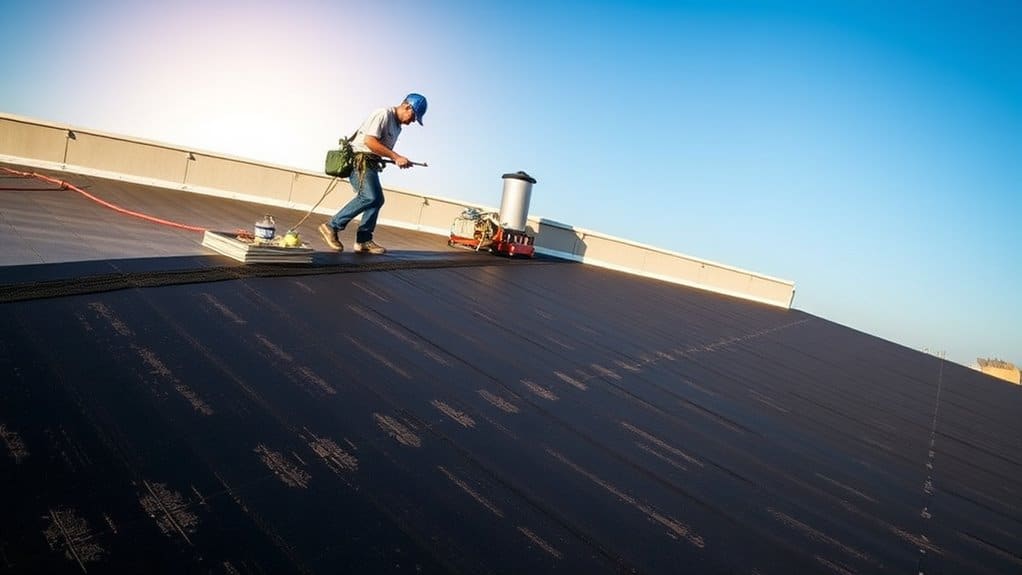
To ensure the longevity and performance of your built-up roofing system, regular maintenance is key. Schedule roof inspections at least twice a year, ideally in spring and autumn, to identify potential issues early. If your roof is older or subject to severe weather, consider increasing the frequency of these inspections.
During each visit, make sure to clear debris from the roof and check that drains are unobstructed to avoid moisture build-up. Pay special attention to sealing flashings and drains to prevent leaks. Inspect curb corners and wall details to ensure they're secure.
You might also want to apply reflective coatings to exposed roof cement for extra protection against UV damage. It's important to manage the load on your roof—limit foot traffic and unnecessary weight to maintain its integrity.
Keep a detailed maintenance schedule that includes pre-winter checks in autumn and post-winter evaluations in spring to address any damage caused by harsh weather. Consulting roofing experts can help customise your maintenance plan to meet the specific needs of your built-up roofing system.
Proactive maintenance can save you from costly repairs and extend the lifespan of your roof.
Performance in Various Climates
Built-up roofing systems are highly adaptable and perform exceptionally well in various climates, thanks to their excellent thermal insulation and waterproofing properties.
Whether you're in a sweltering desert or a chilly region, these systems provide reliable protection.
Here are four key benefits that demonstrate their effectiveness across different environments:
- Thermal Insulation: The multiple layers help keep indoor temperatures stable, reducing heating and cooling expenses.
- Waterproofing: The layered structure offers strong resistance to water, minimising leaks, particularly in areas with heavy rainfall.
- UV Protection: Reflective top layers deflect harmful UV rays, safeguarding against heat damage and improving energy efficiency.
- Energy Efficiency: Built-up roofing systems lower energy usage, helping to cut utility bills and support sustainability efforts.
Installation Considerations
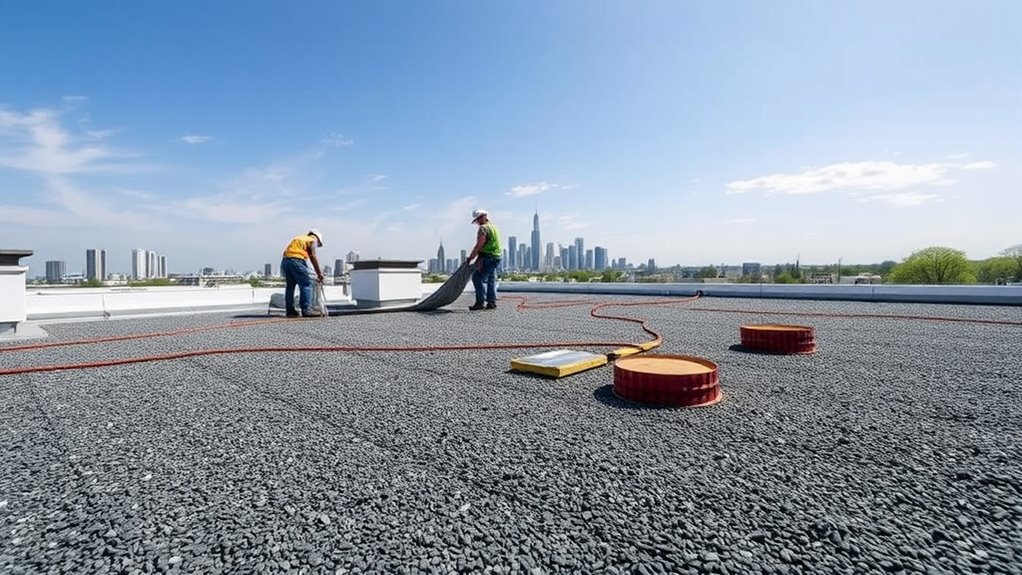
When planning your built-up roofing installation, consider the entire process, including timing and weather.
Proper scheduling is crucial for ensuring ideal conditions to lay down materials and achieve a lasting finish.
For instance, avoid installing during heavy rain or strong winds, as these can compromise the work.
Keeping an eye on the weather forecast can help prevent delays and protect the integrity of your installation.
Installation Process Overview
The installation process for built-up roofing (BUR) requires careful planning and execution to ensure durability. Follow these steps and keep safety in mind throughout.
- Thorough Inspection: Begin by checking the roof deck for any damage or issues that need fixing.
- Clean and Dry Deck: Ensure the deck is clear of debris and completely dry.
- Structural Soundness: Confirm that the deck can support the BUR system properly.
- Base Sheet Application: Lay the base sheet onto the prepared roof deck and secure it with fasteners.
Next, alternate layers of hot bitumen and roofing felt, typically using three to five plies, while embedding a layer of fibreglass for extra strength.
Apply a final layer of bitumen before choosing surfacing materials like gravel or reflective coatings to enhance durability and manage temperature.
Using skilled workers and proper equipment, along with safety gear, is crucial for optimal results and compliance with safety standards.
A proper installation ensures that your BUR system meets your building's needs for many years.
Timing and Weather Factors
Timing and weather considerations are crucial for the successful installation of built-up roofing (BUR). The timing of your installation can significantly affect the project's outcome, and understanding weather influences is essential for maintaining efficiency and quality.
| Factor | Impact on Installation | Considerations |
|---|---|---|
| Roof Size/Type | Affects installation time | Larger, more complex roofs take longer to complete. |
| Weather Conditions | Can halt progress | Heavy rain or extreme temperatures can delay work. |
| Seasonality | Influences ideal timing | Late spring to early autumn is typically best for installation. |
Severe weather, such as heavy snow or intense rain, can stop installation altogether, so careful planning is necessary to minimise disruptions. For example, applying BUR in colder months requires attention to material handling and asphalt temperatures. Supply chain issues and permit revisions can also lead to unforeseen delays.
It's advisable to schedule installations during favourable weather seasons. This approach reduces the likelihood of weather-related setbacks, helping ensure a smoother process and a durable roof that can withstand the elements. Prioritise your planning to navigate these factors effectively!
Environmental Impact
Built-up roofing systems provide notable environmental advantages that support sustainability and waste reduction. By selecting this roofing option, you comply with current UK environmental regulations and practices that advocate for responsible resource management.
Here are some key environmental impacts of built-up roofing:
- Recyclable Materials: Components like bitumen and reinforcing fabrics can be recycled, helping to reduce waste.
- Energy Efficiency: Built-up roofs serve as thermal barriers, cutting down energy use for heating and cooling, which in turn lowers carbon emissions.
- Long Lifespan: Their robust design means fewer replacements are needed, leading to less waste and a smaller environmental footprint.
- Reflective Coatings: Choosing sustainable surfacing options, such as reflective coatings, can further boost energy efficiency.
Frequently Asked Questions
How Does Built-Up Roofing Compare to Other Roofing Types?
When you compare built-up roofing to other types, you'll find it's cost-effective in the long run, even though the installation can be complex. Its durability and minimal maintenance make it a dependable option for different environments. For instance, in commercial settings, built-up roofing can withstand harsh weather, reducing the need for frequent repairs.
What Materials Are Used in Built-Up Roofing Systems?
In built-up roofing systems, asphalt layers offer waterproofing, while insulation materials improve energy efficiency. These elements combine to form a robust and dependable roofing solution suitable for different weather conditions. For instance, the asphalt protects against rain, while insulation helps keep heating costs down in winter.
Can Built-Up Roofing Be Installed Over Existing Roofs?
It's not advisable to install built-up roofing over existing roofs without a proper assessment. Typically, you'll need to remove the old materials to ensure good adhesion and structural stability. This helps avoid issues like water damage or excessive weight. For instance, if you simply add layers on top, you might find that the roof can't support the added load, leading to costly repairs later on.
What Is the Average Warranty Period for Built-Up Roofing?
The average warranty period for built-up roofing typically ranges from 20 to 50 years, depending on the quality of materials used. Regular maintenance is crucial and can significantly affect the validity of the warranty, ensuring the roof performs well and lasts throughout its intended lifespan. For instance, neglecting minor repairs can lead to larger issues, ultimately shortening the roof's life.
Are There Any Aesthetic Options for Built-Up Roofing?
Yes, built-up roofing provides a variety of colour options and design flexibility. You can personalise the top layer with different aggregates to complement your building's architectural style, ensuring both aesthetic appeal and practical performance work together effectively.
Conclusion
In commercial roofing, built-up roofing (BUR) often stands out as a surprisingly effective option. Its remarkable durability, energy efficiency, and minimal maintenance requirements make it a solid choice. BUR performs well in various weather conditions and proves to be cost-effective in the long run. While you may think a straightforward roofing solution can't offer so much, built-up roofing defies that expectation, making it a wise option for your commercial property.


